News for Nur. Stuff that's neat.
Section: Wildcard
Sunday, November 8, 2026

Infinite chess, where a rook can flee to anywhere and still lose

Posted by Captain Queso on Sunday November 8, 2026 @5:51PM in Wildcard
from the just-one-more-square dept.

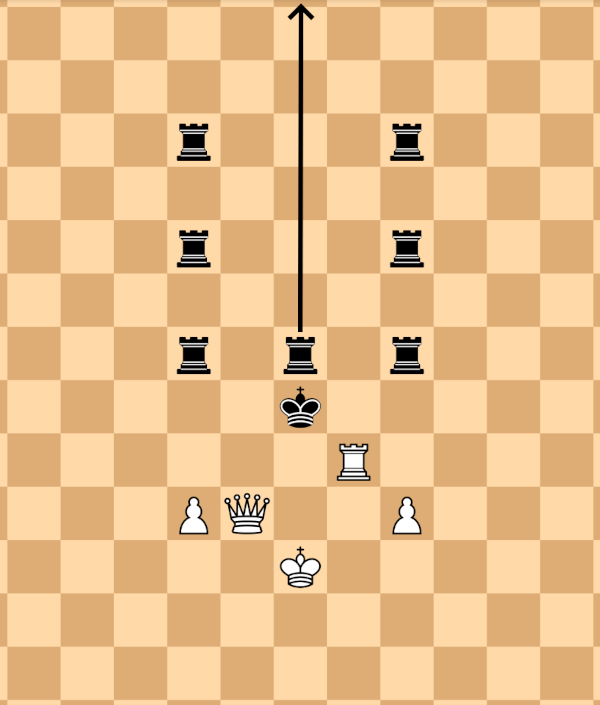
Take away the edges of the board and chess starts producing positions that feel like Zeno's paradoxes in a cardigan. Here Black escapes mate by flinging a rook arbitrarily far away, and is doomed anyway by a patient chase that never quite ends. A lovely little puzzle about what 'eventually' means.

Futility Closet presents a position on an unbounded chessboard in which Black avoids immediate mate by sending a rook any finite distance north. White can then drive the king endlessly up the board after it, raising the odd question of whether a game that never concludes counts as a forced loss.
Read the rest of this story (Futility Closet)

A surprise right whale calf turns up off Quebec

Posted by Captain Queso on Sunday November 8, 2026 @12:51PM in Wildcard
from the late-entry-to-the-census dept.

In a species this rare, every calf gets counted by name, so one that slipped through the winter surveys entirely is genuinely good news. The detective work is the fun part: matching photos against the catalogue the New England Aquarium keeps on every known animal. A small, cheering correction to the numbers.

Researchers photographed an unidentified North Atlantic right whale calf near Anticosti Island in Quebec in September. Scientists at the New England Aquarium in Boston concluded it was born months earlier and missed by winter surveys, bringing the latest calving season's count to 24.

Need for Speed Underground 2, recompiled to run in a browser

Posted by Captain Queso on Sunday November 8, 2026 @6:51AM in Wildcard
from the neon-underglow-in-a-tab dept.

A port born from two brothers wanting to race each other again twenty years on, which is about the best reason to do something this ambitious. The game's own code was recompiled for the browser, with online races, widescreen and wheel support thrown in, and the author keeps it free with no paid perks. Hacker News filler, but the good kind.

A fan project recompiles the original PC version of Need for Speed Underground 2 to run in Chrome and Firefox, with free roam, online races with friends and support for controllers, wheels and touch. The author started it so he could play with his brother again and kept going.
Saturday, November 7, 2026

The dwarf reed snake escapes by cartwheeling

Posted by Captain Queso on Saturday November 7, 2026 @5:51PM in Wildcard
from the rolling-stone dept.

A snake with no limbs that nonetheless does cartwheels, at four times its slithering speed, is the sort of fact that justifies a whole afternoon of reading. The underlying paper in Current Biology looks at how it keeps its head steady while the rest of it tumbles. Predators, one imagines, are mostly too confused to follow.

Futility Closet notes new research on the dwarf reed snake, which flees predators by flipping into a continuous rolling cartwheel. Researchers measured the movement and found it far faster than the snake's normal crawl, with the head held surprisingly stable.
Read the rest of this story (Futility Closet)
Underwood Dudley's 1,332 coincidence

Posted by Captain Queso on Saturday November 7, 2026 @12:50PM in Wildcard
from the trisector's-revenge dept.

A tiny numerical curiosity that ties the permutations of 1, 2 and 3 to the first digits of pi with the same total, and it is entirely a coincidence. Dudley collected these to show how easily patterns appear when you go looking. A pleasant thing to check on the back of an envelope.

Futility Closet passes along a number puzzle from mathematician Underwood Dudley in which sums built from the orderings of 1, 2 and 3 and from the opening digits of pi both come to 1,332. It comes via Martin Gardner and Dudley's essay on cranks who claim to trisect the angle.
Read the rest of this story (Futility Closet)
Draw a circle on a sphere and keep the area

Posted by Captain Queso on Saturday November 7, 2026 @7:00AM in Wildcard
from the cap-in-hand dept.

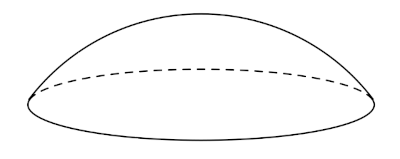
Set a pair of compasses, draw on a sheet of paper, then draw on a ball without touching the setting: the flat disk and the curved cap come out exactly equal in area. It sounds like it shouldn't work, which is the whole fun. Archimedes would nod; the rest of us reach for a pencil.

Futility Closet presents a small geometric surprise: a circle drawn with fixed compasses on a plane and one drawn with the same setting on a sphere enclose the same area, because the chord length sets both.
Read the rest of this story (Futility Closet)

Friday, November 6, 2026

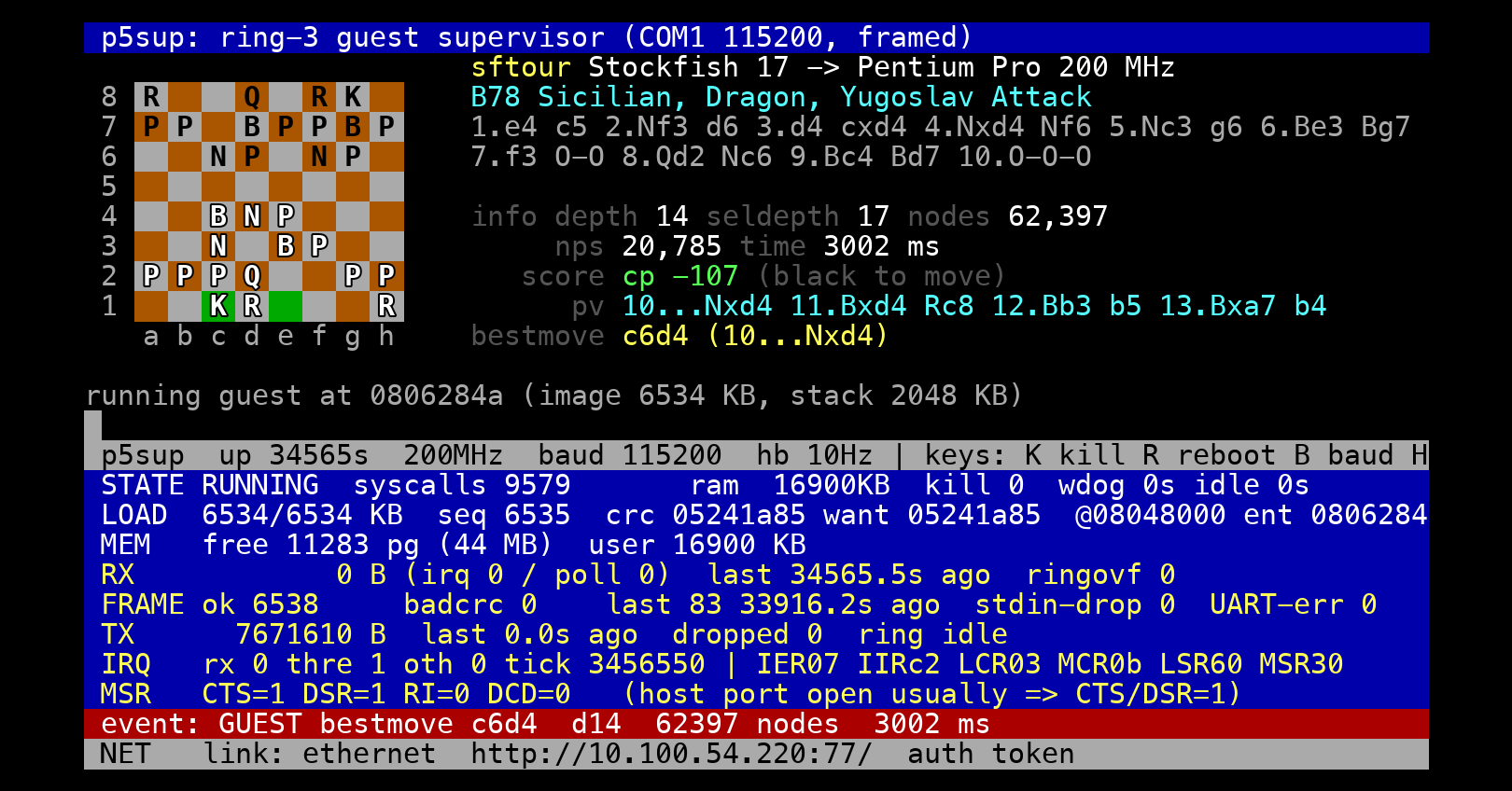
Could a Pentium Pro running Stockfish have beaten Deep Blue?

Posted by Captain Queso on Friday November 6, 2026 @5:36PM in Wildcard
from the premature-optimization-rook dept.

IBM built a custom supercomputer for this, and the suggestion is that better algorithms could have done it on a nice desktop from about 1995. Nothing says more about where the gains went than that. Nobody can rerun the match without a time machine, so enjoy it as a measure of what thirty years of search heuristics are worth, and not as a verdict.

Nicholas Carlini ported the Crafty and Stockfish engines to a 200 MHz Pentium Pro with 64 MB of RAM, then tuned the builds. Hackaday reports the result looks strong enough to take at least a few games from Kasparov or Deep Blue.

Ten years of reversing to make DOS Wing Commander co-op

Posted by Captain Queso on Friday November 6, 2026 @12:36PM in Wildcard
from the Kilrathi-at-the-gates dept.

Two brothers shared one keyboard as kids, and one of them never let go of the idea of flying as actual wingmen. The method is lovely old-school memory archaeology: strip space of everything, snapshot RAM in DOSBox, fly straight, see what changed. A decade is a reasonable schedule for a childhood promise.

A developer describes getting network co-op working in the original DOS Wing Commander, a project begun in 2015. He hunted for the wingman's coordinates by comparing DOSBox memory dumps taken in empty space, so that network packets could steer the second ship.

Christian Jankowski hunts his groceries with a bow and arrow

Posted by Captain Queso on Friday November 6, 2026 @6:35AM in Wildcard
from the free-range-butter dept.

In 1992 a German art student took the back-to-nature fantasy to its logical aisle. The best detail is the cashier, who rang up his kills with total indifference. Performance art rarely gets a better review than that.

For a 1992 piece called The Hunt, artist Christian Jankowski spent a week living on supermarket goods he had shot with a bow and arrow, then paid for them at the till.
Thursday, November 5, 2026

A ninth-century river-crossing puzzle from Alcuin of York

Posted by Captain Queso on Thursday November 5, 2026 @5:36PM in Wildcard
from the weight-limit-exceeded dept.

Alcuin's little book is the ancestor of every wolf, goat and cabbage you ever met, compiled to sharpen young minds at the court of Charlemagne. This one is a tidy bit of state-space search, a thousand years before anyone called it that. Try it before clicking for the answer.

Two adults and two children need to cross a river in a boat that holds only two children or one adult. Futility Closet pulls the problem from Alcuin's Propositiones ad Acuendos Juvenes, a medieval collection of mathematical teasers, and hides the solution behind a click.
Read the rest of this story (Futility Closet)
Why the bugs, and then the geckos, have left the LED porch light

Posted by Captain Queso on Thursday November 5, 2026 @12:40PM in Wildcard
from the moth-to-a-different-flame dept.

A bird blog explains a change you have probably noticed without noticing: the bug cloud around the outdoor light is gone. The explanation is tidy, and the geckos give it a small food-chain punchline. Take the moonlight navigation account as one reading of why insects circle lamps, then go and look at your own porch.

A birder's post recounts a guide in Veracruz whose family swapped to LEDs and lost the geckos that hunted at the lamps. The argument is that insects steer by ultraviolet, which incandescent bulbs emit and LEDs do not, so far fewer gather.
Read the rest of this story (Birds Outside My Window)

Inside the Space Shuttle's I/O Processor, board by board

Posted by Captain Queso on Thursday November 5, 2026 @12:39PM in Wildcard
from the core-memories dept.

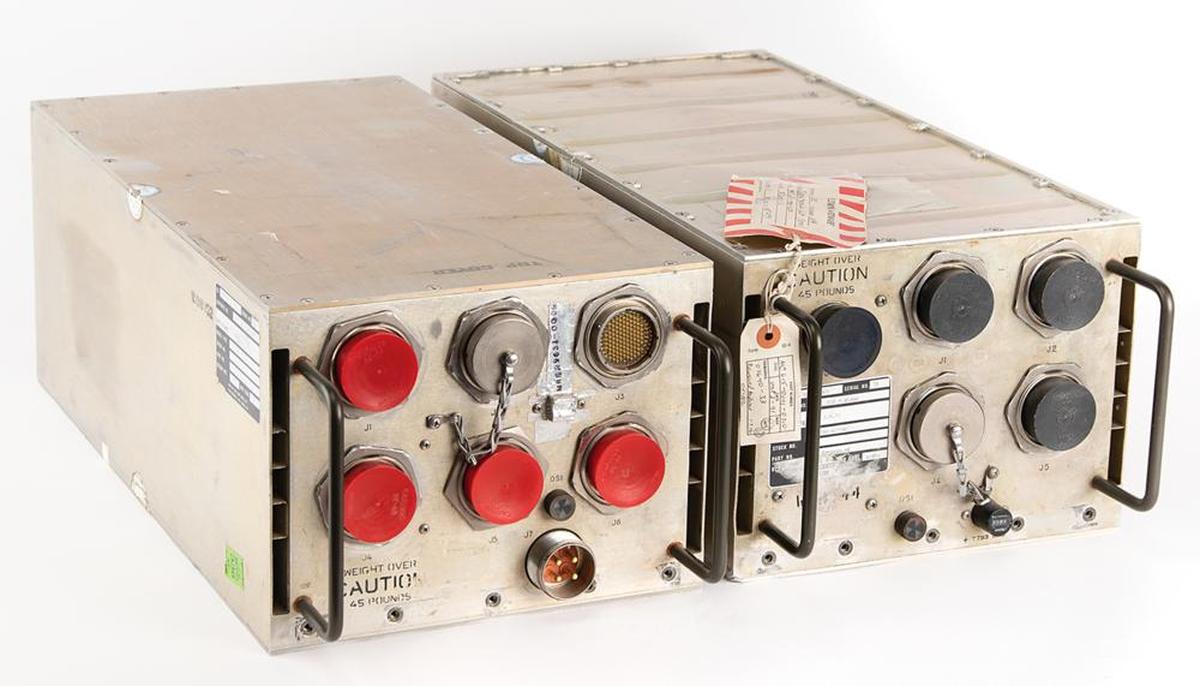
Our occasional computing history slot goes to Ken Shirriff, who treats old avionics the way other people treat cathedrals. Five general-purpose computers ran the Shuttle at 420,000 instructions per second on magnetic core, and the I/O box is the half that rarely gets the attention. Flight software fans will want to see the iron it actually ran on.

Shirriff looks at boards from the IOP, the box that sat beside the CPU in each of the Shuttle's computers. The machines predate popular microprocessors, so the logic was spread across boards of simple chips with core memory rather than DRAM.

Hunting placeholder pages across Britain's government websites

Posted by Captain Queso on Thursday November 5, 2026 @6:43AM in Wildcard
from the dolor-sit-admin dept.

Terence Eden goes looking for lorem ipsum on British public sector sites and comes back with something close to archaeology. Test users named Alice and Henry, pages nobody dares delete, stubs that lead to forgotten functions. He is at pains not to point and laugh, which only makes it funnier, and every sysadmin will recognise the load-bearing placeholder.

A blog post searches UK government and council websites for leftover dummy content, and treats what it finds as a peek at how the sites were built. Stray test pages can turn up style guides and half-forgotten features, and some placeholders have ended up too risky to remove.
Wednesday, November 4, 2026

The 1982 plan to rewrite the Oxford Book of English Verse without emotion

Posted by Captain Queso on Wednesday November 4, 2026 @5:36PM in Wildcard
from the behold-her-if-convenient dept.

Rob Thomson and William Palmer proposed to strip English poetry of feeling and modernise it, starting with Wordsworth's solitary reaper. They appear to have stopped at the first verse, and the world's literature breathed out. Futility Closet supplies the deadpan, which is the only way to serve this.

In 1982 two men set out to convert the Oxford Book of English Verse into non-emotive modern language, turning Wordsworth's Highland lass into a Ms McPherson. There is no evidence that the project ever got past that opening.
Read the rest of this story (Futility Closet)

Amateur radio on screen, where film crews sometimes did their homework

Posted by Captain Queso on Wednesday November 4, 2026 @12:37PM in Wildcard
from the CQ-CQ-calling-central-casting dept.

Technology on film is usually two people typing on one keyboard, so it's a small marvel that ham radio has fared rather well. The roll call runs from Hancock's gloriously inept operator to the real radio amateur who overheard a London bank job. And yes, Principal Skinner holds a licence, which explains a good deal.

Hackaday surveys how amateur radio has appeared in film and television, from comic turns in Hancock, The Munsters and The Simpsons to heroic operators in The Red Tent and The Bank Job. The piece finds the hobby has had a few surprisingly accurate portrayals.

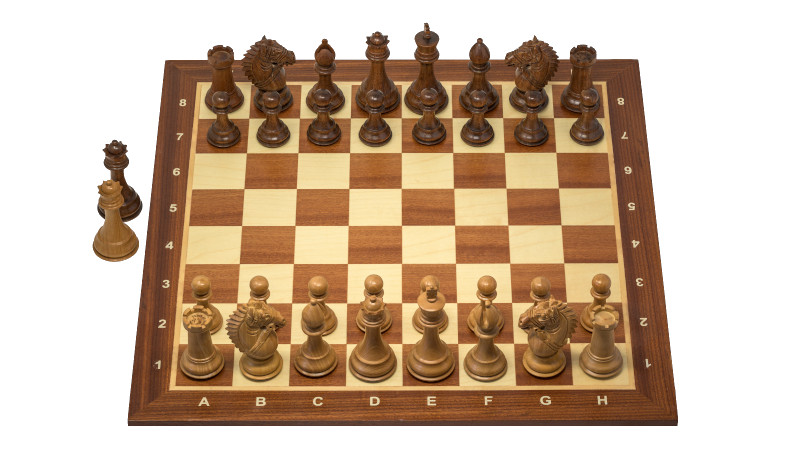
Could a modern chess engine on a Pentium have beaten Kasparov in 1996?

Posted by Captain Queso on Wednesday November 4, 2026 @6:38AM in Wildcard
from the deep-blue-on-a-budget dept.

A proper counterfactual for anyone who remembers those matches: all that custom silicon against a beige box and thirty years of better ideas. The answer flatters the software and stings the hardware budget. Worth reading for what it says about how much search and evaluation have improved, with the machine held fixed.

IBM's Deep Blue relied on 30 processors and 480 custom chess chips. This experiment asks whether an off-the-shelf 1996 desktop running a smarter engine would have done the job, and concludes that commodity hardware of the day could have beaten Kasparov.
Tuesday, November 3, 2026

The 'possibly extinct' Bangka slow loris was never really lost

Posted by Captain Queso on Tuesday November 3, 2026 @5:42PM in Wildcard
from the nobody-told-the-loris dept.

Science mislaid it for the better part of a century; the people living on the island did not. A venomous primate is odd enough already, and this one comes from just down the road by Penang standards. There's still a threats section, but the headline act is survival.

A recent study documents the Bangka slow loris, last recorded in the scientific literature around 1937 and listed as possibly extinct in 2015, as still alive on Indonesia's Bangka Island. Researchers examined more than 90 of the animals, and locals had known about them all along.

A long-lost 1997 Daft Punk mixtape, rescued from a damaged tape

Posted by Captain Queso on Tuesday November 3, 2026 @12:40PM in Wildcard
from the around-the-tape-head dept.

An archive story wearing a dance-music jacket: a DJ finds a tape the duo mailed him after Homework, it is in poor shape, and a specialist brings it back. There is a small thrill in possibly being among the first to hear it in nearly thirty years. Folk it is not, but the instinct to rescue a recording is the same one.

Radio DJ Ralph Lawson, who hosted a show called Trans Europe Express, found an hour-long mix that Daft Punk sent him in 1997. The tape was badly damaged, so he worked with a specialist to restore it and has posted the whole thing online. It is unclear whether it was ever aired.

Is there anything left in the dream of cold fusion?

Posted by Captain Queso on Tuesday November 3, 2026 @6:36AM in Wildcard
from the benchtop-heresy dept.

Few scientific reputations have been so thoroughly vaporised at room temperature. Quanta's writer comes back to it by way of philosopher Huw Price, who argues scientists may have been too risk-averse about it. Whatever you think of the physics, it is a good case study in how a field decides a question is closed.

Prompted by an exchange with Cambridge philosopher Huw Price, who co-authored a paper on attitudes toward cold fusion, a Quanta Magazine writer revisits the idea and asks whether scientists have been overly dismissive of it.
Read the rest of this story (Quanta Magazine)
Monday, November 2, 2026

The OEIS picks winners for its 400,000th-sequence celebration

Posted by Captain Queso on Monday November 2, 2026 @5:38PM in Wildcard
from the next-term-please dept.

An integer sequence encyclopedia throwing a party and giving out prizes is peak delightful small community. The headline winner is about buildings that can see a number of earlier buildings equal to their own height, which you can explain at a dinner party and then be unable to stop thinking about. The judges' one-line citations are half the pleasure.

The On-Line Encyclopedia of Integer Sequences has announced winners from more than 100 nominations, chosen by a committee including founder Neil Sloane. Eric Fox's city-building sequence took the A400000 number, and the list includes polyomino puzzles and simple definitions that lead to hard open problems.

Karl Lemström and the mountain wired to make an aurora

Posted by Captain Queso on Monday November 2, 2026 @5:37PM in Wildcard
from the northern-lights-switch dept.

A nineteenth-century physicist deciding that the way to test the aurora was to rig up a mountain is pure Victorian-scale ambition. BLDGBLOG treats it as landscape architecture, which is the right lens. Birkeland fans will feel a familiar tingle.

BLDGBLOG recounts how the Finnish physicist Karl Lemström, convinced the Northern Lights were electromagnetic, tried to produce an artificial aurora by turning a mountaintop into an apparatus. The post draws on a paper by the historian Fiona Amery and includes one of Lemström's watercolours.