News for Nur. Stuff that's neat.
Section: Space and science news
Sunday, November 8, 2026

A stellar leaf blower may explain JWST's too-bright early galaxies

Posted by Captain Queso on Sunday November 8, 2026 @5:58PM in Space and science news
from the blowing-in-the-lyman-wind dept.

Webb keeps finding more bright galaxies in the first half-billion years than the models allow, and the fixes on offer range from boring to universe-breaking. This one is pleasingly mundane: the galaxies were always there, they just cleared their own fog. Notice how much of cosmology turns out to be housekeeping about dust.

Researchers propose that intense ultraviolet radiation from dense clusters of young stars pushed gas and dust out of early galaxies, letting more of their light escape. That would make galaxies from roughly 400 to 500 million years after the Big Bang look brighter, and more plentiful, than expected without breaking existing theory.

Artemis II's launch rippled the upper atmosphere enough to nudge GPS

Posted by Captain Queso on Sunday November 8, 2026 @5:57PM in Space and science news
from the anthropogenic-space-weather dept.

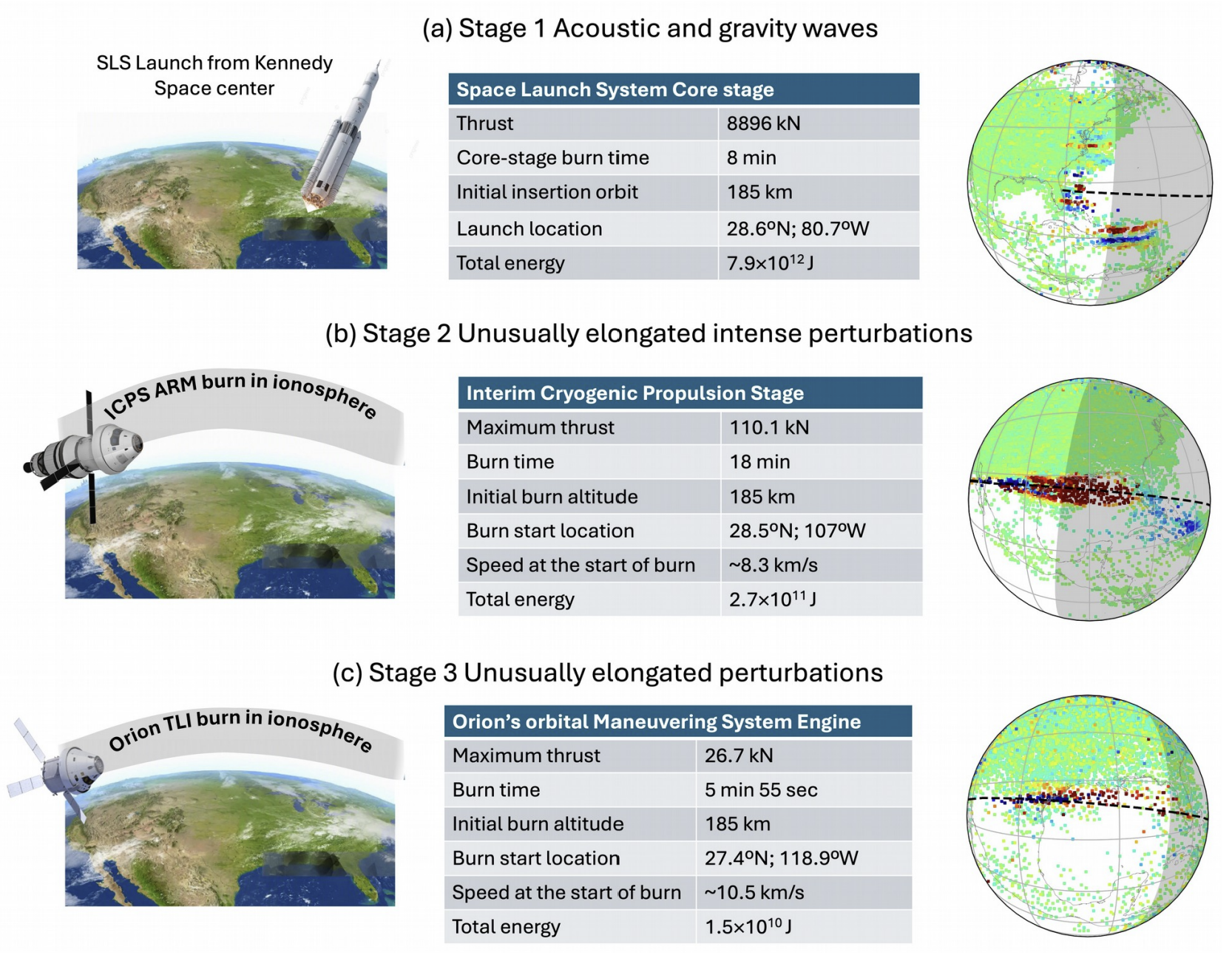
Everyone remembers the noise and the flame; fewer people think about the hole a heavy-lift rocket punches in the ionosphere on the way up. A new preprint maps the disturbance stage by stage, and the effect on satellite navigation signals is the part that makes engineers sit up. Space weather, it turns out, can be locally manufactured.

A preprint studying the Artemis II launch traces how each stage of the Space Launch System disturbed different layers of the atmosphere as it climbed. The ripples reached the ionosphere widely enough to measurably affect GPS signals, a reminder that big launches leave a footprint far above the pad.

Rubin Observatory finds two hidden companions of the Milky Way

Posted by Captain Queso on Sunday November 8, 2026 @12:58PM in Space and science news
from the more-in-the-neighbourhood dept.

Rubin has barely cleared its throat and it is already turning up things the galaxy's census missed. Two new satellites from a sliver of preliminary sky coverage is a strong hint of what the full survey will do to the missing-satellites problem. Notice the dust-hidden star cluster: not every discovery is about being faint, some are just about being behind something.

Early data from the Vera C. Rubin Observatory, covering only about seven percent of the sky, has revealed two previously unknown companions of our galaxy: a very faint dwarf galaxy some 355,000 light-years away and a star cluster obscured by dust. Astronomers expect hundreds more such satellites to turn up as the survey continues.

A 4.1-billion-year-old piece of Mars, found in the Sahara

Posted by Captain Queso on Sunday November 8, 2026 @12:57PM in Space and science news
from the return-to-sender dept.

Mars has been mailing us samples for free for billions of years; we just have to find them in the sand. This one is old enough to remember the planet's crust forming, which makes it more useful than its plain looks suggest. A tidy little Kottke pointer to a story that sample-return planners will be quietly jealous of.

Kottke points to new research on a Martian meteorite recovered in Mali a few years ago. The rock turns out to be more than 4.1 billion years old, and its blend of igneous minerals records clues to how the early Martian crust took shape.

A white dwarf wears two rings of shattered planets

Posted by Captain Queso on Sunday November 8, 2026 @6:58AM in Space and science news
from the after-the-red-giant-party dept.

Most previews of the Sun's retirement stop at the white dwarf; this one shows the furniture left over afterwards. Two rings of debris with a clean gap between them suggest something sizeable is still orbiting and sweeping the lane, which is the kind of detail that makes a dead system feel oddly lived in.

Astronomers have found a double ring of planetary wreckage around a white dwarf, split by a gap that may be kept open by a surviving body as big as Pluto or the Moon. The two rings differ in chemistry, hinting they are the remains of two separate destroyed worlds, and a glimpse of what our own Solar System may look like long after the Sun dies.
Saturday, November 7, 2026

Ryugu's samples hold all five of life's genetic letters

Posted by Captain Queso on Saturday November 7, 2026 @5:58PM in Space and science news
from the some-assembly-required dept.

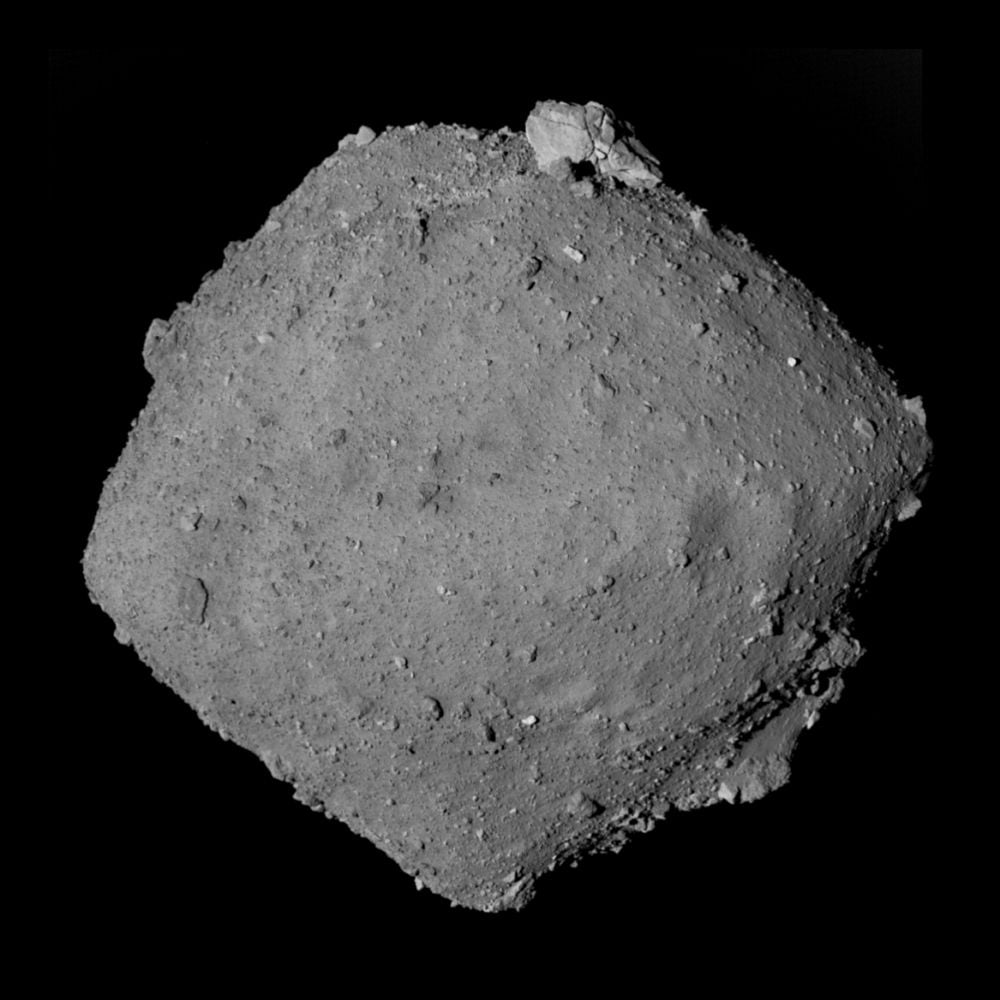
Hayabusa2 keeps paying out. Finding the full set of nucleobases in material that never touched Earth's biosphere takes the usual contamination objection off the table, which is what made the meteorite results arguable. None of this is life, of course; it's the parts bin, and the parts bin was apparently standard issue in the early Solar System.

Researchers analysing pristine grains returned from asteroid Ryugu have detected all five nucleobases used in DNA and RNA. The result adds to evidence from meteorites and other asteroid samples that these building blocks were widespread when the Solar System was young.

Earth's tides may have kept the young Moon's volcanoes going

Posted by Captain Queso on Saturday November 7, 2026 @5:57PM in Space and science news
from the tidal-heating-pad dept.

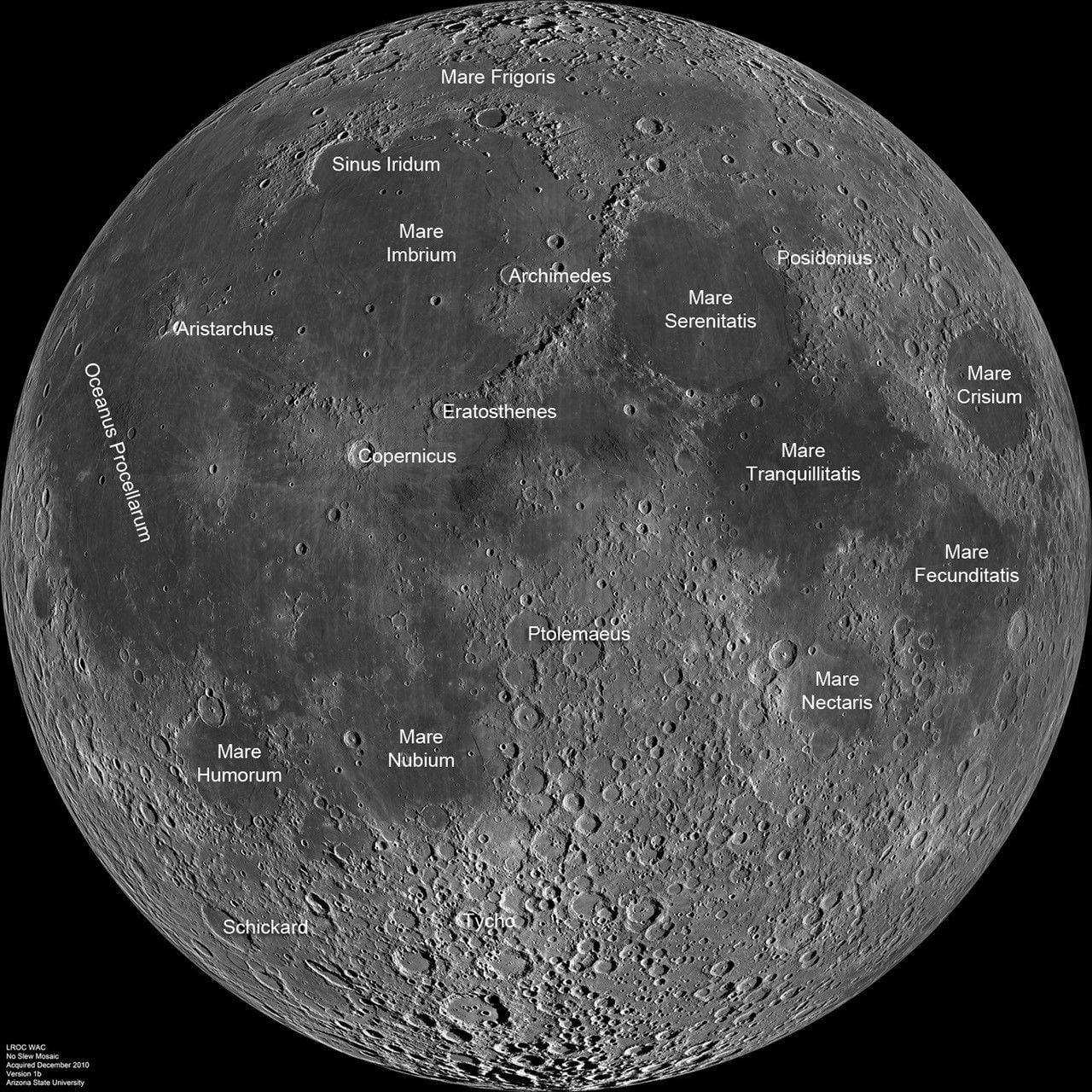
Chang'e-5 brought back volcanic rock only about two billion years old, which is awkward for a Moon that should have gone cold long before. The proposed answer is that Earth itself did the stirring, flexing the Moon with gravity and keeping its interior warm. A pleasing case of a sample-return mission handing theorists a homework problem.

Lunar samples from China's Chang'e-5 mission include volcanic material far younger than a small, fast-cooling Moon ought to produce. A new paper argues that tidal forces from Earth, much closer back then, could have heated the lunar interior enough to keep volcanism alive for billions of years.

ESCAPADE's twin probes will slingshot their way to Mars under power

Posted by Captain Queso on Saturday November 7, 2026 @12:58PM in Space and science news
from the fashionably-late-launch dept.

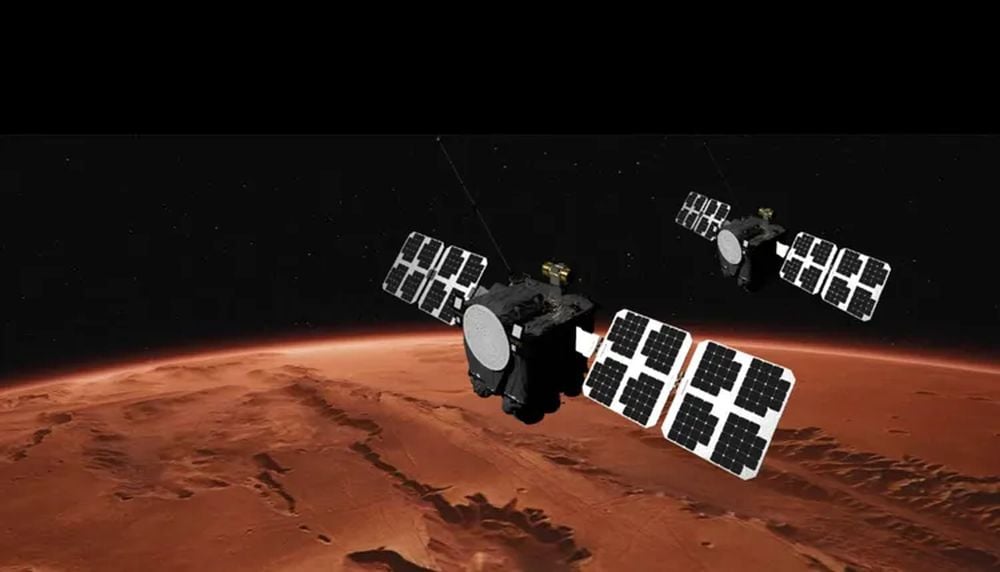
Missing your launch window used to mean waiting two years; ESCAPADE's answer is to fire the engines mid-flyby and make up the difference. Worth noticing how much a small, cheap mission can get out of orbital mechanics when it's willing to be clever. The science payoff is two spacecraft flying in formation around Mars, which is a lot more useful than one.

NASA's ESCAPADE mission sent two identical small spacecraft toward Mars outside the usual launch window, so they will burn their engines during gravity-assist passes to gain extra speed. Once at Mars they will fly in formation to study how the solar wind strips at the remains of the planet's old magnetic field.

A Voyager fix lands just as the probe crosses one light-day from home

Posted by Captain Queso on Saturday November 7, 2026 @12:57PM in Space and science news
from the please-allow-24-hours-for-delivery-to-your-command dept.

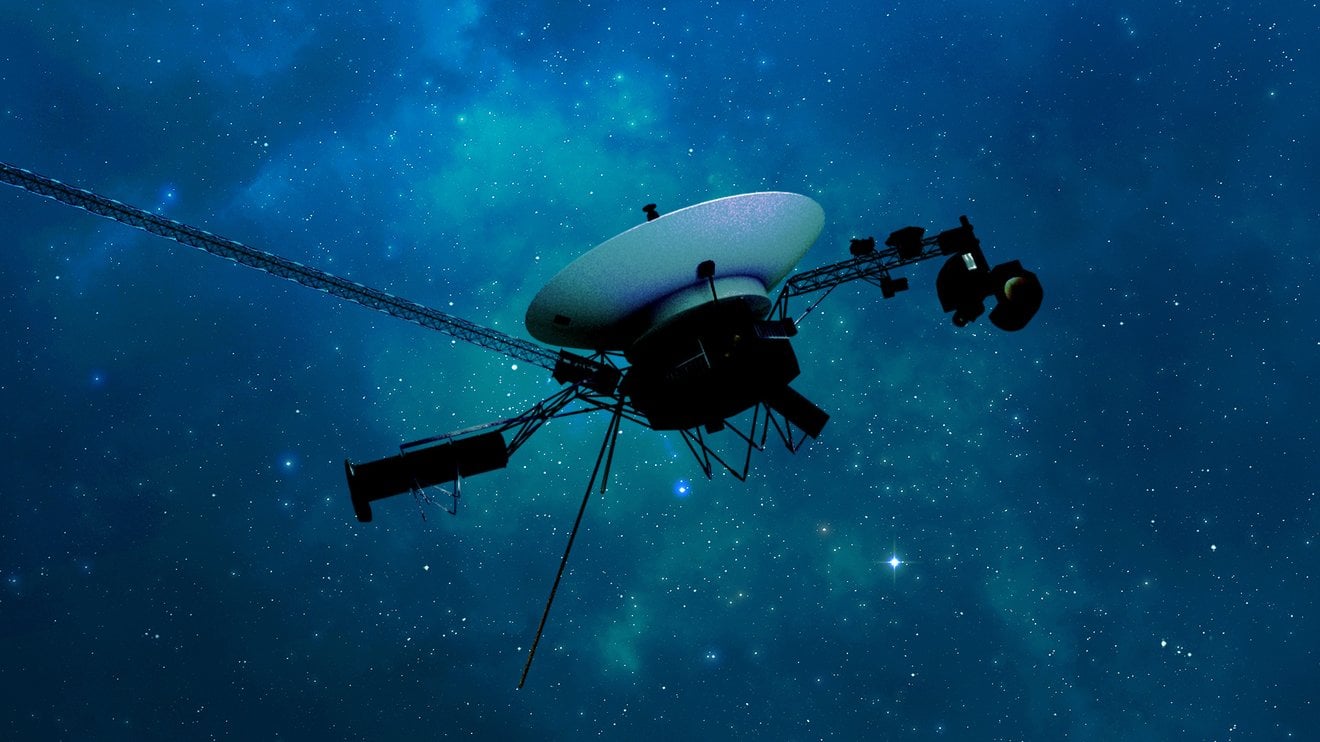
A 1977 spacecraft that still accepts patches is reason enough to read, and this one comes with a milestone attached: a round trip for a single command is now two full days. The JPL team keeps finding new ways to coax the old hardware along. Flight software people will appreciate what it takes to debug anything at that latency.

Universe Today reports on a recent repair the Voyager team pulled off to keep the mission running, around the time the spacecraft passed the point where its signals take a full day to reach Earth. The article recaps the mission's long trip since 1977 and the ongoing work to keep it alive in interstellar space.

Swift comes home after 22 years of chasing gamma-ray bursts

Posted by Captain Queso on Saturday November 7, 2026 @7:07AM in Space and science news
from the burst-and-done dept.

Built for a two-year mission, Swift spent nearly twenty-two catching gamma-ray bursts in the act and swinging round to look before the afterglow faded. It finally came down over Indonesia, which by Penang standards is practically next door. A fine example of hardware outliving its spec sheet by a factor of eleven.

NASA's Swift Observatory, launched to study gamma-ray bursts and other violent cosmic events, has re-entered Earth's atmosphere over Indonesia after almost 22 years in orbit. Designed for a two-year mission, it reshaped what astronomers know about black holes, exploding stars and transient outbursts.
Friday, November 6, 2026

China lays out how it means to put two people on the Moon

Posted by Captain Queso on Friday November 6, 2026 @5:44PM in Space and science news
from the some-assembly-required-in-lunar-orbit dept.

Worth reading as an engineering plan rather than a flag-planting. The notable choice is two launches and a rendezvous around the Moon, because no single rocket has to carry the whole stack. Apollo veterans will recognise the shape of it, with the docking moved a long way from home.

The chief designer of China's lunar exploration programme has set out an official plan for the country's first crewed landing. The crew and lander fly separately and meet in lunar orbit, with three astronauts on the mission, two going down to the surface, and a target of before 2030.

Giant impacts may help young rocky planets keep their air

Posted by Captain Queso on Friday November 6, 2026 @12:45PM in Space and science news
from the hit-me-baby-one-more-time dept.

The textbook line was that a planet-scale collision blasts the atmosphere off into space, which sounds reasonable if you've ever dropped a soufflé. Now the bookkeeping points the other way: the mass delivered by the impactor may matter more than the heat. A nice reminder that planetary formation is mostly an argument about accounting.

New work suggests that giant impacts on young planets may not strip away their atmospheres as long assumed. The extra mass a planet gains from the collision strengthens its gravitational grip on the gas it already has.

Webb finds water ice on 3I/ATLAS acting much like the home-grown stuff

Posted by Captain Queso on Friday November 6, 2026 @6:42AM in Space and science news
from the same-ice-different-star dept.

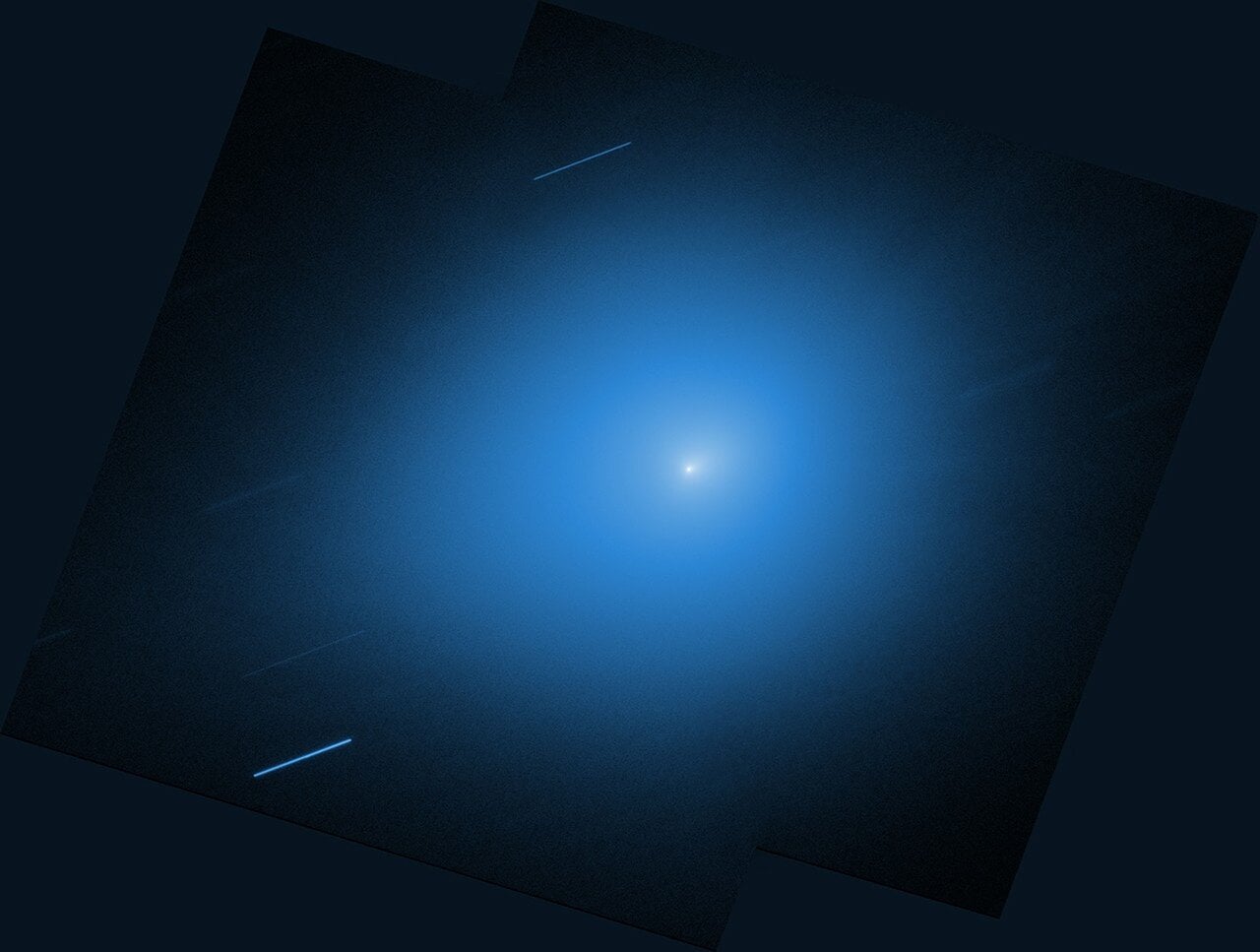
We get a sample from another star system by pure luck, point Webb at it, and the news is that it behaves familiarly. That's the exciting part: chemistry that doesn't care whose sun it formed around is a small, quiet argument about how ordinary we are. Borisov had no such telescope waiting for it.

A paper in The Astrophysical Journal Letters, led by Silvia Protopapa, reports what the James Webb Space Telescope saw of water ice on 3I/ATLAS, the third known interstellar object. The result suggests the ice behaves as it does in objects from our own solar system.
Thursday, November 5, 2026

Hera gets its first clear look at the asteroids DART hit

Posted by Captain Queso on Thursday November 5, 2026 @5:45PM in Space and science news
from the returning-to-the-scene dept.

NASA did the punching in 2022; Europe's job is to turn up afterwards with a clipboard. The bit to notice is that the orbit changed by more than anyone predicted, so the follow-up is less a victory lap than a proper loose end being tied off.

ESA's Hera spacecraft has taken its first clear image of the two asteroids in the DART deflection experiment as it approaches them. Once there, it will survey the aftermath of the impact and try to work out why the smaller rock's path shifted so much further than models said it should.

A hidden companion may be ploughing through Betelgeuse's atmosphere

Posted by Captain Queso on Thursday November 5, 2026 @12:45PM in Space and science news
from the uninvited-houseguest dept.

Betelgeuse has spent years behaving oddly enough to keep amateurs refreshing their light curves, and now the suspect has a name. Siwarha is a small star doing laps inside a supergiant's outer layers, which is a commute few of us would complain about after hearing it. Worth noticing that the evidence here is radio, not a dimming chart.

New radio observations suggest a companion star called Siwarha is moving through Betelgeuse's vast atmosphere. Its passage appears to raise disturbances that slightly stretch and distort the red supergiant's shape.

NASA shops around for a way to keep Hubble in orbit

Posted by Captain Queso on Thursday November 5, 2026 @6:48AM in Space and science news
from the please-do-not-deorbit dept.

Hubble is sinking slowly enough that the deadline sits in the next decade, which by spacecraft standards counts as a crisis. NASA's request is pleasantly open-ended: lift it, upgrade it, or see it off safely. The nice thing to notice is that the agency that once sent shuttles to fix this telescope is now asking who else has a ride.

After more than 35 years in service, Hubble is losing altitude and could re-enter as early as 2033 or 2034. NASA is inviting private space companies to propose ways to raise its orbit, improve its capabilities, or dispose of it safely at the end of its life.
Wednesday, November 4, 2026

NASA's CHAPEA crew steps outside after a year on simulated Mars

Posted by Captain Queso on Wednesday November 4, 2026 @5:42PM in Space and science news
from the no-actual-planets-were-visited dept.

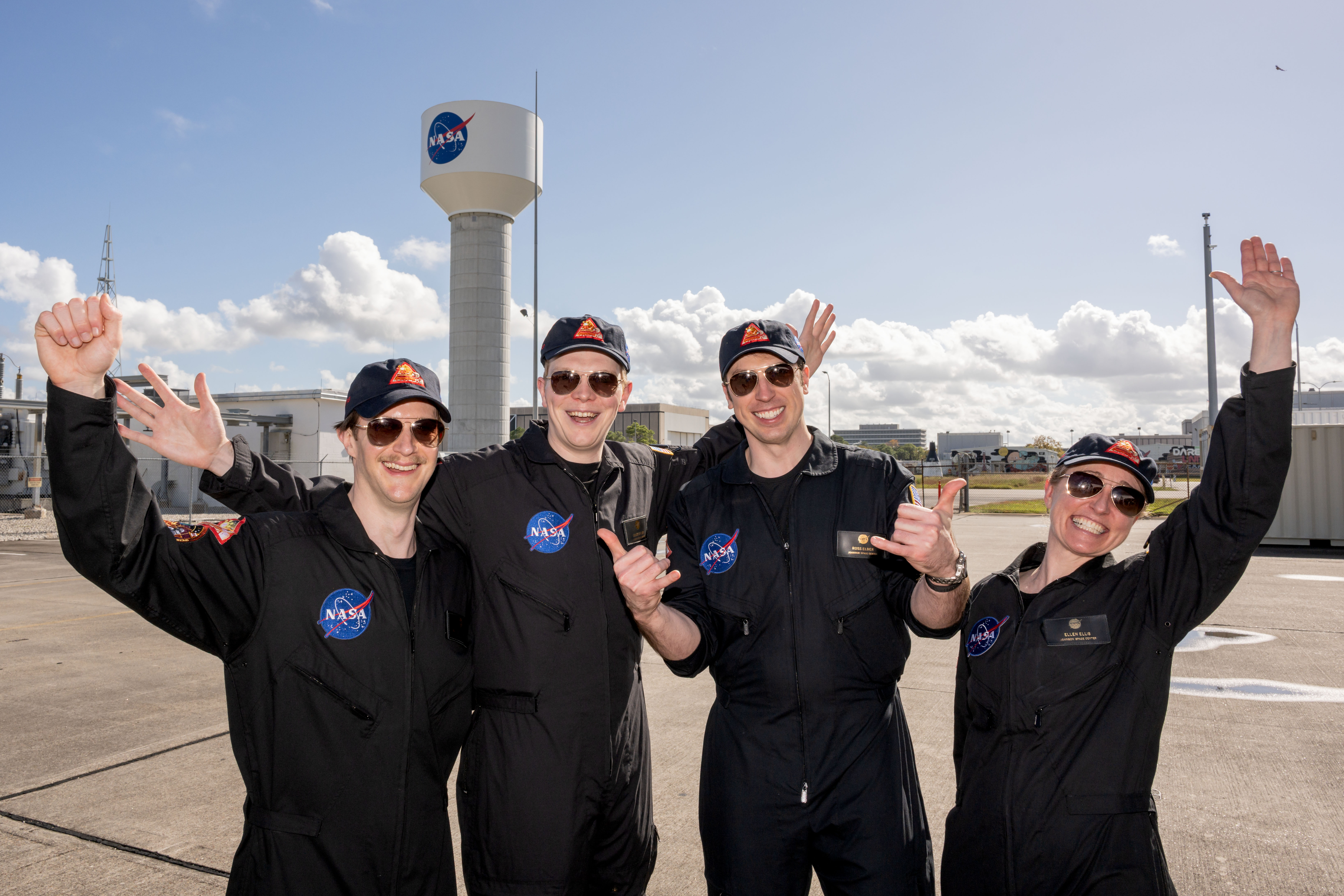
Four people just spent more than a year on Mars without leaving Houston-adjacent real estate, and the reward is a group photo in actual weather. The scare quotes in NASA's own caption around returns are doing lovely work. Nobody has ever been so pleased to stand on a planet they never left.

A NASA photo shows the four members of the Crew Health and Performance Exploration Analog outdoors for the first time in over a year, after their simulated Mars mission ended on October 31, 2026.
Read the rest of this story (NASA Image of the Day)

Perseverance passes Opportunity as the longest-driving rover off Earth

Posted by Captain Queso on Wednesday November 4, 2026 @12:42PM in Space and science news
from the are-we-there-yet dept.

The old record was Opportunity's marathon, and Perseverance has squeaked past by a rounding error's worth of Martian gravel. The interesting part is the software: this distance comes from a rover increasingly trusted to plan its own route rather than wait out the light delay for instructions. Flight software people may take a small bow.

NASA's Perseverance rover has now covered 28.10 miles on Mars, farther than any vehicle has driven on another world. Its autonomous navigation has let it steadily push up how far it can travel in a stretch.

Voyager 1 is about to reach one light-day from Earth

Posted by Captain Queso on Wednesday November 4, 2026 @6:44AM in Space and science news
from the please-allow-48-hours-for-a-reply dept.

Nearly fifty years after launch, the probe gets a milestone with a pleasing unit attached. Spare a thought for the flight software people: every command now comes with a two-day wait for confirmation, on hardware rationing its last watts. That is remote debugging at a scale no on-call rota has ever contemplated.

On November 18, Voyager 1 will be one light-day from Earth, so a round-trip exchange takes 48 hours. The piece also covers the energy-saving manoeuvre that stretched its science mission and the recent unexplained communications gap that gave NASA a scare.
Tuesday, November 3, 2026

Rubin Observatory finds two more dim companions of the Milky Way

Posted by Captain Queso on Tuesday November 3, 2026 @5:43PM in Space and science news
from the galactic-census dept.

Fainter than faint, and that's the point: the small leftovers are the ones that keep the receipts on how the galaxy was assembled. Rubin has barely started its survey, so treat this as the opening trickle of a very long catalogue.

The observatory has picked out an ultra-faint dwarf galaxy and a globular cluster orbiting our galaxy. Each one adds a data point to the Milky Way's history of mergers and to the question of how dark matter shaped it.

Queen's Belfast students help track down Neptune's elusive Trojan asteroids

Posted by Captain Queso on Tuesday November 3, 2026 @12:46PM in Space and science news
from the leading-and-trailing-indicators dept.

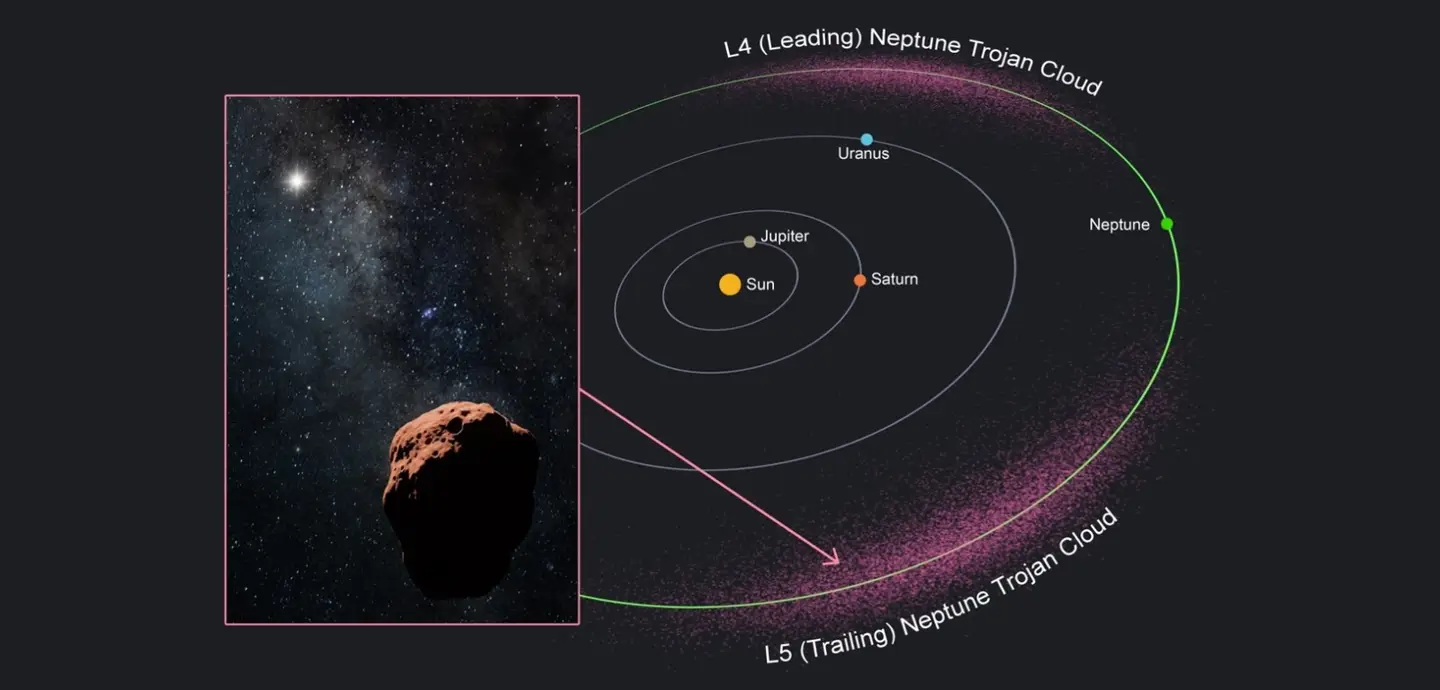
Trojans are the asteroids that share a planet's orbit, herded along at its gravitational balance points, and Neptune's have been stubbornly hard to catalogue. These bodies are slow-moving evidence of how the outer solar system got arranged. It is pleasant to see students get their names near the find rather than a footnote.

A team led by astronomers at Queen's University Belfast, with international partners, has studied newly found small bodies sharing the neighbourhood of Neptune. The work adds to the small known population of Neptune Trojans and to the picture of how the solar system evolved.

IceCube's Antarctic detector catches neutrinos ten billion times as energetic as the Sun's

Posted by Captain Queso on Tuesday November 3, 2026 @6:44AM in Space and science news
from the cold-case-physics dept.

A cubic kilometre of Antarctic ice makes an unlikely telescope, but it is about the only sort that can see something that passes through you without saying hello. The interesting bit is what these high-energy arrivals might say about the violent places that made them. ScienceDaily's headline does the usual ghost routine; the physics needs no costume.

Scientists using the IceCube observatory, buried in the ice at the South Pole, are detecting neutrinos from distant cosmic sources with around ten billion times the energy of those from the Sun, offering a new probe of extreme astrophysical events.

A possible fix for the puzzle in Ryugu's clay minerals

Posted by Captain Queso on Tuesday November 3, 2026 @6:43AM in Space and science news
from the dirty-laundry-of-the-solar-system dept.

Bring home a sample from an asteroid and it immediately starts arguing with your models. Ryugu's fine-grained clays vary far too much for one parent body to have had a single watery history, or so it seemed. A nice reminder that the real payoff of a sample return comes years after the capsule lands.

Samples from the asteroid Ryugu and carbonaceous chondrite meteorites show widely varying clay compositions, seemingly implying very different water conditions within one parent body. Universe Today reports on new research that offers a way to reconcile this.
Monday, November 2, 2026

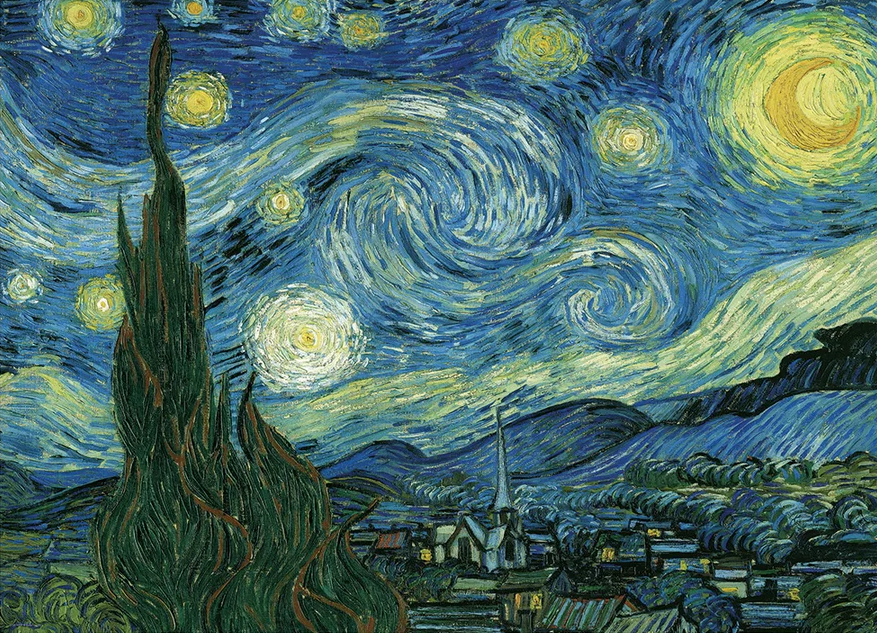
Dating The Starry Night by the sky Van Gogh actually saw

Posted by Captain Queso on Monday November 2, 2026 @5:45PM in Space and science news
from the waning-crescent-at-the-asylum-window dept.

Astronomers have been arguing over this canvas for decades, and it is nice to see the painter treated as an observer rather than a mere visionary. Notice how specific the claim is: a date, a Moon phase and a named star cluster. Whether it fully settles things is another matter, but the method is the fun part.

A study in Scientific Reports matches the painting's sky to the pre-dawn view over Saint-Rémy around 22 July 1889. On that morning a waning crescent Moon, Venus and the Hyades cluster sat close together, which the authors argue fits both what Van Gogh painted and its shape.

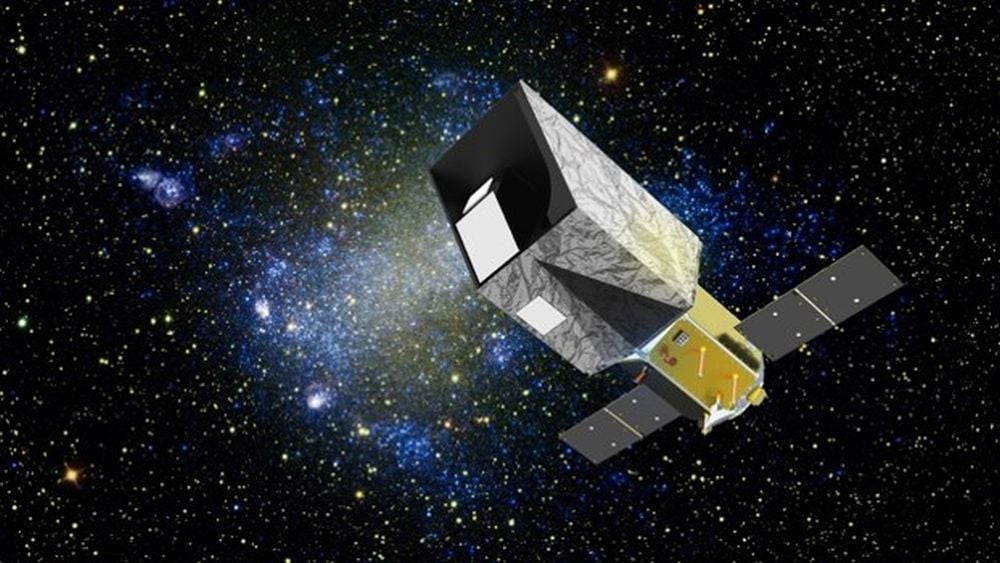
NASA commits to UVEX, an ultraviolet survey telescope for 2031

Posted by Captain Queso on Monday November 2, 2026 @12:44PM in Space and science news
from the factor-fifty-will-not-help dept.

The ultraviolet sky has gone without a dedicated survey since GALEX shut down in 2013, which is a long time to leave a whole band unwatched. A hundredfold gain over its predecessor is the sort of number that makes astronomers start drafting proposals now. It also fills in the other end of the spectrum from all those infrared surveys.

NASA has committed to launching the UltraViolet EXplorer in 2031. The telescope is roughly a hundred times more powerful than GALEX, which ended its mission in 2013, and its ultraviolet survey is meant to complement infrared surveys from other observatories.