News for Nur. Stuff that's neat.
Section: Places to visit
Sunday, November 8, 2026

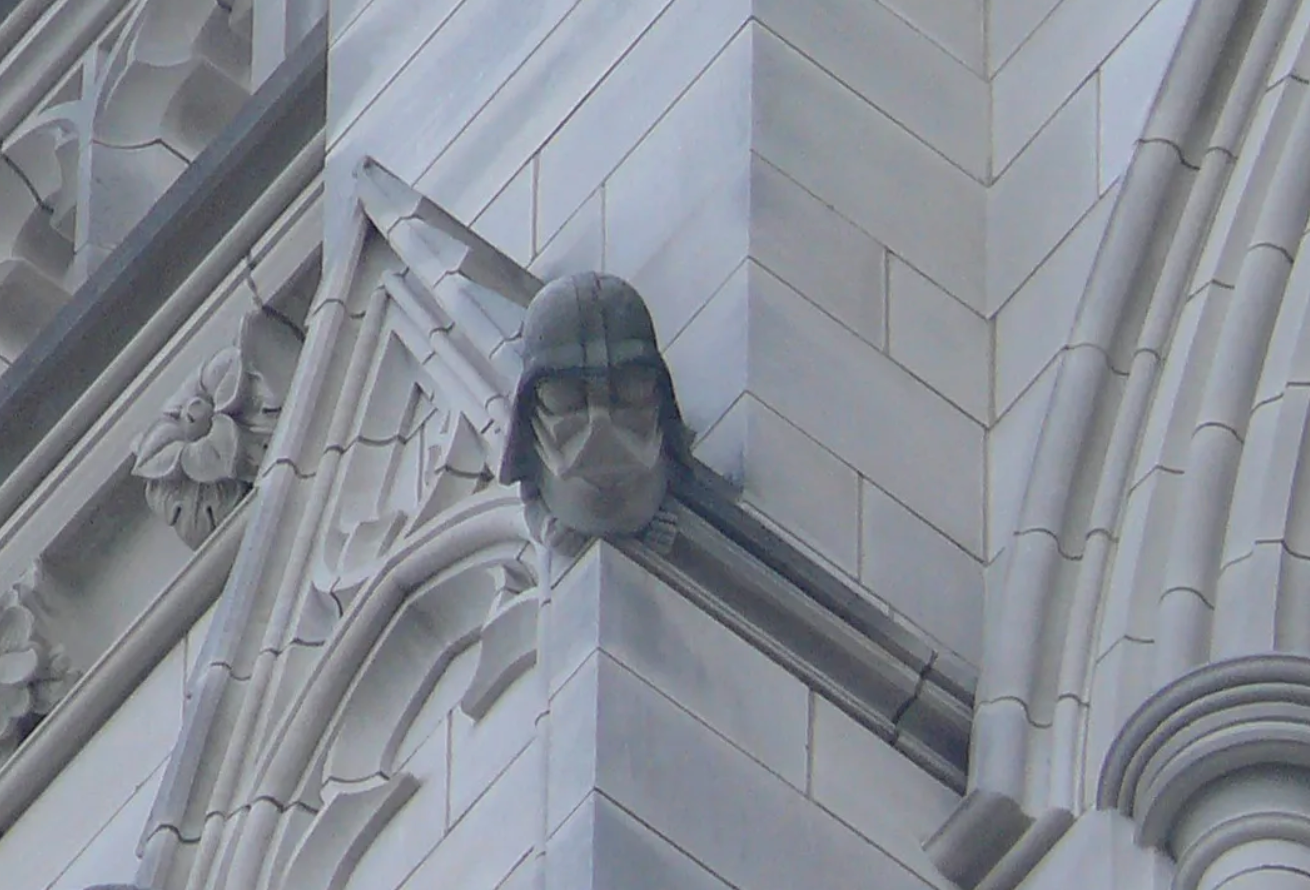
Eight odd gargoyles and grotesques worth a trip

Posted by Captain Queso on Sunday November 8, 2026 @12:53PM in Places to visit
from the stone-faced dept.

Gargoyles are the original user-generated content: a stonemason with a sense of humour and a long time to sit on a scaffold. Atlas Obscura rounds up the ones that break the mould, which makes for a handy itinerary of buildings to stare upward at. Look for the ones that are clearly portraits of someone the carver did not like.

Atlas Obscura gathers eight unusual gargoyles and grotesques from buildings around the world, the ones that stray furthest from the standard scowling beast. Each entry is a real spot you could visit and crane your neck at.
Saturday, November 7, 2026

The Living Museum, an artists' workshop inside a Queens hospital

Posted by Captain Queso on Saturday November 7, 2026 @7:02AM in Places to visit
from the outsider-in dept.

Not a gallery so much as a workplace that happens to be hung floor to ceiling with art. Since 1983, patients at Creedmoor have had studios of their own here, and there is even a recording studio whose albums you can buy in the shop. An unlikely, humane place, and the opposite of a white-cube museum.

Atlas Obscura profiles the Living Museum on the grounds of Creedmoor Psychiatric Center in Queens, New York, a creative space founded in 1983 by Janos Marton and Bolek Greczynski where patients make and show paintings, sculpture, installations and music.
Friday, November 6, 2026

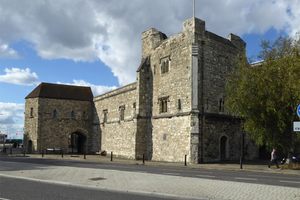
God's House Tower, Southampton's sea gate turned something else

Posted by Captain Queso on Friday November 6, 2026 @5:40PM in Places to visit
from the should've-built-the-wall-first dept.

A building that grew by accretion over centuries, starting with a gate in 1189. The plot twist comes in 1338, when the French sacked a town with no proper walls and went straight for the wine cellars. The king was reportedly not sympathetic, which is the medieval version of a post-incident review.

This stone complex on the Southampton waterfront began as a gate to the Platform Quay and was named for the nearby God's House Hospital. It was later extended over hundreds of years, took on a string of different uses, and can be visited today.

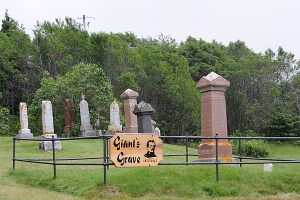
The grave of the Cape Breton Giant in Englishtown

Posted by Captain Queso on Friday November 6, 2026 @12:39PM in Places to visit
from the big-in-Nova-Scotia dept.

Angus MacAskill stood 7 feet 9 inches, and the record books went out of their way to note that nothing medical explained it. A Hebridean emigrant who became an international celebrity and came home to a fishing village is a fine story, and a small cemetery on Cape Breton is a suitably understated place to end it. Bring a long tape measure.

A cemetery in Englishtown, Nova Scotia holds the grave of Angus MacAskill, born in the Outer Hebrides in 1825 and raised on Cape Breton. Guinness listed him in 1981 as the tallest non-pathological giant on record, and his size and strength made him famous in the 19th century.

The Mi'kmaq petroglyphs on the slate shores of Kejimkujik Lake

Posted by Captain Queso on Friday November 6, 2026 @6:37AM in Places to visit
from the writing-on-the-slate dept.

Most rock art is safely ancient; what catches the eye here is how much of it runs right up through the 17th to 19th centuries, so European contact is recorded in stone from the other side. A national park you could walk into, with an archive lying on the ground.

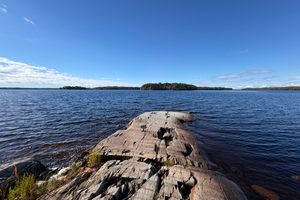
Kejimkujik National Park in Nova Scotia holds more than 500 carvings cut into smooth lakeside slate. Some are thought to be up to a thousand years old, while many show Mi'kmaq life in the centuries after Europeans arrived.
Thursday, November 5, 2026

The Nagelmackers family tomb in a Liège cemetery

Posted by Captain Queso on Thursday November 5, 2026 @5:38PM in Places to visit
from the end-of-the-line dept.

Georges Nagelmackers is the man behind the Orient Express, which makes a quiet suburban cemetery an unexpectedly romantic stop. Atlas Obscura admits the neighbourhood itself is nothing special, which is exactly the kind of honesty that makes a detour appealing.

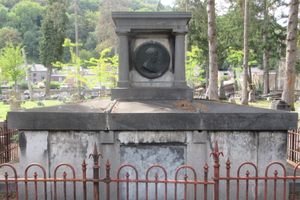
The Nagelmackers banking family bought a château in Angleur, a residential corner of southern Liège, and in 1864 gave land for the Diguette Cemetery, where the family grave now stands. Engineer and industrialist Georges Nagelmackers is among the family remembered there.

Barryscourt Castle, a Barry family seat just outside Cork

Posted by Captain Queso on Thursday November 5, 2026 @12:36PM in Places to visit
from the writing-on-the-wall dept.

An Irish tower house with a longer memory than its walls. The pleasing oddity is the fragments of Ogham among the stones, so a late medieval lordly seat is carrying scraps of a far older script. It is close enough to Cork that a return trip would not need much planning.

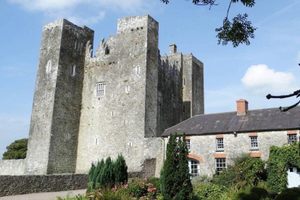
Barryscourt stands near Carrigtwohill and dates mainly from between 1392 and 1420, under John Ciotach Barry, seventh Lord Barry. It served as the principal seat of the Barrymore branch of the Anglo-Norman Barrys, and its stones hold traces of Ogham writing.

Egiategia, the Basque winery on the sea floor off Ciboure

Posted by Captain Queso on Thursday November 5, 2026 @6:46AM in Places to visit
from the vintage-submarine dept.

Most wineries do not mark their premises with a yellow buoy. This one has been letting the Atlantic do the stirring since 2012, fifteen metres down, on the theory that swells make a fine agitator. Go for the view across the bay, stay to wonder who first asked whether the fermenter could be put underwater.

Off Saint Jean de Luz in the French Basque Country, a lone yellow buoy marks vats anchored about 15 metres down, where Egiategia has fermented wine since 2012. Grapes come from local vineyards, and the motion of the waves keeps the juice moving as it ferments.
Wednesday, November 4, 2026

Ten Dutch landscapes on foot, in miniature, near Nijmegen

Posted by Captain Queso on Wednesday November 4, 2026 @5:39PM in Places to visit
from the small-country-even-smaller dept.

The Netherlands is compact already, and this museum in Beek-Ubbergen compresses it further into a lazy afternoon. The extras make it: badgers, expressionist architecture, and a patch of ground that stayed Dutch when most postwar annexations were handed back. Few places let you walk ten landscapes and a border footnote before dinner.

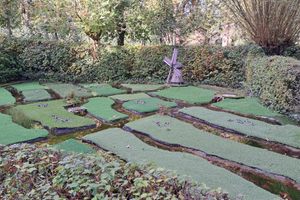
The Miniature Landscape Museum near Nijmegen shows ten Dutch landscapes at small scale. It sits by the Wylerberg, formerly German land annexed after the Second World War and never returned, near Villa Wylerberg, and a foundation there works on restoring cultural landscapes.

The street shrines of Victoria, Gozo's capital

Posted by Captain Queso on Wednesday November 4, 2026 @12:41PM in Places to visit
from the patron-saint-of-the-front-door dept.

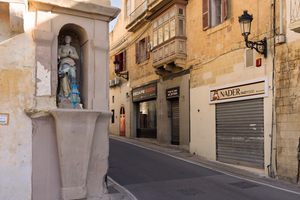
A very pleasing kind of sightseeing: no ticket office, no gift shop, just looking up. These are private devotions on public walls, built by householders rather than handed down by the Church, and some of the lamps are apparently still tended. A walk best taken slowly, at dusk, with a neck that can stand it.

More than fifty small religious niches survive in the old lanes of Victoria on Gozo, some over three centuries old. Families put them up on their own houses to display a patron saint and ask for protection, and they range from carved Baroque canopies to painted figures behind glass.

Amersfoort's Muurhuizen, houses built on the bones of a city wall

Posted by Captain Queso on Wednesday November 4, 2026 @6:42AM in Places to visit
from the load-bearing-history dept.

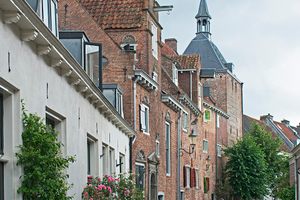
The sort of street that rewards the slow walker: quiet, nearly car-free, and accidentally an architecture timeline. Medieval recycling at its finest, since the wall was gone but the foundations and the bricks were still perfectly good. Mind the residents, who live there and did not ask to be scenery.

When Amersfoort outgrew its first city wall around 1380 and built a new outer one, the old wall came down. From about 1500 residents built homes along its foundation using the salvaged stone and brick, and the centuries of construction left a quiet street of mixed styles.
Tuesday, November 3, 2026

A Bronze Age giants' tomb in the Sardinian countryside

Posted by Captain Queso on Tuesday November 3, 2026 @5:36PM in Places to visit
from the stones-point-the-way dept.

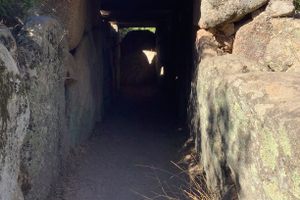
Five minutes from the road and signposted, delightfully, by arrows laid out in rocks, each one different. The best detail is that visitors can peer through the opening at the foot of the great central slab, and squeeze between stones to reach the back.

This is a huge Bronze Age burial monument near Dorgali in Sardinia, reached by a short walk. Its front is a row of very large upright stones, with a low opening in the central one that looks into the tomb.

Dreilinden's 'Virtue Office and Pizza Crust', a Cold War rest stop in loud colours

Posted by Captain Queso on Tuesday November 3, 2026 @12:42PM in Places to visit
from the checkpoint-bravo-for-the-architects dept.

A disused motorway stop is not an obvious pilgrimage, but this one was built for the transit route into West Berlin and dressed like a glam-rock stage set. The nicknames alone earn the detour. Few border crossings have ever looked quite so pleased with themselves.

Atlas Obscura visits the former Dreilinden rest stop at Kleinmachnow, by the old Checkpoint Bravo. Built between 1968 and 1972 to designs by Rainer Rümmler and Hans Joachim Schröder, the complex of clearance buildings, gas stations and a bridgehouse is coordinated in bold red, blue and yellow.

A three-shop miniature curiosity cabinet tucked into Leadenhall Market

Posted by Captain Queso on Tuesday November 3, 2026 @6:38AM in Places to visit
from the very-small-business dept.

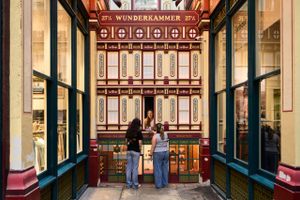
The address alone, No. 27¼, is worth the trip. Tiny storefronts inside a Victorian market, each one tied to some piece of London's story, peered at through little windows. Exactly the sort of thing you walk past nine times, which is presumably the point.

Atlas Obscura describes a small installation at Leadenhall Market in London, inspired by cabinets of curiosities, in which three miniature storefronts behind tiny windows each connect to the history of the market and the city.