News for Nur. Stuff that's neat.
Section: Systems Research and Kernel Development
Sunday, November 8, 2026

Marc Brooker on fixing UUIDv7 for databases

Posted by Captain Queso on Sunday November 8, 2026 @5:53PM in Systems Research and Kernel Development
from the version-seven-deadly-sins dept.

UUIDv7 solved index locality and promptly got blamed for everything else. Brooker sorts the fair complaints from the noise and sketches what a database actually wants from its keys, with the usual distributed-systems eye for correlated behaviour across regions. Short, opinionated, and the kind of thing you end up citing in a design review.

Marc Brooker looks at the criticisms of UUID version 7: it leaks server timestamps, carries less entropy than random IDs, and can create correlated hot spots across datacenters and regions. He separates the legitimate concerns from the rest and proposes adjustments that keep the benefits for database use.

The Morning Paper revisits Linda and tuple spaces

Posted by Captain Queso on Sunday November 8, 2026 @12:54PM in Systems Research and Kernel Development
from the tuple-up-and-wait dept.

Gelernter's Linda is the fourth concurrency model everyone forgets, sitting quietly beside shared memory, message passing and RPC. Adrian Colyer's write-up, from Peter Alvaro's desert-island list, is a good reminder that decoupling in time as well as space was a fully formed idea in the eighties. Read it and count how many modern queueing systems are reinventing it.

An archive post from The Morning Paper walks through David Gelernter's paper on generative communication, the idea behind Linda. Processes coordinate by dropping tuples into and pulling them out of a shared tuple space, so communicating parties need not exist at the same time or know about each other; the post explains why that model was argued to be simpler and more expressive.
Read the rest of this story (The Morning Paper)

Should the kernel finally know what a container is?

Posted by Captain Queso on Sunday November 8, 2026 @6:55AM in Systems Research and Kernel Development
from the there-is-no-spoon dept.

Every kernel hacker knows the old line: there is no such thing as a container, just namespaces and cgroups in a trench coat. This LWN piece looks at the long-running push to give the kernel a first-class notion of a container, an idea that has stalled more than once over who gets to define one. Read it for the arguments about identity and nesting rather than the patch details.

LWN examines a proposal to make containers a recognized object inside the Linux kernel, rather than a user-space convention assembled from namespaces and control groups. The article covers why some subsystems want a stable container identity and why the idea has met resistance before.
Saturday, November 7, 2026

The Morning Paper on The Tail at Scale

Posted by Captain Queso on Saturday November 7, 2026 @5:54PM in Systems Research and Kernel Development
from the ninety-ninth-percentile dept.

Dean and Barroso's paper is the reason everyone now says p99 in meetings, and Colyer's write-up is a tidy refresher on why. The fan-out arithmetic is the bit that still lands: one slow server in a hundred barely matters until every request touches a hundred servers. Hedged and tied requests are worth rereading next to whatever retry policy your own services have grown.

Adrian Colyer summarises Google's paper on tail-tolerance, the idea of building a predictably fast service out of components that are sometimes slow. It walks through why high-percentile latency dominates at large fan-out and the techniques the authors used to tame it, such as hedged requests.
Read the rest of this story (The Morning Paper)

The Morning Paper on Irmin, Git as a library for your data

Posted by Captain Queso on Saturday November 7, 2026 @12:53PM in Systems Research and Kernel Development
from the git-blame-your-database dept.

This morning brought the MirageOS unikernel paper; here is its storage sidekick. Treating application state as a Git repository, with branches, merges and history, is the sort of idea that sounds like a hack until you notice how much distributed-systems pain it absorbs. The two-way mapping to real Git repositories means your usual tools still work on the data.

Adrian Colyer's archive write-up covers Irmin, an OCaml library from the MirageOS project that gives persistent data structures Git-style versioning: clone, branch, merge and revert. Changes made by the application show up in an ordinary Git repository and vice versa.
Read the rest of this story (The Morning Paper)

The Morning Paper on unikernels and the library OS

Posted by Captain Queso on Saturday November 7, 2026 @7:05AM in Systems Research and Kernel Development
from the you-only-link-once dept.

A 2015 Morning Paper on the Mirage paper, back when unikernels were the next big thing and the hypervisor was cast as the only kernel you'd ever need. Adrian Colyer frames it against OSv, which makes a good compare-and-contrast of two answers to the same mismatch between general-purpose kernels and single-purpose cloud guests. Read it now knowing how the decade actually went.

Adrian Colyer summarises the 2013 Mirage paper by Madhavapeddy and colleagues, which proposed compiling an application and only the operating-system pieces it needs into a single sealed image running directly on a hypervisor. He sets it beside OSv as a different response to the same problem of running server software in virtual machines.
Read the rest of this story (The Morning Paper)
Friday, November 6, 2026

SUSE tries switching off setuid for the whole system

Posted by Captain Queso on Friday November 6, 2026 @5:41PM in Systems Research and Kernel Development
from the no-new-privs-for-you dept.

The mechanism is pleasingly blunt: set no_new_privs at PID 1 and let inheritance do the rest. Notice the limits, since the flag only bites at execve(), and a task already holding privileges can still change its IDs. The interesting part is the long tail of hurdles once you ask what breaks when su-style binaries stop working.

LWN covers Thorsten Kukuk's All Systems Go talk on running systemd with NoNewPrivileges for init itself, so the kernel flag applies to every process. Setuid helpers would give way to well-defined IPC services, and some obstacles still stand in the way.

Brooker on why your backward scan runs slow

Posted by Captain Queso on Friday November 6, 2026 @12:37PM in Systems Research and Kernel Development
from the read-behind dept.

It starts with an Andres Freund talk on async IO in Postgres 18 and one result that caught Brooker's eye: forward and reverse scans perform very differently, and readahead looks like the culprit. You know why the kernel only bets in one direction. The fun is in asking whether that bet still deserves to be the default.

Marc Brooker picks up on a forward-versus-reverse scan gap seen in Postgres 18's async IO work, apparently driven by IO layers such as Linux's prefetching ahead of the read point but not behind it. From there he looks at locality and the temporal-spatial hypothesis.

The Morning Paper on CURP: replicate first, order only when you must

Posted by Captain Queso on Friday November 6, 2026 @6:39AM in Systems Research and Kernel Development
from the order-is-overrated dept.

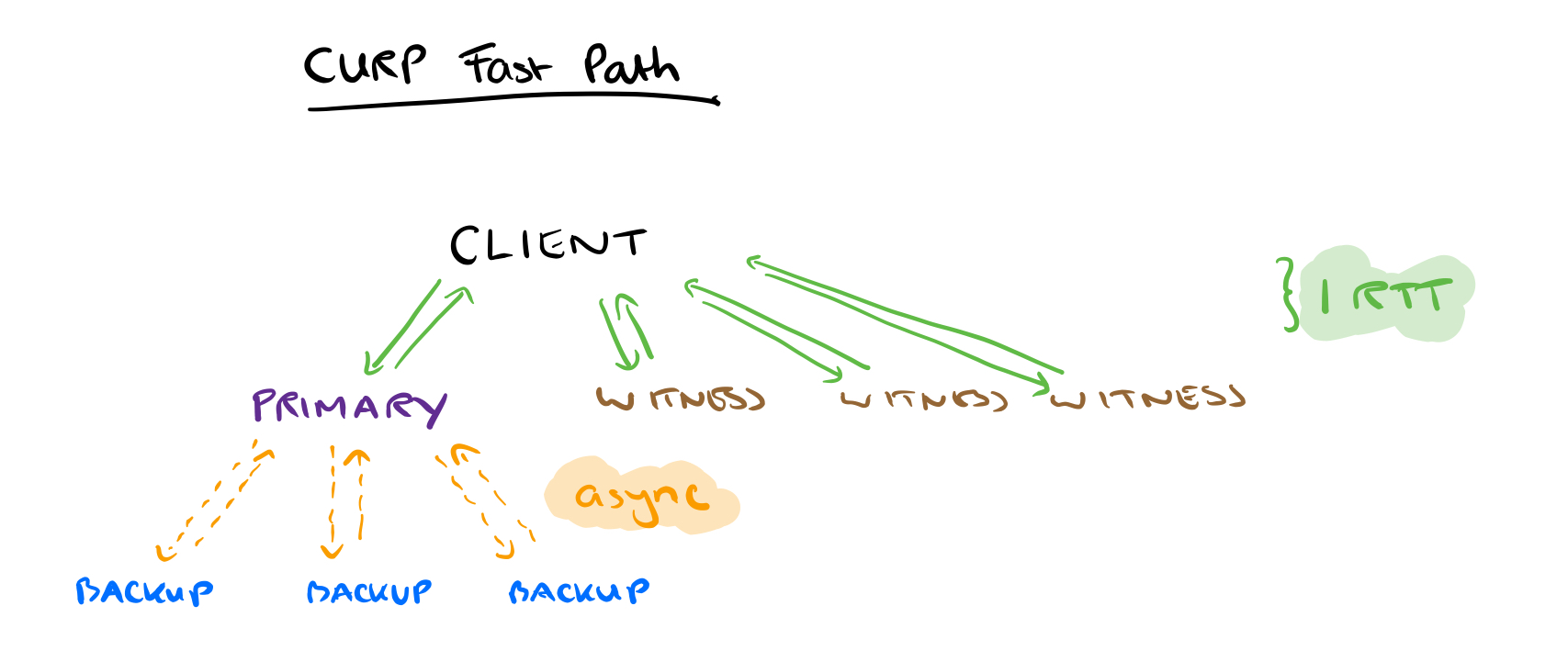
Park and Ousterhout notice that most of the ordering we pay for in primary-backup replication buys nothing when operations commute. Hence 1 RTT writes until a conflict forces a sync. The write-up predicted wide adoption back in 2019, so it's fun to read now with that bet in mind.

A review of the NSDI 2019 paper on the Consistent Unordered Replication Protocol, which lets clients replicate requests before they're ordered provided they commute. Integrated with RAMCloud, it improved write latency about twofold and raised write throughput too.
Read the rest of this story (The Morning Paper)
Thursday, November 5, 2026

The Morning Paper on ARC, the cache that tunes itself

Posted by Captain Queso on Thursday November 5, 2026 @5:39PM in Systems Research and Kernel Development
from the second-chance-list dept.

An old friend, and worth the revisit: two LRU lists and no knobs, beating policies that were tuned with hindsight. Anyone who has argued about page replacement will enjoy how little machinery the balancing act takes, and ZFS fans will recognise the family resemblance.

Adrian Colyer walks through Megiddo and Modha's Adaptive Replacement Cache, which keeps one list for pages seen once recently and another for pages seen at least twice. By adjusting the balance online it tracks both recency and frequency, with LRU-like simplicity and no workload-specific pretuning.
Read the rest of this story (The Morning Paper)

Charapko on metastable failures that cross system boundaries

Posted by Captain Queso on Thursday November 5, 2026 @12:38PM in Systems Research and Kernel Development
from the stuck-in-the-bad-state dept.

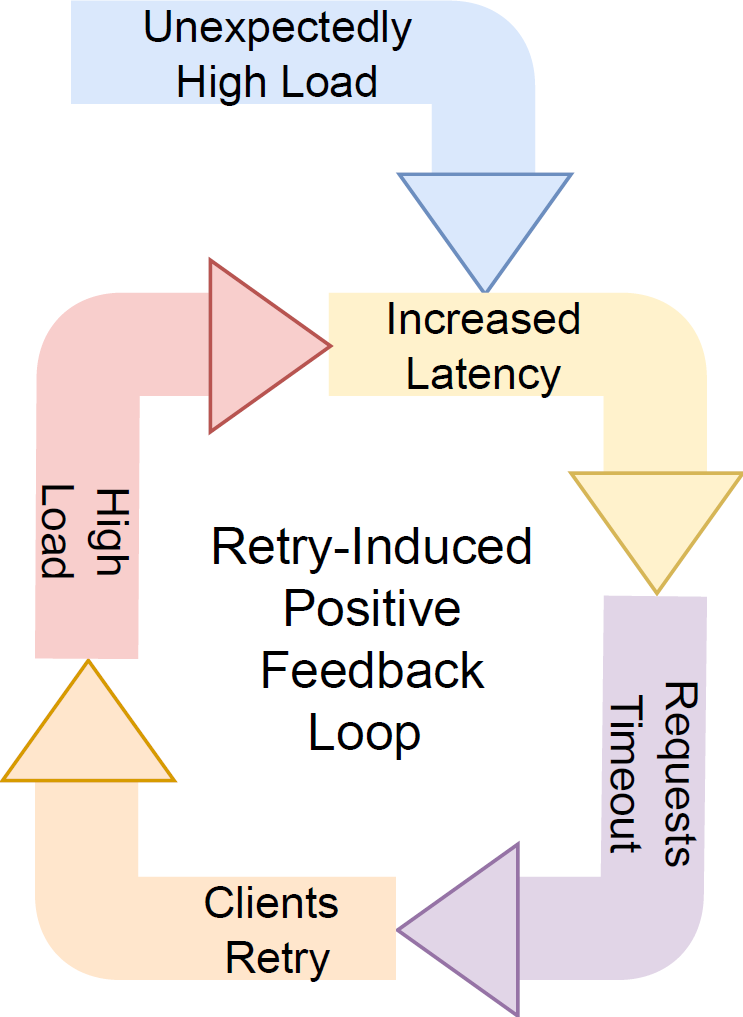
The trigger is gone, the system is still on fire, and the postmortem blames the trigger anyway. Charapko returns to the pattern with the useful framing that the sustaining loop, not the initial fault, is the thing to go after. Anyone who has watched a retry storm outlive its cause will nod along.

Charapko revisits metastable failures, self-sustaining performance collapses held in place by a positive feedback loop after an initial problem. He examines them through actions, states and signals, with attention to how separate systems interact to sustain the loop.
Read the rest of this story (Aleksey Charapko)

The Morning Paper on why concurrent search structures scale when they do

Posted by Captain Queso on Thursday November 5, 2026 @6:44AM in Systems Research and Kernel Development
from the stop-synchronising-at-me dept.

An older paper that still earns its keep: instead of one clever lock-free structure, it looks across lists, hash tables, skip lists and trees and asks what the scalable ones share. The word to watch is portable, meaning scaling that survives a change of platform. Anyone who has watched a benchmark collapse on a new socket layout will nod along.

Adrian Colyer reviews David et al. from 2015, which analyses how concurrent search data structures scale across cores and distils four principles for doing it well. Applying them improves existing algorithms, and a hash table built from scratch on them beats the next best by 23 percent.
Read the rest of this story (The Morning Paper)
Wednesday, November 4, 2026

The Morning Paper on Neumann's compiling query plans for modern hardware

Posted by Captain Queso on Wednesday November 4, 2026 @5:41PM in Systems Research and Kernel Development
from the just-in-time-for-the-tuple dept.

Neumann's VLDB 2011 paper is the one that told the Volcano iterator model to stop calling next on every tuple. Colyer's write-up is a good refresher on why pushing data through compiled pipelines suits modern CPUs, and it arrived at a moment when Spark was borrowing the idea. Old, but it aged better than most query engines.

Adrian Colyer reviews Thomas Neumann's paper on generating efficient code for query plans, written after Databricks engineers mentioned it as an inspiration for improvements to Spark. An archive post, and still a tidy tour of the idea.
Read the rest of this story (The Morning Paper)

The Aurora DSQL paper, end to end

Posted by Captain Queso on Wednesday November 4, 2026 @12:39PM in Systems Research and Kernel Development
from the commit-to-the-whole-thing dept.

Brooker's been dribbling this design out in blog posts for ages, so it's useful to have the query layer, transactions, replication and control plane in one document. A paper written by the people who run the thing tends to be most revealing in what it chooses to simplify. There's also an interactive transaction simulator, for those who prefer to break things by hand.

Marc Brooker introduces the paper on Aurora DSQL, a multi-region relational database, covering the whole system from query processing through transactions and replication to the control plane. It collects in one place material previously scattered across blogs and talks.

An introduction to B-epsilon trees and write optimisation

Posted by Captain Queso on Wednesday November 4, 2026 @6:40AM in Systems Research and Kernel Development
from the flush-it-later dept.

It surfaced on Lobsters this week and deserves another look. These are the people behind the write-optimised filesystem work, so it comes with real measurements, not just asymptotics. The neat trick is buffering in the interior nodes, which is why inserts stop paying the usual B-tree toll while point queries barely notice.

A survey of the B-epsilon tree, a write-optimised on-disk key-value structure for databases and filesystems. It explains how the structure works, compares its asymptotics against B-trees and LSM-trees, gives real-world performance numbers and covers how to design applications around it.
Tuesday, November 3, 2026

The Morning Paper on Snap, Google's microkernel take on host networking

Posted by Captain Queso on Tuesday November 3, 2026 @5:39PM in Systems Research and Kernel Development
from the pony-express-delivery dept.

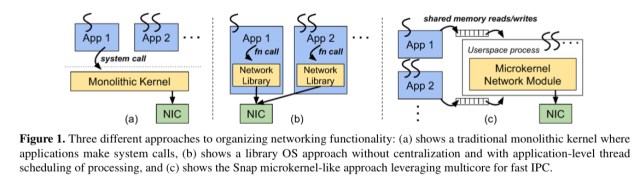
Adrian Colyer's astonishment is the charm here: Google didn't refactor TCP, it started a transport over from scratch. Old hands can read it as a good argument about where a network stack should live, and whether the kernel was ever the right address once you control both ends of the wire.

A write-up of the SOSP 2019 paper on Snap, a networking stack that had been running in production at Google for over three years. Its transport, Pony Express, handles reliability, congestion and flow control, and remote data access, all built for datacentre latency and CPU efficiency.
Read the rest of this story (The Morning Paper)

The Morning Paper on Serval, automated verifiers for systems code

Posted by Captain Queso on Tuesday November 3, 2026 @12:45PM in Systems Research and Kernel Development
from the proof-by-exhaustive-evaluation dept.

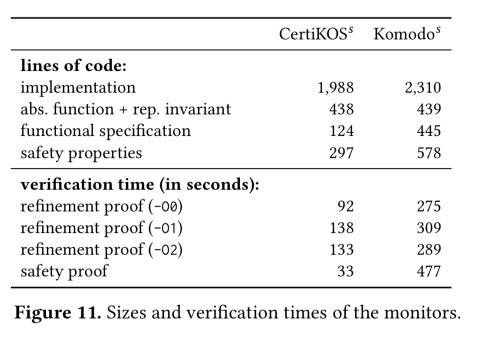
Formal verification usually costs more than the kernel it protects, so anything that gets push-button proofs out of a symbolic evaluator deserves a look. Worth noticing is the contrast Adrian Colyer draws with Google's ship-fast Snap work from the previous post: two ends of the same spectrum. Old post, still a good argument.

Adrian Colyer's write-up of the SOSP 2019 paper by Nelson and colleagues on Serval, a framework for building automated verifiers for systems software. He sets its case against the fast-iteration approach, and looks at how symbolic evaluation can be made to scale to real low-level code.
Read the rest of this story (The Morning Paper)
Monday, November 2, 2026

Murat and Aleksey read Cloudspecs, a decade of cloud hardware economics

Posted by Captain Queso on Monday November 2, 2026 @5:43PM in Systems Research and Kernel Development
from the ten-times-the-cores-twice-the-value dept.

A useful corrective to the assumption that the cloud gets cheaper by itself. Core counts went up tenfold while cost efficiency merely doubled, and that gap should reshape a few back-of-envelope capacity plans. Worth reading for where the paper says the gains really went.

Aleksey Charapko and Murat Demirbas discuss a CIDR paper tracing ten years of AWS instance capabilities through cost-efficiency. Outside Graviton, CPU cost efficiency improved about twofold against a tenfold rise in core counts. The authors also publish an interactive dataset of the numbers.
Read the rest of this story (Aleksey Charapko)

The Morning Paper on ARIES, the write-ahead logging classic

Posted by Captain Queso on Monday November 2, 2026 @12:41PM in Systems Research and Kernel Development
from the steal-no-force dept.

Everyone who has written a journalling filesystem has quietly reinvented a corner of this, usually with worse answers about partial rollbacks. Colyer's write-up from his series on techniques everyone should know is a good excuse to revisit a 1992 paper that still underlies how databases come back from a crash. Old is fine here; recovery has not gone out of fashion.

Adrian Colyer walks through Mohan and colleagues' 1992 paper on ARIES, the canonical steal, no-force recovery algorithm built on write-ahead logging. It was the fifth instalment in a seven-part series on foundational database techniques, drawn from the Redbook.
Read the rest of this story (The Morning Paper)