Archive: November 2026 (241 stories)
Sunday, November 8, 2026
from the arches-of-triumph dept.
Moab's red rock keeps giving, and this time the dig sits practically in the shadow of a national park famous for its stone, not its bones. Early word is cautious, with a lot of 'possible' in it, which is how real palaeontology sounds before the paper lands. Dinosaur news makes the cut on principle; this one earns it on scenery too.
Paleontologists working a bone site near Arches National Park in eastern Utah say some of the material may belong to a species not yet described. The remains are still being prepared and studied, so a name and a formal description will have to wait.
from the blowing-in-the-lyman-wind dept.

Webb keeps finding more bright galaxies in the first half-billion years than the models allow, and the fixes on offer range from boring to universe-breaking. This one is pleasingly mundane: the galaxies were always there, they just cleared their own fog. Notice how much of cosmology turns out to be housekeeping about dust.
Researchers propose that intense ultraviolet radiation from dense clusters of young stars pushed gas and dust out of early galaxies, letting more of their light escape. That would make galaxies from roughly 400 to 500 million years after the Big Bang look brighter, and more plentiful, than expected without breaking existing theory.
from the anthropogenic-space-weather dept.
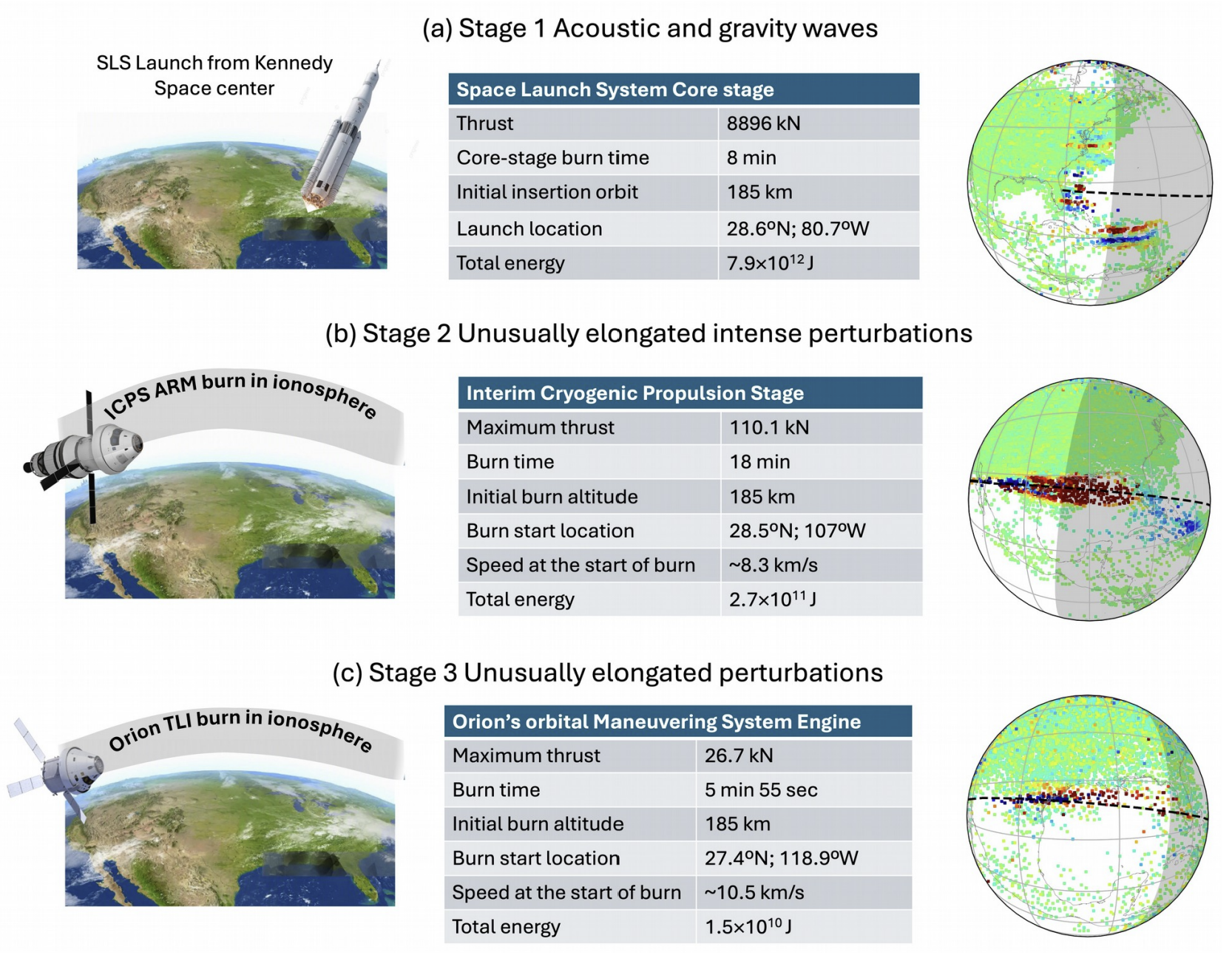
Everyone remembers the noise and the flame; fewer people think about the hole a heavy-lift rocket punches in the ionosphere on the way up. A new preprint maps the disturbance stage by stage, and the effect on satellite navigation signals is the part that makes engineers sit up. Space weather, it turns out, can be locally manufactured.
A preprint studying the Artemis II launch traces how each stage of the Space Launch System disturbed different layers of the atmosphere as it climbed. The ripples reached the ionosphere widely enough to measurably affect GPS signals, a reminder that big launches leave a footprint far above the pad.
from the shorebird-and-the-bike dept.
Plotting a shorebird's migration on a map is science; following it on a bicycle is something closer to devotion. An ecologist and an endurance athlete are trying to cover the bird's route over land, which tells you a lot about how absurdly far whimbrels fly. Worth it for the sheer scale of the trip.
University of Alberta ecologist Timm Döbert and his partner, athlete Leanna Carriere, set off by bike from Prudhoe Bay on Alaska's Arctic coast in August to follow the migration route of a whimbrel. The planned ride runs more than 18,000 miles, a measure of just how far these shorebirds travel.
from the alas-poor-chord-chart dept.
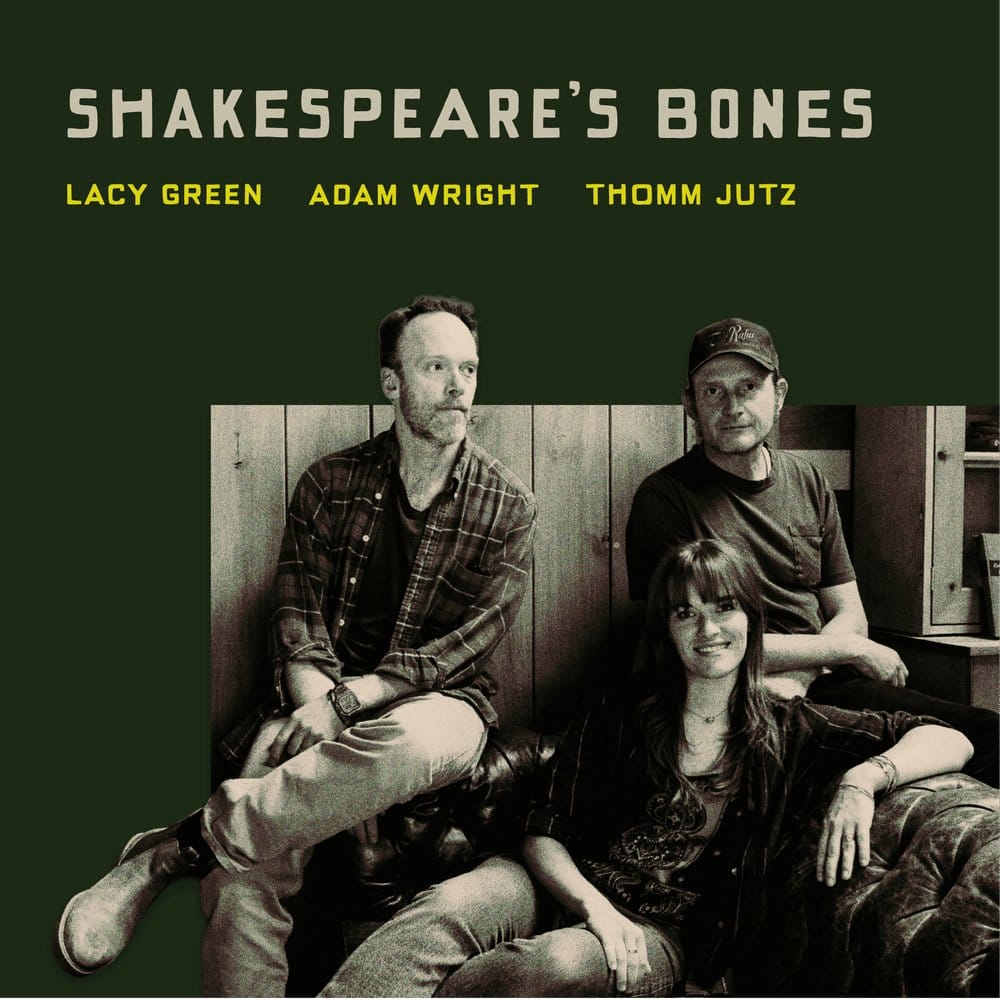
Thomm Jutz has been quietly turning out some of the best bluegrass-adjacent songwriting around, so a three-way record with Lacy Green and Adam Wright is worth an ear. The pitch is the old one, friends in a room with chord charts and no overthinking, and the review suggests it worked. Good craft talk for anyone who likes to watch songs get built.
No Depression reviews a collaborative album by songwriters Lacy Green, Thomm Jutz and Adam Wright, with some songs co-written with Dean Fields. The trio recorded twelve tracks over three loosely planned sessions, and the review credits the looseness and the friendship with the record's spark.
from the danger-will-robinson dept.
The Sidekick was a thin client before anyone called it that, and when its servers went dark it became a very nice paperweight. Someone dug the old SDK out of an archive and started poking at DangerOS, which is exactly the kind of pointless, delightful archaeology this category exists for. Mind the bits about the Java-based OS and what survives of it.
A hobbyist recounts reverse engineering the Danger Hiptop, sold as the T-Mobile Sidekick, two decades after it launched. With the backend that held everything long shut down, the work starts from a surviving SDK and device simulator and digs into how DangerOS ran and what can still be made to work.
from the version-seven-deadly-sins dept.
UUIDv7 solved index locality and promptly got blamed for everything else. Brooker sorts the fair complaints from the noise and sketches what a database actually wants from its keys, with the usual distributed-systems eye for correlated behaviour across regions. Short, opinionated, and the kind of thing you end up citing in a design review.
Marc Brooker looks at the criticisms of UUID version 7: it leaks server timestamps, carries less entropy than random IDs, and can create correlated hot spots across datacenters and regions. He separates the legitimate concerns from the rest and proposes adjustments that keep the benefits for database use.
from the painted-in-persian dept.

Skinner is one of the stranger figures of early British India, a soldier of mixed parentage who raised his own cavalry and commissioned books like this one. The pages are in the Company painting style, that hybrid of Mughal and European habits, and the detail in the dress and trades is the real draw. Linger on the pictures.
The Public Domain Review presents illustrations from a Persian manuscript compiled for James Skinner in 1825, describing the customs and occupations of communities across northern India. The paintings, made in the Company style, form a vivid if period-bound record of how the colonial era catalogued the people it ruled.
from the just-one-more-square dept.
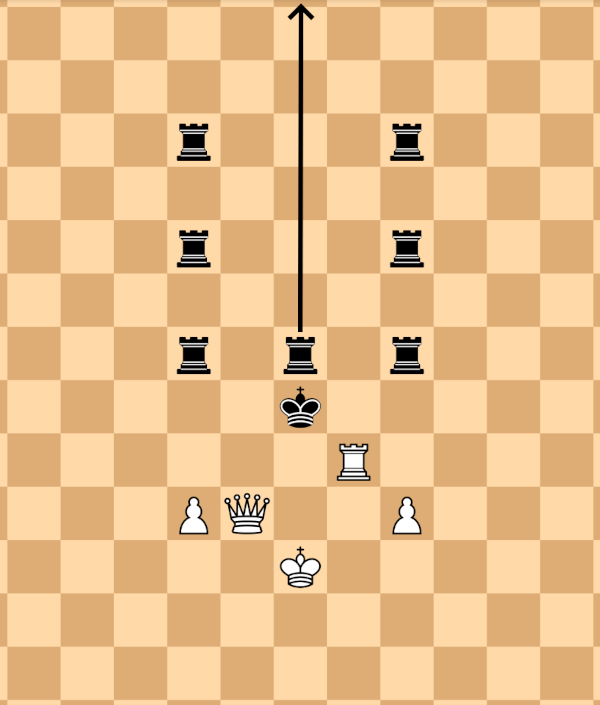
Take away the edges of the board and chess starts producing positions that feel like Zeno's paradoxes in a cardigan. Here Black escapes mate by flinging a rook arbitrarily far away, and is doomed anyway by a patient chase that never quite ends. A lovely little puzzle about what 'eventually' means.
Futility Closet presents a position on an unbounded chessboard in which Black avoids immediate mate by sending a rook any finite distance north. White can then drive the king endlessly up the board after it, raising the odd question of whether a game that never concludes counts as a forced loss.
from the cold-war-on-ice dept.

Andy Weir's novel has a gloriously unhinged plan to deal with a dimming sun by blowing up a continent, and fans noticed it missing from the film. Drew Goddard explains what was cut and why it still bugs him, which is a nice window into how hard-SF ideas survive, or don't, the trip to the screen. Spoiler-light if you've read the book.
Screenwriter Drew Goddard says one of his biggest regrets about the Project Hail Mary adaptation is leaving out the book's plan to nuke Antarctica. Reactor covers what the scene was and why it ended up on the cutting-room floor.
from the it's-not-ketchup dept.
Every few years someone claims soft tissue in a dinosaur bone and the field braces for the argument. This time the selling point is chemical confirmation rather than a suggestive smear under the microscope, which is the bit worth reading closely. If it holds up, the clock on how long biomolecules can last just got a lot longer.
Researchers report chemically verified remnants of blood preserved inside dinosaur bones roughly 115 million years old. The find pushes back estimates of how long such molecules can survive, and could open a window on dinosaur physiology and inform how we look for traces of life beyond Earth.
from the more-in-the-neighbourhood dept.
Rubin has barely cleared its throat and it is already turning up things the galaxy's census missed. Two new satellites from a sliver of preliminary sky coverage is a strong hint of what the full survey will do to the missing-satellites problem. Notice the dust-hidden star cluster: not every discovery is about being faint, some are just about being behind something.
Early data from the Vera C. Rubin Observatory, covering only about seven percent of the sky, has revealed two previously unknown companions of our galaxy: a very faint dwarf galaxy some 355,000 light-years away and a star cluster obscured by dust. Astronomers expect hundreds more such satellites to turn up as the survey continues.
from the return-to-sender dept.
Mars has been mailing us samples for free for billions of years; we just have to find them in the sand. This one is old enough to remember the planet's crust forming, which makes it more useful than its plain looks suggest. A tidy little Kottke pointer to a story that sample-return planners will be quietly jealous of.
Kottke points to new research on a Martian meteorite recovered in Mali a few years ago. The rock turns out to be more than 4.1 billion years old, and its blend of igneous minerals records clues to how the early Martian crust took shape.
from the microcontroller-with-ambitions dept.

The line between a microcontroller and a real SoC just got blurrier: the ESP32-S31 is RISC-V with a proper MMU, so this is the real kernel rather than the no-MMU compromise. Nobody is going to compile a browser on it, but a cheap Wi-Fi board running a 6.x port is exactly the kind of toy that ends up in a hundred weekend projects. Watch for the Espressif repo to grow a community.
Hackaday notes that Espressif's dual-core RISC-V ESP32-S31, with Wi-Fi 6 and a memory management unit, can boot a full Linux kernel. An official repository and a 6.x kernel port exist, and development boards are already cheap enough to tinker with, though performance will be modest.
from the tuple-up-and-wait dept.
Gelernter's Linda is the fourth concurrency model everyone forgets, sitting quietly beside shared memory, message passing and RPC. Adrian Colyer's write-up, from Peter Alvaro's desert-island list, is a good reminder that decoupling in time as well as space was a fully formed idea in the eighties. Read it and count how many modern queueing systems are reinventing it.
An archive post from The Morning Paper walks through David Gelernter's paper on generative communication, the idea behind Linda. Processes coordinate by dropping tuples into and pulling them out of a shared tuple space, so communicating parties need not exist at the same time or know about each other; the post explains why that model was argued to be simpler and more expressive.
from the stone-faced dept.
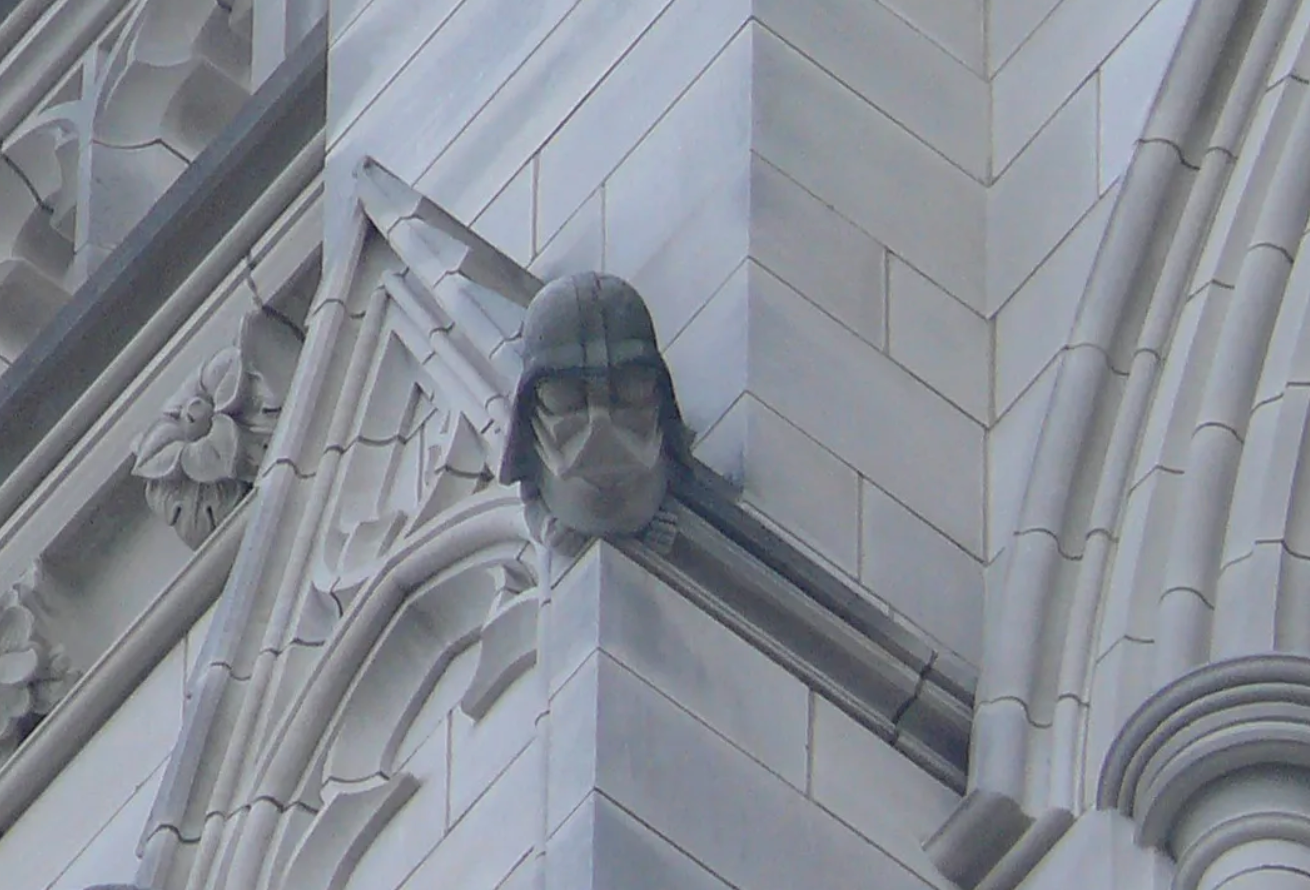
Gargoyles are the original user-generated content: a stonemason with a sense of humour and a long time to sit on a scaffold. Atlas Obscura rounds up the ones that break the mould, which makes for a handy itinerary of buildings to stare upward at. Look for the ones that are clearly portraits of someone the carver did not like.
Atlas Obscura gathers eight unusual gargoyles and grotesques from buildings around the world, the ones that stray furthest from the standard scowling beast. Each entry is a real spot you could visit and crane your neck at.
from the bluegrass-is-greener dept.
A good week to catch up: the IBMA awards just handed out their hardware, and Folk Alley's show threads Billy Strings and Sierra Hull together with Solas and a live session on air. It is the kind of playlist that drifts from Kentucky to Kerry without anyone noticing the border. Jake Blount's new material alone is worth the hour.
This week's Folk Alley radio show features recent IBMA Bluegrass Music Award winners such as Billy Strings, Sierra Hull and East Nash Grass, a birthday nod to Joni Mitchell, Irish music from Solas, new songs from Liv Greene and Jake Blount, and an on-air Irish session.
from the late-entry-to-the-census dept.

In a species this rare, every calf gets counted by name, so one that slipped through the winter surveys entirely is genuinely good news. The detective work is the fun part: matching photos against the catalogue the New England Aquarium keeps on every known animal. A small, cheering correction to the numbers.
Researchers photographed an unidentified North Atlantic right whale calf near Anticosti Island in Quebec in September. Scientists at the New England Aquarium in Boston concluded it was born months earlier and missed by winter surveys, bringing the latest calving season's count to 24.
from the king-of-the-bricks dept.

A fan submission that cleared the Ideas vote in 2024 has grown into a 5,363-piece kaiju, which says something about how much the designers enjoyed themselves. The interesting bit is how far the official model departs from the original fan build. Keep your minifig city well back from the display shelf.
The Brothers Brick reports on 21375 Godzilla, the next LEGO Ideas set, based on a fan design by Matthew Esposito. The model runs to more than 5,000 pieces, comes out at the end of November, and is noticeably larger than the original submission.
from the tyrant-lizard-registry dept.
Alberta has been handing palaeontologists tyrannosaurs for over a century, and apparently the province still has a few in the drawer. Each new branch on this family tree tightens the story of how the big northern tyrants split and spread, so it's worth noticing where this one sits relative to its famous cousins. The CTV headline writer clearly had fun, too.
Palaeontologists have described a new species of tyrannosaur from fossils found in Alberta. CTV News reports on the find and what sets the animal apart from the tyrannosaurs already known from the province's rich Late Cretaceous beds.
from the after-the-red-giant-party dept.
Most previews of the Sun's retirement stop at the white dwarf; this one shows the furniture left over afterwards. Two rings of debris with a clean gap between them suggest something sizeable is still orbiting and sweeping the lane, which is the kind of detail that makes a dead system feel oddly lived in.
Astronomers have found a double ring of planetary wreckage around a white dwarf, split by a gap that may be kept open by a surviving body as big as Pluto or the Moon. The two rings differ in chemistry, hinting they are the remains of two separate destroyed worlds, and a glimpse of what our own Solar System may look like long after the Sun dies.
from the who-goes-there dept.
Australia's largest owl, roosting in the middle of a city botanic garden, is the sort of thing that rearranges a birder's sense of what an urban patch can hold. This is an archive piece from 10,000 Birds, so no breaking news, just the quiet pleasure of a long-awaited lifer refound after years. Raptor fans, note the prey it tends to carry around at its roost.
A 10,000 Birds writer recalls going looking for a Powerful Owl in Sydney's Royal Botanic Gardens, years after last seeing the species while living in Victoria. Republished from 2018 as part of the site's archive series, it is a short field story about Australia's biggest owl living in plain sight in a city park.
from the five-guys-one-mandolin-one-ocean dept.
Punch Brothers have been on the road all autumn, and this time the stop is Carnegie Hall, the venue where a string band stops being a novelty and starts being chamber music. The review frames the night as a journey to an invented place, which fits a band that has spent the year playing its new all-instrumental record. Worth a read to see how the set was built.
NYS Music reviews Punch Brothers' recent show at Carnegie Hall, describing the evening as an imagined voyage through the band's music. It is a concert write-up from the quintet's current tour.
from the there-is-no-spoon dept.
Every kernel hacker knows the old line: there is no such thing as a container, just namespaces and cgroups in a trench coat. This LWN piece looks at the long-running push to give the kernel a first-class notion of a container, an idea that has stalled more than once over who gets to define one. Read it for the arguments about identity and nesting rather than the patch details.
LWN examines a proposal to make containers a recognized object inside the Linux kernel, rather than a user-space convention assembled from namespaces and control groups. The article covers why some subsystems want a stable container identity and why the idea has met resistance before.
from the Q-lifts-the-shroud dept.
A small commit, very much in the OpenBSD house style: instead of a sprawling security dashboard, one new key in top that shows which processes have pledged, unveiled or chrooted themselves. The nice part is that it makes privilege-awareness visible at a glance, so unhardened daemons stand out on a running system. Tiny change, satisfying idea.
OpenBSD's top(1) gains a new Q flag and key that swaps the time column for a privilege column, showing pledge promises and state letters for chroot and unveil use. The aim is to spot quickly which programs restrict themselves and which do not.
from the feline-groovy dept.

Apparently 1918 had a brief boom in cat-themed music, which is the sort of fact the Public Domain Review exists to rescue. This 1919 piece arrived at the tail of the craze, and the accompanying picture of a cat organ is a reminder that people have been putting cats and music together in questionable ways for centuries.
The Public Domain Review presents the 1919 piece of sheet music "A Cat-astrophe", a late entry in an odd wave of cat-themed popular songs from 1918. The collection page sets it in that short-lived fashion.
from the udderly-routine-patrol dept.
After a week of heavy news, here is the South Shore at its most restful: a police warning about cows. Universal Hub's headline earns its pun, and the story is exactly as small and pleasant as it sounds.
Police in Marshfield, on Massachusetts' South Shore, warned residents and drivers to steer clear of a couple of cows that had got loose and were wandering the area. Universal Hub passes on the advisory.
from the neon-underglow-in-a-tab dept.
A port born from two brothers wanting to race each other again twenty years on, which is about the best reason to do something this ambitious. The game's own code was recompiled for the browser, with online races, widescreen and wheel support thrown in, and the author keeps it free with no paid perks. Hacker News filler, but the good kind.
A fan project recompiles the original PC version of Need for Speed Underground 2 to run in Chrome and Firefox, with free roam, online races with friends and support for controllers, wheels and touch. The author started it so he could play with his brother again and kept going.
from the cats-hold-the-keys dept.

Judith Tarr's SFF Bestiary column picks the animal sidekicks of fantasy, and this time it is the cat in Tanya Huff's 1990s Keeper series. A cozy urban fantasy set in Kingston, Ontario, written just before mobile phones took over, is a pleasant period piece in its own right. Good pick for anyone who likes Pratchett-adjacent cats with opinions.
In Reactor's SFF Bestiary series, Judith Tarr reads Tanya Huff's Summon the Keeper, the first of the Keeper novels, and looks at the tuxedo cat who is essential to the heroine's work. She enjoys the book's very Canadian setting and its late-1990s feel.
Saturday, November 7, 2026
from the five-a-day dept.
Most dinosaur diets get sorted into meat or leaves, so a beaked little theropod built for mashing fruit is a genuinely new line on the menu. The nickname does a lot of work here, but the jaw is the real story: if the reading holds, this is the first good case for a dinosaur frugivore. Worth noticing how much of palaeo-diet science comes down to the hinge of a jaw.
Palaeontologists have described a new species of small, beaked theropod from the Hell Creek rocks of the latest Cretaceous, roughly 66 million years old. Its jaw anatomy looks suited to crushing soft fruit, which would make it the first dinosaur known to have specialised in eating it.
from the some-assembly-required dept.
Hayabusa2 keeps paying out. Finding the full set of nucleobases in material that never touched Earth's biosphere takes the usual contamination objection off the table, which is what made the meteorite results arguable. None of this is life, of course; it's the parts bin, and the parts bin was apparently standard issue in the early Solar System.
Researchers analysing pristine grains returned from asteroid Ryugu have detected all five nucleobases used in DNA and RNA. The result adds to evidence from meteorites and other asteroid samples that these building blocks were widespread when the Solar System was young.
from the tidal-heating-pad dept.
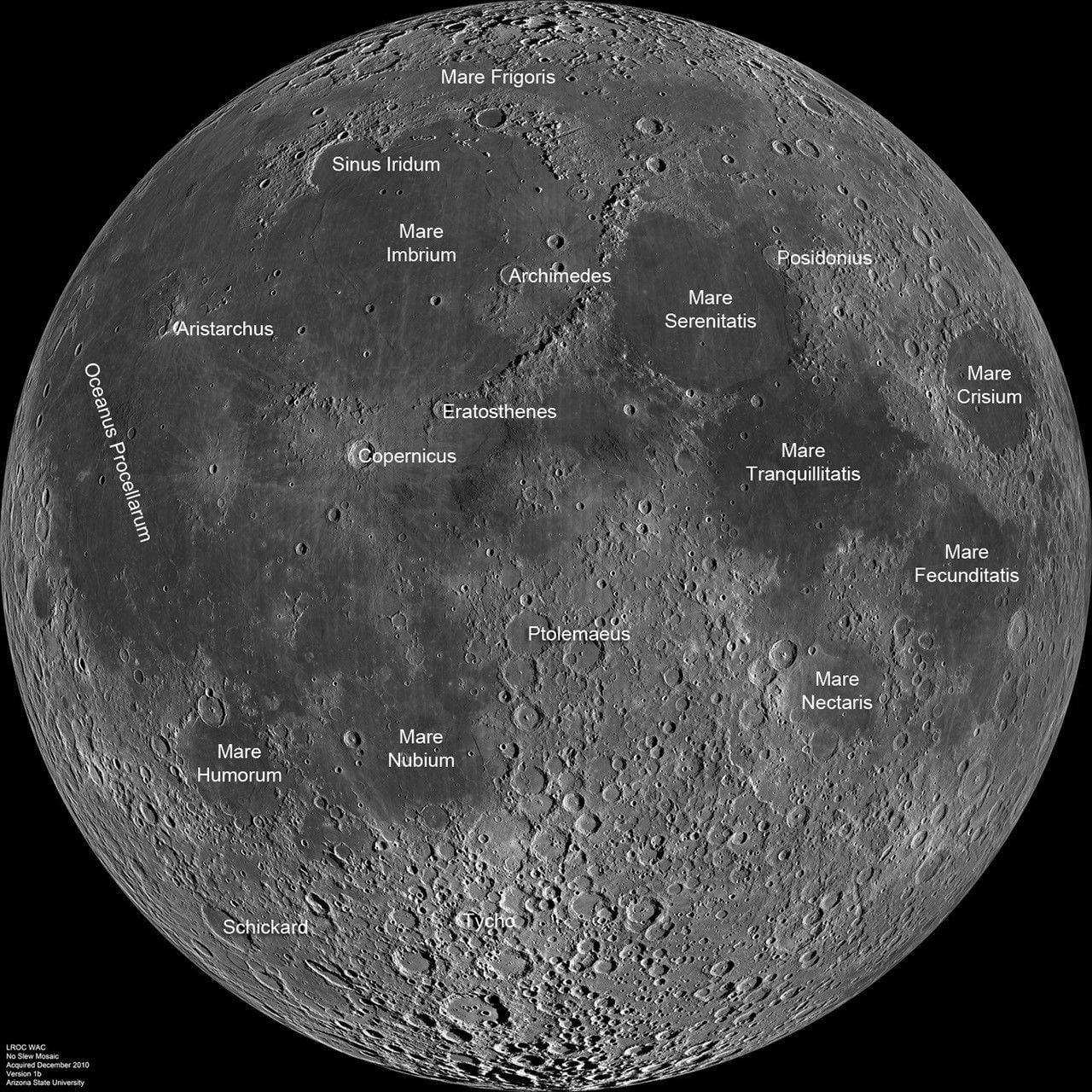
Chang'e-5 brought back volcanic rock only about two billion years old, which is awkward for a Moon that should have gone cold long before. The proposed answer is that Earth itself did the stirring, flexing the Moon with gravity and keeping its interior warm. A pleasing case of a sample-return mission handing theorists a homework problem.
Lunar samples from China's Chang'e-5 mission include volcanic material far younger than a small, fast-cooling Moon ought to produce. A new paper argues that tidal forces from Earth, much closer back then, could have heated the lunar interior enough to keep volcanism alive for billions of years.
from the grave-matters dept.
The caracara is the falcon that forgot to act like one: long legs, a garish face, happy to stroll about on the ground looking for carrion. Audubon Florida's piece uses sightings in an old cemetery to make a quiet case that heritage green space doubles as habitat. Cemeteries are underrated birding spots, as any solo birder who has worked one at dawn will tell you.
Audubon Florida reports crested caracaras using the grounds of the historic Woodlawn Cemetery. The piece argues that protecting old green spaces like this one also protects perches and open foraging ground for owls, hawks and caracaras.
from the out-of-the-vault dept.
The headline grabber in No Depression's weekly roots-news column is a fresh batch of older material from Welch and Rawlings, whose archival digging has been one of the nicer slow projects in Americana. The roundup also comes with a Bandcamp Friday nudge, for anyone who likes their money to reach the musicians. Pour a coffee and work down the list.
No Depression's Bonus Tracks column rounds up the week in roots music, led by previously unreleased older songs from Gillian Welch and David Rawlings. It also announces the magazine's year-end fundraiser and points readers to Bandcamp Friday picks.
from the ninety-ninth-percentile dept.
Dean and Barroso's paper is the reason everyone now says p99 in meetings, and Colyer's write-up is a tidy refresher on why. The fan-out arithmetic is the bit that still lands: one slow server in a hundred barely matters until every request touches a hundred servers. Hedged and tied requests are worth rereading next to whatever retry policy your own services have grown.
Adrian Colyer summarises Google's paper on tail-tolerance, the idea of building a predictably fast service out of components that are sometimes slow. It walks through why high-percentile latency dominates at large fan-out and the techniques the authors used to tame it, such as hedged requests.
from the read-the-fine-kernel dept.
Every e-reader is a little Linux box with a locked door, and this project takes the door off its hinges. A jailbroken Paperwhite 3 gets an Alpine userspace, games, a browser, an arXiv client and even a tiny local language model that types out its thoughts at a stately pace. Very much the old spirit: old hardware, cheap on the second-hand market, and nothing leaving the device.
A hobbyist distro gives the seventh-generation Kindle Paperwhite an Alpine Linux userspace on top of Amazon's old kernel, with a custom front end and a bundle of apps. It needs a jailbreak but can be reverted to stock.
from the bigger-in-california dept.

Before Photoshop there was the darkroom and a pair of scissors, and the boosters of early-1900s California used both with abandon. These exaggeration postcards show peaches the size of wagons and onions that need a crew to haul, all sold with a straight face. A cheerful little archive of the real-estate pitch as folk art.
The Public Domain Review gathers early twentieth-century exaggeration postcards that showed California fruit and vegetables at absurd, photo-montaged sizes. They were sold as souvenirs and doubled as advertising for the state's agricultural bounty.
from the rolling-stone dept.
A snake with no limbs that nonetheless does cartwheels, at four times its slithering speed, is the sort of fact that justifies a whole afternoon of reading. The underlying paper in Current Biology looks at how it keeps its head steady while the rest of it tumbles. Predators, one imagines, are mostly too confused to follow.
Futility Closet notes new research on the dwarf reed snake, which flees predators by flipping into a continuous rolling cartwheel. Researchers measured the movement and found it far faster than the snake's normal crawl, with the head held surprisingly stable.
from the frank-r-paul-would-approve dept.
Steve Davidson spent years reviving Amazing Stories, the magazine where Gernsback first gave the genre its name, and this remembrance comes from the artist who ran the Frank R. Paul website. It's a fan's story of a phone call out of the blue and the project that followed. A gentle reminder of how much of science fiction's history is kept alive by enthusiasts doing it for love.
Artist Frank Wu writes about his friendship and work with the late Steve Davidson, publisher of the revived Amazing Stories. He recalls how their collaboration began through his site devoted to the pulp illustrator Frank R. Paul.
from the nine-miles-of-bad-road dept.
Yes, the Jorgensen date turned up here yesterday as a calendar listing; this is the Connecticut press giving the visit a proper write-up, and favourite-band coverage gets in on its own ticket. The headline promises a scenic route, which for a band currently touring without lyrics feels apt. Tonight's the night, for anyone within driving distance of Storrs.
The CT Examiner previews Punch Brothers' stop at UConn's Jorgensen Center, the Connecticut leg of their current tour. The piece frames the band's journey to the campus show as a roundabout one.
from the fashionably-late-launch dept.
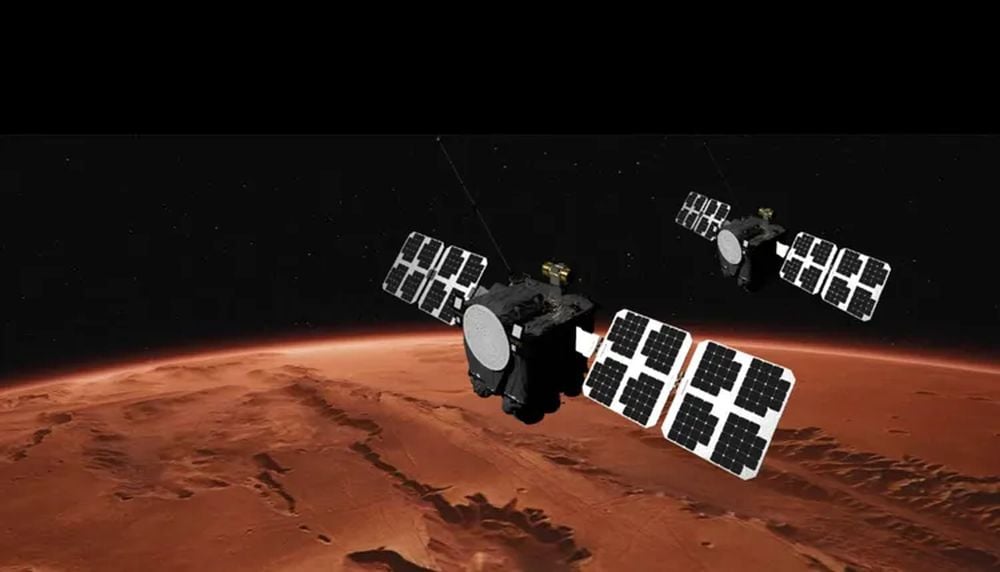
Missing your launch window used to mean waiting two years; ESCAPADE's answer is to fire the engines mid-flyby and make up the difference. Worth noticing how much a small, cheap mission can get out of orbital mechanics when it's willing to be clever. The science payoff is two spacecraft flying in formation around Mars, which is a lot more useful than one.
NASA's ESCAPADE mission sent two identical small spacecraft toward Mars outside the usual launch window, so they will burn their engines during gravity-assist passes to gain extra speed. Once at Mars they will fly in formation to study how the solar wind strips at the remains of the planet's old magnetic field.
from the please-allow-24-hours-for-delivery-to-your-command dept.
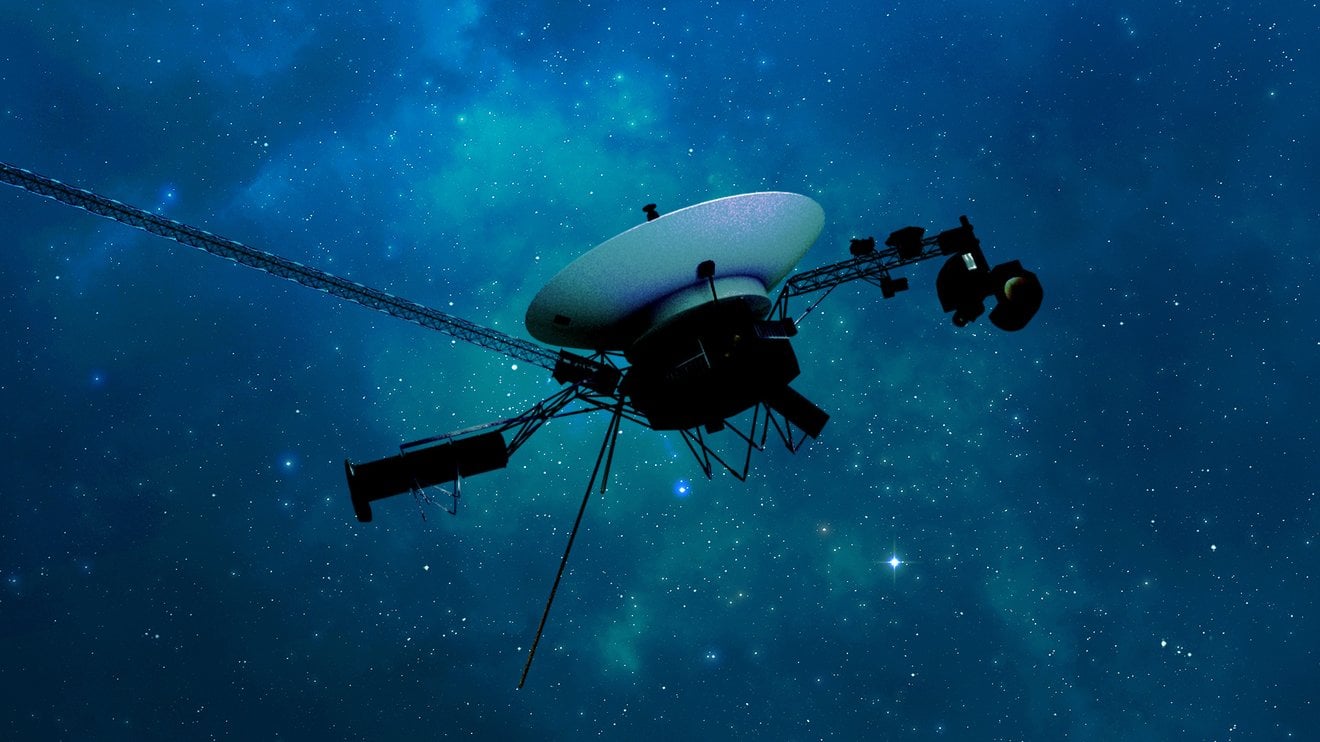
A 1977 spacecraft that still accepts patches is reason enough to read, and this one comes with a milestone attached: a round trip for a single command is now two full days. The JPL team keeps finding new ways to coax the old hardware along. Flight software people will appreciate what it takes to debug anything at that latency.
Universe Today reports on a recent repair the Voyager team pulled off to keep the mission running, around the time the spacecraft passed the point where its signals take a full day to reach Earth. The article recaps the mission's long trip since 1977 and the ongoing work to keep it alive in interstellar space.
from the one-species-or-two dept.

Every birder's life list is quietly at the mercy of the taxonomists, and this is a calm tour of why. The new unified checklist puts the world total comfortably past the round number the blog was named after. Carrion and Hooded Crows make an appearance, as they always do in these arguments.
10,000 Birds looks at how the global species count has grown to more than 11,000 under the new AviList checklist, and why deciding what counts as a species is so tricky. It walks through recent splits and lumps and what they mean for anyone keeping a list.
from the there-is-no-port dept.

Late-90s energy in pure form: someone put an IRC network on a port every tool refuses to touch, then scanned the whole IPv4 space to see who else was squatting there. The gap between what the socket API allows and what the wire allows is the whole joke, and the trick. The scan turns up a few residents who probably ought to be somewhere else.
Port 0 is normally just a request for the kernel to pick any free port, but nothing in the TCP header stops a packet addressed to it. The author ran an IRC network there, then surveyed the internet's port 0 and found other services hiding in the same blind spot.
from the strike-anywhere dept.
Matchbooks were the business card, billboard and souvenir of half the twentieth century, and almost nobody kept them on purpose. A group now wants to treat them as primary sources, with research-grade cataloguing. The website isn't up yet, so file this as one to watch.
A new project called the Match Archive is building a digital catalogue of American matchbooks as records of graphic design, advertising and social history. Its site is still in the works, with samples of the collection being shared online in the meantime.
from the git-blame-your-database dept.
This morning brought the MirageOS unikernel paper; here is its storage sidekick. Treating application state as a Git repository, with branches, merges and history, is the sort of idea that sounds like a hack until you notice how much distributed-systems pain it absorbs. The two-way mapping to real Git repositories means your usual tools still work on the data.
Adrian Colyer's archive write-up covers Irmin, an OCaml library from the MirageOS project that gives persistent data structures Git-style versioning: clone, branch, merge and revert. Changes made by the application show up in an ordinary Git repository and vice versa.
from the bigger-on-the-inside dept.
From the street it is a row of ordinary D.C. houses; inside it is a warren of galleries and courtyards packed with art and odd objects. The collection leans toward self-taught artists, many with New Orleans roots. Exactly the kind of place that rewards wandering without a plan.
Gallery O on H is a set of connected buildings on H Street in Washington, D.C., turned into galleries, courtyards and nooks filled with art and curiosities. Running for more than fifteen years, it favours self-taught artists over a conventional commercial gallery model.
from the third-rail-of-nostalgia dept.

Not a MOC, but the infrastructure under a thousand of them: the metal-railed 9V track that powered LEGO trains for years and now tarnishes in attic bins. A deep dive in the restoration spirit, which is to say cleaning, testing and coaxing current back through old rails. Anyone with a box of grey track knows why this matters.
BrickNerd runs a deep dive on caring for LEGO's discontinued metal 9V train track, covering how to maintain and restore it so it carries power to the trains again.
from the trisector's-revenge dept.
A tiny numerical curiosity that ties the permutations of 1, 2 and 3 to the first digits of pi with the same total, and it is entirely a coincidence. Dudley collected these to show how easily patterns appear when you go looking. A pleasant thing to check on the back of an envelope.
Futility Closet passes along a number puzzle from mathematician Underwood Dudley in which sums built from the orderings of 1, 2 and 3 and from the opening digits of pi both come to 1,332. It comes via Martin Gardner and Dudley's essay on cranks who claim to trisect the angle.
from the fiddle-while-you-wait dept.
Straight from the editor-in-chief's own tip line, and the news is the best kind: a new solo record from one of the finest fiddlers working, with a pre-save button and absolutely nothing else to go on. Coming only months after North Node, her duo outing with sister Natalie, it suggests the Haas household is in a productive season. No title, no date, just a promise; tour dates meanwhile live with Hawktail.
Brittany Haas's own website announces that a new solo album is coming soon and offers a pre-save link, though no title or release date has been given yet. It follows North Node, her duo record with cellist Natalie Haas, released in June.
from the three-part-harmony-headline dept.
Any week that I'm With Her tops a roundup is a good week, and here they get first billing ahead of Jack Blocker and the rest of the pack. The feed only carries the headline, so the details are behind the click, but the trio of Aoife O'Donovan, Sara Watkins and Sarah Jarosz rarely shows up anywhere without something worth hearing.
The Bluegrass Situation's latest You Gotta Hear This column, its regular pick of new roots releases, features I'm With Her at the top, alongside Jack Blocker and several other artists.
from the high-lonesome-homecoming dept.
Eighty years after Carter and Ralph worked out what bluegrass harmony could sound like, and weeks after their Country Music Hall of Fame induction, the tribute album arrives on cue. Alison Brown and Garry West at the controls is a good sign that this will be a players' record rather than a souvenir. Listen for how differently the guests handle Rank Strangers.
Folk Alley reviews Where The Soul Never Dies, a multi-artist tribute marking 80 years of the Stanley Brothers, the Virginia duo whose gospel arrangements and originals became bluegrass standards. The album, produced by Alison Brown and Garry West, follows the brothers' induction into the Country Music Hall of Fame in October.
from the burst-and-done dept.
Built for a two-year mission, Swift spent nearly twenty-two catching gamma-ray bursts in the act and swinging round to look before the afterglow faded. It finally came down over Indonesia, which by Penang standards is practically next door. A fine example of hardware outliving its spec sheet by a factor of eleven.
NASA's Swift Observatory, launched to study gamma-ray bursts and other violent cosmic events, has re-entered Earth's atmosphere over Indonesia after almost 22 years in orbit. Designed for a two-year mission, it reshaped what astronomers know about black holes, exploding stars and transient outbursts.
from the open-access-economy dept.
Timothy Taylor has edited every issue of this journal since 1987, and his announcement doubles as a tasting menu: titles, abstracts, and a promise to blog about a few papers soon. The opener, on how US colleges sort students by test scores and spend accordingly, is exactly the calm, data-first kind of economics this feed likes. Everything back to issue one is free to read.
Timothy Taylor announces the Fall 2026 issue of the Journal of Economic Perspectives, which the American Economic Association has made freely available along with its full archive. His post lists each paper with its abstract, starting with a study of stratification and spending in American higher education.
from the you-only-link-once dept.
A 2015 Morning Paper on the Mirage paper, back when unikernels were the next big thing and the hypervisor was cast as the only kernel you'd ever need. Adrian Colyer frames it against OSv, which makes a good compare-and-contrast of two answers to the same mismatch between general-purpose kernels and single-purpose cloud guests. Read it now knowing how the decade actually went.
Adrian Colyer summarises the 2013 Mirage paper by Madhavapeddy and colleagues, which proposed compiling an application and only the operating-system pieces it needs into a single sealed image running directly on a hypervisor. He sets it beside OSv as a different response to the same problem of running server software in virtual machines.
from the nanny-nanny-nop dept.
Someone noticed that the UTF-8 bytes for a goat decode on an 8088 into a locked flag load followed by two NOPs, which is to say they run and do nothing, harmlessly. From there it is a short, deranged hop to whole programs spelled in emoji. The proper old-school spirit: no point to it at all, beyond the joy of finding out.
Hackaday covers a discovery by GloriousCow that the byte sequence for the goat emoji forms harmless instructions on the original 8086 and 8088 processors. The trick extends to other emoji, making it possible to build executable programs written entirely in them.
from the shake-a-tail-feather-at-dawn dept.
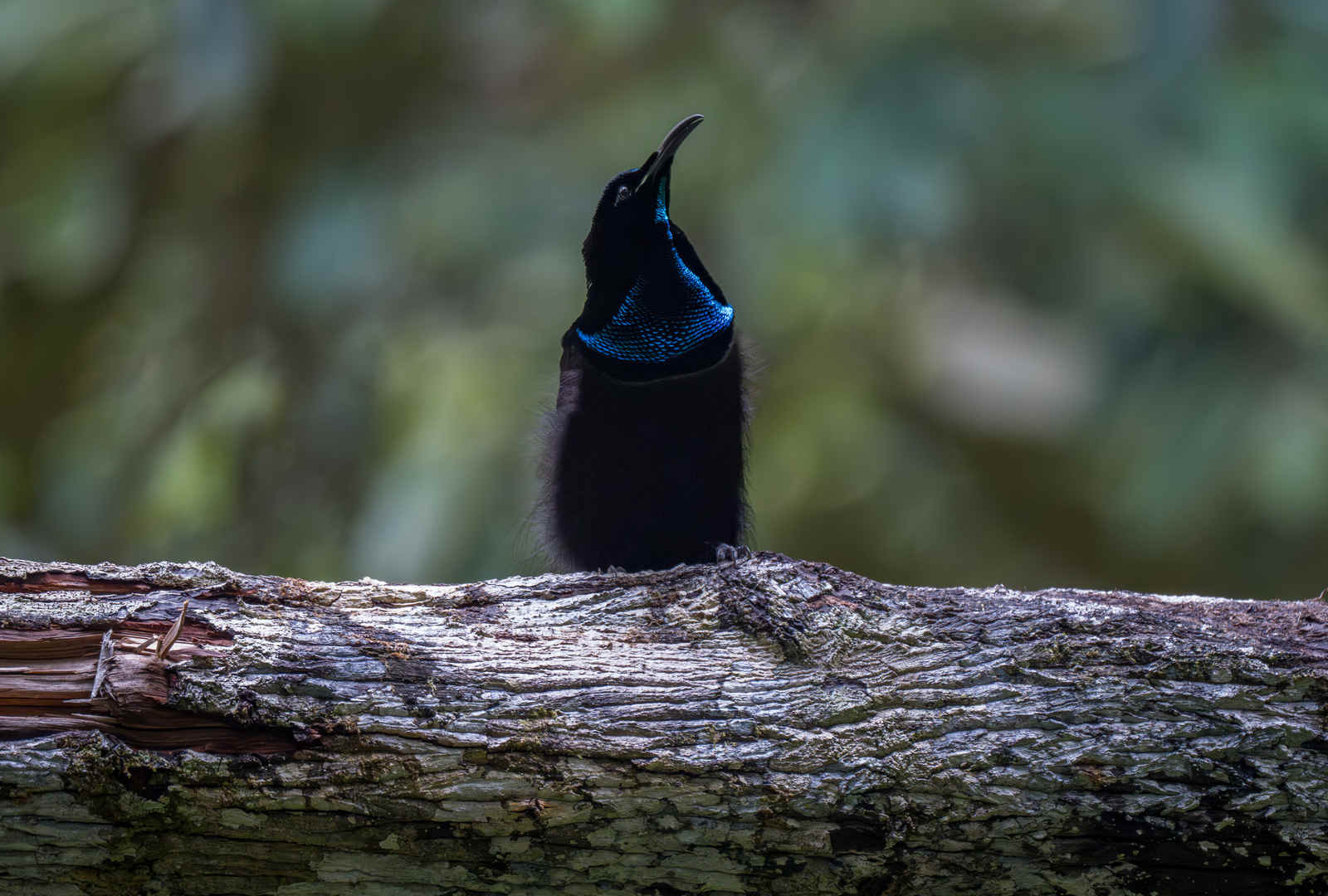
10,000 Birds hands the column over to the bird itself, a male riflebird rehearsing his display on a favourite branch at first light. It's a fun conceit for a species whose courtship is half ballet, half cape-flapping, and the accompanying photo from Nimbokrang shows why the dawn alarm is worth it. Birds-of-paradise are a short hop east of home, and one day the trip will happen.
A species profile of the magnificent riflebird, a bird-of-paradise from New Guinea, written in the voice of a displaying male preparing for his sunrise courtship routine. The photographs were taken at Nimbokrang in Indonesian Papua in October.
from the outsider-in dept.
Not a gallery so much as a workplace that happens to be hung floor to ceiling with art. Since 1983, patients at Creedmoor have had studios of their own here, and there is even a recording studio whose albums you can buy in the shop. An unlikely, humane place, and the opposite of a white-cube museum.
Atlas Obscura profiles the Living Museum on the grounds of Creedmoor Psychiatric Center in Queens, New York, a creative space founded in 1983 by Janos Marton and Bolek Greczynski where patients make and show paintings, sculpture, installations and music.
from the a-long-time-ago-in-a-budget-far-away dept.
After 1977 every producer with a smoke machine wanted a space opera, which gave the world Starcrash, Message From Space and the gloriously named The Beast in Space. Evan Puschak uses the knockoffs to work out what Star Wars itself got right, mixing 2001-grade realism with Saturday-serial adventure. Lightsabers sometimes included, at no extra charge.
Kottke points to a video essay by Evan Puschak on the wave of low-budget imitations released after Star Wars, from Italy, Japan and elsewhere. He uses them to examine what made the original distinctive, drawing on Julie Turnock's writing about its effects.
from the cap-in-hand dept.
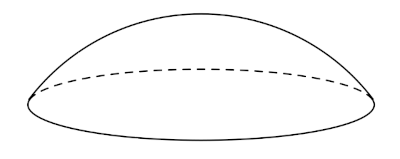
Set a pair of compasses, draw on a sheet of paper, then draw on a ball without touching the setting: the flat disk and the curved cap come out exactly equal in area. It sounds like it shouldn't work, which is the whole fun. Archimedes would nod; the rest of us reach for a pencil.
Futility Closet presents a small geometric surprise: a circle drawn with fixed compasses on a plane and one drawn with the same setting on a sphere enclose the same area, because the chord length sets both.
Friday, November 6, 2026
from the rock-of-ages dept.
Dinosaur news gets a free pass here, and this one comes with scenery. Nothing beats a dig where the commute runs past Arches, and the Moab country has a long habit of giving up new animals. The word to hold on to is possible: naming a species is a slow argument, so treat this as the opening statement.
SFGATE reports on a dig near Arches National Park in Utah where palaeontologists are uncovering what may be a new dinosaur species. Coverage elsewhere points to the fossil site near Moab as a bonebed still being worked.
from the some-assembly-required-in-lunar-orbit dept.
Worth reading as an engineering plan rather than a flag-planting. The notable choice is two launches and a rendezvous around the Moon, because no single rocket has to carry the whole stack. Apollo veterans will recognise the shape of it, with the docking moved a long way from home.
The chief designer of China's lunar exploration programme has set out an official plan for the country's first crewed landing. The crew and lander fly separately and meet in lunar orbit, with three astronauts on the mission, two going down to the surface, and a target of before 2030.
from the blow-on-the-contacts dept.

Someone shipped a physical N64 game in 2026, and the cheat underneath is the best part. The engine only understands 2D, so the levels simply have no elevation and it never learns about the third dimension. That is the sort of lie the old console programmers would have respected. Sixty frames a second on hardware with 4 kB of texture memory is no small thing either.
Dominic Szablewski has written up the making of Xibalba 64, a first-person shooter sold on a real cartridge. It grew out of a demo for his MIT-licensed engine, high_impact, and supports co-op for two and deathmatch for four.
from the turtles-all-the-way-down dept.
Mes exists for one of the most stubbornly idealistic goals in free software: building the whole toolchain up from something small enough to audit. What makes this post good is the confession, not the changelog. A researcher admits that proving an idea can work comes easily, and handing people a finished release does not.
Ekaitz Zarraga writes about GNU Mes 0.28, the first release he has made as a co-maintainer, in his long-running series on speeding Mes up. He reflects on his habit of moving on after the research part, with the RISC-V bootstrap on Guix as his example.
from the no-new-privs-for-you dept.
The mechanism is pleasingly blunt: set no_new_privs at PID 1 and let inheritance do the rest. Notice the limits, since the flag only bites at execve(), and a task already holding privileges can still change its IDs. The interesting part is the long tail of hurdles once you ask what breaks when su-style binaries stop working.
LWN covers Thorsten Kukuk's All Systems Go talk on running systemd with NoNewPrivileges for init itself, so the kernel flag applies to every process. Setuid helpers would give way to well-defined IPC services, and some obstacles still stand in the way.
from the should've-built-the-wall-first dept.
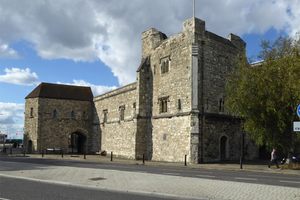
A building that grew by accretion over centuries, starting with a gate in 1189. The plot twist comes in 1338, when the French sacked a town with no proper walls and went straight for the wine cellars. The king was reportedly not sympathetic, which is the medieval version of a post-incident review.
This stone complex on the Southampton waterfront began as a gate to the Platform Quay and was named for the nearby God's House Hospital. It was later extended over hundreds of years, took on a string of different uses, and can be visited today.
from the lifer-of-the-party dept.
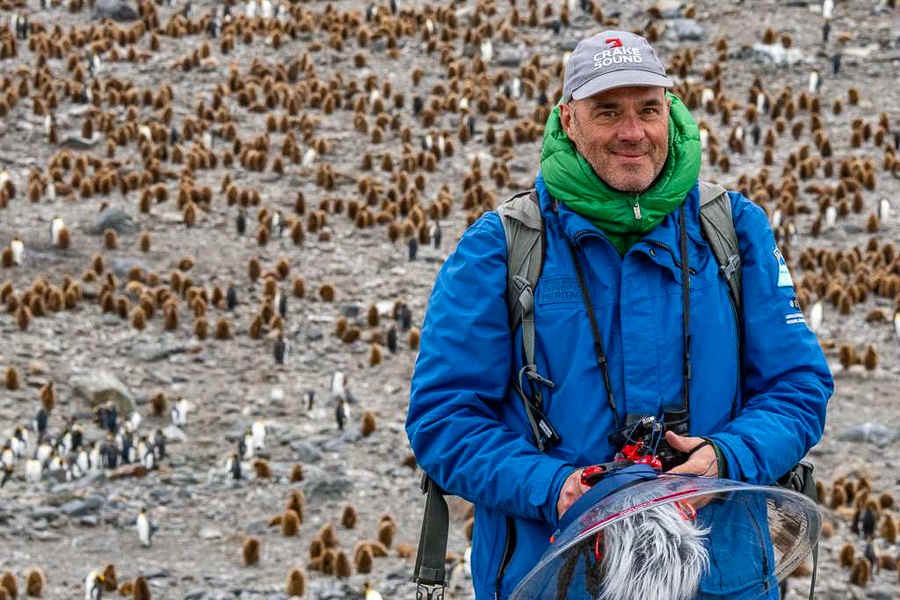
Ask a guide for a favourite species and you learn something about the guide. His answer is the one he has not seen yet, or failing that whichever one is in front of him, and any birder working alone in Penang will know the feeling. The appeal here is the places he names: deserts, the high Andes and cloud forest.
An interview in the 10,000 Birds series on working guides, this time with a Chilean-based guide who grew up in Patagonia. He talks about his favourite birds and the habitats he likes best.
from the i-know-kung-fu-parchment dept.

Every age gets the shortcut to expertise it deserves. Long before anyone typed a prompt, scholars hoped a magical book could spare them years of study, and the Public Domain Review headline does not let the parallel go to waste. Pay attention to the demons, which are the part the sales pitch left out.
Anne Lawrence-Mathers looks at the Ars notoria, a medieval text said to fast-track advanced knowledge through ritual. The essay covers what it promised, how it was used, and the demonic reputation it picked up among some of its readers.
from the prime-suspects dept.

A low-budget Canadian film with one set, a few strangers and a lot of number theory, which should not work and does. Kali Wallace comes at it from the science side, so the fun is in checking how rigorous the puzzle really is. Fair warning: the opening room is not kidding about the gore.
A Reactor column revisits Vincenzo Natali's Cube, in which strangers wake up inside a lethal maze of identical rooms. The piece gives credit to the film's efficient opening and its surprisingly careful mathematics.
from the premature-optimization-rook dept.
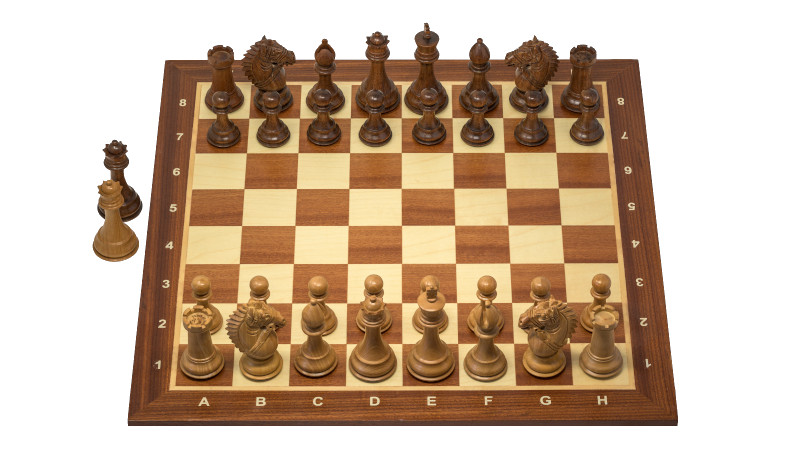
IBM built a custom supercomputer for this, and the suggestion is that better algorithms could have done it on a nice desktop from about 1995. Nothing says more about where the gains went than that. Nobody can rerun the match without a time machine, so enjoy it as a measure of what thirty years of search heuristics are worth, and not as a verdict.
Nicholas Carlini ported the Crafty and Stockfish engines to a 200 MHz Pentium Pro with 64 MB of RAM, then tuned the builds. Hackaday reports the result looks strong enough to take at least a few games from Kasparov or Deep Blue.
from the hit-me-baby-one-more-time dept.

The textbook line was that a planet-scale collision blasts the atmosphere off into space, which sounds reasonable if you've ever dropped a soufflé. Now the bookkeeping points the other way: the mass delivered by the impactor may matter more than the heat. A nice reminder that planetary formation is mostly an argument about accounting.
New work suggests that giant impacts on young planets may not strip away their atmospheres as long assumed. The extra mass a planet gains from the collision strengthens its gravitational grip on the gas it already has.
from the kob-web dept.

Most people could not place the planet's biggest mammal migration, and it isn't the one with the wildebeest. Look at the map itself: GPS tracks from a few hundred collars pile up until they read like spider silk, and the people working on it call them lines of life. Cartography where the ink walked there on its own.
Conservationists have mapped the movements of 262 collared antelopes tracked since 2023 across South Sudan's Great Nile Migration Landscape. The four species involved are part of a seasonal movement of around six million animals, the largest mammal migration on Earth.
from the sinking-feeling dept.
A city that spent centuries on wooden piles now arrives on a baseplate, which is arguably the more stable foundation. The review weighs the usual question for a flagship Icons set, namely whether it earns its price, and that free water taxi is doing some quiet lobbying. Still cheaper than a week on the Grand Canal, the reviewer notes, with fewer pigeons by our own estimate.
The Brothers Brick reviews Icons 11388 Venetian Neighbourhood, a 5,682-piece brick-built take on Venice, along with the 40898 Venetian Water Taxi gift-with-purchase set. The review considers whether the set is worth buying.
from the on-the-page-again dept.
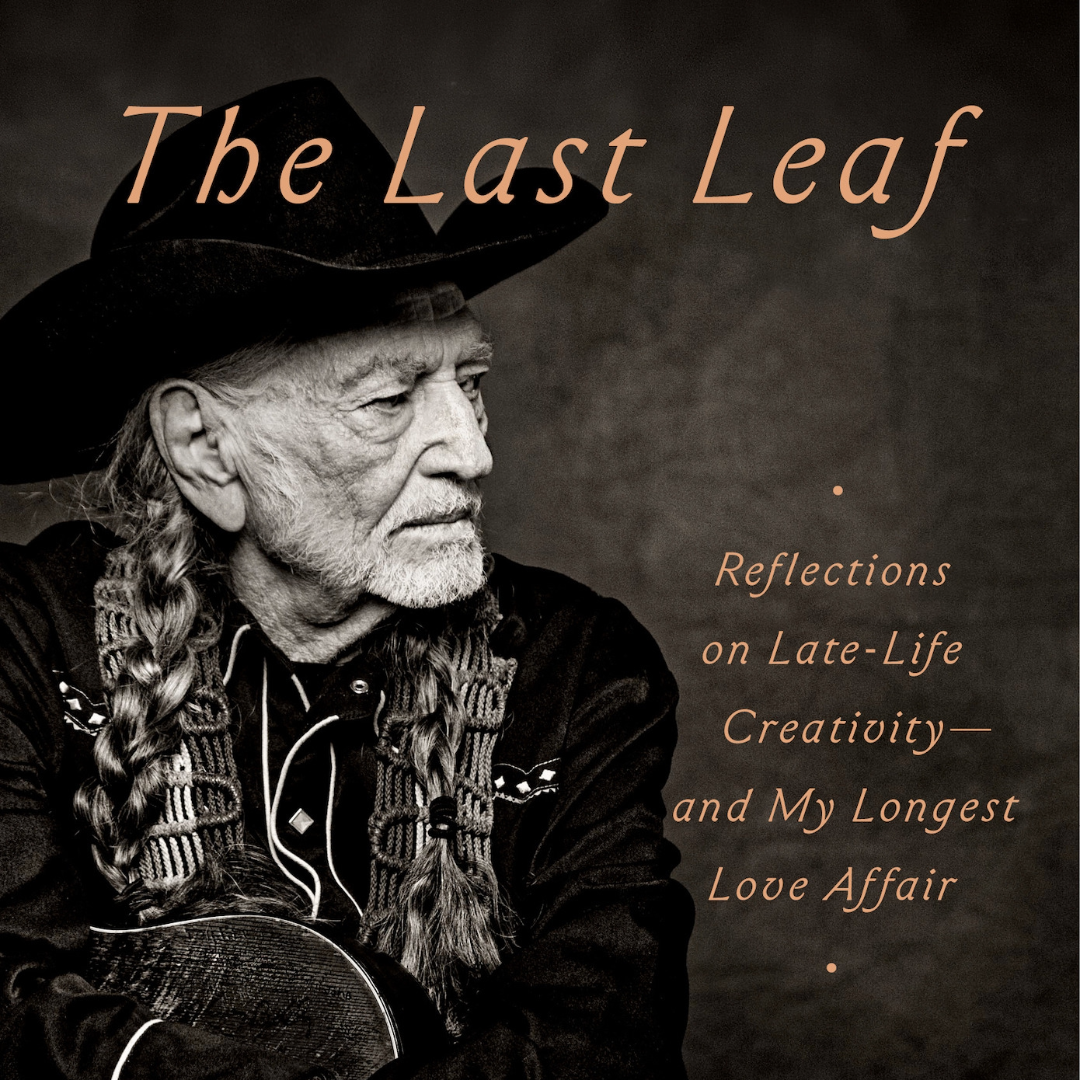
Nobody has earned the right to a book about late-life creativity more thoroughly than a man who is still working at it. The review makes it sound less like a memoir than an evening on the bus, sly and cranky in about equal parts. The roll call of absent friends is what gives it weight: Cash, Haggard, Jennings and more.
No Depression's Reading Room looks at The Last Leaf, Willie Nelson's short-chaptered book on ageing, breathing, love and songwriting. It reflects on the loss of friends such as Ray Charles, Kris Kristofferson and Johnny Cash, and the review finds it affectionate and cantankerous.
from the bytes-the-dust dept.
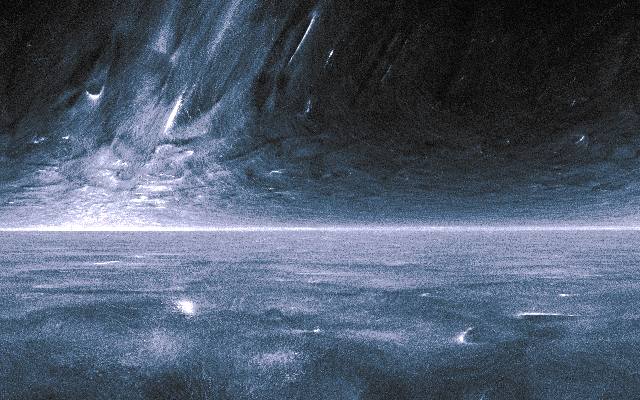
Proper demoscene stuff: a procedural landscape with an accidental moon, made for Outline 2026 and fitted into less space than this paragraph. The write-up is the treat, with Forth pressed into service as a stepping stone because it maps so neatly onto the x87 stack. Note the render time on period-correct cycles. Patience was a feature in 1994.
A 256-byte DOS production for the Outline 2026 demoparty draws a stylised landscape in 32-bit colour using oscillators on the x87 FPU. Its author explains how an old p5.js sketch became a Forth prototype and then a tiny real-mode program, which takes around 13 minutes to render at 286-era DOSBox speed.
from the red-socks-nation dept.
An auk in formal black with white wing patches and, for reasons of pure swagger, bright red feet. It's a long way from Penang, so call this one armchair birding. Worth noting that it swims with its wings, which is the sort of lifestyle choice that makes you reconsider what flight is for, and that this one is posing with its lunch.
Wikipedia's picture of the day shows a black guillemot, also called a tystie, of the subspecies islandicus, holding a common herring. These auks live on rocky North Atlantic and Arctic coasts, nest in crevices and hunt by diving, turning a pale off-white for winter.
from the big-in-Nova-Scotia dept.
Angus MacAskill stood 7 feet 9 inches, and the record books went out of their way to note that nothing medical explained it. A Hebridean emigrant who became an international celebrity and came home to a fishing village is a fine story, and a small cemetery on Cape Breton is a suitably understated place to end it. Bring a long tape measure.
A cemetery in Englishtown, Nova Scotia holds the grave of Angus MacAskill, born in the Outer Hebrides in 1825 and raised on Cape Breton. Guinness listed him in 1981 as the tallest non-pathological giant on record, and his size and strength made him famous in the 19th century.
from the purl-before-swine dept.

Lovecraft spent a career being afraid of things; Kingfisher gives you a 75-year-old woman making a sweater for a teddy bear, which is far more alarming to any elder god paying attention. Reading the Weird is one of the better long-running columns around, and the cats appear to be doing some of the heavy lifting here.
Ruthanna Emrys's Reading the Weird column covers Agent of Chaos, a T. Kingfisher story from a 2023 Azathoth anthology, reprinted in Ellen Datlow's Lovecraft's Brood in 2026. It opens with Alice, 75, knitting for her grand-niece's teddy bear, and the column includes spoilers.
from the read-behind dept.
It starts with an Andres Freund talk on async IO in Postgres 18 and one result that caught Brooker's eye: forward and reverse scans perform very differently, and readahead looks like the culprit. You know why the kernel only bets in one direction. The fun is in asking whether that bet still deserves to be the default.
Marc Brooker picks up on a forward-versus-reverse scan gap seen in Postgres 18's async IO work, apparently driven by IO layers such as Linux's prefetching ahead of the read point but not behind it. From there he looks at locality and the temporal-spatial hypothesis.
from the Kilrathi-at-the-gates dept.
Two brothers shared one keyboard as kids, and one of them never let go of the idea of flying as actual wingmen. The method is lovely old-school memory archaeology: strip space of everything, snapshot RAM in DOSBox, fly straight, see what changed. A decade is a reasonable schedule for a childhood promise.
A developer describes getting network co-op working in the original DOS Wing Commander, a project begun in 2015. He hunted for the wingman's coordinates by comparing DOSBox memory dumps taken in empty space, so that network packets could steer the second ship.
from the Storrs-before-the-calm dept.
The fourth Punch Brothers sighting on the tour calendar in a week, and the rule says a favourite artist always makes the cut, so here we are, unrepentant. This one's a New England date, in a campus hall they know, so if you're anywhere near Connecticut the Saturday is worth keeping free.
UConn's campus news site previews the Punch Brothers' return to the Jorgensen Center for the Performing Arts in Storrs, where they play on Saturday, November 7. They also played there in 2022.
from the mind-your-minifig-town dept.
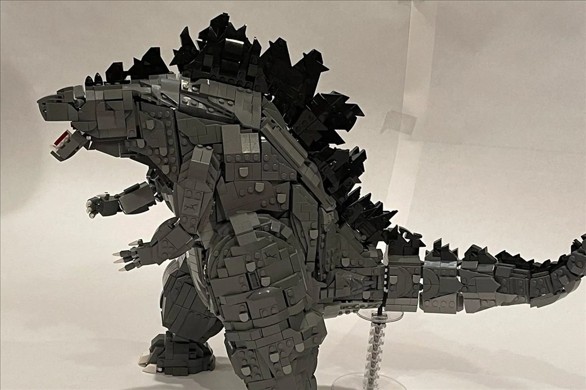
A fan design that survived the Ideas gauntlet and came out the other end as a tall column of atomic breath. The interesting question isn't whether it's big, it's whether bricks can do a single frozen moment of drama rather than a mere statue. Town owners may wish to review their insurance.
The Brothers Brick reviews the new LEGO Ideas Godzilla set, based on Matthew Esposito's fan submission. It recreates the famous poster image of the monster firing his heat ray straight up, and the review asks whether it works as a display piece.
from the same-ice-different-star dept.
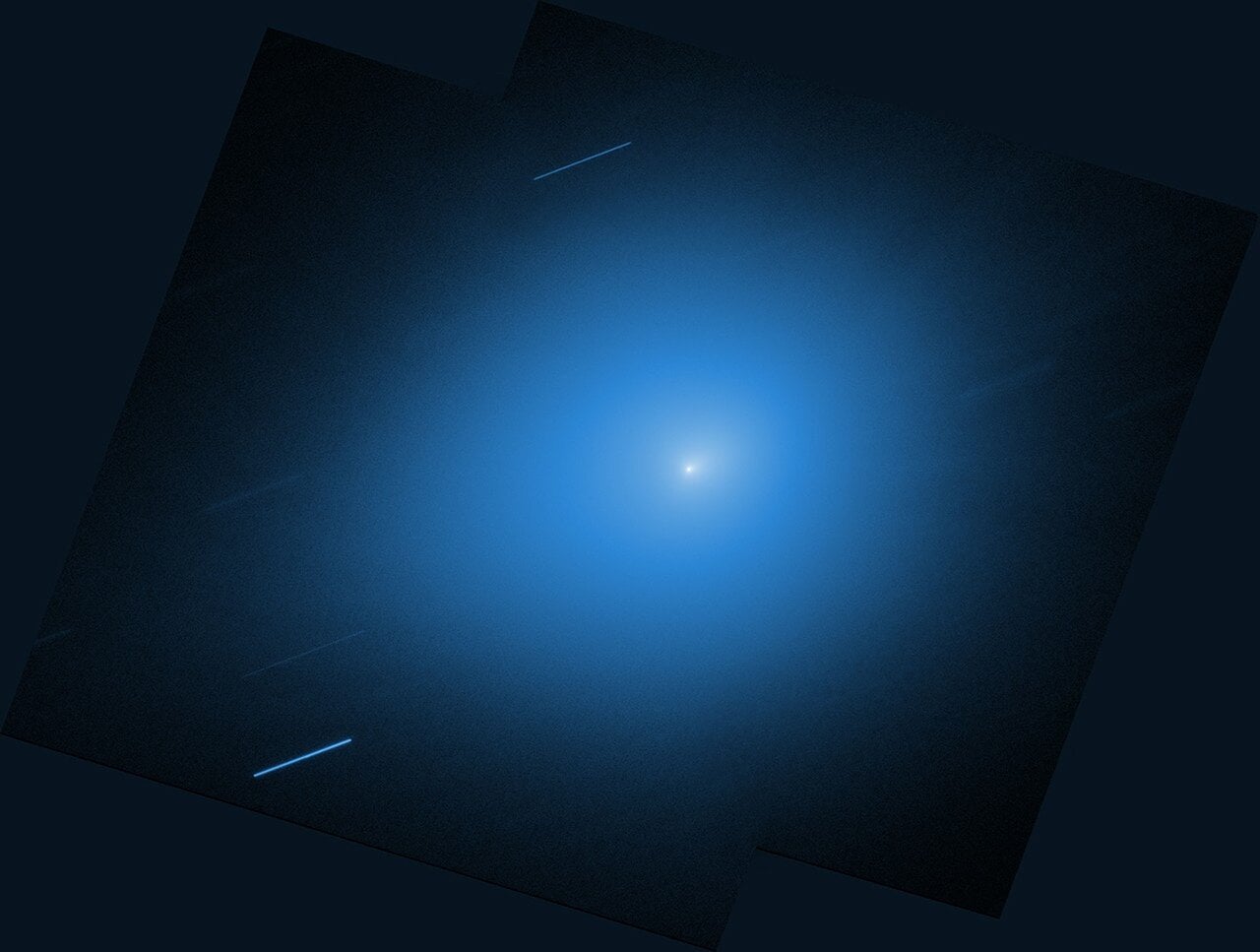
We get a sample from another star system by pure luck, point Webb at it, and the news is that it behaves familiarly. That's the exciting part: chemistry that doesn't care whose sun it formed around is a small, quiet argument about how ordinary we are. Borisov had no such telescope waiting for it.
A paper in The Astrophysical Journal Letters, led by Silvia Protopapa, reports what the James Webb Space Telescope saw of water ice on 3I/ATLAS, the third known interstellar object. The result suggests the ice behaves as it does in objects from our own solar system.
from the serial-killer-app dept.

No screen, no touch, just a serial port and a shell, which is to say the correct way to meet a computer. Someone looked at an ESP32-S3 and decided what it needed was an editor, GPS, weather and APRS, plus installable apps in C. The single supported board is the very late-90s price of doing it for fun.
KoaOS is a small operating system for the ESP32-S3 on Heltec's WiFi LoRa 32 V4, driven entirely through a serial terminal over USB. It offers a Unix-like shell with bundled apps, and programs written in C can be installed and removed over the network.
from the wish-you-were-a-century-ago dept.

A fiddle player with a box of old mail is a dangerous thing, in the good way. Scheinman found the postcards and made a record that argues with the distance between then and now. Worth noticing how much of the praise here is about time rather than tunes.
No Depression reviews One Hundred Years Today, a new album by violinist and songwriter Jenny Scheinman. It grew out of a box of postcards she discovered, and the reviewer hears it as music that feels old and new at once.
from the order-is-overrated dept.
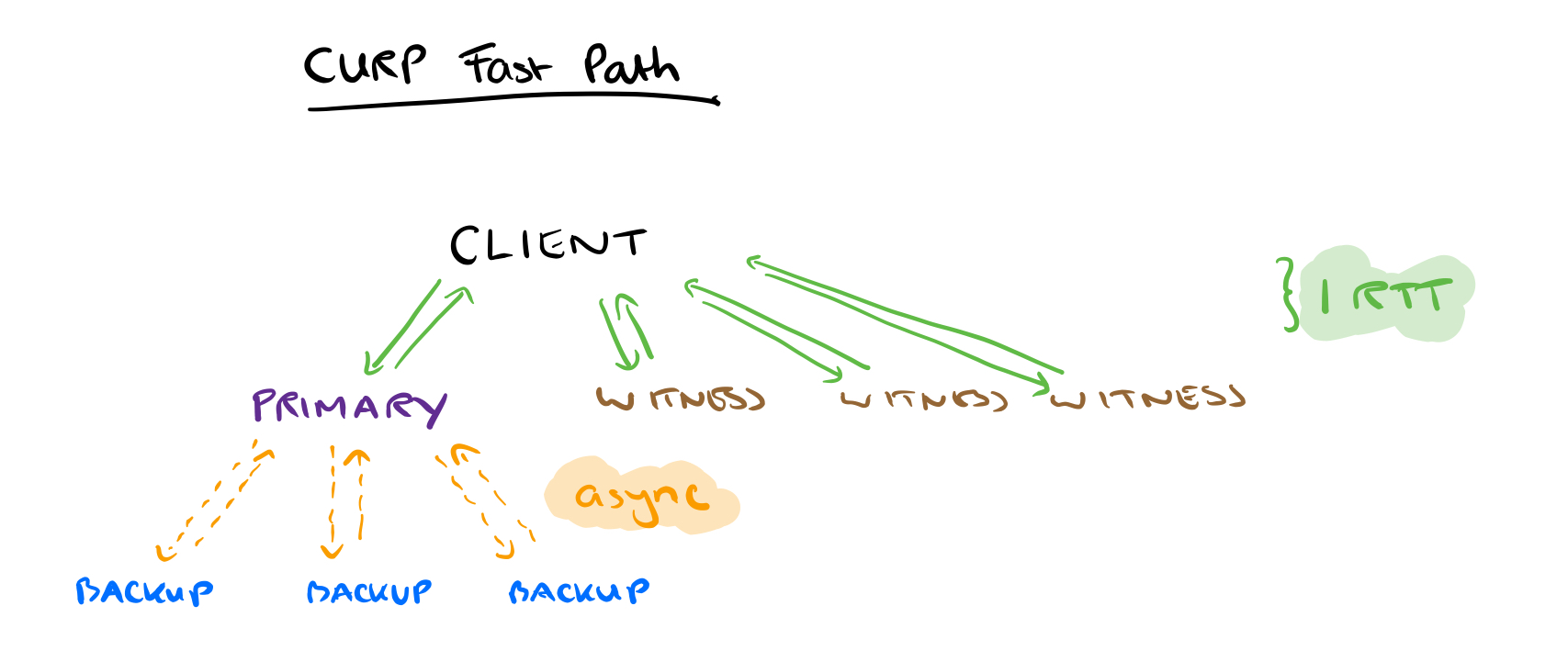
Park and Ousterhout notice that most of the ordering we pay for in primary-backup replication buys nothing when operations commute. Hence 1 RTT writes until a conflict forces a sync. The write-up predicted wide adoption back in 2019, so it's fun to read now with that bet in mind.
A review of the NSDI 2019 paper on the Consistent Unordered Replication Protocol, which lets clients replicate requests before they're ordered provided they commute. Integrated with RAMCloud, it improved write latency about twofold and raised write throughput too.
from the bonus-round dept.
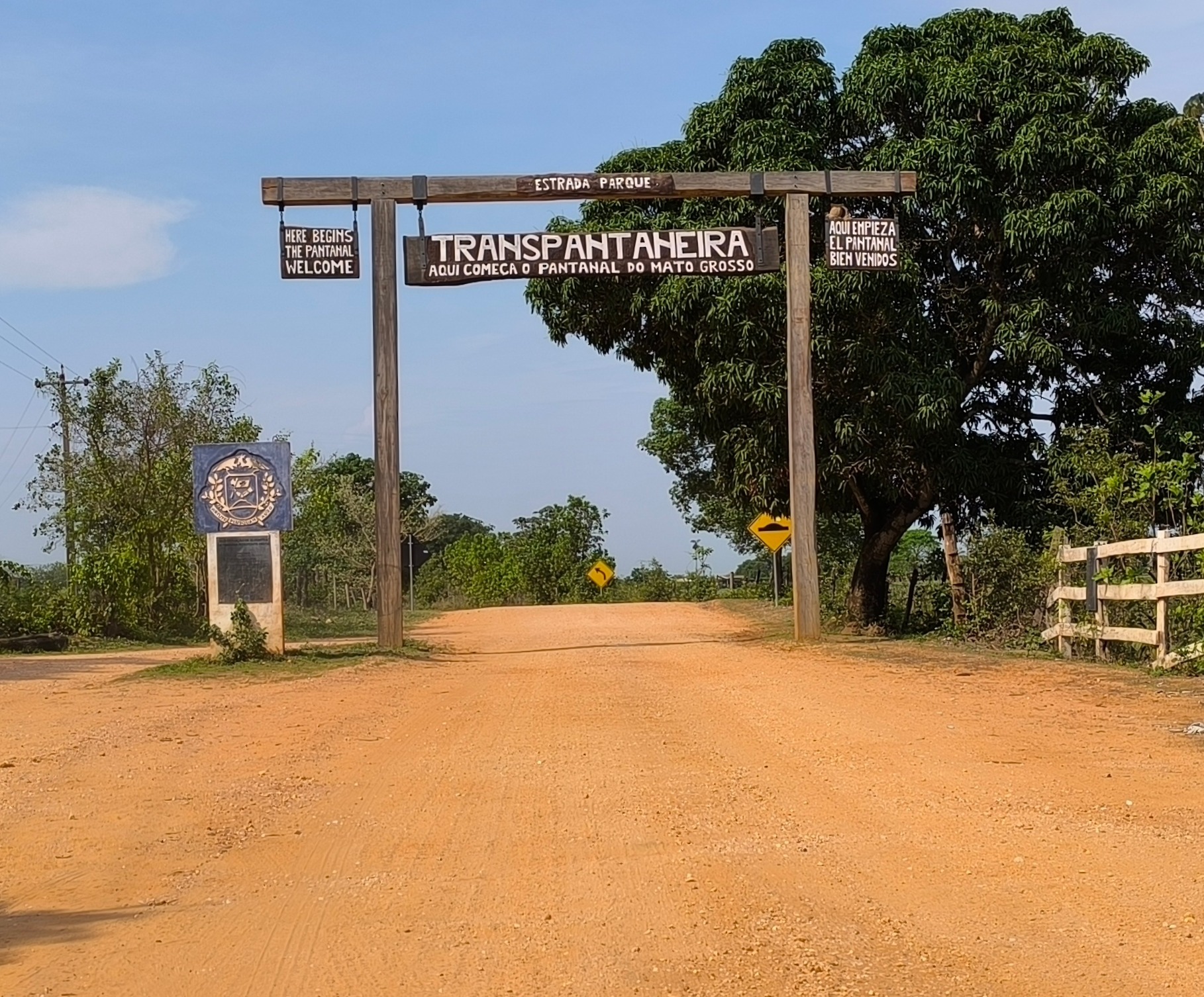
The stated targets were jaguars and giant otters, with birds billed as a mere bonus, and anyone who's birded knows how that sentence ends. A dusty road through wetland with over a hundred bridges is effectively a very long hide. A pleasant armchair trip for a solo birder a long way from Penang.
The first part of a 10,000 Birds trip report from Brazil's Pantanal follows the Transpantaneira, roughly 145 km of unpaved road and more than 100 bridges leading to a lodge at Porto Jofre, and the birding along the way.
from the writing-on-the-slate dept.
Most rock art is safely ancient; what catches the eye here is how much of it runs right up through the 17th to 19th centuries, so European contact is recorded in stone from the other side. A national park you could walk into, with an archive lying on the ground.
Kejimkujik National Park in Nova Scotia holds more than 500 carvings cut into smooth lakeside slate. Some are thought to be up to a thousand years old, while many show Mi'kmaq life in the centuries after Europeans arrived.
from the handle-with-care dept.

A delusion with a timeline: it turns up in medical records just as lenses were reshaping how Europe saw things. Sanderson's essay treats it less as a curiosity than as a way of saying what couldn't otherwise be said, which is a far better reading than the usual snickering. Charles VI's reinforced clothes are the famous footnote.
A Public Domain Review essay by Tamara Sanderson traces the glass delusion, in which patients in early modern Europe firmly believed their bodies were made of glass, and asks what the belief may have been carrying for them.
from the free-range-butter dept.
In 1992 a German art student took the back-to-nature fantasy to its logical aisle. The best detail is the cashier, who rang up his kills with total indifference. Performance art rarely gets a better review than that.
For a 1992 piece called The Hunt, artist Christian Jankowski spent a week living on supermarket goods he had shot with a bow and arrow, then paid for them at the till.
Thursday, November 5, 2026
from the returning-to-the-scene dept.
NASA did the punching in 2022; Europe's job is to turn up afterwards with a clipboard. The bit to notice is that the orbit changed by more than anyone predicted, so the follow-up is less a victory lap than a proper loose end being tied off.
ESA's Hera spacecraft has taken its first clear image of the two asteroids in the DART deflection experiment as it approaches them. Once there, it will survey the aftermath of the impact and try to work out why the smaller rock's path shifted so much further than models said it should.
from the it's-dangerous-to-build-alone dept.

A franchise this old and this loved should have been buried in fan builds years ago, and yet the author could find just one Zelda model besides his own at a recent BrickFair. A nice snapshot of a niche filling in, with an official LEGO designer among the early offenders.
The Brothers Brick marks the week of the Ocarina of Time remake with a selection of this year's Legend of Zelda creations. The piece argues that these once-scarce builds now turn up almost weekly, perhaps helped along by the official sets and minifigures.
from the point-and-shoot dept.

Yes, it runs DOOM, and no, that is not the interesting part. Dumping the camera's memory out through photo metadata is the sort of trick that makes you sit up, and it turns a sealed bit of landfill into a documented platform. Probably a better console than camera, as the write-up concedes.
A hacker known as Spode got into the firmware of a cheap toy camera built around an HX3302B chip, using its easy update path and a trick that wrote memory into the EXIF data of photos. To fit the game he kept only the hottest code in RAM and left the rest in flash, then added a custom synthesiser for the music.
from the doorstop-with-honours dept.
The Goldsmiths exists to reward fiction that bends the novel out of shape, which makes Miéville about as natural a winner as the prize could hope for. The news leads a File 770 roundup, so wander on down the list; that scroll is usually good for an idle ten minutes.
China Miéville has won the £10,000 Goldsmiths Prize for The Rouse, a novel running to some 1,200 pages. File 770 carries the item at the top of its daily roundup of science fiction and fantasy news, pointing to the Guardian's coverage.
from the battenberg-and-batch-jobs dept.
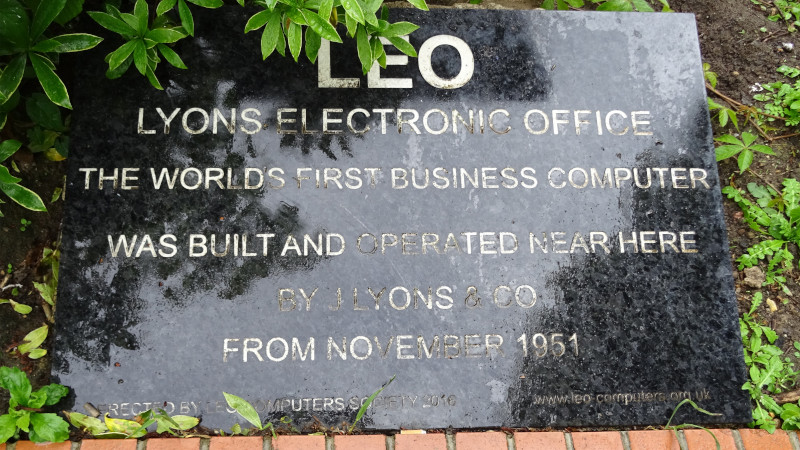
The first purpose-built business computer came not from a bank or a ministry but from the people who made Britain's cakes. Hackaday rightly suspects there's a cultural essay in that. The picture of tea-shop logistics driving electronic computing is the delight here, and very British with it.
J. Lyons and Company, a giant of British food and tea shops, turned Cambridge's EDSAC research machine into the Lyons Electronic Office. LEO machines lasted into the 1970s, and the Centre for Computing History is holding an event to mark the anniversary.
from the guilty-plumage dept.
Every birder keeps a short list of unfashionable affections, and the solo ones have nobody to confess them to. Starlings and gulls feature, as does a spirited defence of the cormorant from someone who has read its leg bands from a hide. Good company for a dull patch day.
The site's Ask a Birder series puts one question to several of its writers: which bird do you hate admitting you like? The answers run from cheerful shamelessness about sparrows and starlings to fondness for the widely resented Great Cormorant.
from the second-chance-list dept.
An old friend, and worth the revisit: two LRU lists and no knobs, beating policies that were tuned with hindsight. Anyone who has argued about page replacement will enjoy how little machinery the balancing act takes, and ZFS fans will recognise the family resemblance.
Adrian Colyer walks through Megiddo and Modha's Adaptive Replacement Cache, which keeps one list for pages seen once recently and another for pages seen at least twice. By adjusting the balance online it tracks both recency and frequency, with LRU-like simplicity and no workload-specific pretuning.
from the end-of-the-line dept.
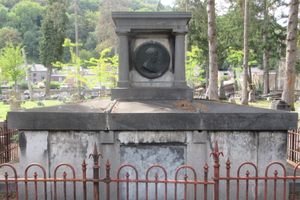
Georges Nagelmackers is the man behind the Orient Express, which makes a quiet suburban cemetery an unexpectedly romantic stop. Atlas Obscura admits the neighbourhood itself is nothing special, which is exactly the kind of honesty that makes a detour appealing.
The Nagelmackers banking family bought a château in Angleur, a residential corner of southern Liège, and in 1864 gave land for the Diguette Cemetery, where the family grave now stands. Engineer and industrialist Georges Nagelmackers is among the family remembered there.
from the invented-antiquity dept.

National myth-making rarely looks this good. What's worth noticing is the ambition: not just pretty scenes of a lost past, but a whole visual archive built to stand up against Christian imagery. Public Domain Review is at its best with this sort of sincere, slightly unhinged project.
Public Domain Review presents a collection of works by the Polish painter Marian Wawrzeniecki, made between 1891 and 1923. Together they form a neopagan picture of the Slavic past, intended to rival the iconic power of the Christian West.
from the weight-limit-exceeded dept.
Alcuin's little book is the ancestor of every wolf, goat and cabbage you ever met, compiled to sharpen young minds at the court of Charlemagne. This one is a tidy bit of state-space search, a thousand years before anyone called it that. Try it before clicking for the answer.
Two adults and two children need to cross a river in a boat that holds only two children or one adult. Futility Closet pulls the problem from Alcuin's Propositiones ad Acuendos Juvenes, a medieval collection of mathematical teasers, and hides the solution behind a click.
from the uninvited-houseguest dept.
Betelgeuse has spent years behaving oddly enough to keep amateurs refreshing their light curves, and now the suspect has a name. Siwarha is a small star doing laps inside a supergiant's outer layers, which is a commute few of us would complain about after hearing it. Worth noticing that the evidence here is radio, not a dimming chart.
New radio observations suggest a companion star called Siwarha is moving through Betelgeuse's vast atmosphere. Its passage appears to raise disturbances that slightly stretch and distort the red supergiant's shape.
from the same-time-next-year dept.

No snow, no first frost, just a morning when the soundscape quietly changes hands. Anyone who birds alone in Penang knows the feeling of migrants arriving overnight, and this is the same moment seen from further up the flyway. A small, unhurried piece from someone who pays attention.
Faisal Rehman, a backyard bird-feeding writer in Pakistan, describes how winter reaches his town through new voices rather than weather. Resident sparrows and bulbuls carry on while migrants, ducks among them, appear on water that had been silent.
from the original-blues dept.

Not string-band territory, but anyone who cares how American music got assembled should spend time here. Morton picked up opera house and ragtime as a boy in New Orleans and spent the rest of his life insisting he had invented jazz, which remains the best-documented boast in the genre. The early sides are where you can hear the seams.
No Depression reviews a compilation of Morton's early work, starting from the Chicago sessions of June 1923. Over the next three years he cut 54 performances as soloist, sideman and bandleader.
from the twelve-kilobytes-ought-to-be-enough dept.
This is the correct response to finding a neglected gadget in a drawer: adopt its orphaned operating system. A dormant project, a maintainer asking for help and a stranger who turns up to do the work is the late-90s spirit in one blog post. Note the budget, about 12 KB of RAM left for apps, and that Python is running there at all.
A Python user group organiser revives wasp-os, a MicroPython watch OS for the cheap and hackable PineTime that had stalled on a 2019 fork. He moves it to mainline MicroPython and tidies the project, working within a 64 MHz Cortex-M4 and 64 KB of RAM.
from the pluck-of-the-photon dept.
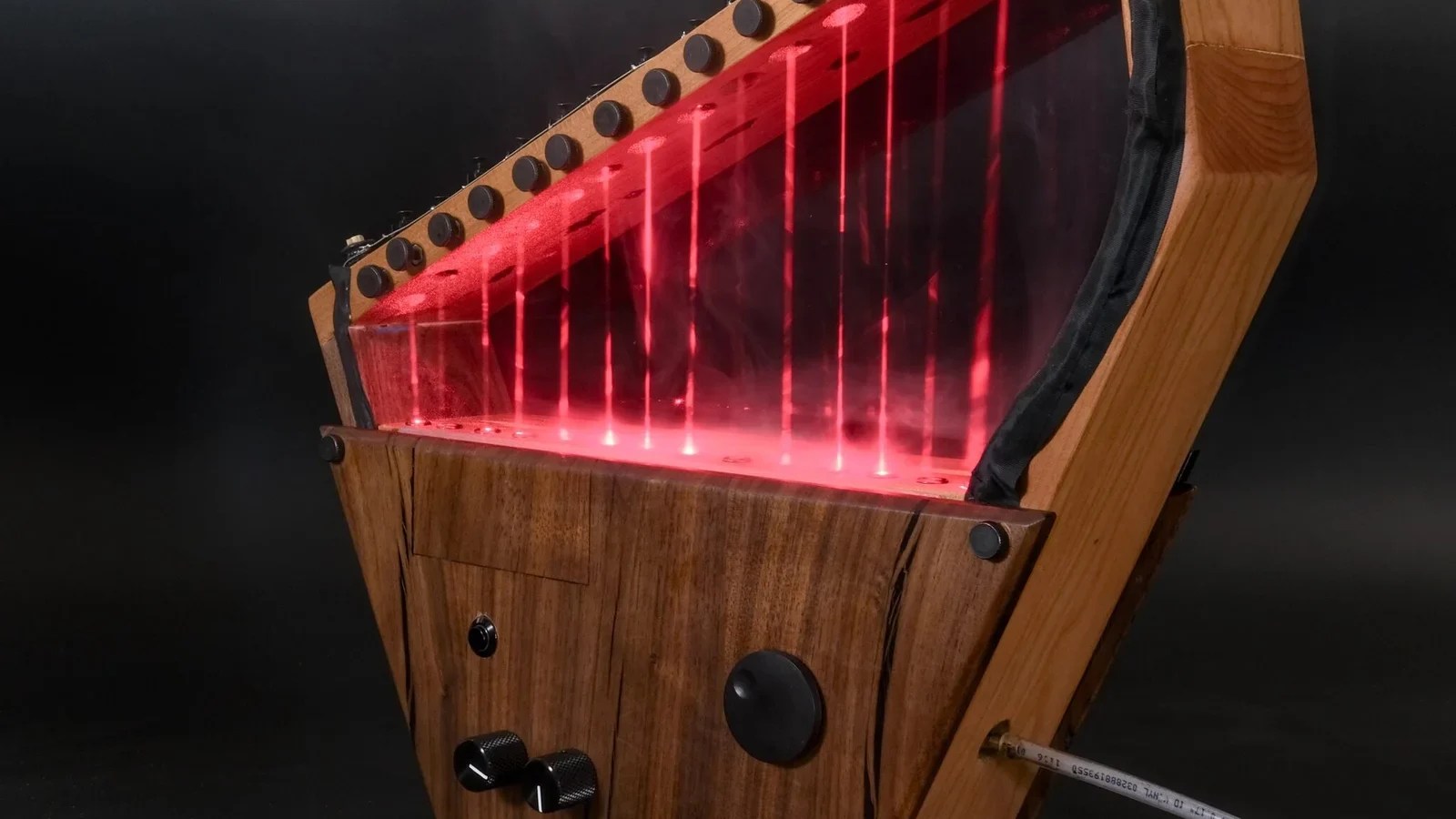
Everyone thinks about building a laser harp and almost nobody does, which makes this one's excess all the more welcome. The detail to enjoy is using photoresistors on purpose, because their sluggishness gives you pluck speed and so dynamics. Then there is the fog machine hookup, which is the only sensible way to make the strings visible.
A maker known as DJ Baja Blast built a harp whose photoresistors read how fast a hand breaks each beam, controlling volume. An accelerometer bends notes, an ultrasonic sensor adds theremin-style control, and a Teensy 4.1 runs Karplus-Strong string synthesis.
from the moth-to-a-different-flame dept.
A bird blog explains a change you have probably noticed without noticing: the bug cloud around the outdoor light is gone. The explanation is tidy, and the geckos give it a small food-chain punchline. Take the moonlight navigation account as one reading of why insects circle lamps, then go and look at your own porch.
A birder's post recounts a guide in Veracruz whose family swapped to LEDs and lost the geckos that hunted at the lamps. The argument is that insects steer by ultraviolet, which incandescent bulbs emit and LEDs do not, so far fewer gather.
from the core-memories dept.
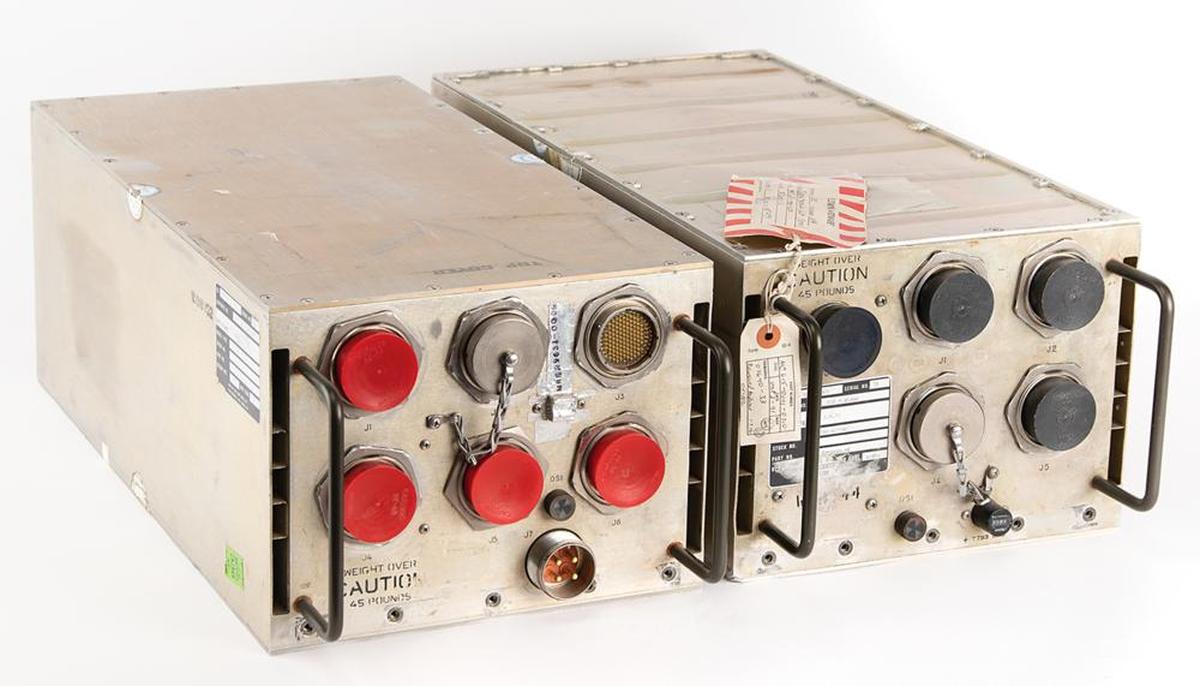
Our occasional computing history slot goes to Ken Shirriff, who treats old avionics the way other people treat cathedrals. Five general-purpose computers ran the Shuttle at 420,000 instructions per second on magnetic core, and the I/O box is the half that rarely gets the attention. Flight software fans will want to see the iron it actually ran on.
Shirriff looks at boards from the IOP, the box that sat beside the CPU in each of the Shuttle's computers. The machines predate popular microprocessors, so the logic was spread across boards of simple chips with core memory rather than DRAM.
from the stuck-in-the-bad-state dept.
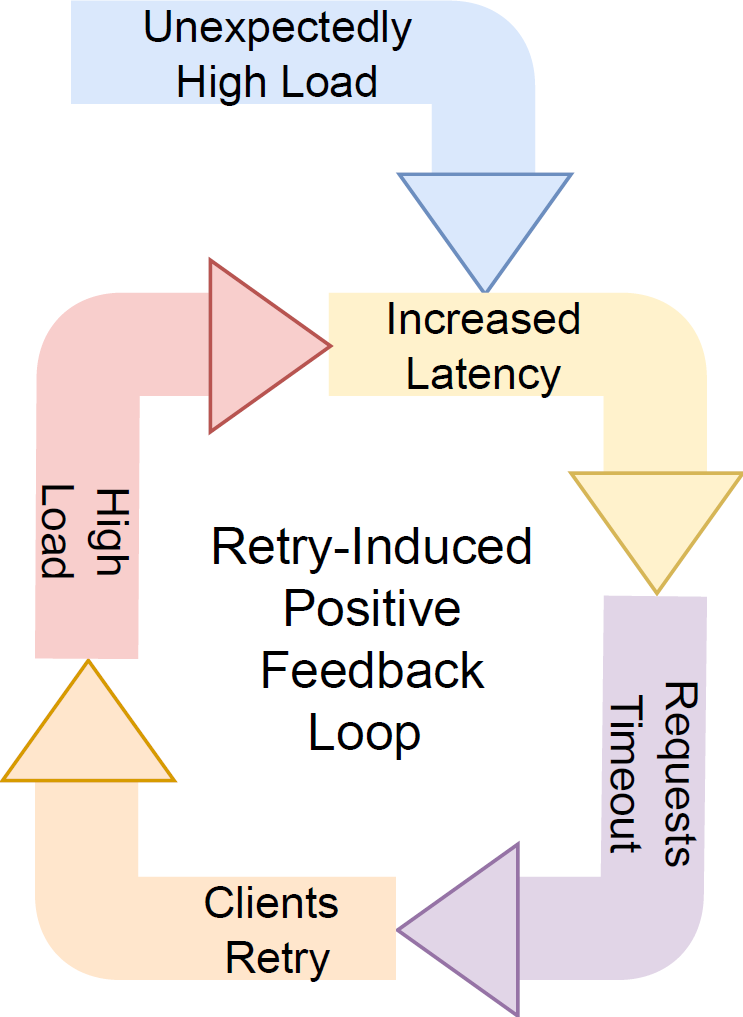
The trigger is gone, the system is still on fire, and the postmortem blames the trigger anyway. Charapko returns to the pattern with the useful framing that the sustaining loop, not the initial fault, is the thing to go after. Anyone who has watched a retry storm outlive its cause will nod along.
Charapko revisits metastable failures, self-sustaining performance collapses held in place by a positive feedback loop after an initial problem. He examines them through actions, states and signals, with attention to how separate systems interact to sustain the loop.
from the stable-diffusion-of-techniques dept.
Nearly eight metres of silk on which two painting traditions meet and get along remarkably well. Castiglione brought European perspective and shading to the Qing court and fitted them into Chinese technique, and the horses repay a slow scroll. A quiet thing to look at for a minute or ten.
Giuseppe Castiglione painted this 7.76-metre silk handscroll for the Yongzheng Emperor, showing a hundred horses at rest, at a gallop and crossing a river. The Qianlong Emperor declared it a masterpiece in 1735, and it is now in the National Palace Museum in Taipei.
from the writing-on-the-wall dept.
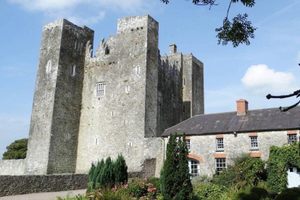
An Irish tower house with a longer memory than its walls. The pleasing oddity is the fragments of Ogham among the stones, so a late medieval lordly seat is carrying scraps of a far older script. It is close enough to Cork that a return trip would not need much planning.
Barryscourt stands near Carrigtwohill and dates mainly from between 1392 and 1420, under John Ciotach Barry, seventh Lord Barry. It served as the principal seat of the Barrymore branch of the Anglo-Norman Barrys, and its stones hold traces of Ogham writing.
from the claws-for-celebration dept.
Two days after a megaraptor turned up in a London museum drawer, here is one on home turf. Patagonia remains the group's stronghold, and the finds keep adding to a family that took palaeontologists a long while to place on the tree. Same talons, different continent, and a tidy reminder that the British specimen had relatives with better weather.
Sci.News reports a newly described species of predatory dinosaur from Patagonia in Argentina, named Rinconraptor pipoae. It belongs to the megaraptorids, the theropod group known for large hand claws.
from the mandolin-of-few-words dept.
Chris Thile, a man rarely short of things to sing, has gone quiet on purpose. This fall's Punch Brothers shows are billed as all instrumental, which is exactly the sort of dare this band enjoys, and the headline suggests the local press got the joke. New England readers should note the Vermont date is imminent.
A piece in the Mountain Times previews Punch Brothers on their fall 2026 tour behind The Unsung Adventures of Punch Brothers, billed as an all-instrumental run. Tour listings put them in Rutland, Vermont on November 8; only the headline was available here, so the details are the article's to tell.
from the please-do-not-deorbit dept.
Hubble is sinking slowly enough that the deadline sits in the next decade, which by spacecraft standards counts as a crisis. NASA's request is pleasantly open-ended: lift it, upgrade it, or see it off safely. The nice thing to notice is that the agency that once sent shuttles to fix this telescope is now asking who else has a ride.
After more than 35 years in service, Hubble is losing altitude and could re-enter as early as 2033 or 2034. NASA is inviting private space companies to propose ways to raise its orbit, improve its capabilities, or dispose of it safely at the end of its life.
from the actuaries-did-warn-us dept.
Taylor at his most usefully dry: a man who left college in 1982, watched the 1983 fix get made, and has now arrived at the exact date it was always going to run out. No thesis to sell, only arithmetic and a mild wish that politicians would say what they plan to do about it. The shortfall is large, the surprise is nil.
Timothy Taylor traces the trajectory set by the 1983 Social Security fix: a trust fund built up for people retiring from the early 2000s, then a return to promised benefits outrunning revenue. Actuaries put the gap at about 29 trillion dollars over the next 75 years, and he looks at what current law implies if nobody acts.
from the vintage-submarine dept.
Most wineries do not mark their premises with a yellow buoy. This one has been letting the Atlantic do the stirring since 2012, fifteen metres down, on the theory that swells make a fine agitator. Go for the view across the bay, stay to wonder who first asked whether the fermenter could be put underwater.
Off Saint Jean de Luz in the French Basque Country, a lone yellow buoy marks vats anchored about 15 metres down, where Egiategia has fermented wine since 2012. Grapes come from local vineyards, and the motion of the waves keeps the juice moving as it ferments.
from the warm-up-time-not-included dept.
Somebody built an 8-bit machine out of 460 dual triodes, gave it flip digits salvaged from British railway platform clocks, and made it run an airship simulator. This is precisely what the hobby is for. The rest of the list, including a revived West German 4-bit trainer, is a pleasant evening of browsing for anyone who misses front panels.
Hackaday announces the winners of its 2026 Retrocomputing Challenge. The headline entry is a wall-mounted vacuum tube computer with a NOR-based design and 16 instructions; other entries include an emulated Busch Microtronic, a German educational machine built around a 4-bit processor.
from the stop-synchronising-at-me dept.
An older paper that still earns its keep: instead of one clever lock-free structure, it looks across lists, hash tables, skip lists and trees and asks what the scalable ones share. The word to watch is portable, meaning scaling that survives a change of platform. Anyone who has watched a benchmark collapse on a new socket layout will nod along.
Adrian Colyer reviews David et al. from 2015, which analyses how concurrent search data structures scale across cores and distils four principles for doing it well. Applying them improves existing algorithms, and a hash table built from scratch on them beats the next best by 23 percent.
from the dolor-sit-admin dept.
Terence Eden goes looking for lorem ipsum on British public sector sites and comes back with something close to archaeology. Test users named Alice and Henry, pages nobody dares delete, stubs that lead to forgotten functions. He is at pains not to point and laugh, which only makes it funnier, and every sysadmin will recognise the load-bearing placeholder.
A blog post searches UK government and council websites for leftover dummy content, and treats what it finds as a peek at how the sites were built. Stray test pages can turn up style guides and half-forgotten features, and some placeholders have ended up too risky to remove.
from the keeper-of-the-flame dept.
Gernsback's Amazing Stories turned 100 this year, a remarkable age for a title that has spent much of its life being declared finished. Davidson was the fan who took on the job of keeping that name alive. File 770's notice is short and fond, and it is a fine excuse to think about who looks after the old magazines.
File 770 reports the death on November 4 of Steve Davidson, publisher of Amazing Stories, science fiction fan and longtime champion of the genre. The notice is written by Kermit Woodall.
Wednesday, November 4, 2026
from the ten-years-downstream dept.
Another stop on the tour that keeps surfacing here, and we are not complaining. This one is just a public radio calendar listing, so there is no review to read, only the mild pleasure of a record from 2016 getting a birthday lap around the country. Good excuse to put the album back on.
Michigan Public's community calendar carries a listing for Sarah Jarosz: 10 Years of Undercurrent, a date on her autumn tour marking a decade since the album. It is an event notice rather than an article.
from the studs-not-on-top-of-the-class dept.

SNOT, for the uninitiated, is studs not on top, and it is where LEGO building stops being a stack and starts being geometry. Thinking in cubes sounds like the right mental trick, since a brick's odd proportions are the whole difficulty. Only the title and the picture are in hand, so go in expecting technique rather than a set review.
A new BrickNerd article on SNOT, the family of techniques for building with studs facing sideways or downward. Going by its title, it offers cubes as a simpler way of reasoning about those connections.
from the outside-the-puzzle-box dept.
Audubon asks the question corvid fans would prefer left alone. It opens with Kelsey McCune building a puzzle box out of a log for her doctoral work, which is a fine way to learn who in the forest is paying attention. Worth reading with the local Penang mynas in mind, who have opinions on the matter.
An Audubon magazine piece on avian intelligence and whether the usual champions deserve the title. It starts with behavioural ecologist Kelsey McCune, who went to corvids for her Ph.D. at the University of Washington and made a puzzle box from a log.
from the no-actual-planets-were-visited dept.
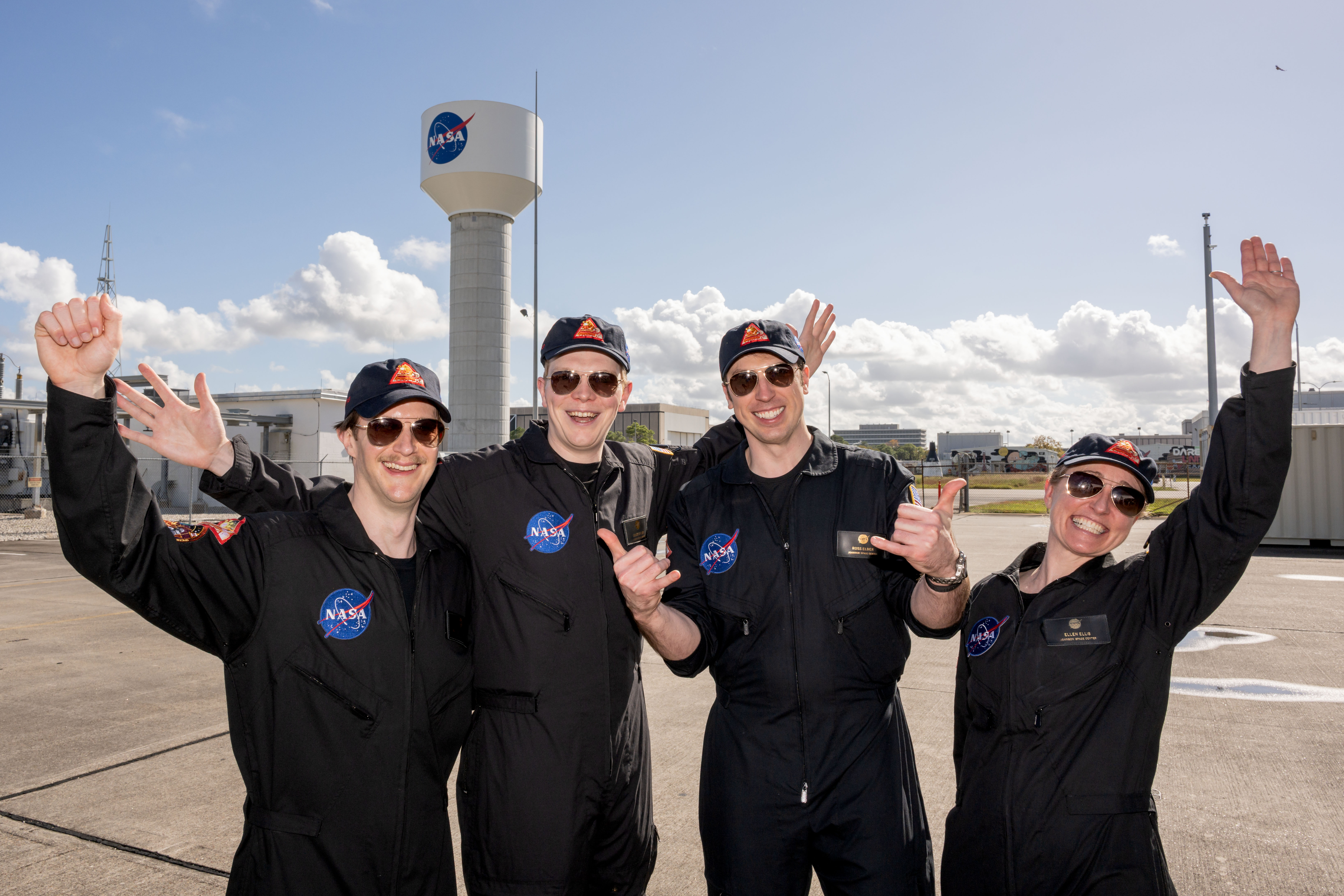
Four people just spent more than a year on Mars without leaving Houston-adjacent real estate, and the reward is a group photo in actual weather. The scare quotes in NASA's own caption around returns are doing lovely work. Nobody has ever been so pleased to stand on a planet they never left.
A NASA photo shows the four members of the Crew Health and Performance Exploration Analog outdoors for the first time in over a year, after their simulated Mars mission ended on October 31, 2026.
from the just-in-time-for-the-tuple dept.
Neumann's VLDB 2011 paper is the one that told the Volcano iterator model to stop calling next on every tuple. Colyer's write-up is a good refresher on why pushing data through compiled pipelines suits modern CPUs, and it arrived at a moment when Spark was borrowing the idea. Old, but it aged better than most query engines.
Adrian Colyer reviews Thomas Neumann's paper on generating efficient code for query plans, written after Databricks engineers mentioned it as an inspiration for improvements to Spark. An archive post, and still a tidy tour of the idea.
from the compile-the-compiler-compiler dept.
Someone is working through the Futamura projections on a Brainfuck compiler for no reason beyond the joy of it, which is exactly the spirit this category exists for. Partial evaluation is one of those ideas that sounds like a parlour trick until the compiler falls out. Read the earlier instalment first, as the author sensibly insists.
A follow-up to a post that turned a Brainfuck compiler back into an interpreter plus a specializer. Having removed hand-written translations, the author now tackles the cost of re-running the specializer for each program, which is where the second projection comes in.
from the small-country-even-smaller dept.
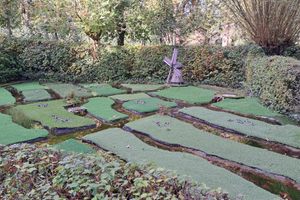
The Netherlands is compact already, and this museum in Beek-Ubbergen compresses it further into a lazy afternoon. The extras make it: badgers, expressionist architecture, and a patch of ground that stayed Dutch when most postwar annexations were handed back. Few places let you walk ten landscapes and a border footnote before dinner.
The Miniature Landscape Museum near Nijmegen shows ten Dutch landscapes at small scale. It sits by the Wylerberg, formerly German land annexed after the Second World War and never returned, near Villa Wylerberg, and a foundation there works on restoring cultural landscapes.
from the before-the-water-lilies dept.

Before the haystacks, there was a teenager who knew people would pay to be mocked. Public Domain Review gathers Monet's early caricatures from the late 1850s, and the pleasure is seeing a famous eye for light aimed at noses instead. A reminder that even the Impressionists had a side hustle.
A Public Domain Review collection of caricatures Claude Monet made for cash as a teenager in the late 1850s, before he turned to the painting he is remembered for.
from the make-it-so-again dept.
After Patrick Stewart's death, Kottke did the sensible thing and went looking for what to rewatch, comparing other people's lists rather than adding one more opinion. The Inner Light is on it, naturally, as it is on everyone's. A gentle way to spend an evening with a very good actor.
Prompted by Stewart's death, Jason Kottke rewatched the Next Generation finale and then compiled the Picard-centred episodes that recur across published lists, from Star Trek: The Next Generation and Star Trek: Picard, with The Inner Light among the favourites.
from the behold-her-if-convenient dept.
Rob Thomson and William Palmer proposed to strip English poetry of feeling and modernise it, starting with Wordsworth's solitary reaper. They appear to have stopped at the first verse, and the world's literature breathed out. Futility Closet supplies the deadpan, which is the only way to serve this.
In 1982 two men set out to convert the Oxford Book of English Verse into non-emotive modern language, turning Wordsworth's Highland lass into a Ms McPherson. There is no evidence that the project ever got past that opening.
from the dooly-noted dept.
Palaeontologists are supposed to be sober people, and then one of them finds a juvenile small enough to deserve a cartoon namesake. Dooly the little green dinosaur is a household name in Korea, so the christening is less whimsy than national service. The description itself dates from earlier this year and is doing the rounds again, but South Korean dinosaur skeletons are scarce enough to justify a second look.
A juvenile dinosaur from 113-million-year-old rock in South Korea has been named Doolysaurus, after the cartoon character Dooly. X-ray scanning of the block let researchers study the small skeleton and recognise it as a new species.
from the point-and-shoot-first dept.

A lost bird recovered by the oldest trick in the solo birder's book: fire the shutter, sort out what you saw later. One fellow tracked the bird's movements aloud while the other got the identifying frame before she had properly laid eyes on it. Anyone who has chased something skulking through a Penang canopy will recognise the method.
Two field fellows with the International Bird Conservation Partnership photographed the orange-bodied Ghana cuckooshrike in Côte d'Ivoire's Taï National Park, the species' first confirmed sighting in 13 years. The photographer says the camera did the identifying, because shy forest birds rarely allow a close look.
from the not-my-voice-either dept.
A follow-up to last week's Irish Times interview, this time in Hot Press, and the question has sharpened from how strange it feels to why the platforms aren't catching it. Hayes has a fair point: services that can identify a song from a few seconds of humming apparently can't tell when the artist never sang it. The pool had only the headline, so the detail sits behind the link.
Irish songwriter Gemma Hayes talks to Hot Press about AI-made music passed off under artists' names, after a fake single appeared in hers. She argues that streaming services ought to have systems in place to spot such tracks.
from the are-we-there-yet dept.
The old record was Opportunity's marathon, and Perseverance has squeaked past by a rounding error's worth of Martian gravel. The interesting part is the software: this distance comes from a rover increasingly trusted to plan its own route rather than wait out the light delay for instructions. Flight software people may take a small bow.
NASA's Perseverance rover has now covered 28.10 miles on Mars, farther than any vehicle has driven on another world. Its autonomous navigation has let it steadily push up how far it can travel in a stretch.
from the patron-saint-of-the-front-door dept.
A very pleasing kind of sightseeing: no ticket office, no gift shop, just looking up. These are private devotions on public walls, built by householders rather than handed down by the Church, and some of the lamps are apparently still tended. A walk best taken slowly, at dusk, with a neck that can stand it.
More than fifty small religious niches survive in the old lanes of Victoria on Gozo, some over three centuries old. Families put them up on their own houses to display a patron saint and ask for protection, and they range from carved Baroque canopies to painted figures behind glass.
from the extended-warranty-free dept.
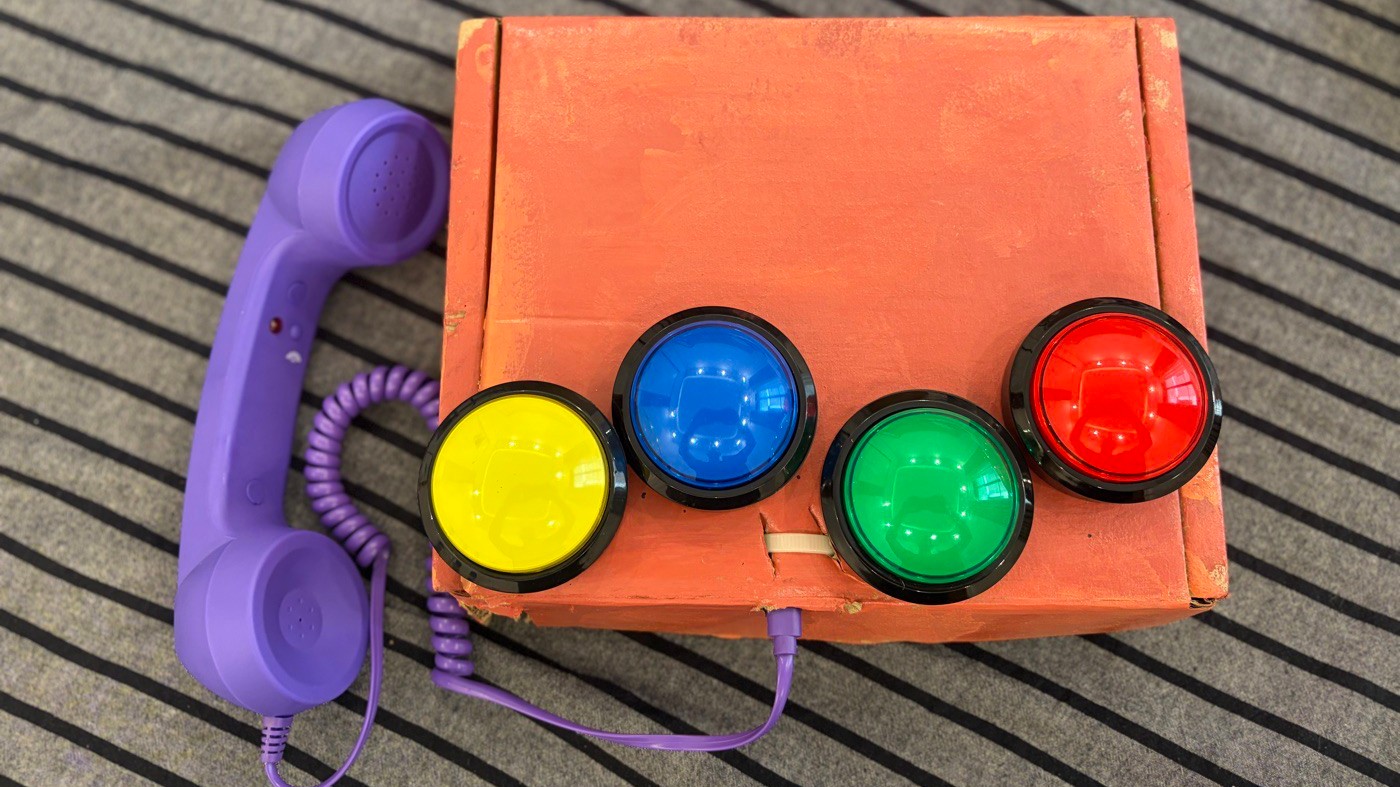
This is the hobbyist spirit at its most charming: a retro handset, a tiny SIP client and arcade buttons in place of a dialling plan. The best touch is that each contact's button lights only when it's a civilised hour in their time zone, which is more scheduling discipline than most calendar software manages. There are no inbound calls either, so the scammers can look elsewhere.
Allan Binder built a phone for his toddler from a retro-style USB handset and an ESP32-S3 running a minimal SIP client over WiFi. Illuminated arcade buttons act as speed dials for family members, and a text-to-speech voice explains when it's too late to call or the network is down.
from the commit-to-the-whole-thing dept.
Brooker's been dribbling this design out in blog posts for ages, so it's useful to have the query layer, transactions, replication and control plane in one document. A paper written by the people who run the thing tends to be most revealing in what it chooses to simplify. There's also an interactive transaction simulator, for those who prefer to break things by hand.
Marc Brooker introduces the paper on Aurora DSQL, a multi-region relational database, covering the whole system from query processing through transactions and replication to the control plane. It collects in one place material previously scattered across blogs and talks.
from the grave-concerns dept.

Macabre, but of the calmly fascinating sort: a civic infrastructure problem that happens to involve corpses. City growth met the fixed capacity of the churchyard, and medical schools were a ready market for the surplus. Roger Luckhurst makes the sanitation reformers nearly as interesting as the body snatchers.
An essay in the Public Domain Review on what happened as Britain's cities filled and their church burial grounds overflowed. It traces the trade in bodies supplying anatomists and the reformers who pushed for alternatives to foul urban graveyards.
from the CQ-CQ-calling-central-casting dept.
Technology on film is usually two people typing on one keyboard, so it's a small marvel that ham radio has fared rather well. The roll call runs from Hancock's gloriously inept operator to the real radio amateur who overheard a London bank job. And yes, Principal Skinner holds a licence, which explains a good deal.
Hackaday surveys how amateur radio has appeared in film and television, from comic turns in Hancock, The Munsters and The Simpsons to heroic operators in The Red Tent and The Bank Job. The piece finds the hobby has had a few surprisingly accurate portrayals.
from the invisible-ballot dept.
Timothy Taylor doing what he does best: one paper, no thesis to sell. The neat move is pointing the intro-econ toolkit at voting itself, so an informed electorate becomes a public good that gets underprovided, just like basic research. Whatever you make of the conclusions, it's a tidy way to see an old problem without anyone shouting.
Taylor walks through a paper by Jason Brennan and Christopher Freiman arguing that familiar market failures have counterparts in democratic elections, including public goods and poor information. If those problems justify rules for markets, they suggest, they also bear on how elections are governed.
from the unconquered-in-storage dept.
Dinosaur news is always in, and this one has the best possible plot: the fossil spent a hundred-odd years being politely overlooked before anyone noticed what it was. Long claws, a name that translates to something like an unconquered female warrior, and a useful reminder that some of the best digging in palaeontology happens in the collections room.
A fossil from the Isle of Wight, held in a London museum since 1924, has been named as a new species of long-clawed predatory dinosaur. Researchers including a team at UCL place it among the megaraptors, which would make it the first of its kind found in Europe.
from the please-allow-48-hours-for-a-reply dept.
Nearly fifty years after launch, the probe gets a milestone with a pleasing unit attached. Spare a thought for the flight software people: every command now comes with a two-day wait for confirmation, on hardware rationing its last watts. That is remote debugging at a scale no on-call rota has ever contemplated.
On November 18, Voyager 1 will be one light-day from Earth, so a round-trip exchange takes 48 hours. The piece also covers the energy-saving manoeuvre that stretched its science mission and the recent unexplained communications gap that gave NASA a scare.
from the green-thumbs-up dept.

An insect-shaped flying machine would be enough for most builders; this one turns around to reveal a greenhouse in the back. Notice the parts usage: a chrome Scala trophy and the new Technic bicycle wheel segments, doing duty as wings. Dragonfly by way of Kew Gardens.
A big retro-futurist LEGO build in smooth curves and rich greens, with insect wings made from Technic bicycle wheel segments and a generous helping of rarely seen chrome parts. The rear of the craft opens out into a portable greenhouse.
from the load-bearing-history dept.

The sort of street that rewards the slow walker: quiet, nearly car-free, and accidentally an architecture timeline. Medieval recycling at its finest, since the wall was gone but the foundations and the bricks were still perfectly good. Mind the residents, who live there and did not ask to be scenery.
When Amersfoort outgrew its first city wall around 1380 and built a new outer one, the old wall came down. From about 1500 residents built homes along its foundation using the salvaged stone and brick, and the centuries of construction left a quiet street of mixed styles.
from the small-islands-big-list dept.
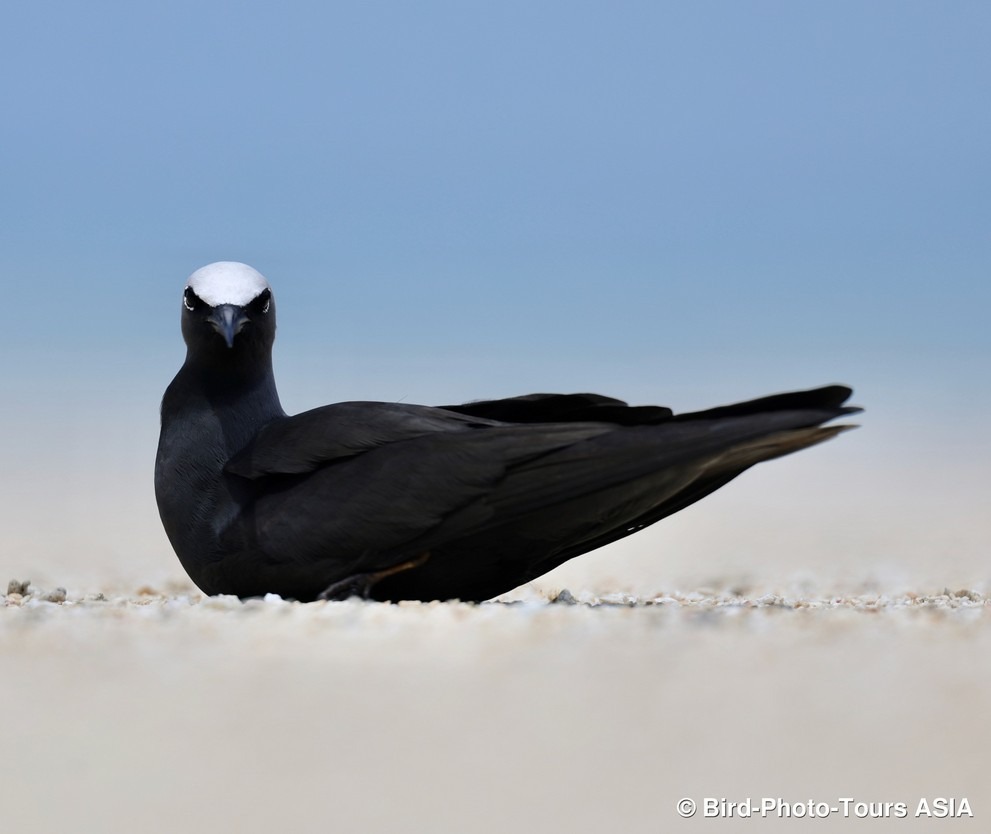
Eighteen endemics on about 460 square kilometres of land is a ludicrous return on real estate, and the sort of arithmetic a Penang birder can appreciate. Palau is just over the horizon from the usual Southeast Asian circuit, and this is the first leg of a long west-to-east trip, so more should follow.
The opening instalment of a 70-day trip across Micronesia, with photographs from Palau taken in March 2026. The republic spreads about 460 square kilometres of land across some 340 islands, yet holds eighteen endemic bird species.
from the flush-it-later dept.
It surfaced on Lobsters this week and deserves another look. These are the people behind the write-optimised filesystem work, so it comes with real measurements, not just asymptotics. The neat trick is buffering in the interior nodes, which is why inserts stop paying the usual B-tree toll while point queries barely notice.
A survey of the B-epsilon tree, a write-optimised on-disk key-value structure for databases and filesystems. It explains how the structure works, compares its asymptotics against B-trees and LSM-trees, gives real-world performance numbers and covers how to design applications around it.
from the daylight-saving-exploit dept.
Every great hack begins with something absurd and small. Here, a car that apparently insists on a map SD card before it will let you change the time, and an owner who assumed that could not possibly be true. The late-90s spirit lives on in anyone willing to root a head unit over a wrong clock.
The owner of a 2014 Renault Latitude passed on the previous owner's old navigation SD card, doubting the claim that the car needed it to change the clock. It did, and the post follows the effort to break into the head unit in order to fix the time.
from the deep-blue-on-a-budget dept.
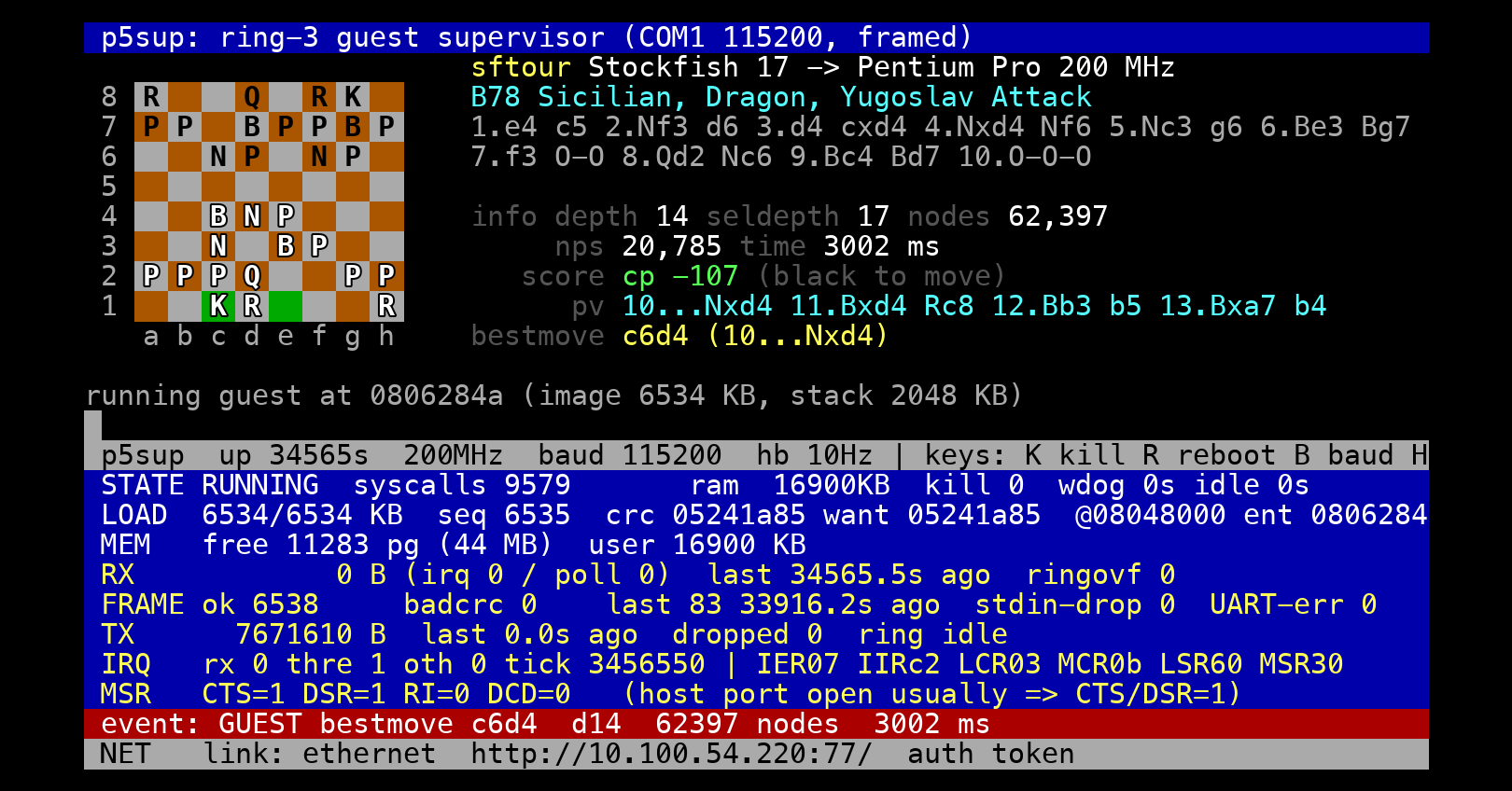
A proper counterfactual for anyone who remembers those matches: all that custom silicon against a beige box and thirty years of better ideas. The answer flatters the software and stings the hardware budget. Worth reading for what it says about how much search and evaluation have improved, with the machine held fixed.
IBM's Deep Blue relied on 30 processors and 480 custom chess chips. This experiment asks whether an off-the-shelf 1996 desktop running a smarter engine would have done the job, and concludes that commodity hardware of the day could have beaten Kasparov.
from the queen-of-curiosities dept.

One for the marvels shelf. Public Domain Review files it between bestiary and medical treatise, which is about where the sixteenth century kept most of its anxieties. The appeal is the provenance as much as the monsters: a Tudor royal manuscript full of wonders, and no need for a reader ticket.
A digitised manuscript of Pierre Boaistuau's Histoires Prodigieuses, dated 1559 and linked to Elizabeth I. It collects marvels, wonders and monstrosities, sitting somewhere between a medieval bestiary and a scientific treatise on birth defects.
from the life-finds-a-time-slot dept.
Filed under science fiction and not Dinosaurs, because no palaeontologist would sign off on this one. A 1993 pitch reel for Saturday-morning raptors is exactly the kind of archival oddity that makes the internet worth keeping. Note the word reportedly: its provenance rests on the channel that posted it, so enjoy with mild scepticism.
A promotional reel said to be for Escape from Jurassic Park, an unproduced animated series, has appeared online. The channel that uploaded it credits William Stout and Universal Cartoon Studios and dates it to 1993, and it has revived talk of one of the decade's best-known unmade cartoons.
Tuesday, November 3, 2026
from the good-to-be-here dept.
A local listings story, not a feature, but McEvoy is on the always-goes-in list and the rule is the rule. Worth noticing that a Dublin songwriter with a catalogue this deep is still working the small rooms of the English Midlands, which is exactly where songs like hers land best.
Lichfield's local news site reports that the Irish singer-songwriter is coming to a venue in the city. It is part of her run of UK dates this season, which also takes in several other small venues.
from the happy-valley-newgrass dept.
Nothing but a calendar entry, and Pennsylvania is a long way from Penang, yet a listing is still proof the band is out on the road. Consider this a status report on the tour, filed by a man who will not be attending but would like it noted.
An event listing on a Pennsylvania community site puts Punch Brothers in State College. The stop belongs to their North American touring this season.
from the galactic-census dept.

Fainter than faint, and that's the point: the small leftovers are the ones that keep the receipts on how the galaxy was assembled. Rubin has barely started its survey, so treat this as the opening trickle of a very long catalogue.
The observatory has picked out an ultra-faint dwarf galaxy and a globular cluster orbiting our galaxy. Each one adds a data point to the Milky Way's history of mergers and to the question of how dark matter shaped it.
from the nobody-told-the-loris dept.

Science mislaid it for the better part of a century; the people living on the island did not. A venomous primate is odd enough already, and this one comes from just down the road by Penang standards. There's still a threats section, but the headline act is survival.
A recent study documents the Bangka slow loris, last recorded in the scientific literature around 1937 and listed as possibly extinct in 2015, as still alive on Indonesia's Bangka Island. Researchers examined more than 90 of the animals, and locals had known about them all along.
from the hand-to-beak dept.
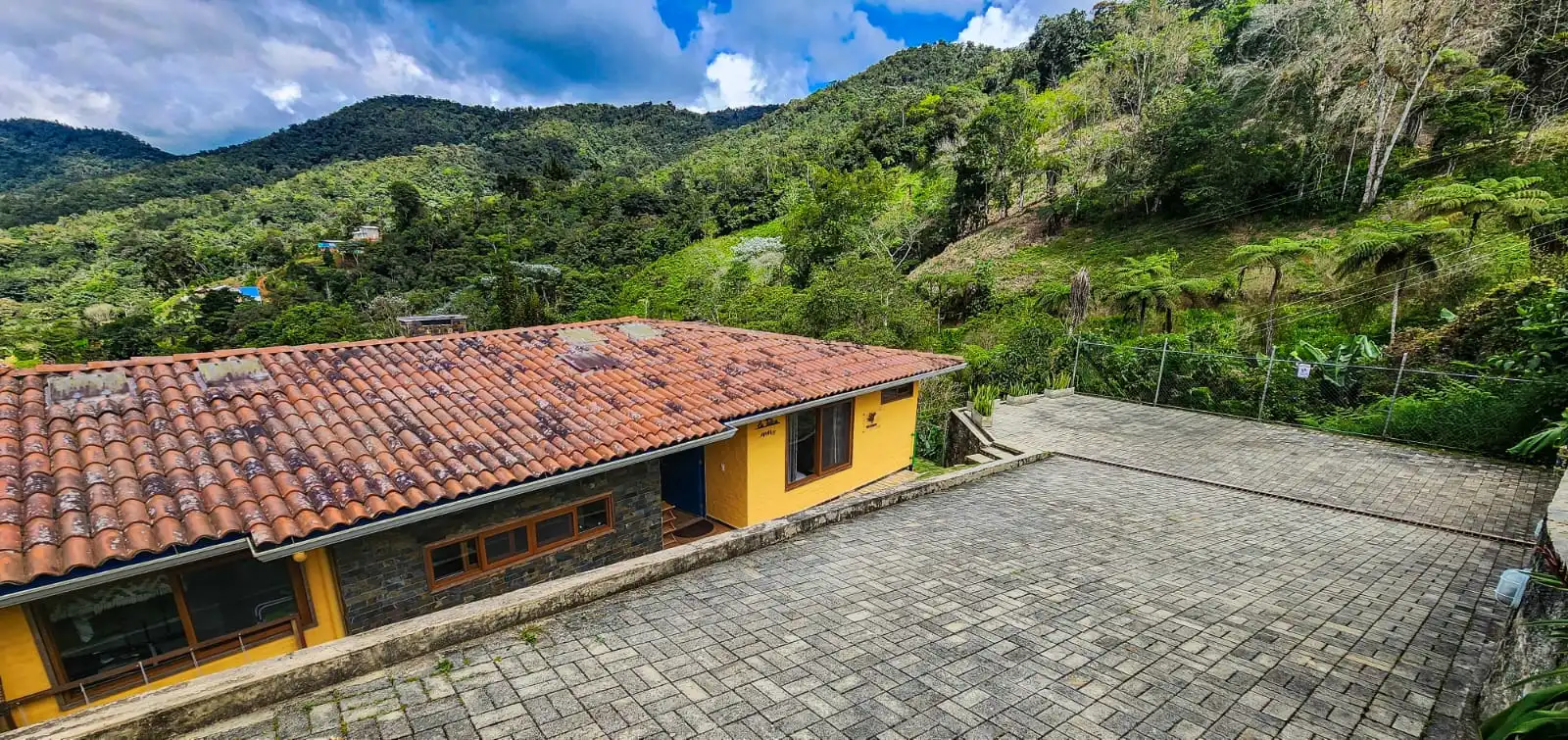
Filed as a lodge profile, but the buried lead is one individual Apical Flycatcher breaking the job description of its entire family. Flycatchers hawk insects on the wing and have no business taking room service, which is what makes this odd behaviour worth the click.
An interview with Yotoco Lodge in Colombia about what draws birders there. The star is a local endemic the staff call Caleño, which as far as they know is the only one of its species that will feed from a human hand.
from the signal-to-noise dept.
One outage, one suspicious command, and a developer who wouldn't accept that he had simply fat-fingered it. Anyone who has lived near the kernel will enjoy the moment the fifty-year-old utility turns out to be the culprit, and the digging that follows is the fun part.
After a production outage in September, the author of the piece traced the fault to the kill command itself. Following it back turned up a root cause behind a whole series of kill bugs shipped across Ubuntu LTS releases from 14 through 24, with recommendations at the end.
from the pony-express-delivery dept.
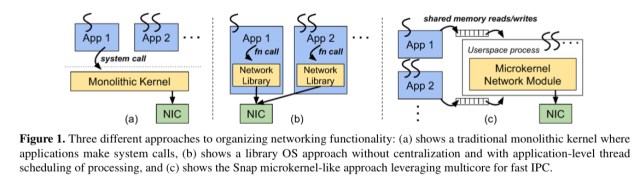
Adrian Colyer's astonishment is the charm here: Google didn't refactor TCP, it started a transport over from scratch. Old hands can read it as a good argument about where a network stack should live, and whether the kernel was ever the right address once you control both ends of the wire.
A write-up of the SOSP 2019 paper on Snap, a networking stack that had been running in production at Google for over three years. Its transport, Pony Express, handles reliability, congestion and flow control, and remote data access, all built for datacentre latency and CPU efficiency.
from the what-I-don't-know-isn't-knowledge dept.
Undergraduates mocking their teachers in rhyme is an ancient tradition, but few get the double honour of being suppressed and then preserved by a librarian. The quatrain on the Master, Jowett, became famous well beyond the college. Ideal idle reading, and short enough for one coffee.
In 1880 seven Balliol students printed a broadsheet of forty verses lampooning the college's dons. The college put a stop to it, a handful of copies survived, and the collection finally reappeared in print in 1939.
from the till-Megalosaurus-do-us-part dept.

No new fossil this run, since the week's dinosaur headlines have already been through here, so have some history instead. Buckland gets the credit for Megalosaurus, but notice the problem he faced: nobody had ever seen one, and somebody had to imagine it accurately. That somebody is the story.
Maria Popova tells the tale of William Buckland's 1824 realisation that jaw bones from a quarry near Oxford belonged to a giant reptile, and his search for an illustrator able to depict an unknown animal. The essay follows Mary Morland, who took on that work and whose life became entwined with his.
from the stones-point-the-way dept.
Five minutes from the road and signposted, delightfully, by arrows laid out in rocks, each one different. The best detail is that visitors can peer through the opening at the foot of the great central slab, and squeeze between stones to reach the back.
This is a huge Bronze Age burial monument near Dorgali in Sardinia, reached by a short walk. Its front is a row of very large upright stones, with a low opening in the central one that looks into the tomb.
from the kettle-on-the-boil dept.
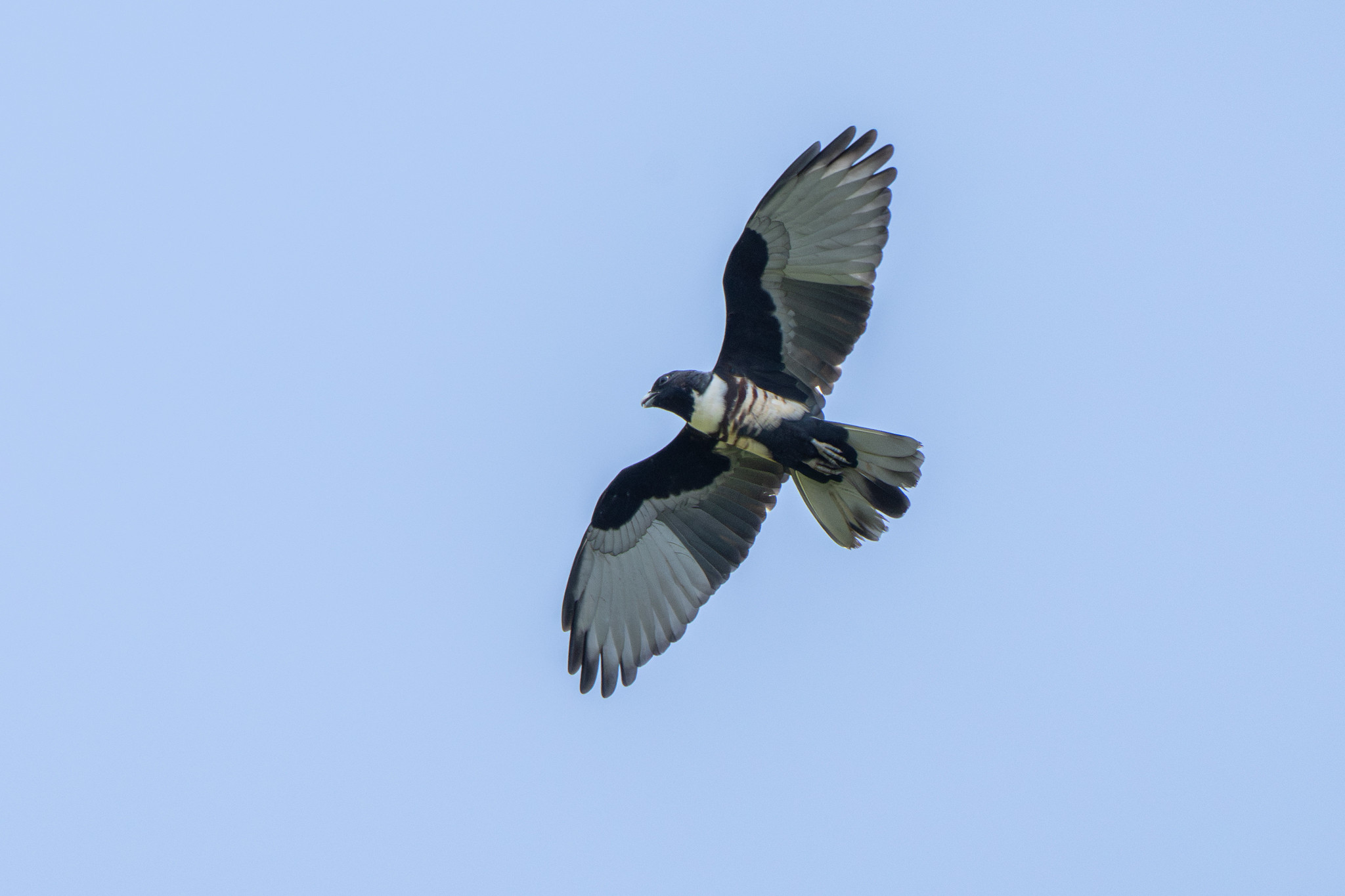
Nur handed this one in himself, with the reminder that the same river of birds passes over Penang, which makes it less a foreign travel piece than an advance schedule. The useful part is the calendar: honey buzzards first, then the rest, with Himalayan Vultures as the big closing act. Find a hill, bring a neck that forgives you.
A week-by-week guide to the autumn raptor passage through Singapore, running from the first Crested Honey Buzzards in late September to Himalayan Vultures in December, with swifts and swallows included. It names high spots such as Bukit Timah Summit and Mount Faber as the places to watch, and notes rarities already seen this season, including a Short-toed Snake Eagle and a Besra.
from the bad-blood dept.
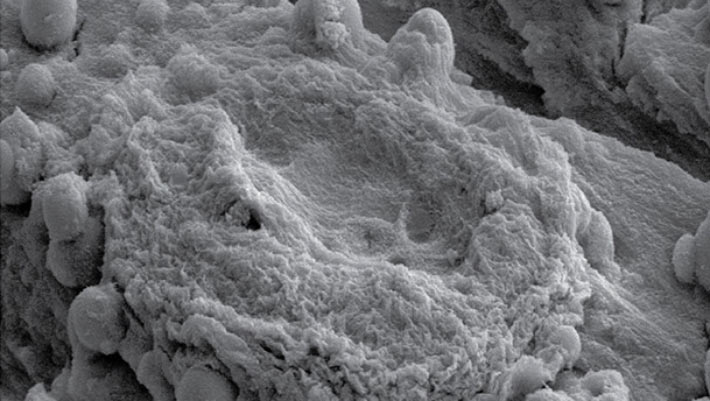
Soft-tissue claims in dinosaurs are a reliable way to start an argument, which is half the fun. Note the careful wording: chemical traces, not a Jurassic Park blood bag, so nobody needs to book a mosquito. The species name also salutes Brazil's National Museum, a nice touch for a fossil from that country's northeast.
Researchers report chemical signatures of red blood cells preserved in the bones of Aratasaurus museunacionali, a small coelurosaurian theropod from northeastern Brazil. The animal lived in the Early Cretaceous, about 115 million years ago.
from the one-bone-is-plenty dept.
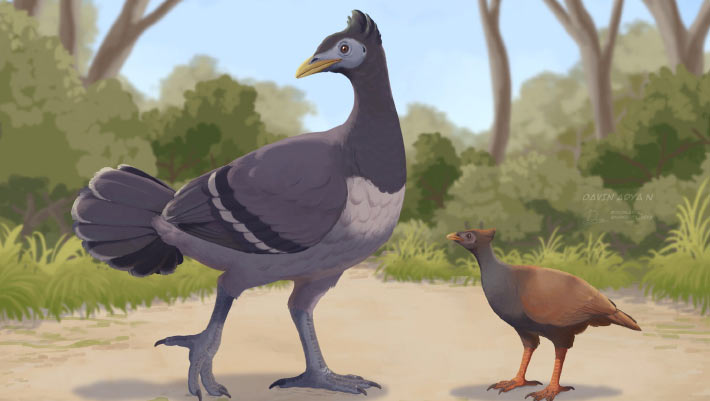
An Indonesian bird, a fossil, and the island better known for its small hominins, so this was never going to stay in the Dinosaurs pile. Megapodes are already the oddballs of the chicken family, outsourcing incubation to warm mounds of soil. Naming a species from a single fragment takes nerve, and a very good reference collection.
Scientists have described a new extinct megapode, a ground-dwelling relative of the chicken several times heavier than its living cousin. The species, Megapodius rokusi, is known from a single piece of leg bone recovered from a cave on the Indonesian island of Flores.
from the leading-and-trailing-indicators dept.
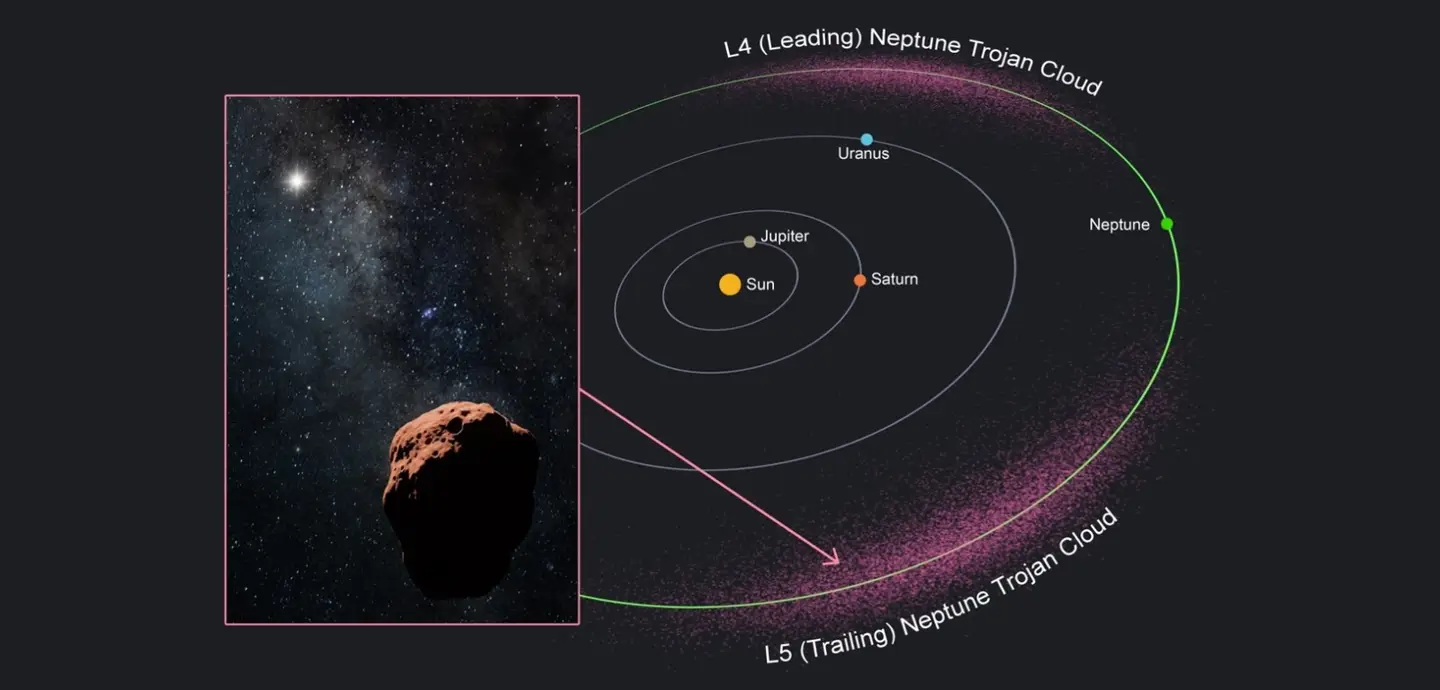
Trojans are the asteroids that share a planet's orbit, herded along at its gravitational balance points, and Neptune's have been stubbornly hard to catalogue. These bodies are slow-moving evidence of how the outer solar system got arranged. It is pleasant to see students get their names near the find rather than a footnote.
A team led by astronomers at Queen's University Belfast, with international partners, has studied newly found small bodies sharing the neighbourhood of Neptune. The work adds to the small known population of Neptune Trojans and to the picture of how the solar system evolved.
from the proof-by-exhaustive-evaluation dept.
Formal verification usually costs more than the kernel it protects, so anything that gets push-button proofs out of a symbolic evaluator deserves a look. Worth noticing is the contrast Adrian Colyer draws with Google's ship-fast Snap work from the previous post: two ends of the same spectrum. Old post, still a good argument.
Adrian Colyer's write-up of the SOSP 2019 paper by Nelson and colleagues on Serval, a framework for building automated verifiers for systems software. He sets its case against the fast-iteration approach, and looks at how symbolic evaluation can be made to scale to real low-level code.
from the sixty-megs-ought-to-be-enough dept.
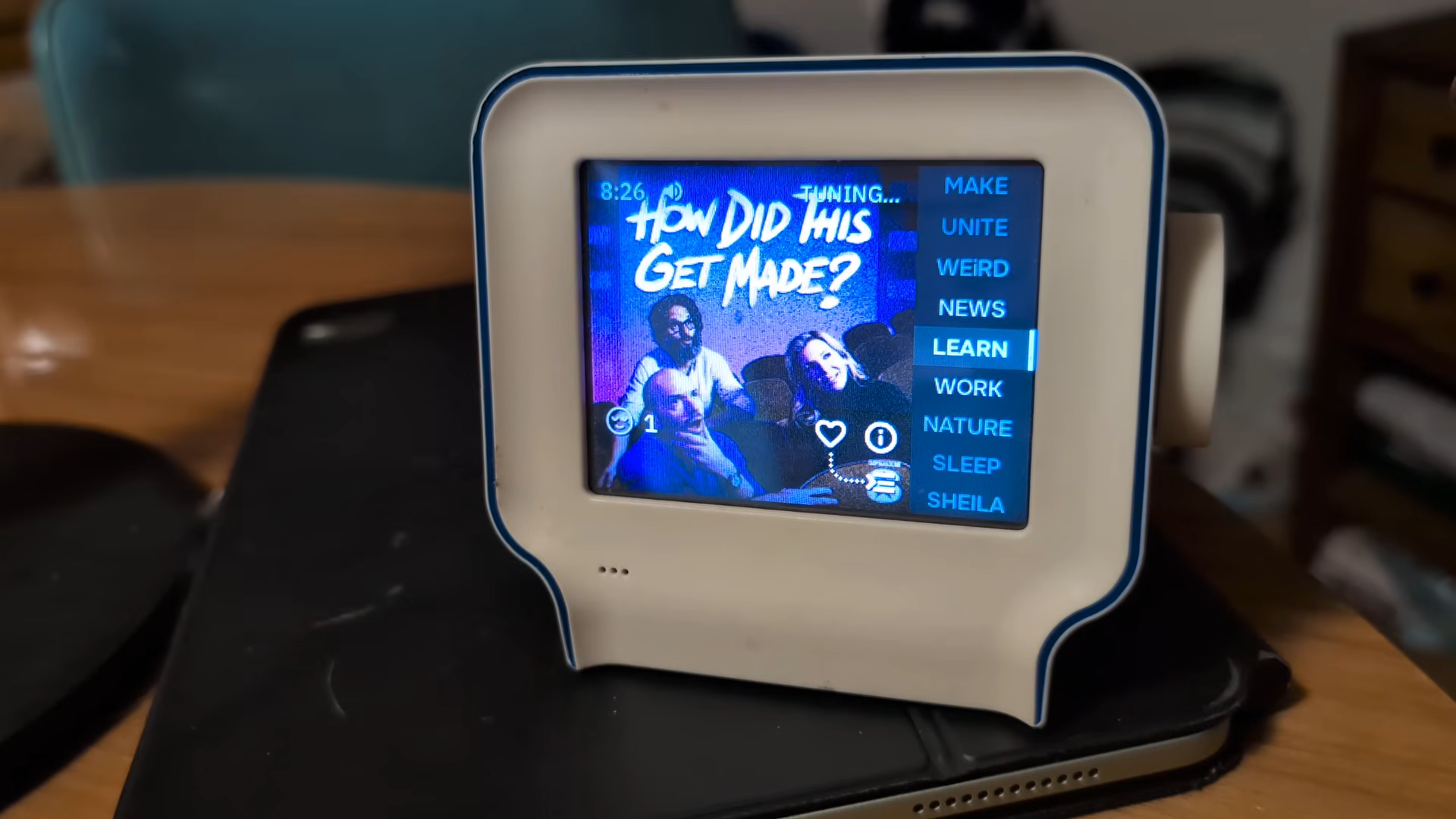
A 454 MHz ARM9 with no FPU, 60 MB of RAM and Linux 2.6.28 is not where most people go looking for a modern internet radio, which is the appeal. The nice detail is the bundled TLS stack, because the stock OpenSSL dates from 2004. Pure late-90s spirit: nobody asked, it was hard, and now there is a little box that works.
Brendan Fitzpatrick wrote a C client that turns an old Chumby One into a dedicated receiver for Static Radio, a station made of podcast content. It boots from a USB stick and leaves the original firmware alone, bringing its own mbedTLS plus fixed-point audio decoding and resampling, with sound going out through ALSA.
from the rabbit-hole-with-a-search-box dept.
Most museum collections are excellent and each one has its own slightly grim search page, so pooling them behind one visual interface is a real kindness. The Rijksmuseum and NASA in the same results is exactly the sort of juxtaposition this category exists for. Budget an afternoon.
Arkivism lets you search and browse millions of public domain works gathered from collections including the Smithsonian, The Met, NASA, the Library of Congress, the National Gallery of Art and the Rijksmuseum.
from the checkpoint-bravo-for-the-architects dept.
A disused motorway stop is not an obvious pilgrimage, but this one was built for the transit route into West Berlin and dressed like a glam-rock stage set. The nicknames alone earn the detour. Few border crossings have ever looked quite so pleased with themselves.
Atlas Obscura visits the former Dreilinden rest stop at Kleinmachnow, by the old Checkpoint Bravo. Built between 1968 and 1972 to designs by Rainer Rümmler and Hans Joachim Schröder, the complex of clearance buildings, gas stations and a bridgehouse is coordinated in bold red, blue and yellow.
from the fear-of-missing-out-since-1840 dept.
Timothy Taylor marks Election Day not with a hot take but with a Frenchman's chapter from 1840, which is about the most soothing way available to think about it. Tocqueville's point that small inequalities sting most once equality is the norm has aged annoyingly well. Economics by way of a very long view.
Taylor revisits a chapter of Democracy in America asking why Americans, well off by French standards of the 1830s, seemed so restless and melancholy. Tocqueville points to materialism, the fear of missing out that comes with mobility, and how a desire for equality sharpens both.
from the around-the-tape-head dept.
An archive story wearing a dance-music jacket: a DJ finds a tape the duo mailed him after Homework, it is in poor shape, and a specialist brings it back. There is a small thrill in possibly being among the first to hear it in nearly thirty years. Folk it is not, but the instinct to rescue a recording is the same one.
Radio DJ Ralph Lawson, who hosted a show called Trans Europe Express, found an hour-long mix that Daft Punk sent him in 1997. The tape was badly damaged, so he worked with a specialist to restore it and has posted the whole thing online. It is unclear whether it was ever aired.
from the cold-case-physics dept.
A cubic kilometre of Antarctic ice makes an unlikely telescope, but it is about the only sort that can see something that passes through you without saying hello. The interesting bit is what these high-energy arrivals might say about the violent places that made them. ScienceDaily's headline does the usual ghost routine; the physics needs no costume.
Scientists using the IceCube observatory, buried in the ice at the South Pole, are detecting neutrinos from distant cosmic sources with around ten billion times the energy of those from the Sun, offering a new probe of extreme astrophysical events.
from the dirty-laundry-of-the-solar-system dept.

Bring home a sample from an asteroid and it immediately starts arguing with your models. Ryugu's fine-grained clays vary far too much for one parent body to have had a single watery history, or so it seemed. A nice reminder that the real payoff of a sample return comes years after the capsule lands.
Samples from the asteroid Ryugu and carbonaceous chondrite meteorites show widely varying clay compositions, seemingly implying very different water conditions within one parent body. Universe Today reports on new research that offers a way to reconcile this.
from the bog-standard-heritage dept.

Two centuries in one family, on one of the most New England crops there is, and in November the bogs are still doing their thing. Boston.com points out you can tour it with the Halls themselves. It is a rare travel piece where the guides predate the Civil War, at least genealogically.
Boston.com looks at the Hall family of Harwich, who have grown cranberries on Cape Cod since 1816 and offer tours of their operation to visitors.
from the small-man-big-valley dept.

Twenty years in, Kristian Matsson turns back to the fiddle-rooted traditional music he grew up around in central Sweden. The New England and Irish fiddle tradition has a Nordic cousin here, and it is worth hearing what a songwriter does when he finally stops avoiding it. No Depression lets him tell it himself.
A No Depression interview with Kristian Matsson about Just Beyond Endless Mountain, his October album, on which he faced his fears and returned to the sounds of his childhood in rural Dalarna, including Swedish traditional folk music.
from the core-was-actually-core dept.
The Fourth Edition tape turned up in a storage room last year, and people are now doing what people should do with such a find: reading it for fun. This author follows memory allocation back to a routine sitting in the C compiler's tools, before it had become a tidy library call. Nothing you don't know about allocators, but plenty of pleasure in seeing the ancestor in medieval C.
A blogger reads the 1973 Unix Fourth Edition sources, recovered from a tape found last year, and traces how early Unix programs handled memory allocation, starting with a small routine in the C compiler's optimiser that looks like an early relative of malloc.
from the please-hang-up-and-hack-again dept.
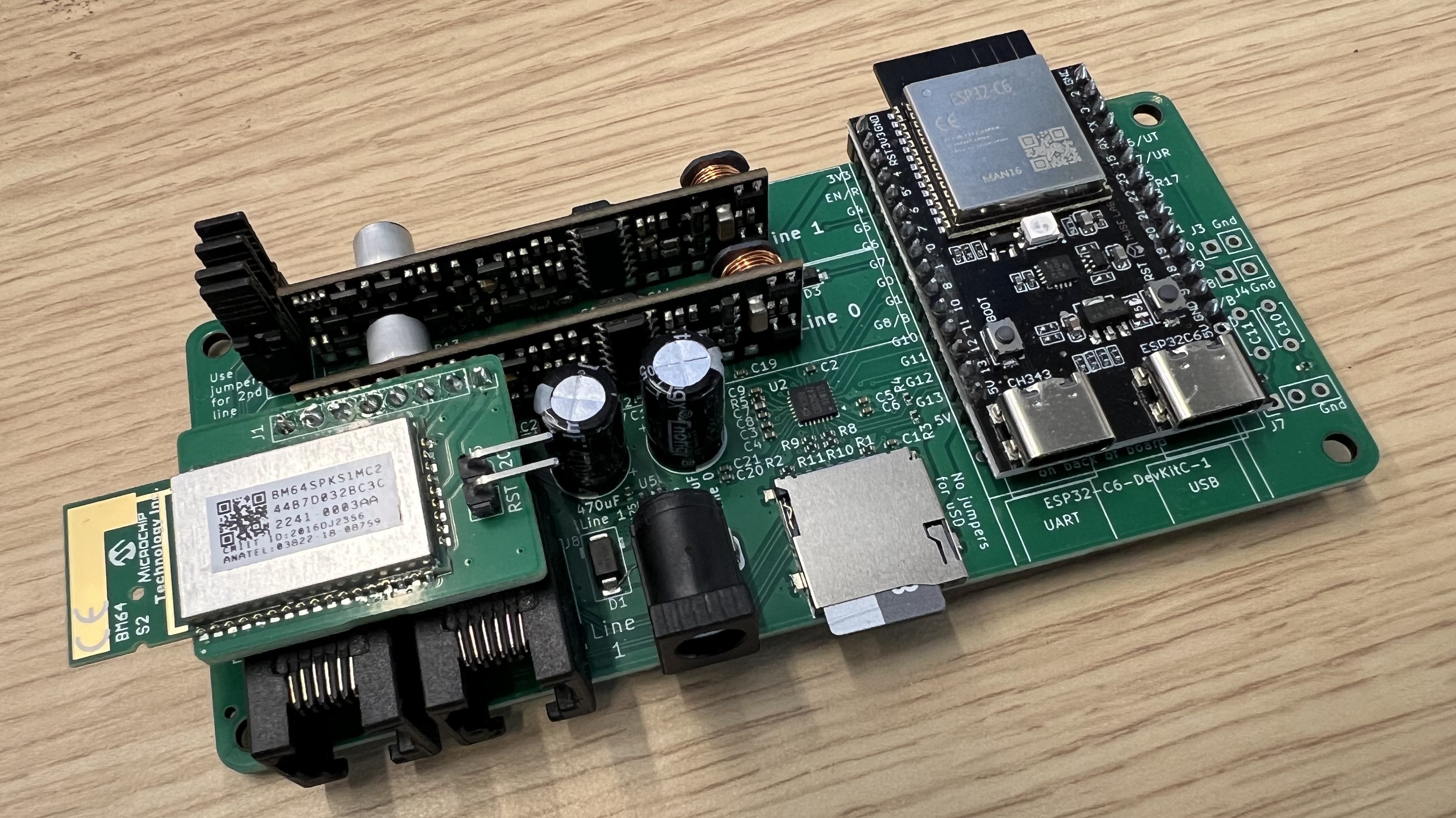
The phone company may have taken the copper away, but a small board with an ESP32 will give an old handset its dial tone back. Scott Dylewski's design handles ringing, calls between two phones, SIP and an answering machine, with dial codes for home automation. Open files, real bells, and the correct sort of pointlessness.
Scott Dylewski's Analog Redial is an open hardware board built around an ESP32-C6 that lets two old landline phones work again, with dial tone and ringing, calls between them or out over SIP, plus answering machine functions and a web interface.
from the very-small-business dept.

The address alone, No. 27¼, is worth the trip. Tiny storefronts inside a Victorian market, each one tied to some piece of London's story, peered at through little windows. Exactly the sort of thing you walk past nine times, which is presumably the point.
Atlas Obscura describes a small installation at Leadenhall Market in London, inspired by cabinets of curiosities, in which three miniature storefronts behind tiny windows each connect to the history of the market and the city.
from the wisdom-of-wobbly-crowds dept.
Ask a few hundred thousand people playing a daily game to sketch borders and average the results, and you get something between a real map and a mental one. The fun is seeing which borders the crowd knows cold and which dissolve into wishful wobbling. There are timelapses too, so you can watch collective geography come into focus.
The Drawn Maps combine borders of countries, states and provinces sketched by more than 300,000 players of the online daily game Borderline, with versions for the world, the USA, Canada, Italy and elsewhere, some as timelapses.
from the benchtop-heresy dept.

Few scientific reputations have been so thoroughly vaporised at room temperature. Quanta's writer comes back to it by way of philosopher Huw Price, who argues scientists may have been too risk-averse about it. Whatever you think of the physics, it is a good case study in how a field decides a question is closed.
Prompted by an exchange with Cambridge philosopher Huw Price, who co-authored a paper on attitudes toward cold fusion, a Quanta Magazine writer revisits the idea and asks whether scientists have been overly dismissive of it.
Monday, November 2, 2026
from the five-a-day-in-the-Cretaceous dept.
Everyone remembers the teeth; hardly anyone asks about dessert. A dinosaur diet built around fruit would be a real first, and the evidence is in the jaw, so note the careful 'may be' in the claim. It also gives the tabloids a nickname the Linnaean name can't compete with.
Researchers have named Infernogallus jamesi, a small, beaked, chicken-like dinosaur roughly the size of a turkey. Its jaw looks suited to mashing fruit rather than tearing meat, which would make it the earliest known specialist fruit-eater among dinosaurs if the reading holds.
from the waning-crescent-at-the-asylum-window dept.
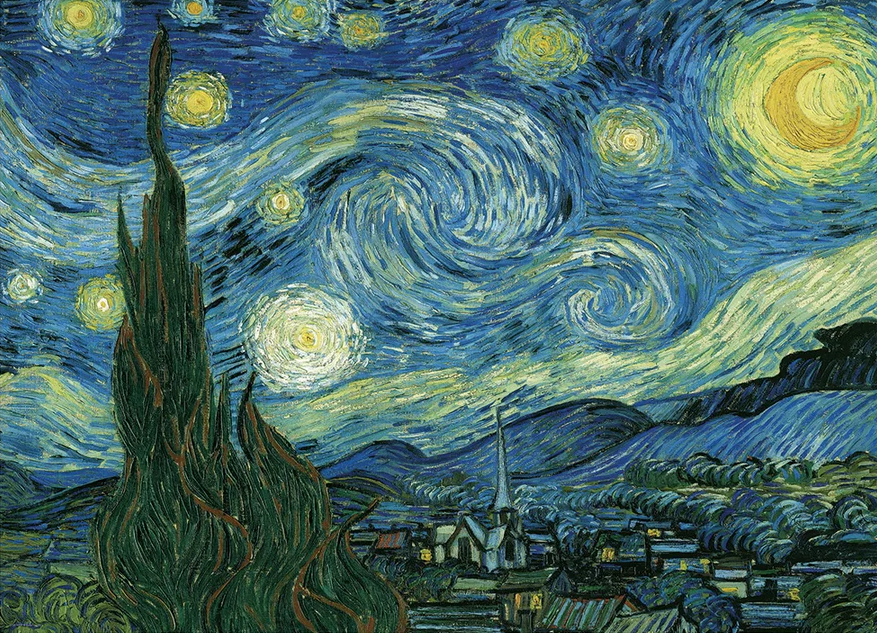
Astronomers have been arguing over this canvas for decades, and it is nice to see the painter treated as an observer rather than a mere visionary. Notice how specific the claim is: a date, a Moon phase and a named star cluster. Whether it fully settles things is another matter, but the method is the fun part.
A study in Scientific Reports matches the painting's sky to the pre-dawn view over Saint-Rémy around 22 July 1889. On that morning a waning crescent Moon, Venus and the Hyades cluster sat close together, which the authors argue fits both what Van Gogh painted and its shape.
from the swamp-canary-confidential dept.
Prothonotary Warblers are about the most improbable yellow you can find in a flooded forest, and Kansas was not always where you went looking. The appeal here is the crew: people on four hours' sleep and a strong handshake, doing fieldwork for love. Solo birders may recognise the condition.
Audubon follows a team of Kansas volunteers working with Prothonotary Warblers at the edge of the species' range, where nest-box monitoring has been building a picture of a growing breeding population. The piece is built around an open question about these birds that the team is trying to answer.
from the ten-times-the-cores-twice-the-value dept.
A useful corrective to the assumption that the cloud gets cheaper by itself. Core counts went up tenfold while cost efficiency merely doubled, and that gap should reshape a few back-of-envelope capacity plans. Worth reading for where the paper says the gains really went.
Aleksey Charapko and Murat Demirbas discuss a CIDR paper tracing ten years of AWS instance capabilities through cost-efficiency. Outside Graviton, CPU cost efficiency improved about twofold against a tenfold rise in core counts. The authors also publish an interactive dataset of the numbers.
from the serpent-parsing-library dept.

A whole divination manual devoted to snakes is exactly the kind of thing the archives are for. The Victorian packaging is half the charm: a learned society in Bombay soberly translating a book of snake omens. The lead image of Zahhak chained on Damavand is a good one too.
Public Domain Review presents an 1892 English translation of a Zoroastrian text on taking omens from serpents. It was prepared by the President of the Bombay Anthropological Society and is a small window on Persian divination and on colonial-era scholarship in Bombay.
from the amaze-amaze-for-your-consideration dept.

An Oscar campaign on behalf of a sentient spider-rock is the most cheerful sentence Hollywood has produced in a while. It also quietly honours puppetry, a craft that rarely gets near this category. Grace may need to explain the ceremony in musical chords.
Amazon MGM is putting James Ortiz, the puppeteer and voice of the alien Rocky in Project Hail Mary, forward for Best Supporting Actor consideration. Reactor's note covers the studio's awards push for the Andy Weir adaptation, in which Ryan Gosling's Ryland Grace meets Rocky in deep space.
from the second-berkeley-tape dept.
A comic book history of free software is the sort of thing that should have been handed out with every 1990s install CD. This is the third part of its BSD run, and the fun for someone who knows the story is seeing how it gets drawn. It is a bedtime story for people with opinions about init.
The thirteenth instalment of FOSS Comics, an illustrated history of free software, is part three of its BSD arc and covers how BSD Unix got going. It is a short, drawn retelling rather than a technical account.
from the 512-bytes-should-be-enough dept.

Set the hype aside and enjoy the hack: hand-written real-mode assembly, int8 weights, and a 386 hallucinating PCI bars for hardware that never existed. It is the same spirit as a demoscene intro, with a kernel log as the demo. Anyone who has read a lot of boot logs will find the output unsettlingly familiar.
This project pairs a 512-byte hand-written master boot record with an 11.5 KB int8 character model stored in the following sectors. It runs in 16-bit real mode with no operating system and generates fake Linux boot logs, having been trained on three megabytes of synthetic dmesg.
from the next-term-please dept.
An integer sequence encyclopedia throwing a party and giving out prizes is peak delightful small community. The headline winner is about buildings that can see a number of earlier buildings equal to their own height, which you can explain at a dinner party and then be unable to stop thinking about. The judges' one-line citations are half the pleasure.
The On-Line Encyclopedia of Integer Sequences has announced winners from more than 100 nominations, chosen by a committee including founder Neil Sloane. Eric Fox's city-building sequence took the A400000 number, and the list includes polyomino puzzles and simple definitions that lead to hard open problems.
from the northern-lights-switch dept.

A nineteenth-century physicist deciding that the way to test the aurora was to rig up a mountain is pure Victorian-scale ambition. BLDGBLOG treats it as landscape architecture, which is the right lens. Birkeland fans will feel a familiar tingle.
BLDGBLOG recounts how the Finnish physicist Karl Lemström, convinced the Northern Lights were electromagnetic, tried to produce an artificial aurora by turning a mountaintop into an apparatus. The post draws on a paper by the historian Fiona Amery and includes one of Lemström's watercolours.
from the out-of-where-exactly dept.
No dinosaurs this run, since the week's new species have already been through here, so the palaeontology slot goes to a relative. Notice the verb: scientists suspect, not scientists have proven. One old fossil in the right place can start an argument that takes decades to finish, and those are the best kind.
A fossil ape from Egypt, dated to around 17 to 18 million years ago, is prompting researchers to question whether East Africa was really where the ancestors of modern apes and humans first evolved. They now suspect North Africa and the Middle East may have played that role instead.
from the factor-fifty-will-not-help dept.
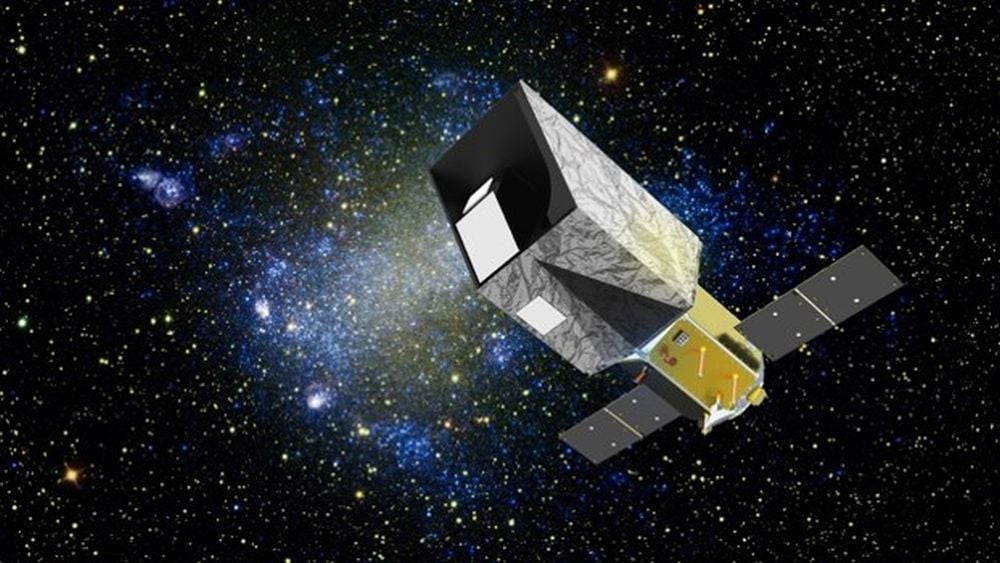
The ultraviolet sky has gone without a dedicated survey since GALEX shut down in 2013, which is a long time to leave a whole band unwatched. A hundredfold gain over its predecessor is the sort of number that makes astronomers start drafting proposals now. It also fills in the other end of the spectrum from all those infrared surveys.
NASA has committed to launching the UltraViolet EXplorer in 2031. The telescope is roughly a hundred times more powerful than GALEX, which ended its mission in 2013, and its ultraviolet survey is meant to complement infrared surveys from other observatories.
from the nuts-to-your-air-defences dept.

A premise so good it barely needs the build, but the build holds up anyway: look at how the shaping around the cockpit tapers away into the hull. For anyone who birds, note that this is a rodent revenge fantasy aimed squarely at raptors. We remain neutral, and watch the skies.
LEGO builder Oliver Barrell has made a sleek spaceship for squirrels who have had enough of being carried off by birds of prey. The Brothers Brick singles out the sculpted cockpit and the way the whole craft tapers together.
from the lazy-evaluation-in-silicon dept.
Lisp machines get all the nostalgia, but the 80s also had hardware for non-strict functional languages, and it lost for the usual reason: commodity CPUs kept getting faster. Now that they've stopped being so obliging, a PhD student is trying the idea again for the sheer cute of it. The demo comes first, which is how all such talks should open.
A PhD researcher describes Ouros, a combinator-based graph reduction machine that executes Haskell directly, with no software runtime or kernel underneath. The latest work adds input and output and puts the design on an FPGA, where a program talks over a UART, and the post covers the architecture and its limits.
from the steal-no-force dept.
Everyone who has written a journalling filesystem has quietly reinvented a corner of this, usually with worse answers about partial rollbacks. Colyer's write-up from his series on techniques everyone should know is a good excuse to revisit a 1992 paper that still underlies how databases come back from a crash. Old is fine here; recovery has not gone out of fashion.
Adrian Colyer walks through Mohan and colleagues' 1992 paper on ARIES, the canonical steal, no-force recovery algorithm built on write-ahead logging. It was the fifth instalment in a seven-part series on foundational database techniques, drawn from the Redbook.
from the records-committee-will-see-you-now dept.

Closer to home than most of what crosses this desk. The pieces on raptors taking large prey and on pygmy woodpecker identification are the ones for a solo birder in Penang, and the records committee's first-record accounts make for surprisingly gripping reading. It's a free download, so it's a fair thing to have on a phone in a hide.
The March 2026 issue of the Malaysian Bird Report covers call playback, mistletoe and flowerpeckers, raptors with large prey and unusual breeding behaviour. It also carries the MNS-BCC Records Committee report for 2024 and 2025, plus identification pieces on pygmy woodpeckers, godwits and dowitchers.
from the note-for-note dept.

Songwriting-craft reading rather than a release plug, although the album did land the same day. The interesting bit is the starting point: a child who sang everything exactly as recorded and took no liberties at all. Anyone who has learned fiddle tunes off a record will know where that road goes, and how long it takes to leave it.
In an essay marking her new album Hell or High Water, No Depression's October Spotlight artist looks back on how she came to sing as herself. She starts with a childhood spent reproducing recordings exactly, and traces the long road from there to what she calls her most authentic voice.
from the bust-on-the-mantelpiece dept.

Award lists are the most honest kind of reading recommendation, since at least a jury had to sit through the whole pile. This one had Tamsyn Muir and Ann VanderMeer on it, which is reason enough to trust the shortlist. Worth a scan of the shorter categories too, where the odd thing you'd otherwise miss tends to hide.
The 2026 World Fantasy Award winners were announced at this year's World Fantasy Convention in Oakland, held from October 22 to 25. The novel award went to Once Was Willem by M. R. Carey, and the full list of winners and nominees is set out by category.
from the small-bites dept.

Victorian audiences paid to see this sort of thing projected on a wall, and frankly the entertainment budget has only gone downhill since. The title gives the flea its proper Latin name and the man no name at all, which tells you who the star is. It's a single image and a two-second read, ideal for an idle moment.
Public Domain Review presents an 1885 lantern slide titled The Attack of the Monster, which shows a man in combat with a flea. The Latin name in the title is the human flea, here given a monster's billing.
from the seven-ears-on-one-stalk dept.
A heritage-grain story with an unusually good opening: an unknown sack, a pile of manure, and no expectations whatsoever. Then a plant turns up that the farmer can't find in any agricultural book, and he finds it in Genesis instead. Faith, farming and a very tall crop, all from one sack.
In the early 1990s Parma grain farmer Claudio Grossi found an old sack of seeds in his attic, probably left by his great-grandfather, and tipped them onto a manure pile. Among the wheats that came up was one about six feet tall, with seven ears on a stem and kernels in a range of colours, which he eventually matched to a passage in the Bible.
from the quarry-hours dept.
Dinosaur news from the back room rather than the badlands: the fossil sat quietly in a museum drawer for a quarter of a century before anyone recognised it as something new. The name honours a man who worked at the quarry where it was found and died before the discovery, which is about as gentle a dedication as taxonomy gets.
Researchers working through the Natural History Museum's fossil collections in London have described a new British dinosaur, Paludohadros proudlovii, from bones collected at an English quarry some 25 years ago and never properly studied. The species name commemorates a quarry worker, a husband and father of two, who died before the find was made.
from the long-patience dept.
Seven years of searching, 400 feet of cold Gulf of Maine water, and a ship that's been missing since the last winter of the Second World War. It's a reminder that the war came right up to the New England coast, and that some of the best history out there is still on the sea floor waiting for people stubborn enough to go and look.
Technical divers have located the wreck of the SS Cornwallis, a freighter torpedoed by a German U-boat off the coast of Maine in late 1944, after a search lasting seven years. The wreck lies in about 400 feet of water, roughly eight decades after it went down.
from the dosimeter-in-a-mannequin dept.
Artemis I flew no crew, but it did fly instrumented stand-ins, and the readings are in. The headline is mildly reassuring: deep space near the Moon is harsher than low Earth orbit, but less so than the pessimists had pencilled in. The more interesting part is what the tiny detectors say about how radiation actually moves through a body.
Data from radiation detectors carried on the uncrewed Artemis I flight show that cosmic radiation near the Moon is higher than in Earth orbit, though by a smaller margin than many expected. Small experimental sensors also revealed new detail about how radiation passes through human tissue, which feeds into planning for crewed lunar missions.
from the more-panels-captain dept.
A seven-hour shift bolting a roll-out solar blanket onto a station that's been flying since before some of its crew were born. There's something pleasing about an ageing spacecraft still getting hardware upgrades, even if part of the point is keeping the lights on all the way to its planned, controlled exit.
Two astronauts completed a spacewalk of just over seven hours to install a new roll-out solar array on the International Space Station. When the last array in the set goes up in early November, the station should have up to about 30 percent more power available for its remaining operations and eventual deorbit.
from the good-enough-is-good-enough dept.
A filesystem born in 9front, Plan 9's stubborn descendant, now being ported to OpenBSD by its own author, with the mailing list doing the testing and sending patches. This is the late-90s spirit in its purest form: no roadmap slide deck, just code, a preview diff, and a polite note that theory and reality may still diverge in the error paths.
Ori Bernstein, the author of GEFS, has posted an updated preview of the 9front copy-on-write filesystem running on OpenBSD. The new round reworks error handling, forward-ports bug fixes from 9front, leaves the first block free for disklabels and adds userspace tools such as mkfs, with snapshot control still to come.
from the four-nines-and-a-shrug dept.
Anyone who has sat in an SLO review knows the uptime percentage is the least informative number on the slide. Mogul and Wilkes, who have both been on the provider side of that argument at Google, lay out why customer and cloud interests pull in opposite directions and what more meaningful promises might look like. Old, short, and still annoyingly relevant.
Adrian Colyer's write-up of Mogul and Wilkes's HotOS 2019 paper on cloud service-level objectives. It untangles SLIs, SLOs and SLAs, explains why contractual SLAs drift towards describing worst-case behaviour, and argues for metrics that reflect what customers actually experience on shared, statistically multiplexed infrastructure.
from the needle-in-a-Dutch-haystack dept.

A seventeenth-century Dutch physician in the service of the VOC goes to Japan, meets acupuncture, and writes it up for European readers in Latin. The diagrams are the draw: anatomy filtered through two medical traditions and a language barrier, with all the charming confusion that implies.
The Public Domain Review presents illustrations from De Acupunctura, published in 1683 by Willem ten Rhijne, a Dutch doctor who encountered acupuncture while working for the Dutch East India Company in Japan. His treatise was one of the first detailed European accounts of the practice.
from the koerner-the-market dept.
Favourite-band bulletin: Punch Brothers are on the bill at Toronto's Koerner Hall this month, one of the best-sounding rooms in North America for acoustic string music. It's only a listing, but after Carnegie Hall and the European run it's another sign the band is out on the road with real momentum this season.
A concert listing for Punch Brothers at the Royal Conservatory of Music's Koerner Hall in Toronto, scheduled for 17 November 2026.
from the googolplex-and-counting dept.
A question that sounds like a bar bet and turns into a tour of how mathematicians actually write down huge numbers, from factorial towers to notations that make a googolplex look like pocket change. The 280-character limit is just the excuse; the real subject is how far a little notation can carry you.
Kottke points to an exploration of the biggest number you could fit in a single 280-character post, which quickly gets complicated once you move past strings of nines and start using clever notation and definitions.
Sunday, November 1, 2026
from the some-assembly-required dept.
Ostrich-mimic dinosaurs are rare finds in eastern North America, so a big block of one arriving at a museum lab counts as news. The fun part is that the discovery is only half done: what's inside gets found the slow way, with dental picks and a visiting public watching through the glass.
The North Carolina Museum of Natural Sciences has a roughly 5,000-pound block of rock holding the remains of an ornithomimid, a long-legged, beaked ostrich-mimic dinosaur, from about 75 million years ago. Its preparators are now starting to open the jacket and expose the bones for study.
from the just-add-hydrogen dept.

The usual story has comets and wet asteroids topping up a dry young Earth. This one argues the plumbing was built in: make the water during formation and the comets become optional. If it holds, every rocky planet gets a home-brew kit, which is good news for anyone counting habitable worlds.
New research suggests Earth did not need comets and asteroids to deliver its water after it cooled. Instead, water could have formed as part of the planet's own assembly, and the authors argue the same process would work for rocky planets in general.
from the every-page-counts dept.
Every thread drags a kernel stack along with it, and on a box running tens of thousands of threads that adds up to real memory doing nothing most of the time. The interesting tension is the old one: shrink the stacks and you need a plan for the rare deep call chain that would otherwise walk off the end.
LWN looks at the ongoing work to cut the memory the kernel spends on per-thread stacks, including ideas such as stacks that start small and grow on demand, and letting the stack size be chosen at boot rather than fixed at build time. It covers the trade-offs between memory savings, overflow safety and performance.
from the graffiti-was-a-handwriting-system dept.

Aaron Ardiri assumed nobody cared about Palm OS any more, then discovered a whole community of people still poking at it. So he emptied his attic of tools, source and documentation for them. It's the sort of preservation that only happens because someone never threw out an old drive.
Developer Aaron Ardiri was contacted about Palm OS software he had written decades ago and found an active enthusiast community still exploring the platform. In response he published his large personal archive of development tools, source code and documentation from his years writing for early Palm handhelds.
from the five-stars-would-not-be-cursed-again dept.
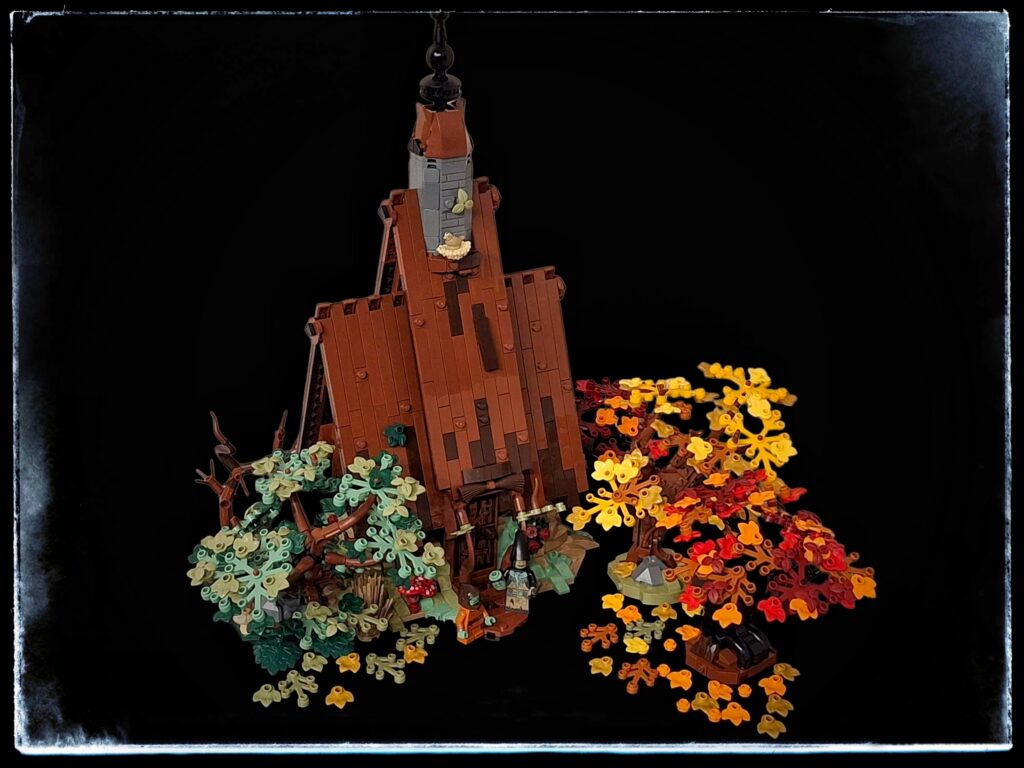
Alexandr Afanasenkov's Dark Dreamlands builds are always more unsettling than they have any right to be in plastic. This one does it with misdirection: tiled roof, autumn trees, all very charming, until you meet the hostess. Worth a close look at how he makes a minifigure properly creepy rather than cartoon-evil.
Builder Alexandr Afanasenkov has made a witch's lair disguised as an inviting countryside cottage, with a detailed tiled roof and lush autumn foliage. The host is a heavily customised witch minifigure that The Brothers Brick rates as one of the eeriest it has seen.
from the songs-in-the-key-of-fandom dept.
Filk is fandom's own folk tradition, songs about starships and dragons sung in con suites into the small hours, and the Pegasus Awards are its big night. That makes this a rare spot where two of the feed's loves overlap. The nominee sound clips are the real treat.
The winners of this year's Pegasus Awards, which honour excellence in filk music, were announced at the Ohio Valley Filk Fest on October 31. File 770 points to sound clips, lyrics and details for the nominees.
from the dry-run dept.
The Rockrunner is one of those birds you have to go to Namibia for, a near-endemic skulker of rocky slopes with a song much bigger than it is. This is a pleasant walk-and-bird account of a reservoir that rarely fills, which is exactly the kind of place a solo birder ends up liking best.
A birding trip report from Avis Dam, just east of Windhoek, a 1930s reservoir that is often well below what its builders hoped. A walking trail circles it, with wide views and dry-country birds, and the author goes looking for the Rockrunner among the rocks.
from the which-way-is-auspicious dept.

Before route planners, you planned a journey by consulting the calendar and the compass for omens. These diagrams are a lovely piece of that thinking: part almanac, part map of the heavens, all very tidy. The Public Domain Review has them because the manuscript they came from is gone.
The Public Domain Review gathers diagrams from the Qanoon-e-Islam, an 1832 work drawn from a now-lost Urdu manuscript on customs in South India. The diagrams set out which days and directions were thought favourable or unlucky for setting out on a journey.
from the f-stop-and-listen dept.
No Depression's review starts from the nice idea that album photographs once told half the story. Newberry spent decades shooting Chicago's musicians, and a book like this reads as a history of a scene told through faces and rooms. Good idle-moment browsing.
A review of a new book by photographer Jim Newberry, collecting a hundred portraits from nearly four decades of photographing Chicago musicians. The piece considers how music photography captures the mood of a moment and what Newberry's pictures say about the city's scene.
from the dawn-chorus dept.

A detour from the usual: composer Paola Prestini set texts about birds for the Young People's Chorus of New York City, to mark twenty years of Maria Popova's site. Children singing about birds is about as far from a doomscroll as this feed gets.
To celebrate The Marginalian's twentieth anniversary, composer Paola Prestini set a cycle of pieces built around birds and divination for the Young People's Chorus of New York City. Maria Popova shares the performance along with her thoughts on music, childhood and what singing reminds us of.
from the salt-of-the-asteroid-belt dept.

Ceres holds something like a quarter of the asteroid belt's mass and still gets treated as the belt's big rock rather than a world. This one is a nice reminder that its surface is a chemistry problem: what looks like ice in the spectra may be sitting on top of, or mixed into, a lot of salt.
New work on the dwarf planet Ceres suggests that water ice on its surface can mask the spectral signature of large salt deposits underneath or alongside it. That matters for reading the famous bright spots, which are thought to be left behind by briny, cryovolcanic activity from a layered interior.
from the it-was-starspots-all-along dept.
Nineteenth-century astronomers were sure a giant planet was tugging on this binary, and the claim has haunted it ever since. The tidy answer is stellar activity mimicking a planet, which rules out Jupiters in the interesting zones but leaves room for smaller, quieter worlds 16 light-years away.
Astronomers have traced a long-debated wobble in a two-star system about 16 light-years from Earth to activity on the stars rather than an orbiting giant planet. Large planets are now excluded from key orbits, but smaller and potentially habitable planets remain possible.
from the couldnt-fly-couldnt-hide dept.
Somebody went and built properly sourced timelines for extinct birds, last confirmed sighting to formal declaration, and the data says something grimly predictable about who disappears first. The careful, primary-source bookkeeping is the real attraction here; a calmer way into extinction than the usual doom headline.
A guest piece at 10,000 Birds draws on a hand-built, fully sourced dataset of extinct bird species, tracking last confirmed records and how long it took for each to be declared extinct. The pattern it finds is that flightless species were lost first, with a gap of more than two centuries in the record between them and the rest.
from the two-turntables-and-a-studless-microphone dept.

Plenty of people build LEGO record players; Olle Moquist built two that actually spin records, then added the rest of the booth. The motor control comes from old 9V train controllers and a Technic control centre from 1990, which is the kind of parts-bin archaeology that earns extra respect.
Builder Olle Moquist has made a fully functional pair of LEGO turntables, plus a modular mixer and sampler, so the whole thing works as a DJ setup. The drive is handled by two vintage 9V train controllers and a 1990 Technic control centre.
from the dot-PP-and-a-pot-of-tea dept.
Someone who dreaded every writing assignment at school ended up writing two novellas and setting them in groff, the troff descendant most of us only meet in man pages. There is no product, no launch and no download, just a person doing an old Unix thing for the joy of it, which is exactly the spirit this category exists for.
A self-confessed technical person describes writing two novellas, one of roughly 15,000 words and one of about 40,000, and typesetting them in A5 with groff. The first took seven months; the second took ten days. The stories themselves will stay private.
from the you-forgot-to-change-the-other-file dept.
A double header from the archive, both from NSDI 2020 and both about correlation. Rex mines commit history to notice when you changed one config file without its usual partner, while CloudCanary goes hunting for shared dependencies that would take replicas down together. Anyone who has broken production with a half-applied change will recognise the problem immediately.
Adrian Colyer reviews two NSDI 2020 papers. Rex, deployed widely at Microsoft, flags commits that touch files usually changed together with others that were left alone. CloudCanary looks for hidden sources of correlated failure in service updates and suggests targeted fixes to improve reliability.
from the medieval-pop-up-book dept.

John of Arderne was the fourteenth-century English surgeon of fistula fame, and this scroll copy of his work comes with diagrams that have a wonderful, unsettling frankness. The patients seem to be helpfully peeling back their own skin for the viewer, which is either very good pedagogy or very bad bedside manner.
The Public Domain Review looks at an early fifteenth-century scroll, now in Sweden, that copies the surgical writings of John of Arderne. Its anatomical drawings show patients holding their bodies open to display what lies beneath.
from the a-long-time-ago-on-FM dept.
Before home video was a given, NPR turned the original trilogy into long-form radio, with Mark Hamill and Anthony Daniels back in their roles for the first two. It reportedly brought the network a flood of new listeners, and the whole run is preserved online, John Williams cues and all. Perfect for a long walk with headphones.
Kottke points to NPR's radio dramatisations of the original Star Wars films, aired in 1981, 1983 and 1996, which expand the stories considerably. All three are available to stream in full, and they use John Williams' score.
from the neither-rain-nor-snow-nor-phonetic-spelling dept.
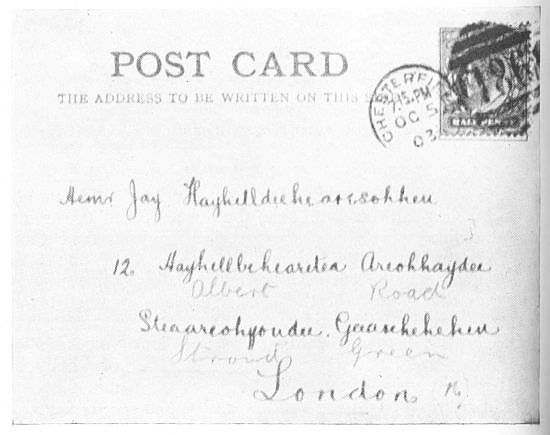
Some prankster addressed a postcard by writing out the name of each letter in full, producing what looks like Greek crossed with German. The Post Office decoded it, pencilled in a translation, and delivered it the following evening. A small, cheerful monument to sorting-office ingenuity.
Futility Closet reprints an old letter to a periodical about a postcard sent from a village near Chesterfield whose address spelled each letter out as a word. Post Office staff worked it out, annotated it in pencil and delivered it within a day.
from the ferrite-in-low-earth-orbit dept.
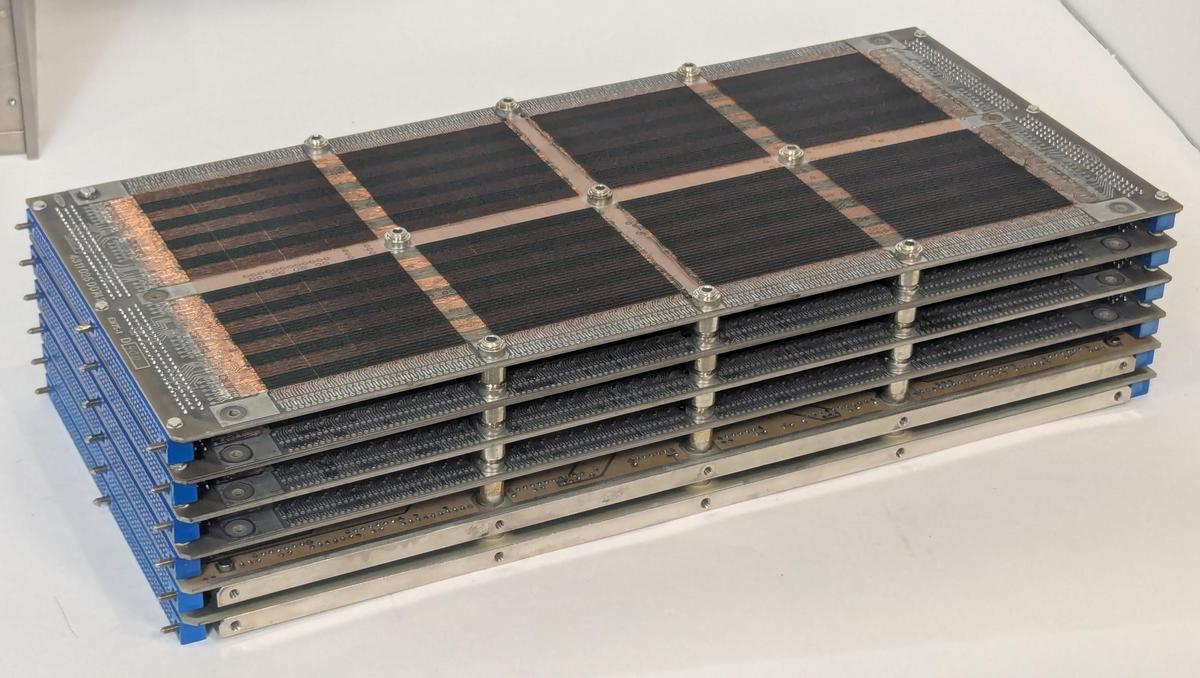
Spacelab was European, so it flew a French Mitra minicomputer rather than the Shuttle's IBM machines, and that computer stored its 128 kilobytes in magnetic cores. Shirriff pulls the board, looks at the core planes and explains how it all hangs together, at the usual level of loving detail.
Ken Shirriff examines the magnetic core memory module from the Spacelab laboratory's onboard computer, a French-built Mitra 125 MS. He shows the core stack and walks through how bits were stored in tiny ferrite rings and read back.
from the double-double-fiddle-trouble dept.
Any time Aoife O'Donovan turns up the feed takes notice, and here she is lending her voice to Kaia Kater's 'The Witch' as the very first track of the hour. The rest of the running order is a good seasonal grab bag, with a set of waltzes for anyone who prefers their Halloween in three-four time.
Folk Alley's weekly radio show leans into Halloween with dark and eerie songs, leading with Kaia Kater's 'The Witch' from her album Strange Medicine, featuring Aoife O'Donovan. Also on the playlist: new music from Jay Farrar and Kelly Willis, a live cut from Béla Fleck's new bluegrass record, and a set of waltzes.
from the what-big-mouth-you-have dept.
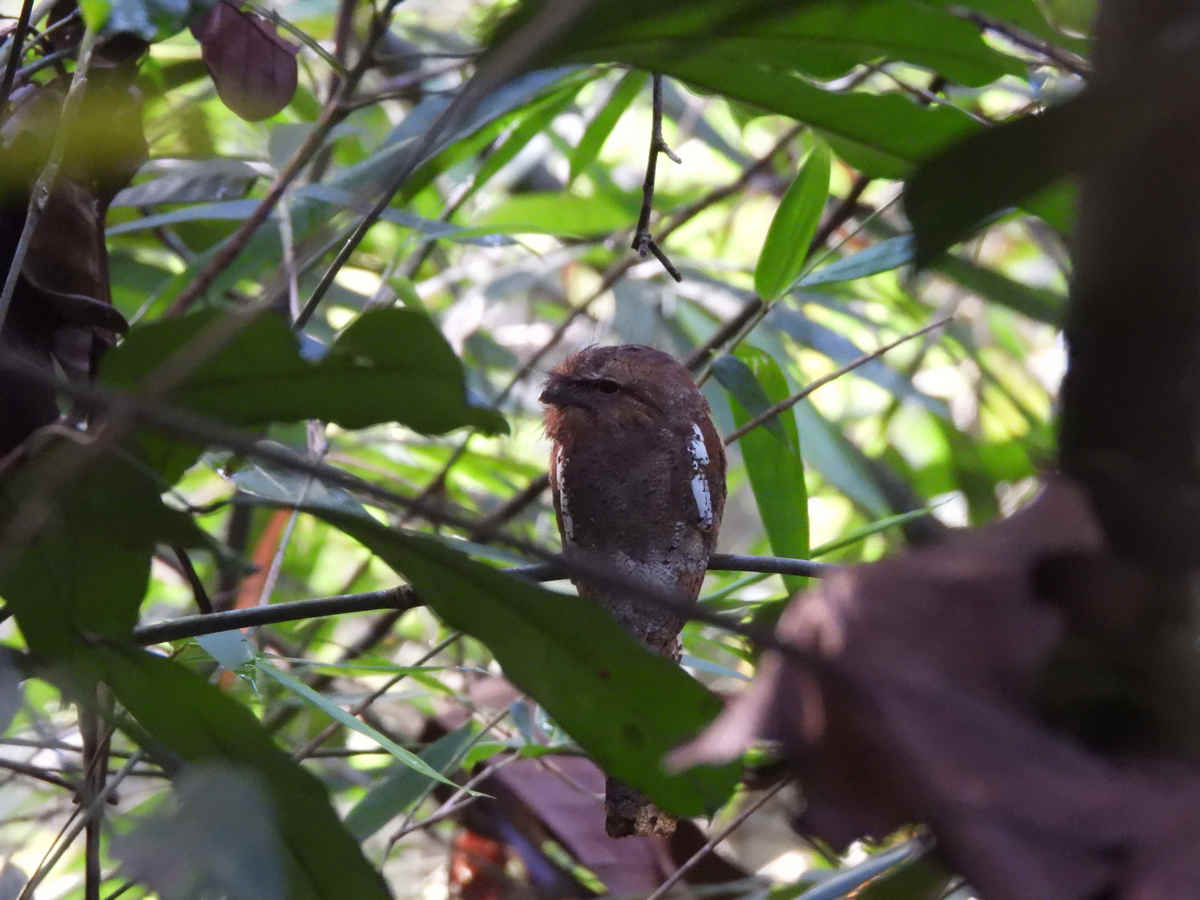
A frogmouth on home turf, and one with a tangled naming history, since the bird once lumped in with the Javan Frogmouth now gets its own species name in most checklists. Tom Gray is a conservation scientist with long experience in tropical Asia, so expect the taxonomy to be handled with more care than the usual field-guide footnote.
Tom Gray, a British birder and conservationist based in Southeast Asia for two decades, writes on 10,000 Birds about Blyth's Frogmouth in Selangor and the question of what the bird should be called. The small, cryptic night bird of Peninsular Malaysia's forests is a good case study in how splits and renamings play out.
from the please-hold-for-the-next-available-light-day dept.
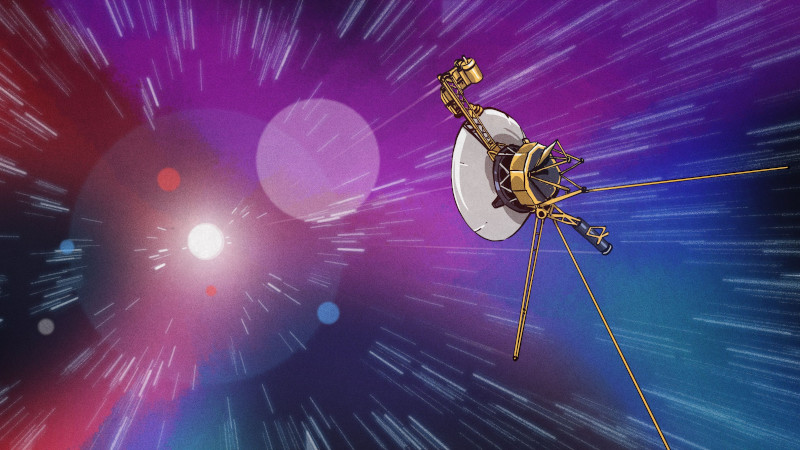
Forty-nine years out and running on a dwindling plutonium budget, Voyager 1 dropped off the air for over 24 hours in mid-October before checking back in. The interesting part is the context: the team has been switching instruments to lower-power modes while juggling heater and fuel-line temperatures, and every such change is a calculated gamble with hardware nobody can touch.
Voyager 1 fell silent for more than 24 hours on October 18 and 19 before contact resumed. Engineers have not yet pinned down the cause; the most recent change was a batch of instrument switches to lower-power configurations meant to stretch both Voyagers' shrinking power supplies while keeping their electronics and fuel warm enough.
from the sing-it-from-the-magnetosphere dept.
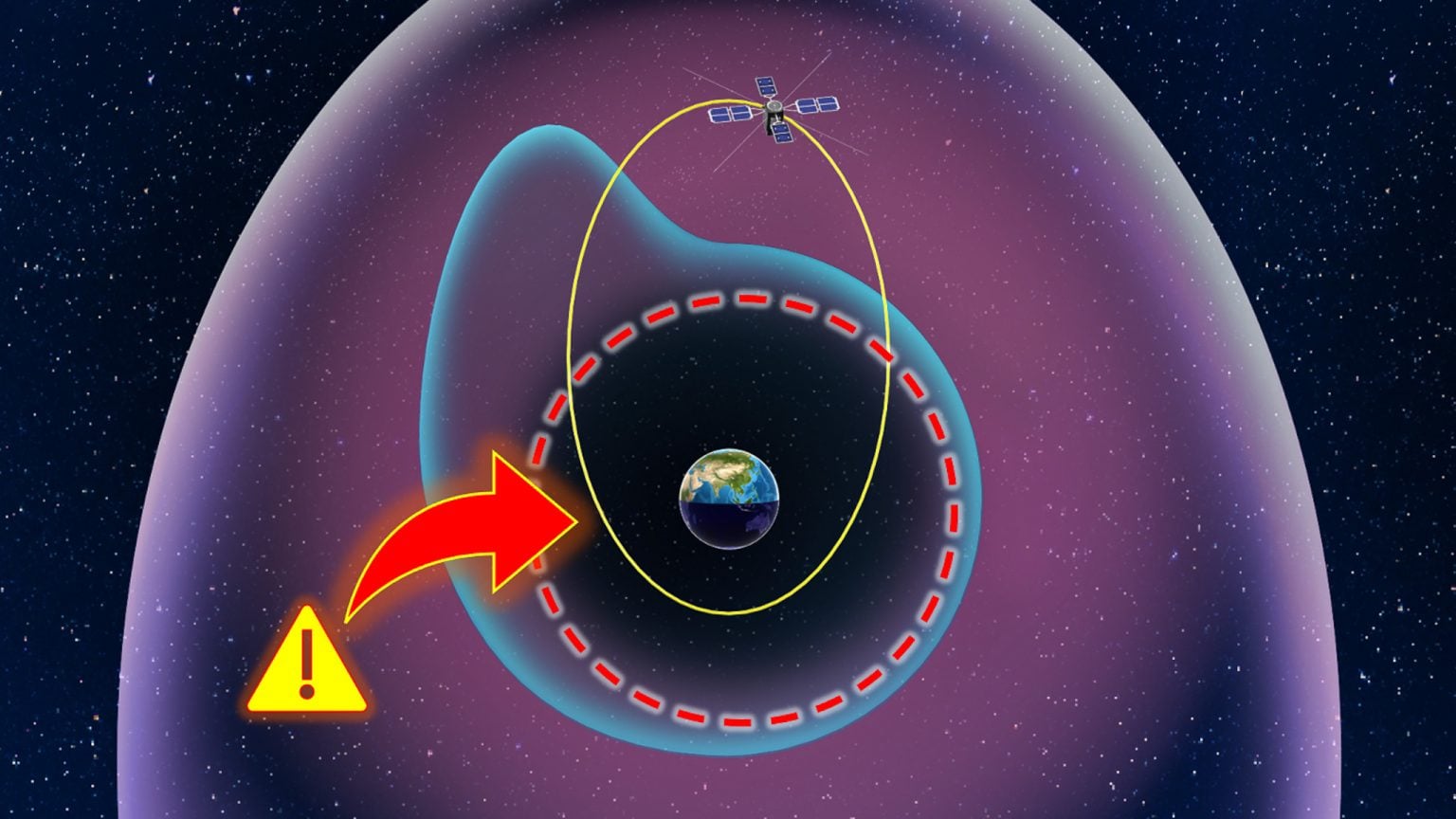
The big storm that painted auroras over Florida keeps paying out science. This one concerns the boundary inside the Van Allen belts that energetic electrons normally can't cross, and a plasma wave with the lovely name 'chorus' that seems to have accelerated electrons on the wrong side of it.
A study in Geophysical Research Letters led by Yoshizumi Miyoshi of Nagoya University looks at the aftermath of the May 2024 solar storm. It suggests chorus waves, a type of natural radio-frequency plasma wave, accelerated nearby electrons to relativistic speeds in a region long thought to be shielded from such particles.
from the stored-program-of-the-mind dept.
Murat spent his Bay Area commute with Ananyo Bhattacharya's von Neumann biography and came out dazzled by just how many fields one man seeded in 53 years. A distributed-systems researcher reflecting on the patron saint of the architecture we all still program is a pleasant Sunday-morning read, and lighter than his usual paper teardowns.
Demirbas reviews the audiobook of The Man from the Future, Ananyo Bhattacharya's biography of John von Neumann, and tries to pin down what made von Neumann so prolific. He works through the range of fields von Neumann touched and argues his real habit was reaching for the abstraction underneath each problem.
from the put-the-figure-on-the-box dept.
This is the hobby-project spirit in its purest form: a parent admires the Toniebox's perfect gesture, dislikes its business model, and teaches himself electronics by breaking things until he has his own. The write-up is honest about learning from zero, which is half its charm.
A father of three, starting with no electronics knowledge, built a box that plays a story when a child sets a figurine on top and stops when it is lifted off. Inspired by commercial story boxes but wary of their locked-in content model, he documents the build and what he learned along the way.
from the every-sixty-seconds-on-the-dot dept.
Grid operators had watched the frequency wobble like clockwork every minute for years, harmless but unexplained. The culprit is delightfully mundane: big battery storage systems all running their routine power checks on the same schedule, which is the sort of emergent synchronisation bug anyone who has seen a cron stampede will recognise.
Transmission operator TenneT Germany had long seen the European grid's frequency dip briefly every 60 seconds. A team led by Dirk Witthaut at Forschungszentrum Jülich, reporting in Nature Energy, traced the pattern to regular power checks by large battery storage systems, and says the finding can help make supply more robust.
from the if-at-first-you-don't-succeed dept.
Worlds of IF is the old pulp that ran early Heinlein and Niven in its heyday, so it is a small joy to see the name back on new issues, with the numbering picking up where the classic run left off. Whether the relaunch can find its own voice is the open question, but the cover-art tradition at least is being kept.
Starship Sloane Publishing, led by editor-in-chief Justin T. O'Conor Sloane, has announced issue 180 of Worlds of IF, the fourth since the classic science fiction magazine was revived. The issue features front cover art by Ninja Jo and is now available to order.
from the speak-of-the-devil dept.

Halloween is over, but the Public Domain Review's pick of Paul Carus's survey of the Evil One makes a fitting All Saints' Day hangover. Carus was the Open Court philosopher who did so much to bring Eastern religion to American readers, and the book's real treat is its gallery of demons gathered from many centuries of art.
The Public Domain Review features Paul Carus's The History of the Devil and the Idea of Evil, published in 1899, which traces the figure of the Evil One from the earliest religions to the author's own day. The book is well illustrated with devils and demons drawn from art across cultures and centuries.
from the going-around-in-circles dept.
A tidy little combinatorial geometry problem from Viktor Prasolov, the kind that looks like it needs measurement but really needs a clever pairing argument. Try it with coffee before peeking at the answer.
Futility Closet poses a problem from Russian mathematician Viktor Prasolov: a circle is split into arcs, an equal number each of lengths one, two and three. The task is to prove that two of the dividing points must sit exactly opposite each other on the circle.
 Neat