Archive: October 2026 (337 stories)
Saturday, October 31, 2026
from the last-call-on-Mass-Ave dept.
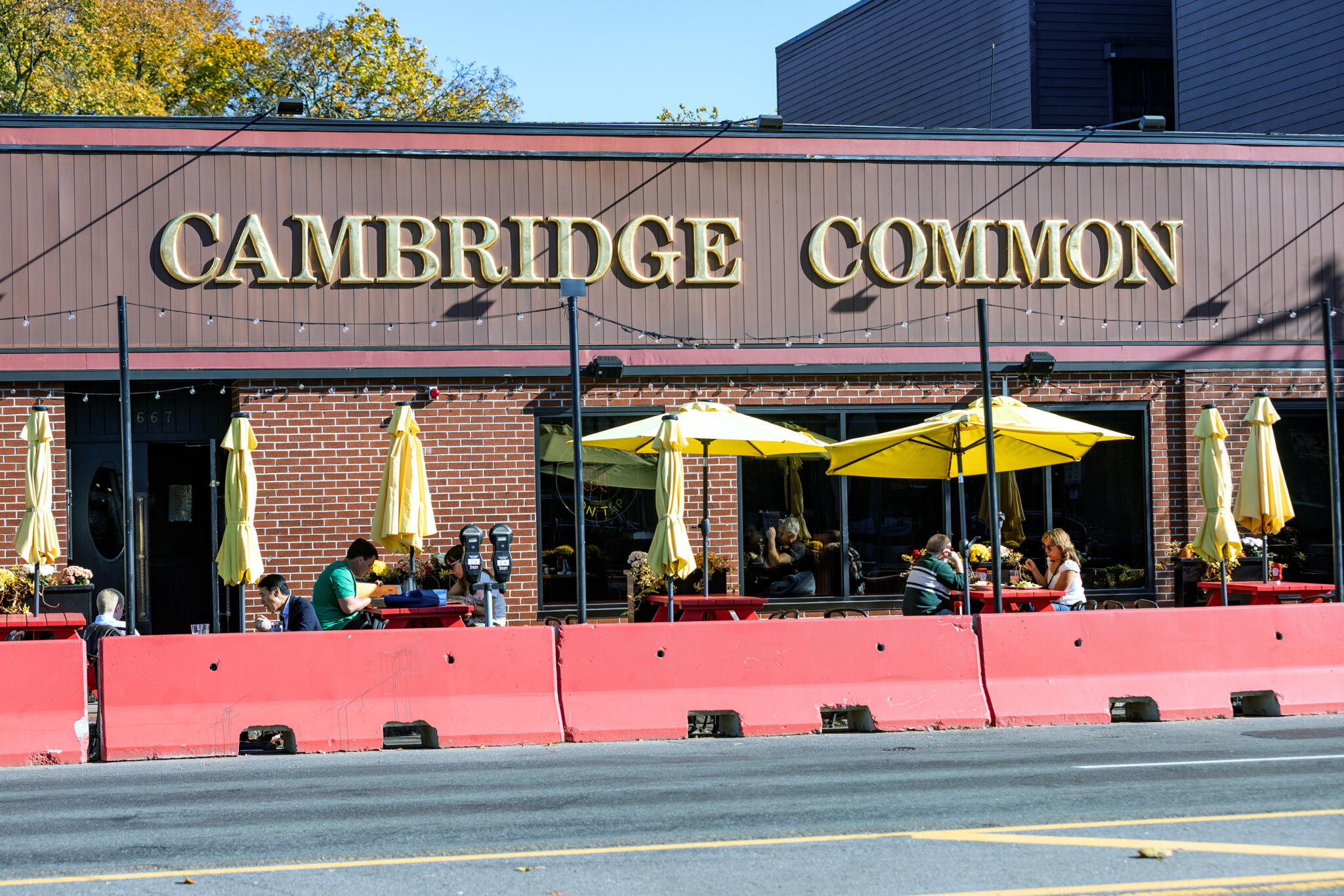
Nur flagged this one, and he is right that it stings: the room where Lake Street Dive got their start is shutting after nearly thirty years. The small consolation is that there is still a season left, and Club D'Elf are talking about reviving their Friday residency for one last run, which is about as good a wake as a club can ask for.
The owners of Cambridge Common and the Lizard Lounge beneath it, who opened the club in 1997 on the stretch of Massachusetts Avenue between Porter and Harvard, plan to sell the building and close both at the end of May. The basement started life as a pink function hall before they turned it into the loungey red room that became a proving ground for Boston musicians.
from the double-vision-is-a-feature dept.
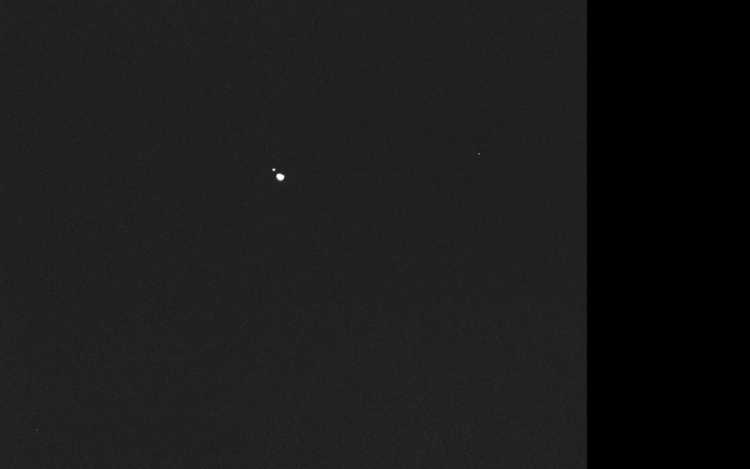
ESA's Hera is the follow-up visit to the scene of DART's 2022 punch, and it has now got close enough to see the two asteroids as separate bodies rather than one smudge. Not much to look at yet, but this is the moment the forensic part of planetary defence starts.
Hera is heading for the binary asteroid system whose smaller member, Dimorphos, was deliberately hit by NASA's DART spacecraft. Its latest images resolve the pair individually for the first time, ahead of a close survey meant to measure what the impact actually did to the moonlet's shape, mass and orbit.
from the spinning-up-from-cold dept.
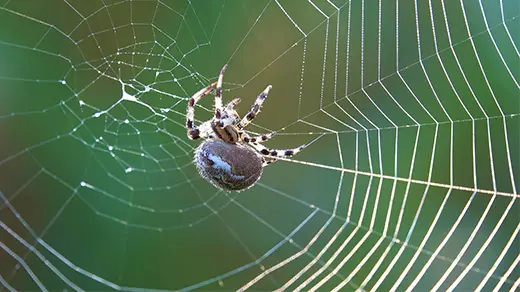
A spider knocked off a wall has a few milliseconds to turn a liquid into climbing rope, and nobody has managed to copy the trick at scale. Quanta follows the chemistry of the 'dope', the concentrated protein brew in the silk gland, which is the part of the process materials scientists most want to steal.
Spider silk is stronger than steel by weight, tougher than Kevlar and friendly to human tissue, yet it starts out as a runny solution of proteins. The piece looks at research into how that solution is held ready inside the spider and then reorganised into an ordered fibre in the moment it is pulled out.
from the wait-for-the-tide dept.

A site profile for a place that rewards exactly the solo, unhurried birding Nur already does in Penang, only with cranes and mudflat waders on a Korean estuary. Worth bookmarking for the day South Korea comes up as a trip.
A birder's guide to Suncheon Bay on Korea's southern coast, a broad estuary of reeds and mudflats where the rhythm of the tide sets the day. It covers where the public viewpoints are and makes the case for taking it slowly, since the shoreline shifts and the birds move with it.
from the not-in-official-colours dept.
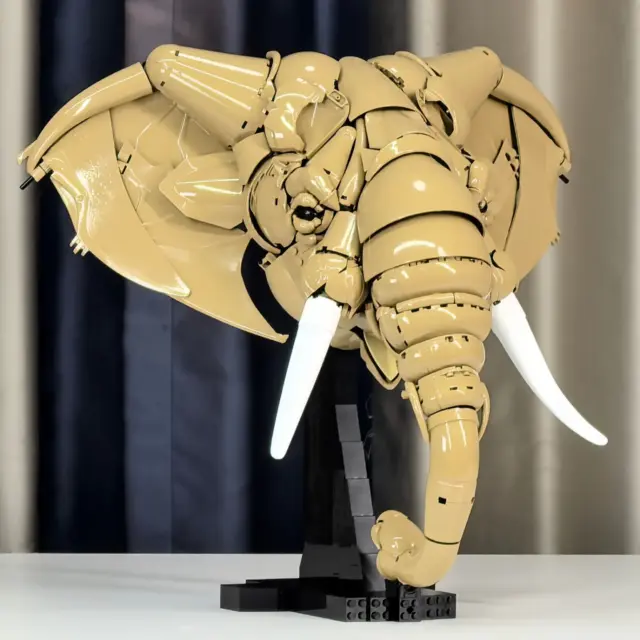
Glue is the great LEGO taboo, so paint must be at least a misdemeanour. The builder's realistic animals pick exactly the right parts for the shaping and then fix the one thing LEGO never offered, the colours, and the glossy finish that results is hard to argue with.
Builder lego_smile_leo makes lifelike animal models from carefully chosen parts, then paints the pieces where the right colours were never produced. The Brothers Brick weighs the heresy against the result, an elephant with a striking, slightly reflective finish.
from the patent-clerk's-icebox dept.
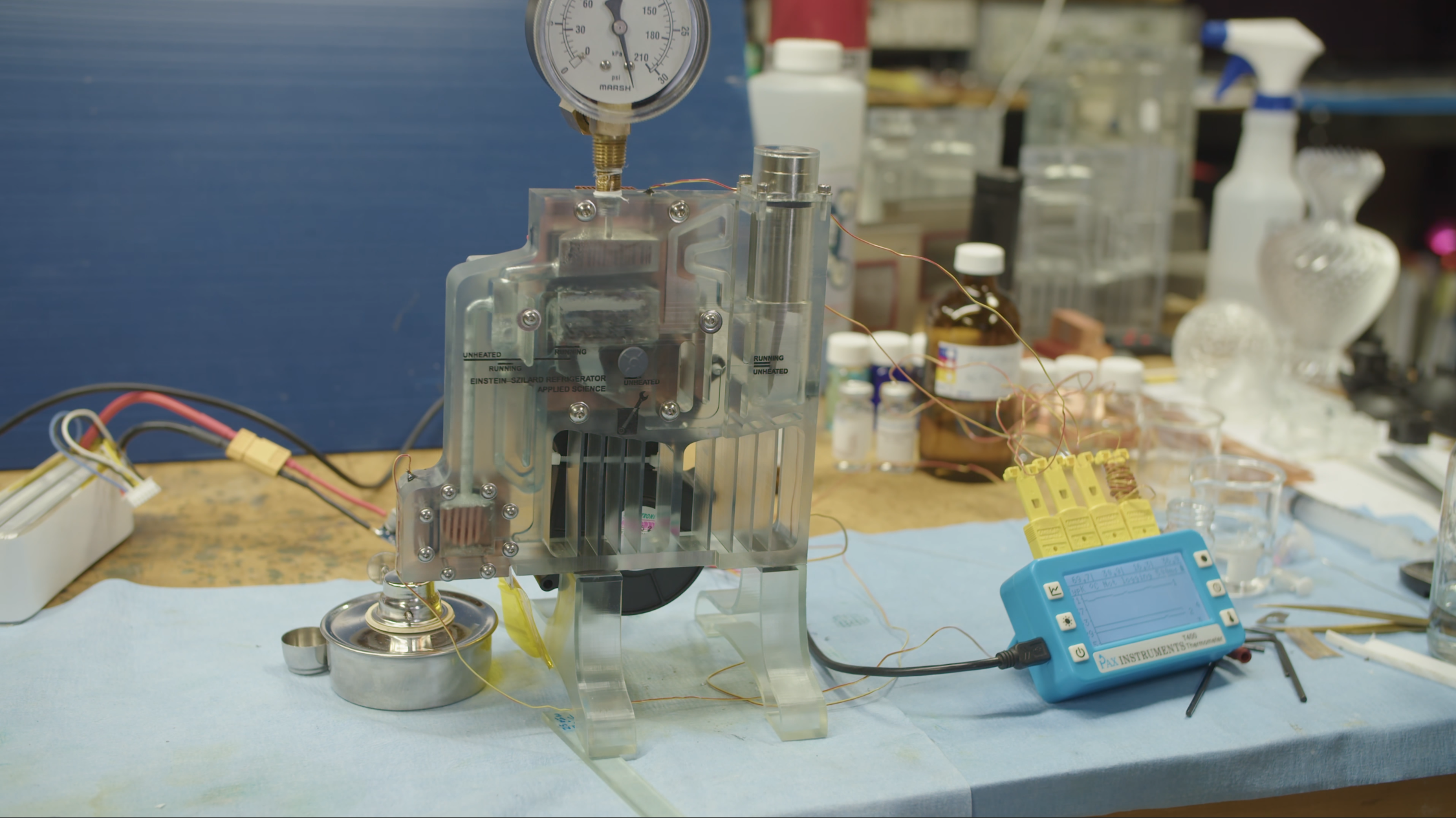
Einstein and Szilard patented a refrigerator with no moving parts in the 1920s, and almost nobody has seen one work. Ben Krasnow of Applied Science made a transparent version so you can actually watch the three fluids do their thing, which is the best kind of physics lesson.
Absorption fridges cool using only heat, which is why they turn up in camper vans and factories, but the usual ammonia-and-water kind needs pressures too high for clear walls. The Einstein-Szilard design adds a third fluid as the refrigerant so it can run near atmospheric pressure, and this 3D-printed and transparent build shows the cycle happening.
from the probably-yes-definitely-no dept.
Everybody reaches for a Bloom filter and then discovers it cannot delete, count, resize or keep its accesses local. Pandey and colleagues fixed all four at once in SIGMOD 2017, and Colyer's write-up walks through the rank-and-select trick that makes the quotient filter compact and fast.
A summary of the SIGMOD 2017 paper introducing the counting quotient filter, an approximate membership structure that supports counts, deletion and resizing while staying small. The authors report in-memory inserts and queries up to an order of magnitude faster than earlier filters, with good behaviour on disk and SSD too.
from the allow-six-to-eight-weeks-for-enlightenment dept.

A Halloween-appropriate pick, though the real subject is infrastructure: cheap pulp paper, the Linotype machine and a better postal network did more for turn-of-the-century occultism than any spirit guide. The adverts and pamphlets that survive are a wonderful archive of hope sold by the ounce.
Allan Johnson's essay traces how mail-order magic flourished in the United States around 1900, when new printing technology and improved postal routes let anyone advertise secret wisdom and ship it nationwide. He also follows that world into the present, where it is still quietly going.
from the Catskills-to-the-county-fair dept.
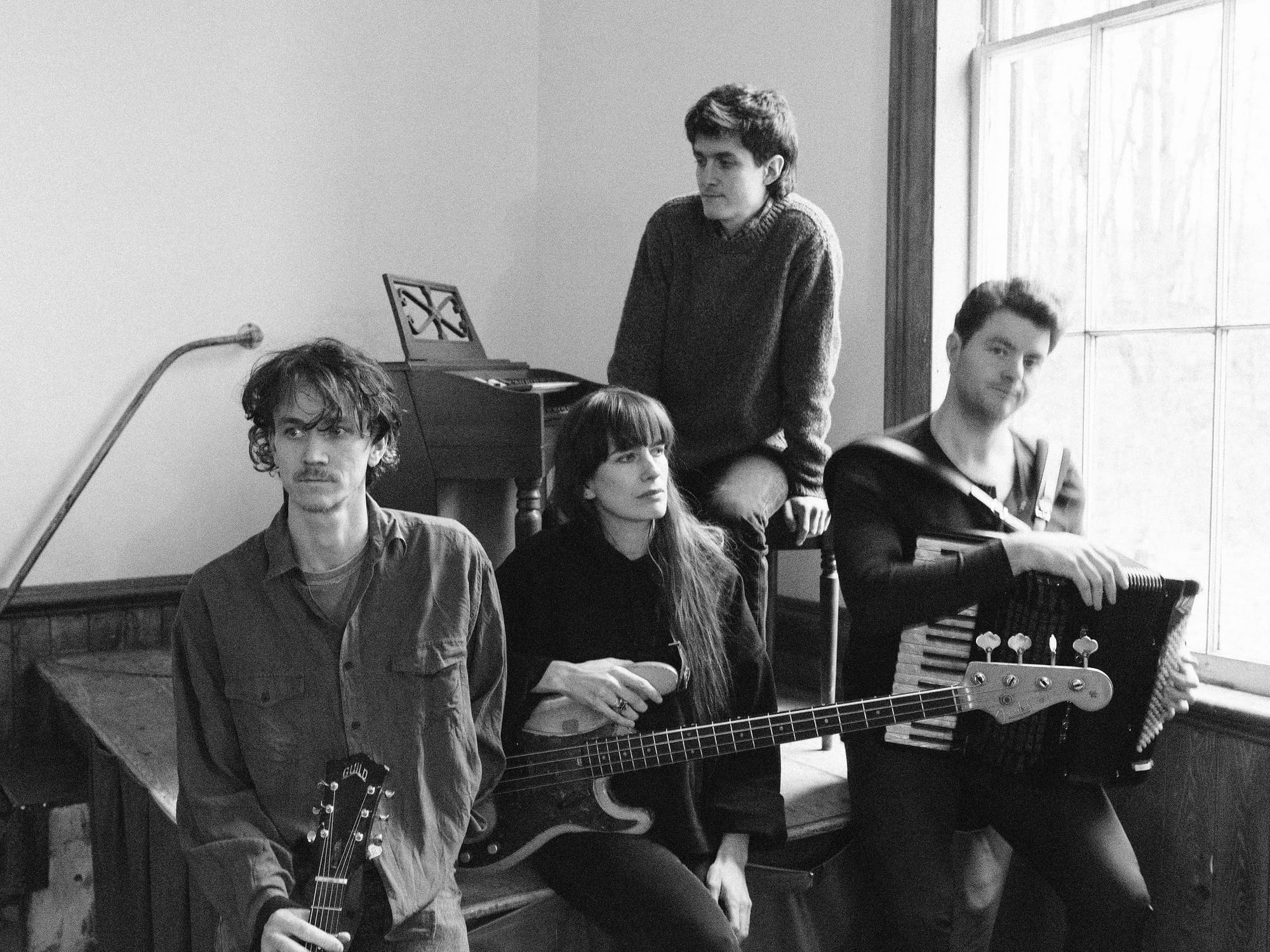
The Felice Brothers went from busking in the subway to being the band other bands quietly borrow from, and twenty years on the people doing the borrowing have lined up to say so. A good excuse to go back to the originals, which still sound like a barn dance held during a thunderstorm.
Felice County Fair, a tribute to the ragged Catskills band, came out in mid-October with contributions from Bright Eyes, The Lumineers, Dawes and Old Crow Medicine Show. It arrives alongside a new documentary about the band, and No Depression looks at how far their influence has spread.
from the found-in-the-attic dept.
Every attic is supposed to hold a treasure, and this one held a crop. An Italian farmer planted seeds he had found lying around for decades and got a strange, many-eared wheat, which he then traced back to a description in Genesis, the kind of seed-bank story that makes you want to check your own loft.
Kottke points to the story of a farmer in Italy who sowed long-forgotten seeds from his attic and grew a branching wheat carrying seven ears on a stalk. The variety is said to be nutritious and drought-tolerant, and the farmer linked it to the seven-eared grain of Pharaoh's dream.
from the it's-all-about-the-angles dept.

A burst that looked feeble and then threw odd, late peaks in its afterglow turns out to have been perfectly ferocious, just pointed slightly away from us. It is a nice reminder that a lot of astrophysics is geometry with very large numbers attached.
Fermi caught a gamma-ray burst in March 2026 whose opening flash was faint and whose afterglow brightened again in strange, delayed bumps. Follow-up work concludes the jet was viewed off-axis, and that the narrow beam actually carried roughly as much energy as the Sun puts out in a billion years.
from the hold-the-bones dept.
Every school biology lab has dissected one, and most people still file them under droppings. A short, cheerful Audubon explainer for the next time a grey nugget under a roost tree in Penang turns out to be a tiny archive of somebody's dinners.
Audubon explains the owl pellet: the compact bundle of bones, fur and feathers an owl can't digest and brings back up rather than passing through. It covers how to tell one from scat and what the contents reveal about what the bird has been eating.
from the transparent-motives dept.

Building a convincing big cat is hard enough in opaque bricks; doing it in trans parts, so you can see the structure holding it up, is showing off of the best kind. Notice how the cockpit and windscreen pieces keep the muscle shapes readable.
French builder Alexis, who goes by Mr Youm, has built a large prowling cat almost entirely from transparent LEGO elements. Curved windscreens and canopies give it a muscular outline while letting you see right through to the inner framework that keeps it standing.
from the TeX-and-the-city-gardens dept.
Someone on Reddit asked how to make flowery page margins in LaTeX, and someone else answered with a whole generative system. Every petal is a computed curve, painted in Lua at typeset time, with a space-filling trick borrowed from a 1998 paper on ornament. Pure hobbyist joy, with a nod to the Dutch tiles.
Florilegium is an open-source LaTeX package that grows Delft-blue floral borders procedurally: hand-designed primitives with randomised parameters are drawn as parametric curves by Lua while the page compiles, with no images or imported artwork. A layout pass then fills the leftover margin space so the decoration looks hand-placed.
from the retry-harder dept.
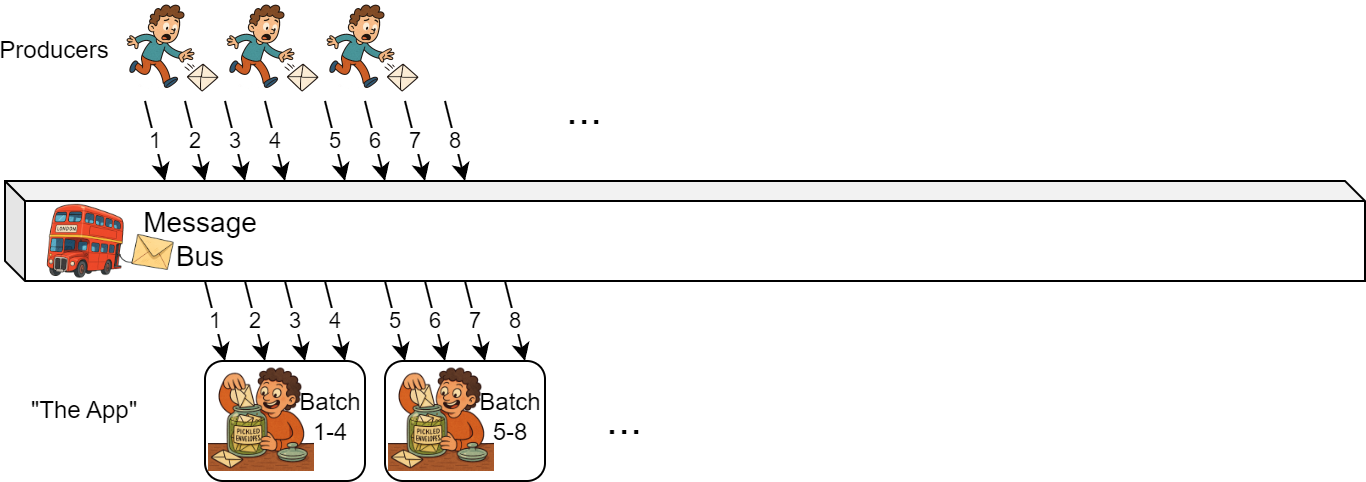
The uncomfortable point here is that the recovery machinery itself can be the loop that keeps a system down: the same response to a timeout is sensible for a blip and disastrous for overload. Follows his talk with Meta's Todd Porter and Dave Maier at SREcon, and worth reading with your own on-call scars in mind.
Aleksey Charapko continues his series on metastable failures, this time on cascading recovery: cases where components reacting to ambiguous signals such as timeouts feed load back into each other and form a loop that sustains the outage. He walks through an example and what it implies for designing recovery actions.
from the single-payer-is-not-a-single-thing dept.
American debates tend to set the familiar problems at home against a vague 'what every other country does'. Taylor's point is that there is no one alternative: the other rich countries run quite different systems, each with its own trade-offs, and the details are where the interesting economics lives.
A calm primer on how health coverage is organised across high-income countries, written against the habit of treating 'national health insurance' as a single model. Taylor walks through the different approaches and what each one gives up, without selling a conclusion.
from the stained-and-proud dept.
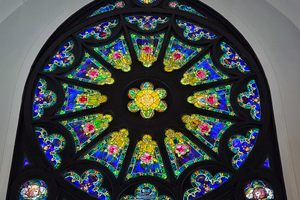
Franklin was an oil boomtown, and its money left behind one of only seven churches still holding a complete set of Tiffany Studios windows. The rose window is the third-largest Tiffany ever made. Plain on the outside, which is how the best surprises are packaged.
St. John's Episcopal Church in Franklin, Pennsylvania, looks modest from the street but every window inside came from Louis Comfort Tiffany's studios. Highlights include a huge rose window and triptychs on the life of Christ, plus some unusual woodwork.
from the night-of-the-living-lithograph dept.
For the 31st, Wikipedia's featured image is a restored release poster for the first feature-length zombie film, with Bela Lugosi as the villain. Old film posters are a little archive genre of their own, and this one has the full pre-Code lurid treatment.
Wikipedia's picture of the day is a restored United Artists poster for White Zombie, the 1932 independent horror film by Victor and Edward Halperin. Bela Lugosi plays the sinister 'Murder' Legendre; the film drew on William Seabrook's travel book The Magic Island, and the poster's artist is unknown.
from the stable-genius-configurations dept.
The three-body problem has no general solution and is usually chaotic, which makes the periodic exceptions all the more satisfying to watch. Numerical searches have turned up thousands of them, looping in figure-eights and braids; Liu Cixin fans will find them oddly reassuring.
Kottke points to a collection of periodic solutions to the three-body problem: special starting conditions, found by numerical search rather than by formula, in which three gravitating bodies trace paths that close on themselves and repeat. Watching them is half physics lesson, half kinetic art.
from the mandolin-in-the-middle dept.
Sharp spent a decade as a quarter of Mipso, and his debut solo record is about being a natural team player, middle-child style. He passed through the same Brooklyn scene as Courtney Hartman and Sarah Jarosz, so there's a friend of the feed in the background.
On the Basic Folk podcast, Jacob Sharp, a founding member of the North Carolina string band Mipso, talks about his first solo album, Middle Kid. He covers growing up in the Blue Ridge foothills, forming the band at UNC Chapel Hill and the collaborative Brooklyn folk community he later joined.
from the location-location-location dept.
The perennial question of the end-Cretaceous: why did one lineage of big scaly reptiles walk away while the other went extinct. This answer is pleasingly unglamorous, more real-estate than physiology, and it's a nice reminder that extinction survival is often about where you happened to be standing.
A broad analysis of fossil occurrences and reconstructed ancient climates suggests crocodylians survived the end-Cretaceous impact largely because they preferred warm places. That taste kept them concentrated in tropical refuges that stayed habitable after the impact, while the rest of the world went through the worst of it.
from the nothing-to-see-here dept.

A spacecraft that was built for Pluto is still doing science out past it, this time by sniffing the faint hydrogen fog our Sun drifts through. Quanta's piece is about how that measurement feeds into a lumpier, busier picture of our galactic neighbourhood than the textbooks' calm one.
The interstellar medium is thin but not empty: New Horizons measured a proxy for neutral hydrogen beyond Pluto's orbit and found something like a hundred-odd atoms per litre. A new map built partly on such measurements suggests the local galaxy is more turbulent and structured than the tranquil picture astronomers had assumed.
from the before-the-beard dept.
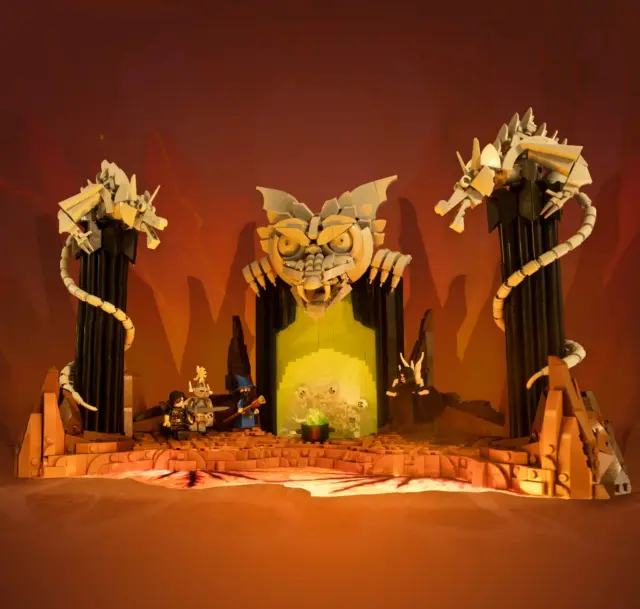
Classic Castle fans will know Majisto as the old wizard of the early-90s sets; Simulterious imagines him at the start of his career. Worth a close look for the lighting gradient in the rockwork and for what the builder turned into dragon bones, which includes sausages.
Builder Simulterious imagines a young Majisto, the LEGO wizard from the Dragon Masters era, on an early adventure. The rocks use a gradient of colours to fake light falling across them, and the skeletal dragons are built from shields, minifigure hands and other unlikely parts.
from the be-here-now dept.
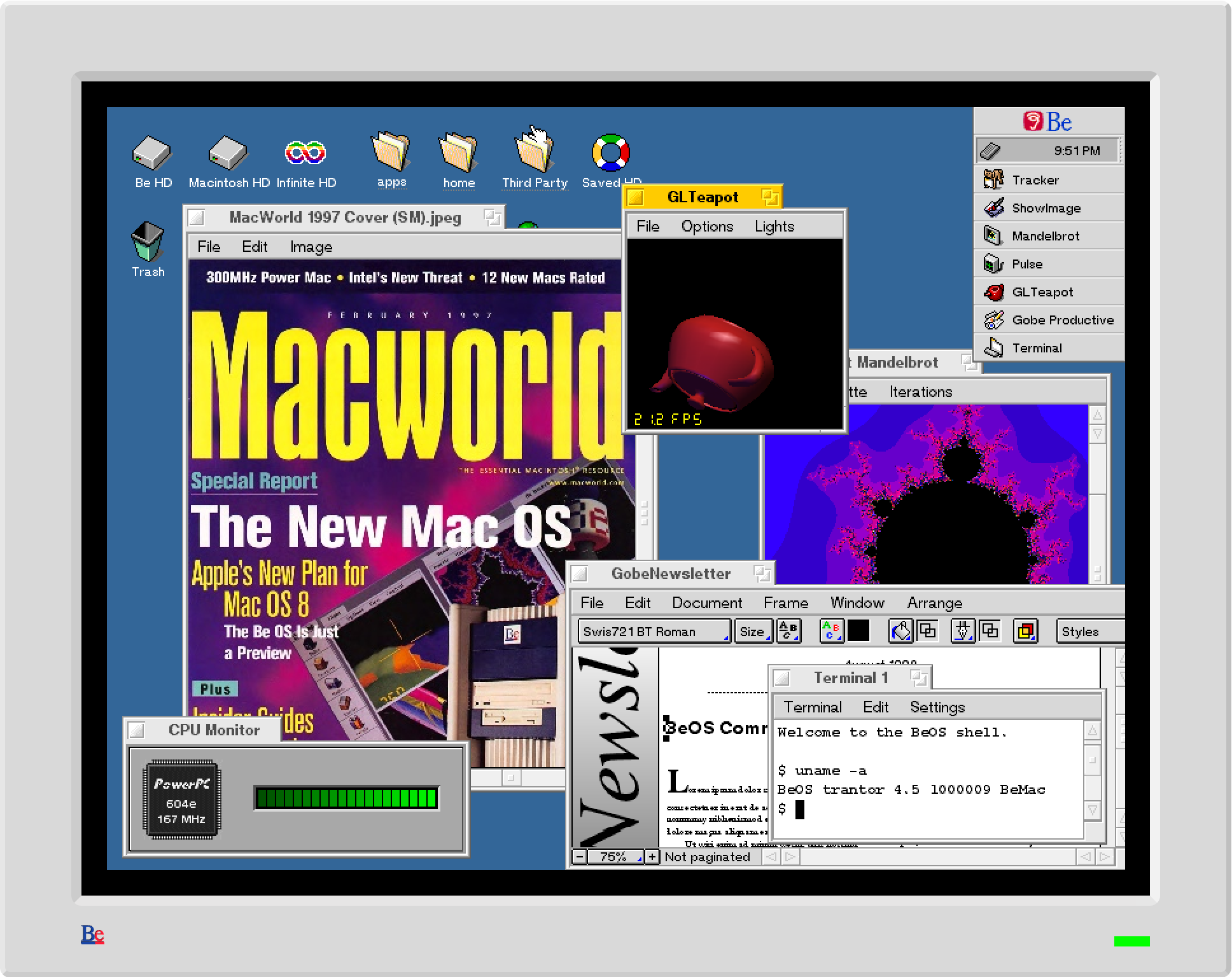
Apple nearly bought Be before it bought NeXT, and now anyone can poke at the alternate timeline in a browser tab. The write-up is a fun hobbyist tale too, built on the DingusPPC emulator and a personal memory of spotting a BeBox in Akihabara.
Infinite Mac, the site that runs classic Mac OS versions in the browser, now boots several releases of BeOS on emulated PowerPC Macs. The installs start instantly, come with preloaded software, can mount CD images from the Internet Archive and keep a drive for saving your work.
from the please-wait-for-page-302 dept.
A 1997 paper picked by Peter Alvaro as a desert-island favourite, and you can see why: it treats a repeating broadcast as a disk and then asks how to lay data out on it. Anyone who has tuned cache hierarchies will enjoy watching the same ideas reappear when the client can barely talk back.
Adrian Colyer revisits Acharya and colleagues' paper on data management when servers can broadcast far more than clients can send upstream. Instead of request and response, the server cycles data on a schedule, like teletext pages coming round again, and the paper studies how to arrange broadcast frequency and client caching around that.
from the trillion-here-a-trillion-there dept.
A calm, numbers-first piece, which is the house style. Taylor's first move is to compare the headline fortune with the long-run funding gaps in Social Security and Medicare, a useful sanity check whatever your politics, before getting to how household wealth has grown relative to the economy.
Starting from Forbes's list of the 400 richest Americans, Timothy Taylor sets their combined wealth against other large figures, such as projected shortfalls in federal retirement and health programmes. He then looks at how the ratio of total US wealth to GDP, roughly steady for decades, has climbed since.
from the three-part-harmony dept.
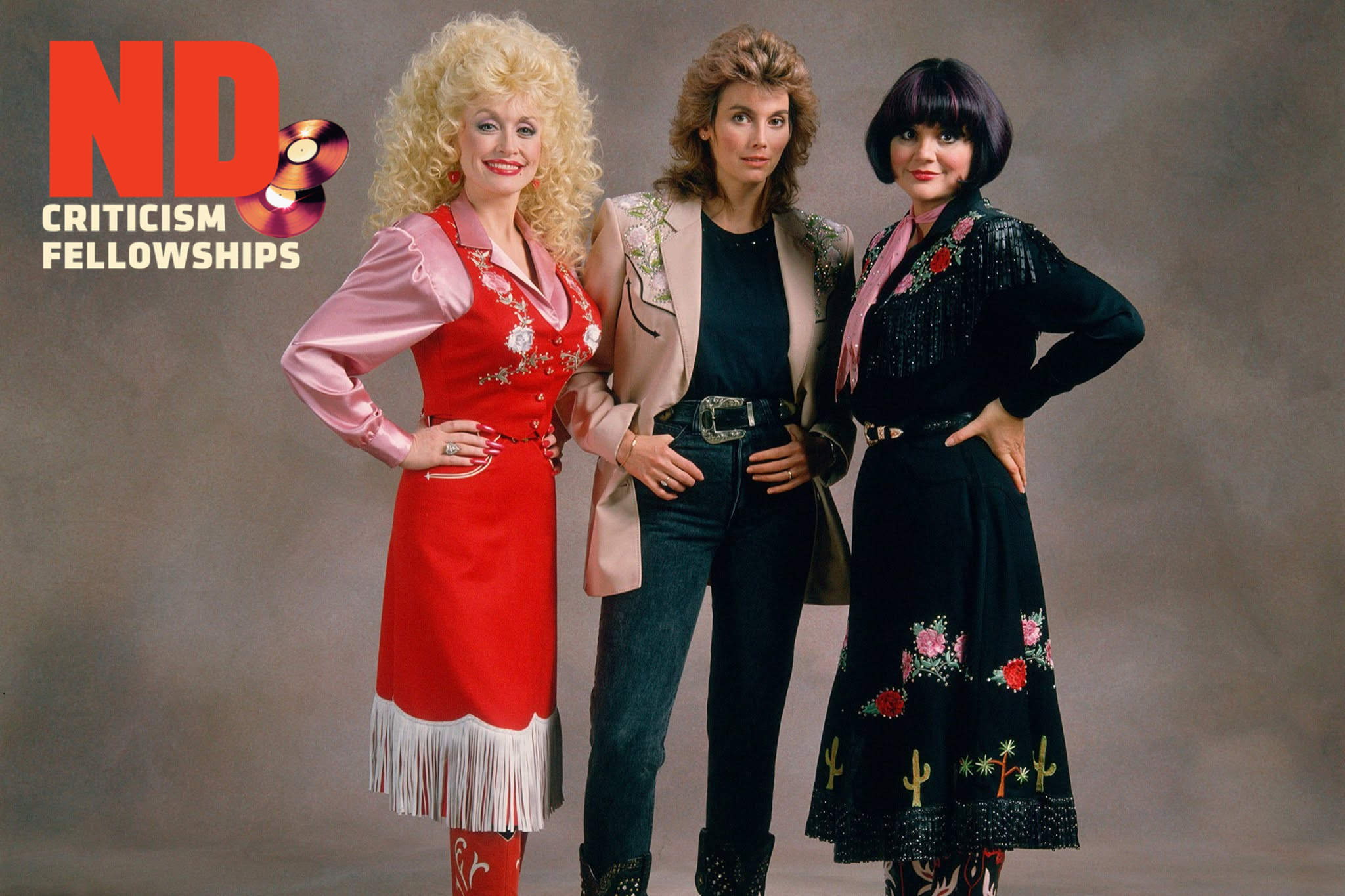
Not a favourite-artist pick, but the record sits squarely in the tradition that Aoife O'Donovan and I'm With Her come out of, and the review draws that line itself. Good on how the three voices fit together and why the album keeps getting cited by newer harmony groups.
A No Depression criticism fellow looks back at Trio, recorded starting on Dolly Parton's fortieth birthday in 1986 with Emmylou Harris and Linda Ronstadt. The review covers how the album came together, why it became a landmark, and the supergroups it has inspired since.
from the release-the-kraken dept.
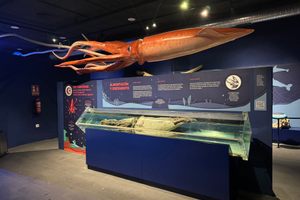
The kraken turns out to be real, if rather less interested in ships than the sailors claimed. The Asturian coast has a deep submarine canyon nearby where giant squid turn up unusually often, so a small fishing town ended up with a whole museum of them. A good stop on any northern Spain trip.
In Luarca, a fishing town in Asturias, a museum displays preserved giant squid, which surface off this coast more often than almost anywhere else. Exhibits explain the animal's three hearts, huge eyes and beak, and how the creature behind the kraken legend actually lives.
from the some-assembly-required dept.
A Halloween-appropriate pick that's more botany than spookiness. Maria Popova pairs Pollan's argument that gardens were long about the power of plants rather than their looks with Emily Dickinson's witch-hazel, and the broomstick origin story is the kind of thing you will repeat at dinner.
The Marginalian revisits Michael Pollan's case that for most of history gardens were grown for what plants could do to us rather than how they looked. Along the way it covers his account of how witches' plant-based ointments, rather than any aerodynamics, lie behind the legend of the flying broomstick.
Friday, October 30, 2026
from the arches-of-triumph dept.
Eastern Utah keeps paying out, and this time the Utah Geological Survey has a fresh quarry near Moab with bones it thinks may belong to something unnamed. Note the careful word 'possible': the formal description comes later, after a lot of jacketing, prep work and arguing. Still, a new bonebed a short drive from Arches is the sort of thing that keeps a field season interesting.
Paleontologists with the Utah Geological Survey have opened a new excavation site near Moab, close to Arches National Park, where the fossils recovered so far may represent a new dinosaur species. The find still has to be prepared and formally described before it gets a name.
from the say-cheese-event-horizon dept.

The Event Horizon Telescope trick never gets old: wire up radio dishes across the planet, time them with atomic clocks, and pretend the Earth is one enormous lens. Doeleman led that effort, so this is the explanation from the person who actually did it. Notice that it is the shadow, not the hole itself, that ends up in the picture.
Quanta's podcast talks with Harvard astrophysicist Shep Doeleman about how a black hole can be photographed at all. Since no light escapes, what gets imaged is the shadow against glowing gas around it, and that picture lets researchers test what theory predicts.
from the field-guide-to-the-galaxy dept.

A local field guide written partly by Amar-Singh HSS, whose Perak observations turn up all over the Bird Ecology Study Group, and reviewed by James Eaton, who knows the region's birds better than most. If the Penang list needs a book that actually matches what flies past, this is the candidate. Reviews like this are how you decide which book rides in the bag.
James A. Eaton reviews the new Helm Wildlife Guide to the birds of Peninsular Malaysia and Singapore by Amar-Singh HSS, Kim-Chye Lim and David Bakewell. It is a compact photographic guide, the latest in a long series, and it leaves out East Malaysia on Borneo.
from the round-moon-gate dept.

This one rewards the zoom button: the roofs, the round gateway and the foliage hide a pile of clever part usage under a deliberately calm surface. The Brothers Brick even sets a little puzzle about the flowerpot, and the answer is a properly LEGO joke. Simplicity, as usual, takes a lot of bricks.
The Brothers Brick features a traditional Chinese courtyard by the builder akidandabrick. The build looks restrained but uses a mix of classic and new techniques for its tiled roofs, walls, round gateway and greenery, with parts used in places you would not expect.
from the minsky-would-be-proud dept.
Every sufficiently capable config format eventually becomes a programming language, usually by accident. Here someone shows that two harmless-looking curl features, variable slicing and nested config includes, were enough to run a two-counter machine. The fix was a modest include-depth cap, which is the most curl response imaginable.
A write-up demonstrates that curl releases 8.12 through 8.16 let config files slice variables and include other config files with no depth limit, which together can simulate any two-counter Minsky machine. Curl 8.17 capped nesting at five levels, closing the loophole.
from the access-not-ok dept.
The double-underscore user-access helpers were a speed hack from an era when skipping the address check felt worth the risk. Now that set_fs() is long gone and the checks are cheap, they have been removed outright. The interesting part is how long a 'just convert the callers' job takes in a tree this size.
LWN looks at the removal of the unchecked user-space accessors __get_user() and __put_user() from the kernel, merged for Linux 7.4. Callers move to the checked get_user() and put_user() or the newer user-access block helpers, ending years of gradual cleanup.
from the pons-asinorum dept.

Venice had a long-running tradition of rival neighbourhoods meeting on railless bridges and fighting it out, with crowds watching and the canal waiting below. Painters loved it. The Public Domain Review gathers the pictures, which manage to look both chaotic and oddly choreographed.
The Public Domain Review collects 17th and 18th century artworks showing the organised fist-fights that rival Venetian factions staged on the city's bridges, often with large crowds of spectators and plenty of combatants ending up in the water.
from the arnold-left-in-a-hurry dept.
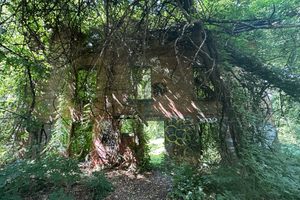
A short hike from the Garrison train station that packs in a vine-covered ruin, a footbridge over the tracks, Hudson views and a bamboo grove. The Revolutionary War footnote is the hook: this is the path Benedict Arnold took when his plot came apart. Easy to reach by train from New York, which is half the charm.
Atlas Obscura describes a trail in Philipstown, New York, that starts at the Garrison Metro-North station. It passes an overgrown brick wall, crosses the railway to Arden Point for river views, and runs through bamboo along the route Benedict Arnold used to escape, with signs on the history of Beverly Dock Road.
from the mimeograph-and-chips dept.
Long before blogs and forums, British SF fans swapped their fanzines through OMPA, a postal club founded in 1954. Rob Hansen is fandom's best archivist, and TAFF giving the book away free is very much in that spirit of sharing things for the fun of it. Good reading for anyone who likes the history behind the history of the genre.
Rob Hansen's history of the Off-Trails Magazine Publishers Association, the first British amateur press association, founded in 1954, has been added to the Trans-Atlantic Fan Fund's library of free downloads. Members circulated their fanzines to each other in regular bundled mailings.
from the six-degrees-of-separation-anxiety dept.
The party game assumed Bacon was special, and the graph theory says otherwise: plenty of actors sit closer to the middle of the film network than he ever did. A nice small dose of network science wrapped in a pop-culture joke. Bacon, to his credit, has always been in on it.
Kottke points to an analysis of the network of film actors showing that Kevin Bacon, of the Six Degrees game, is not and has never been the best-connected actor in Hollywood, since other actors have always been better connected.
from the more-hand-than-sense dept.
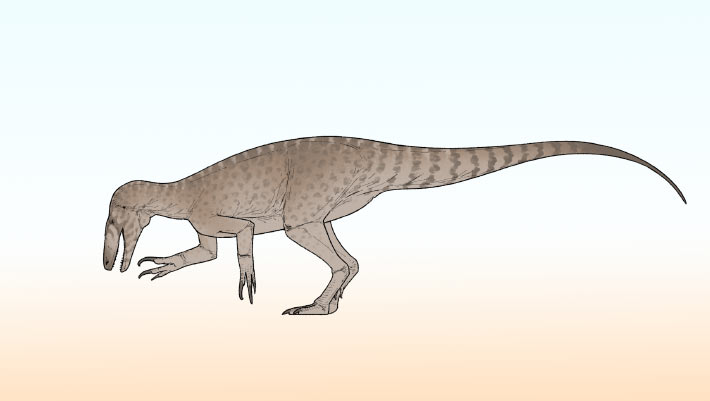
Two megaraptors in one week, one from a Surrey museum drawer and now one from Argentina, which is roughly where the group was always supposed to be at home. The skeleton is incomplete, as these things always are, so the fun is in watching palaeontologists argue a whole predator out of the pieces. Look at the picture and count the claws.
Palaeontologists have described Rinconraptor pipoae, a new genus and species of megaraptorid, from a partial skeleton dug up in northern Patagonia. Megaraptorids were lightly built predators with oversized hand claws, and Patagonia has yielded a good share of the known members of the family.
from the nine-lives-of-a-star-nursery dept.

A Halloween-ready release, and one of the better demonstrations of why you want both telescopes. Hubble sees a dark, cat-shaped pillar of dust; Webb, looking in the infrared, sees straight through the fur to the young stars forming inside. Put the two images side by side and play spot-the-difference.
Hubble and Webb have imaged a dusty pillar in the Carina Nebula, about 7,500 light-years away, that resembles a cat's head. Hubble's visible-light view shows a dark, elongated column with hints of newborn stars, while Webb's infrared cameras reveal many more stars and structure hidden within the dust.
from the shields-up-and-then-some dept.
Earth's defence against the solar wind is a fairly tidy bow shock. Jupiter, being Jupiter, runs a layered affair of strong plasma waves and several distinct shock regions instead. The nice twist is that this giant-planet plumbing may help explain the far larger shock waves thrown off by exploding stars.
Data from NASA's Juno spacecraft show that Jupiter deflects the solar wind using a complex arrangement of powerful plasma waves and multiple shock regions. The results highlight how different its magnetic boundary is from Earth's and could inform models of supernova shock waves.
from the reflecting-pool-of-studs dept.

A bird build for a birder. Mike Sinclair, who did a blue heron last year, is back at the pond with a swan gliding through reeds and lily pads. The real trick is the water: a mosaic that pulls off a crisp mirror reflection, which is harder to fake in bricks than it looks.
LEGO builder Mike Sinclair follows up his earlier heron with a swan model set among reeds and lily pads. The still water is built as a mosaic that shows a clean reflection of the bird.
from the urban-coot-commuter dept.

Nobody has ever asked this at a park pond, as the author admits, but now you will be ready if they do. Coots are one of those birds everyone walks past, which makes them a good subject for asking how wildlife adjusts to people. A short read built on a real study, with a handsome common coot up top.
A 10,000 Birds column takes a tongue-in-cheek question about whether Eurasian coots get used to urban living and answers it by walking through a recent research paper on how coots cope with living alongside people.
from the lock-it-or-lose-it dept.
Savage and friends in 1997, and still the paper anyone who has stared at lockdep output should have read. Instead of chasing happens-before relationships, Eraser just checks that every shared variable is consistently protected by some lock, and refines the candidate lockset as it watches. Cheap, blunt and surprisingly effective; notice how much of the design is about tolerating initialisation and read-sharing without drowning you in false positives.
Adrian Colyer's write-up of Eraser, a dynamic data race detector from 1997. It enforces a locking discipline by tracking, for each shared memory location, the set of locks held on every access, and reports a race when that set becomes empty.
from the three-Rs-of-the-customs-house dept.
Taylor doesn't hide his scepticism of the current tariff regime, but this post is mostly a calm tour of the research. The standout is a database of US tariff rates back to 1789, built from 19th-century congressional documents, which sorts American history into revenue, restriction and reciprocity eras. Notice how tariffs have drifted towards hyper-specific goods, types of cheese and so on, as a way to aim at particular countries.
The Conversable Economist summarises a tariff symposium in the Journal of Economic Perspectives, picking out one interesting finding from each of its six papers, starting with a long-run reconstruction of US tariff policy since the founding.
from the waterworks-gone-to-woods dept.
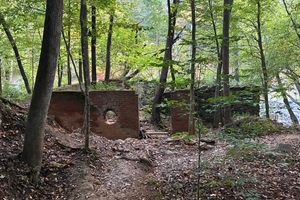
Industrial ruins slowly being reclaimed by a river forest, reached on a decent hiking trail, free, and open in daylight. The brick footings and a washed-out stone dam upstream are what is left of the system that once piped drinking water eight miles to Durham. Good for a quiet walk with binoculars.
In North Carolina's Eno River State Park, the brick and concrete foundations of a former pumping station sit at the water's edge, with the remains of a broken stone dam a short way up a creek. They were part of the waterworks that supplied Durham, and several trails lead to them.
from the electron-pump-at-the-gas-station dept.

James Davis Nicoll goes digging in the decade of oil shocks and finds SF writers cheerfully inventing their way out of it, with Asimov's The Gods Themselves and its universe-swapping power source front and centre. It's an affectionate look at an era when the fix was always one bold idea away. Bonus: Nicoll grumbling that his colleagues are too young to be nostalgic for anything.
A Reactor essay looks back at science fiction from the 1970s energy crisis and the bold, often wildly speculative power sources its authors dreamed up, starting with Isaac Asimov's The Gods Themselves.
from the Roman-nanotech dept.
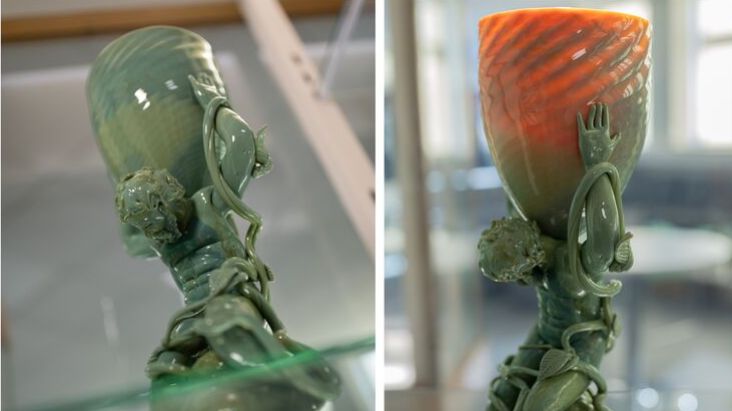
The Lycurgus Cup is green when lit from the front and glows red with light behind it, thanks to a sprinkle of gold and silver nanoparticles that its Roman makers could not possibly have known they were using. Now a Sheffield team has made the same dichroic glass on purpose and cast it into a modern take on Atlas. Sixteen centuries later, we finally have the recipe card.
The Lycurgus Cup, a fourth-century Roman glass cup, changes from green to red depending on how it is lit, an effect caused by gold and silver nanoparticles in the glass. Researchers at the University of Sheffield have reproduced the effect and used it in a new sculpture of Atlas.
from the ten-years-under-the-current dept.
A favourite artist, so it goes in without debate. We ran the tour announcement a few days back; this is the first word from an actual stop on it, and the verdict in the headline is unambiguous. Worth a look to see how the old songs sit a decade on.
The Santa Barbara Independent reviews Sarah Jarosz's show at the Lobero Theatre on October 21, part of her tour marking ten years since the album Undercurrent. The paper's short take: she shines.
from the make-it-so-one-last-time dept.
Not the cheeriest item, but for anyone who grew up with a bald Shakespearean captain quoting the Bard on a starship, it would be odd to leave out. Reactor's notice is brief and respectful, the way he'd probably have liked it.
Reactor reports that Patrick Stewart died on October 28 at the age of 86. The notice carries his spokesperson's statement and his family's request for donations in place of flowers.
from the hairball-of-the-gods dept.

Beta Pictoris is the nearest thing astronomers have to a baby photo of our own solar system, and its odd trailing dust feature has nagged at people for a while. The proposed culprit is a smash-up between two Pluto-class bodies, which is exactly the sort of thing that must have happened here too.
A study suggests the long, curved dust structure around the young star Beta Pictoris, some 63 light years away, is debris from a collision between two dwarf planets. The system is only about 23 million years old, so it offers a glimpse of the violent early days of planetary systems like ours.
from the spicule-and-span dept.
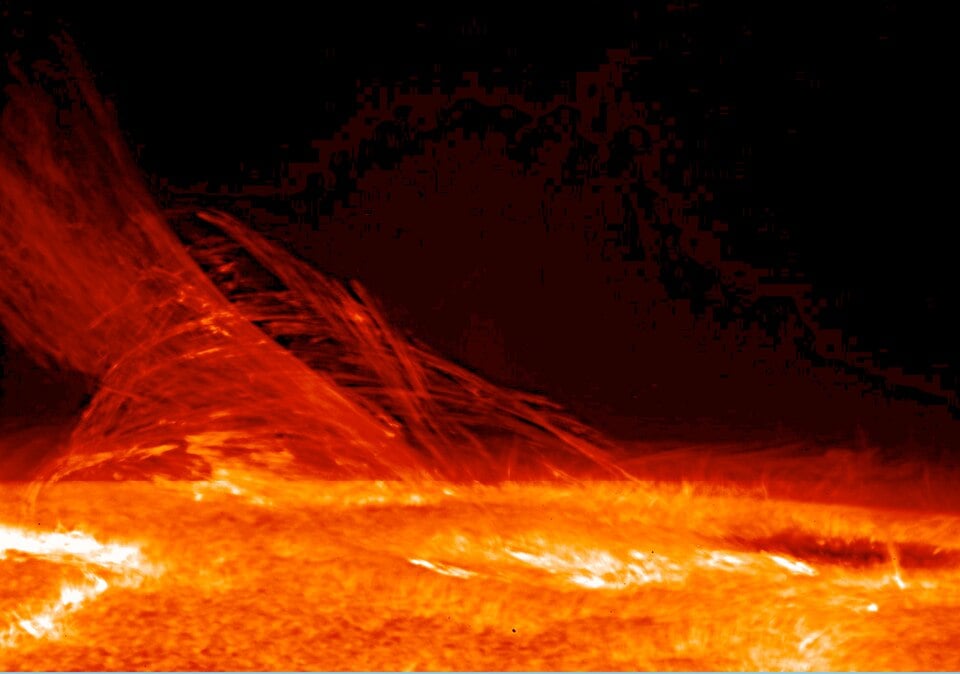
The coronal heating problem has been 'solved' roughly once a month lately, which is half the fun. This one goes after spicules, the needle-like jets in the lower solar atmosphere, and argues we've been interpreting them wrong.
Researchers from Newcastle, Sheffield and the Indian Institute of Astrophysics propose a new reading of spicules, the rotating jets of plasma that rise from the Sun's lower atmosphere. Their account offers another candidate answer to why the corona is so much hotter than the surface below it.
from the system-seven-on-a-chip dept.
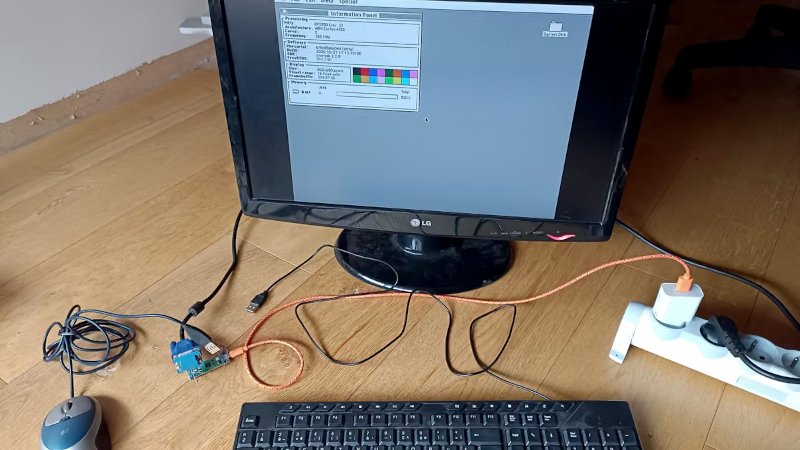
Microcontrollers now outclass the desktops of the late 80s, so someone was bound to try running a desktop on one rather than emulating one. Underneath the early-Macintosh look sits FreeRTOS, which invites the old argument about whether this is an OS or a distro.
SylphideOS is a hobby GUI operating system for RP2350 and some ESP32 boards, with a framebuffer desktop, keyboard and storage support, and an emulator. Unlike most microcontroller 'OSes', it stays resident under the programs it runs.
from the supermario-was-in-the-rom-all-along dept.
The person who already ported Windows NT to the GameCube and Wii has now brought up classic Mac OS on the same hardware, probably the first new-platform bring-up of the old Mac OS outside Apple since the clone era. The write-up revels in the decades of accumulated jank, which is the right attitude.
A hobbyist porting classic Mac OS to PowerPC consoles built on ArtX chipsets (GameCube, Wii, and eventually Wii U) has reached the desktop for the first time. The post covers why anyone would do this and the obstacles hit so far, though a public release is still a way off.
from the less-is-lint dept.
An ASPLOS '16 paper with a pleasingly contrarian thesis: strip a static checker down to almost nothing, ignore most of the language, and it still finds real bugs. Anyone who has watched an analysis tool sprawl into its own maintenance burden will nod along.
Adrian Colyer reviews Brown et al.'s work on building static checkers with roughly two orders of magnitude less code than the usual tools. The authors argue that ever-growing complexity in bug-finding research hurts scaling and debuggability, and show that drastically simpler checkers remain effective.
from the hold-the-walls dept.
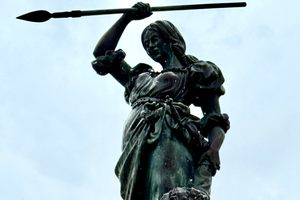
A huge arcaded square in Galicia, named for a woman who rallied the defence when the English came over the walls in 1589. The history is the hook; the square itself, at about a hectare, is the reason to stand there.
Atlas Obscura's entry on the 10,000 square metre plaza in A Coruña's old town, ringed by arches and civic buildings including the city hall. At its centre stands a statue of María Pita, the local heroine who took up the fight after her husband fell during the 1589 attack.
from the slash-eight-is-a-continent dept.
A cartogram for the networking crowd: shrink and swell every country by its share of IPv4 addresses rather than its land area. The early allocation history jumps right off the map.
A map project that redraws the world's countries so each one's area matches its share of the roughly 3.6 billion locatable IPv4 addresses, instead of its share of land. It's a vivid way to see how unevenly the address space was handed out.
from the price-per-unit dept.
Kyla doing what she does best: taking a sore everyday topic and calmly unpicking it with someone who used to run economic policy. The interest is in the mechanics and in what a modest fix would actually look like, not in the outrage.
Kyla Scanlon interviews former Fed vice chair Lael Brainard about why groceries feel so expensive, citing surveys that most Americans now shop around several stores for prices. They discuss what affordability means and what a fix worth about a thousand dollars a year to households might involve.
Thursday, October 29, 2026
from the timetable-subject-to-space-weather dept.
Every space weather talk cites the same old railway anecdote, and it turns out the citation had the year wrong all along. There is something very satisfying about historians of science doing the archival equivalent of a git blame and finding the bug. Bonus: a reminder that the Sun was messing with infrastructure long before there were satellites to break.
Researchers re-examined a famous early account of a train held up by a geomagnetic storm and found the event happened in 1848, not 1841 as usually stated. The correction shifts part of the early timeline of recorded space weather effects on technology.
from the more-fragmentation-than-flame dept.
The textbook line is that meteors quietly vaporise; the new work says they melt, crack and shatter in a messier sequence. Worth reading for the mechanics alone, and it also explains why meteorites tend to land as a scattered field rather than a single tidy rock.
Scientists describe seven distinct stages an incoming space rock passes through in the atmosphere, with melting and violent break-up, rather than simple evaporation, deciding what survives. The findings help explain meteorite strewn fields and how larger asteroids explode in the air.
from the fsync-and-pray dept.
Adrian Colyer called this one fabulous, and for once the superlative is earned: stronger guarantees and better throughput in the same ext4 patch set. The trick is splitting filesystem operations into streams with ordering inside each one, which anyone who has fought journaling modes and rename-dance recovery code will appreciate.
A Morning Paper write-up of the FAST 2017 paper on ccfs, an ext4 extension that restores ordering and weak atomicity guarantees that applications quietly rely on. It groups operations into streams, preserving order within a stream but not across them, and still outperforms the baseline.
from the bit-for-bit-or-bust dept.
Module signing and reproducible builds have long pulled in opposite directions, since a per-build signing key makes byte-identical output impossible. This Plumbers talk lays out a hash-based way around that, and LWN's write-up has the usual sharp detail on where the patch set has been and where it might go.
LWN covers Thomas Weißschuh's Linux Plumbers 2026 session on hash-based integrity checking for kernel modules. The approach aims to give distributions module integrity guarantees while keeping kernel builds reproducible by any party, bit for bit.
from the feed-your-pet-a-shell dept.

The late-90s backpack pet is back, and this time someone found the serial port. A cheap USB adapter, some nickel strips and a printed case are all it takes, and of course the demo ends with DOOM running on it, because that is the law.
A maker built a pogo-style adapter from a USB-to-UART board that mimics the Tamagotchi Paradise's link dock. It lets a browser tool talk to the toy for in-game tinkering and even replace its software, with demos of other games running on the device.
from the stab-the-dog-at-noon dept.

Digby's powder was supposed to heal a wound by treating the weapon or a bloody bandage, miles away. It is best remembered for the later, gloriously grim idea of using it to find longitude at sea with an injured dog, but the treatise itself is a fine window into seventeenth-century reasoning by analogy.
The Public Domain Review presents a 1669 edition of Kenelm Digby's treatise on his sympathetic powder, a remedy said to cure wounds without touching them. The piece places it within the era's beliefs about action at a distance.
from the there's-no-place-like-gnome dept.
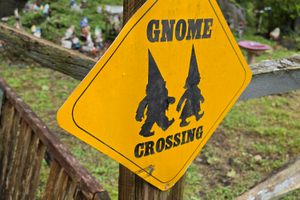
Atlas Obscura could not resist the puns and neither can we. A small hill near a bike trail has slowly filled with gnomes, many dropped off by strangers for the owner to mend and add, which is about as wholesome as roadside folk art gets. There is an honour-system snack stop too.
Just north of a trailhead on Baltimore County's NCR Trail sits a hillside crowded with garden gnomes and gnome jokes, built up over two decades and growing fast since 2020. Visitors leave figures for the owner to repair, and a bench and cash-only snacks await walkers.
from the please-send-more-gold dept.
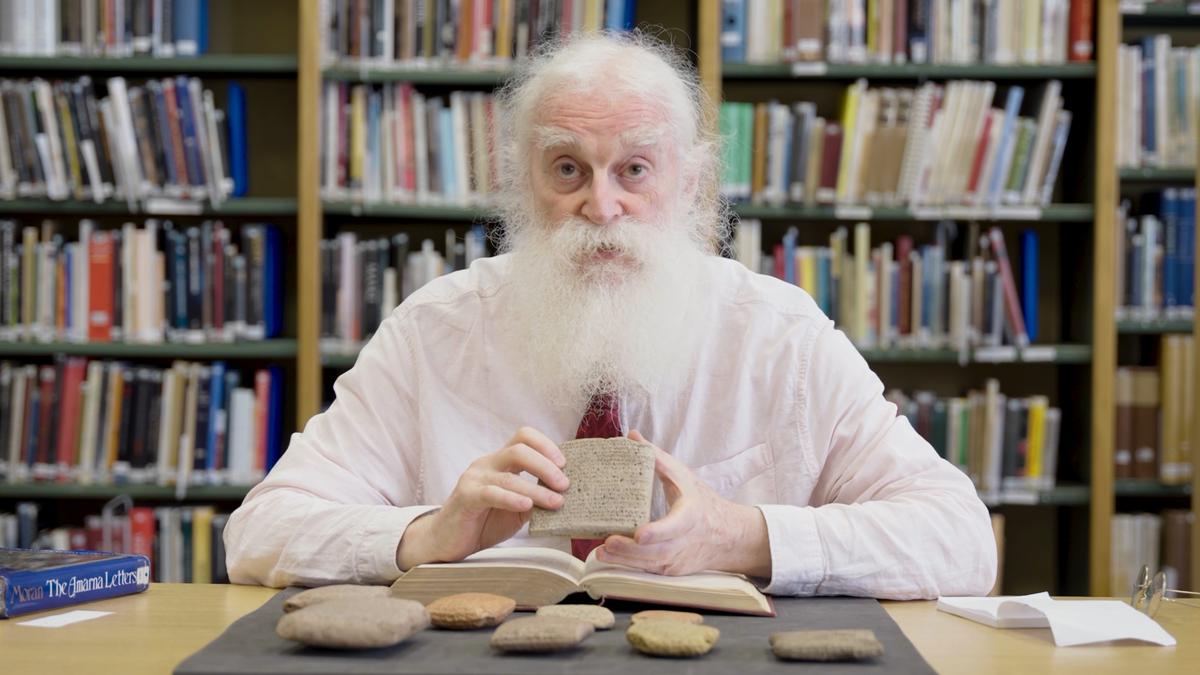
Clay tablets sent to the pharaohs more than three thousand years ago turn out to read a lot like a modern inbox: complaints about slights, begging for help, and endless requests for gold. A short Aeon video, and a calming reminder that statecraft has always been mostly small grievances.
An Aeon video about the Amarna letters, the cuneiform correspondence between Egyptian pharaohs and other rulers of the Near East. It highlights the disputes, pleas and demands for gold they contain, and how familiar that diplomacy still sounds.
from the outfoxed-by-sheep dept.
An asymmetric game of two foxes against twenty sheep, older cousin of Fox and Geese, put through some proper game analysis. The fun is in the details, like how small the first-move advantage turns out to be and how the game can loop forever, which makes solving it trickier than it looks.
A writer analyses the Swedish Fox Game, in which one player's two foxes face the other's twenty sheep under different movement rules. The post works through the rules, the near-irrelevance of moving first and what loopy positions mean for finding the best play.
from the streak-not-broken dept.
Twenty years of daily strips, without a gap, from one artist on a personal blog. In an era of abandoned webcomics and dead links, a run like that deserves a quiet round of applause, and File 770's look at it is a gentle bit of fandom news.
File 770 marks a milestone for Fumiya Yomigishi's Japanese webcomic, a vertical two-panel strip posted on the artist's blog every day since September 2006. The piece introduces the comic and the artist behind the long run.
from the ten-years-of-undertow dept.
A ticket listing is thin gruel, but it marks something real: Undercurrent, the record where Jarosz stripped things back and let the songs carry the weight, is ten years old, and she is touring it. The Monterey date has already been and gone, so treat this as a nudge to check where the tour heads next. Any excuse to put that album back on is a good one.
TicketNews flagged tickets for Sarah Jarosz at Monterey's Golden State Theatre, a stop on her fall tour marking a decade since her 2016 album Undercurrent. The Monterey show took place on October 22.
from the egg-shaped-supergiant dept.

Betelgeuse spent years being the star everyone expected to explode on cue, and the duller explanation keeps winning: it has a partner. New observations show that a close companion is tugging the red supergiant out of round, which could account for some of its famous flickering. Less fireworks, more celestial mechanics, which is arguably the better story.
Universe Today reports on new observations of Betelgeuse and the small star orbiting close to it. The companion's gravity distorts the supergiant into an elongated, egg-like shape, and studying how the pair interact may help explain why Betelgeuse's brightness varies.
from the borrowed-time dept.
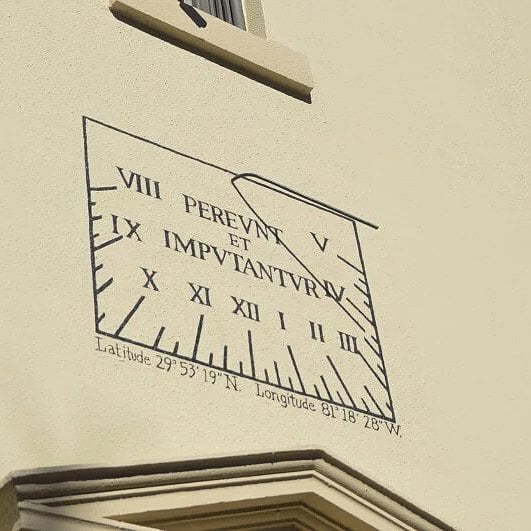
Anyone who has debugged a leap-second bug at 23:59:60 will greet this with relief and a little suspicion. Timekeepers have agreed to stop nudging UTC to track Earth's wobbly rotation, which simply moves the problem far enough into the future that someone else will have to add a whole minute, or an hour, in one go. Kicking the can, but a very carefully measured can.
Universe Today explains this month's decision to drop the leap second and stop keeping atomic time locked to Earth's rotation. The two will drift apart slowly, so at some distant point a larger correction, perhaps a full leap hour, may be needed to bring them back in line.
from the hawk-cuckoo-or-not dept.

This one is close to home: the Malaysian Bird Report's latest issue, with notes on telling hawk-cuckoos apart, which is a problem every birder in Penang has stood under a tree and wrestled with. There are also new additions to the national list and some odd behaviour records. Free, local, and written by people who actually go out and look.
The Bird Ecology Study Group announces the June 2026 issue of the Malaysian Bird Report, free to download. It includes pieces on hawk-cuckoo identification, good eBird practice, reporting birds that hit buildings, diet observations, squabbles within species, hybrids and new species for the Malaysian list.
from the love-all dept.
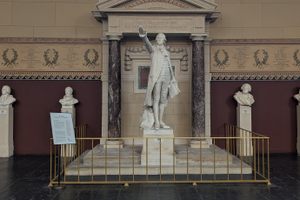
History has a sense of humour: the room built for French nobles to play an ancestor of tennis is where the Third Estate swore not to go home until France had a constitution. The hall is a short walk from the palace and far quieter. Worth noting that the deciding point in 1789 was scored entirely off the court.
Atlas Obscura visits the Salle du Jeu de Paume, a large wooden court near the Palace of Versailles built for the nobility's version of real tennis. In June 1789, locked out of their usual hall, Third Estate deputies gathered here and took the Tennis Court Oath, and the room is now a memorial to that moment.
from the pluggable-policy dept.
sched_ext has gone from controversial patch set to a place where people do real scheduling research, and the Plumbers microconference shows the hard problems arriving on schedule. Priority inversion under BPF schedulers and making proxy execution play nicely with them are the interesting knots. The paravirt angle, letting host and guest schedulers talk, is the one to watch.
LWN points to the Linux Plumbers Conference report from the sched_ext microconference in Prague. Discussion centred on priority inversion and lock-holder preemption with BPF schedulers, cooperation between host and guest schedulers across the VM boundary, and using hardware and cache-topology feedback to place tasks.
from the escape-meta-alt-control-shift dept.

Fifty years ago, editing meant one line at a time on a clattering teletype; then a gang at the MIT AI Lab made the screen itself editable, and some of us have never left the result. This retrospective walks the road from plugboards to full-screen editors. The editor wars may never end, but one side has at least half a century of seniority.
MIT Technology Review marks fifty years of EMACS, setting it against the history of programming from plugboards and paper tape to line editors on teletypes. EMACS first ran on video terminals at the MIT Artificial Intelligence Lab and was among the first full-screen editors, and it is still widely used.
from the reel-history dept.
A searchable pile of old public-domain film, cut into clips you can actually find things in. Kottke went poking and came back with amateur footage of the 1933 Chicago World's Fair and a 1946 film on how New York grew. Exactly the sort of rabbit hole the feed exists for, minus the algorithm.
Kottke highlights the Moving Image Archive, a growing collection of more than 120,000 clips taken from around 2,300 archival films in public-domain collections. He picks out a few finds, including a 1933 amateur film of Chicago's Century of Progress fair.
from the eau-de-carcass dept.

Just across the water from Penang, in Sarawak, grows a parasitic plant that has bet its whole reproductive strategy on smelling dead. It blooms for only a few days, lures flies to do the pollinating, and is endangered, so seeing one takes luck and a strong stomach. Borneo keeps reminding us that the strangest plants on Earth are a short flight away.
A Mongabay short follows a search in Sarawak, Malaysian Borneo, for Rhizanthes lowii, a rare and endangered parasitic flowering plant. Its flowers last only a few days and give off a stench of rotting flesh to attract the flies that pollinate it.
from the there-is-no-planet dept.
Damn Interesting does what it does best: a long, unhurried story about how good science chased a phantom. It begins with Newton fretting that action at a distance was an absurdity, and follows the arithmetic of gravity to a planet that astronomers felt sure must exist. Perfect for an idle half hour, and a fine lesson in how anomalies pay off.
A Damn Interesting long read that starts with Newton's unease about gravity acting across empty space and traces how his theory led astronomers to hunt for a world they could not see. It is a story about prediction, observation and what happens when the numbers do not quite add up.
from the mandolin-meets-the-pit dept.
Punch Brothers have spent two decades blurring the line between string band and chamber group, so pairing them with players from the Met Opera's orchestra at Carnegie Hall is less a stunt than a logical next step. Thile has always written like a man who secretly wants a woodwind section. The listing is light on details, but a favourite band in that room is reason enough to flag it.
BroadwayWorld lists a Carnegie Hall programme that brings together Punch Brothers and the Met Orchestra Chamber Ensemble, a group drawn from the Metropolitan Opera's orchestra. It continues the band's run of concert-hall appearances this season.
from the didn't-even-need-the-full-ten-years dept.

The Vera Rubin Observatory hasn't formally begun its decade-long sky survey and it has already turned up a sizeable trans-Neptunian object. If the size estimate holds, this is no pebble: it would rank among the bigger bodies out past Neptune. A nice early hint of how crowded the outer Solar System's catalogue is about to get.
Using early observations, Rubin has found 2026 ED138, a distant object beyond Neptune that may be up to about 1,500 km across. If confirmed, it would be one of the largest known dwarf planets in that region, and it was found before the Legacy Survey of Space and Time officially got going.
from the pass-the-lithium-fluoride dept.
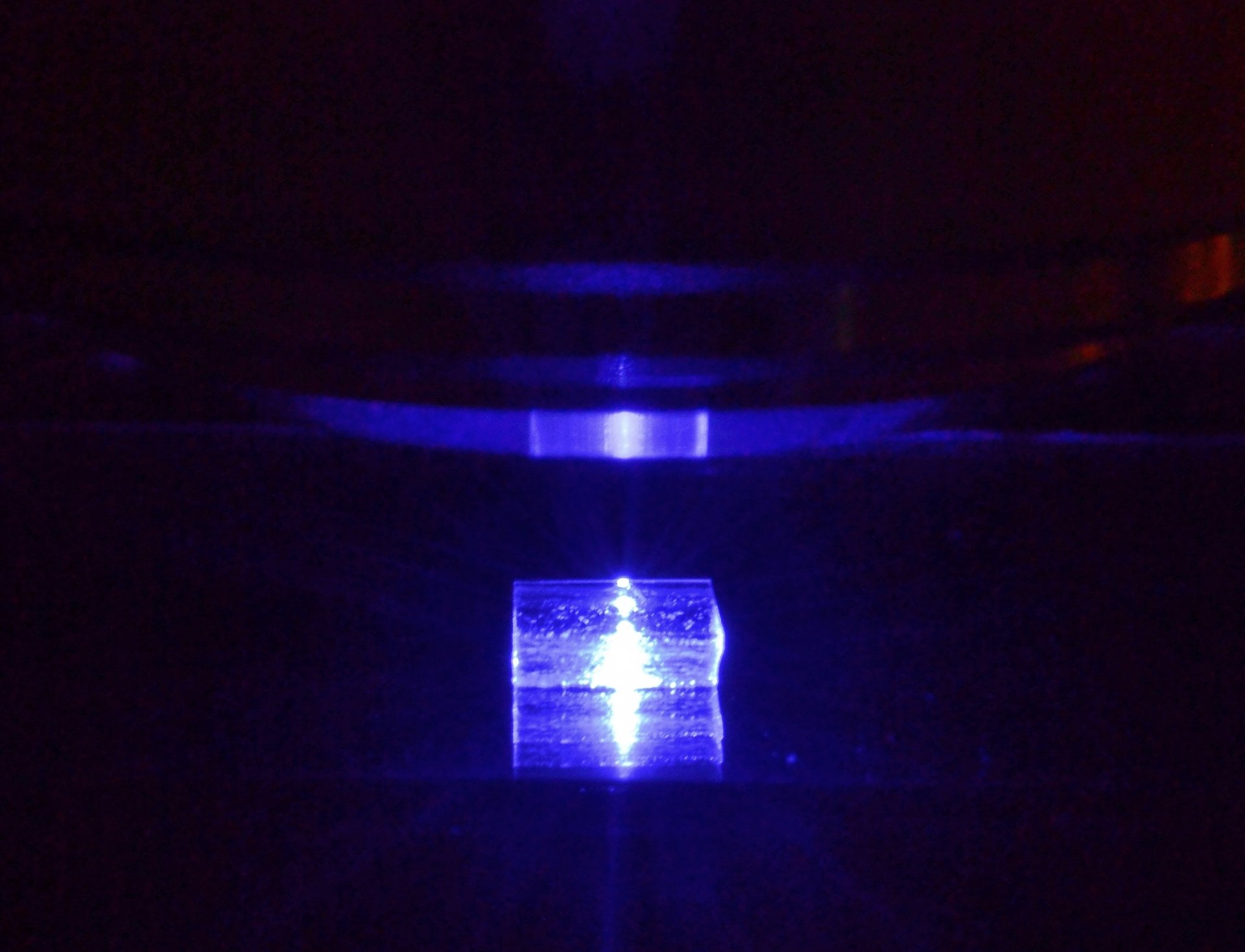
Artemis I flew no crew, but it did carry two phantom passengers built to mimic human bone and tissue and stuffed with radiation detectors. The fun part is the instrumentation: passive crystals that store a dose and give it back as light when heated, read out long after splashdown. Low-tech physics doing high-stakes dosimetry.
A paper led by Pawel Bilski of the Polish Academy of Sciences' Institute of Nuclear Physics reports results from the Matroshka AstroRad experiment on Artemis I. Two anthropomorphic phantoms in the Orion capsule carried hundreds of sensors, including a new type of long-term passive radiation monitor based on lithium, to map the dose a crew would receive on a lunar trip.
from the shave-and-a-haircut-seventy-three-feet dept.

Some landmarks commemorate battles; this one commemorates barbershop singers deciding a Texas town's claim to the tallest barber pole would not stand. Forest Grove put it up in the 1970s and has kept it striped ever since. It is exactly the sort of committed small-town joke that justifies a detour.
Atlas Obscura features a 73-foot red, white and blue barber pole standing in a park in Forest Grove, Oregon. It was erected in the 1970s by local barbershop harmony enthusiasts who wanted to outdo a rival pole in Texas, and it has since become a quirky local landmark.
from the apk-add-portability dept.
Someone has taken the NetBSD kernel and libc, bolted on busybox and Alpine's apk package manager, and called it AlpineBSD. It is early, there's no installer, and the hardware support caveats are printed right on the front page, which is exactly the late-90s spirit: build the odd hybrid because you can. The project also bans LLM-generated code from its base system, a stance some will find refreshing.
AlpineBSD is a work-in-progress operating system that ships the NetBSD kernel, libc and core platform tools with a userspace modelled on Alpine Linux, including busybox and apk-tools. It has no installer yet, warns that NetBSD's hardware support is narrower than Linux's, and keeps AI-generated software out of its base system and main repository.
from the that's-not-the-edge-THIS-is-the-edge dept.
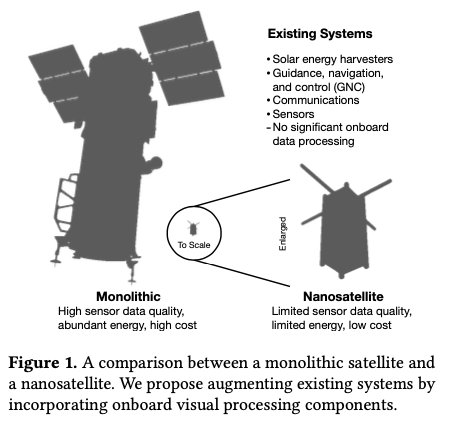
Adrian Colyer at his best: a 2020 ASPLOS paper arguing that constellations of tiny satellites should stop acting as dumb bent pipes and start computing on what they see. Downlink bandwidth is the bottleneck, so the design question becomes how to split work across formation-flying nodes with tight power budgets. A systems paper with orbital mechanics as a constraint is hard to resist.
Colyer reviews Denby and Lucia's ASPLOS 2020 paper on Orbital Edge Computing. It proposes treating nanosatellite constellations as a new class of computer system, processing sensor data in orbit across many cooperating satellites instead of sending raw imagery to the ground through the traditional relay-style architecture.
from the it-never-rains-but-it-portends dept.

The Public Domain Review takes one of Britain's worst floods and looks at it through the cheap printed pamphlets that followed, where weather became prophecy and every wave a moral lesson. It is really a story about early modern media: how a young print trade learned that the odd and the ominous sold. The woodcuts alone are worth the visit.
Erik Crnkovich examines how the great Bristol Channel flood of 1607 was reported and interpreted in early modern Britain, where many saw it as divine judgement. The essay connects such accounts of wondrous weather to a printing industry that fed readers' appetite for the strange and the occult.
from the noughts-and-cubes dept.
Ordinary tic-tac-toe is a solved, dull draw, but stack it into a 3x3x3 cube and a draw becomes impossible. Futility Closet then flips the rules so completing a line loses, and the winning strategy turns out to be a pleasingly symmetric trick. A good puzzle for a quiet ten minutes with a pencil.
In 3x3x3 tic-tac-toe, the player who takes the centre cell can always force a win, and no filled board avoids a completed line. Futility Closet looks at the reversed game, where making a line loses, and explains why taking the centre and then always mirroring the opponent through it remains the right strategy.
from the harder-better-faster-brick-stronger dept.
A short teaser hints at a Daft Punk tie-in from LEGO, and the nice twist is that the set is based on a fan-submitted design. Two famously helmeted robots seem a natural fit for minifigures. Details are scarce, but it's the most on-brand collaboration the company has announced in a while.
Kottke points to a short video teasing a collaboration between Daft Punk and LEGO, including an upcoming set derived from an entry submitted by a fan. Further details about the set have not yet been announced.
Wednesday, October 28, 2026
from the mind-the-clay-pit dept.
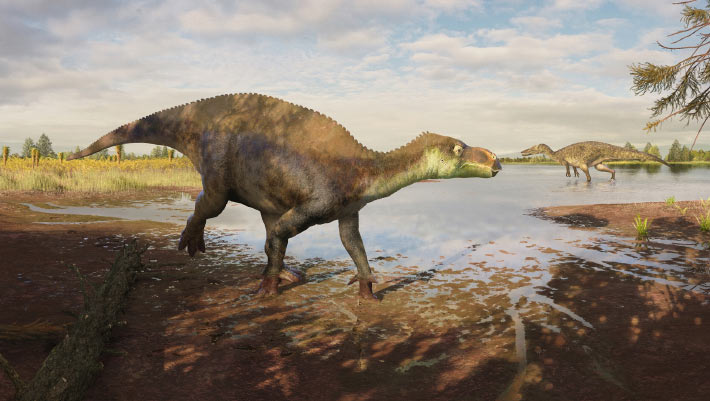
Dinosaur news from the Weald, where the brick pits keep paying out. A partial skeleton that has sat in the Natural History Museum's collections since 2001 turns out to be a new genus, which says as much about the value of museum drawers as it does about Surrey. The species name honours a local man who never got to see it described, a quietly moving touch.
A partial iguanodontian skeleton dug out of a Surrey brickworks in 2001 has been described as a new genus and species, Paludohadros proudlovii. It sits near the base of the hadrosauroid lineage, the group that later produced the duckbilled dinosaurs, and adds to the Early Cretaceous plant-eaters known from southern England.
from the cockatoo-many-tenants dept.

A critically endangered parrot whose wild population is shrinking in Indonesia and Timor-Leste has, by accident, a stable outpost of about two hundred birds in Hong Kong's parks, descended from escaped pets. Notice the bottleneck: not food or predators but tree cavities, lost to storms and tidy-minded pruning. Close enough to Penang for the nest-box idea to feel familiar.
Hong Kong hosts around 200 wild yellow-crested cockatoos, roughly a tenth of the species' global population, likely descended from released or escaped pets. With storms and tree pruning removing most natural nest holes, researchers have put up artificial nest boxes that give the birds somewhere to breed and give scientists a close look at their nesting.
from the bumper-cars-of-creation dept.
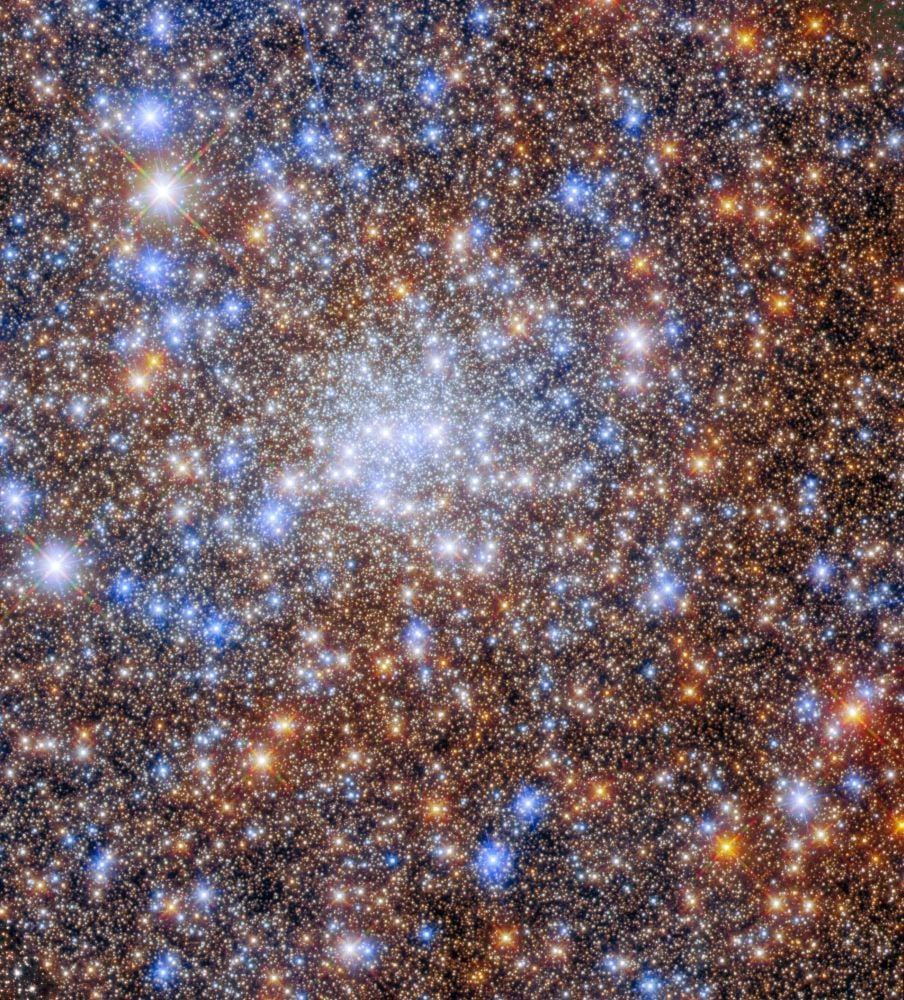
Webb keeps finding supermassive black holes that seem far too big for how young the universe was, and every theorist has a favourite shortcut. This one is pleasingly mechanical: pack enough stars close together and they start running into each other, merging into monsters that collapse into hefty black hole seeds. Worth noticing how it trades exotic physics for plain crowding.
A new study argues that the dense star clusters common in the early universe made stellar collisions frequent, and that repeated mergers could build very massive stars. When those collapsed or exploded they would leave unusually large black holes, giving a head start to the supermassive black holes seen surprisingly early in cosmic history.
from the read-your-own-writes dept.
Brooker opens with the EC2 control plane of 2008, a tree of MySQL replicas glued together with statement-based replication, and works from there to why strong consistency is worth paying for. It's an operator's argument rather than a theorist's: the cost of eventual consistency shows up as weirdness that every application developer has to reason about. No primer here, which is the point.
A systems essay from the Aurora DSQL engineer on why strongly consistent databases make application code simpler, starting from his experience with replicated MySQL at AWS. He walks through how replica lag leaks into application logic and argues that modern distributed databases can now offer strong consistency without the old operational pain.
from the land-ahoy dept.
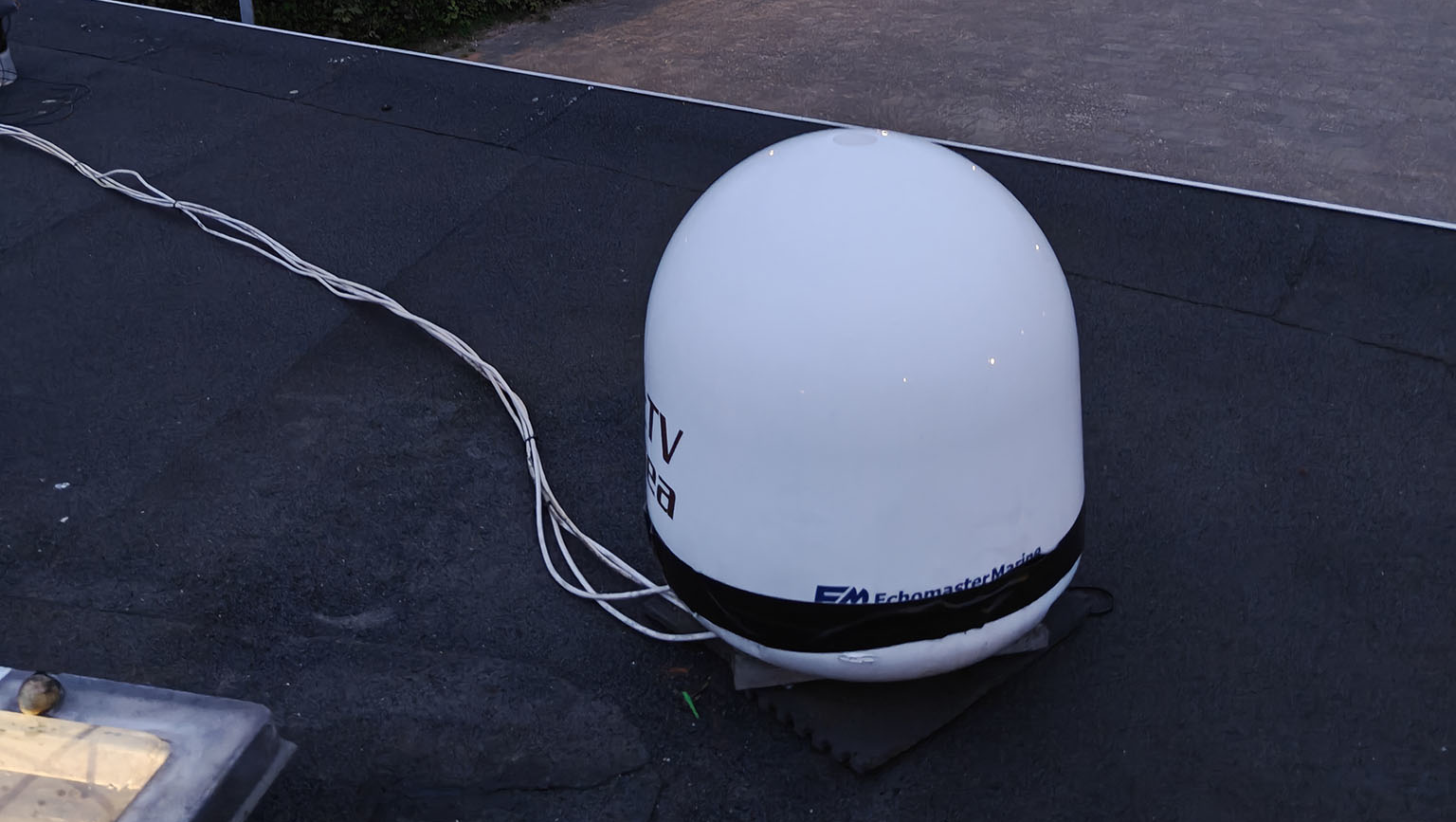
Proper hacker-space energy: get hold of a boat-mounted satellite antenna, then feed it fake compass headings from a microcontroller so it believes it is bobbing around somewhere. Then sniff the control traffic, decompile the vendor tool and write up the protocol. The photo was apparently taken on the roof of a Dutch hackerspace, which feels exactly right.
A hacker named Melan repurposed an Intellian i4 marine satellite dish for use on land. She used an RP2040 to send it the NMEA navigation sentences a ship would, then reverse engineered the link between the vendor's software and the antenna controller so she could point the dish by azimuth and elevation directly.
from the have-a-ball dept.
A forgotten Edwardian craze in which two teams shove an enormous ball towards opposite ends of a field, and the photographs are as gloriously absurd as that sounds. A small New England link too: the game is usually credited to Moses Crane of Massachusetts in the 1890s. It even turned up on horseback for a while, which raises more questions than it answers.
The Public Domain Review gathers photographs and early film of pushball, a game in which two sides try to push a giant ball, taller than the players, across the opposing goal line. It enjoyed a burst of popularity in the US and Britain around the turn of the twentieth century before fading away.
from the holler-back dept.
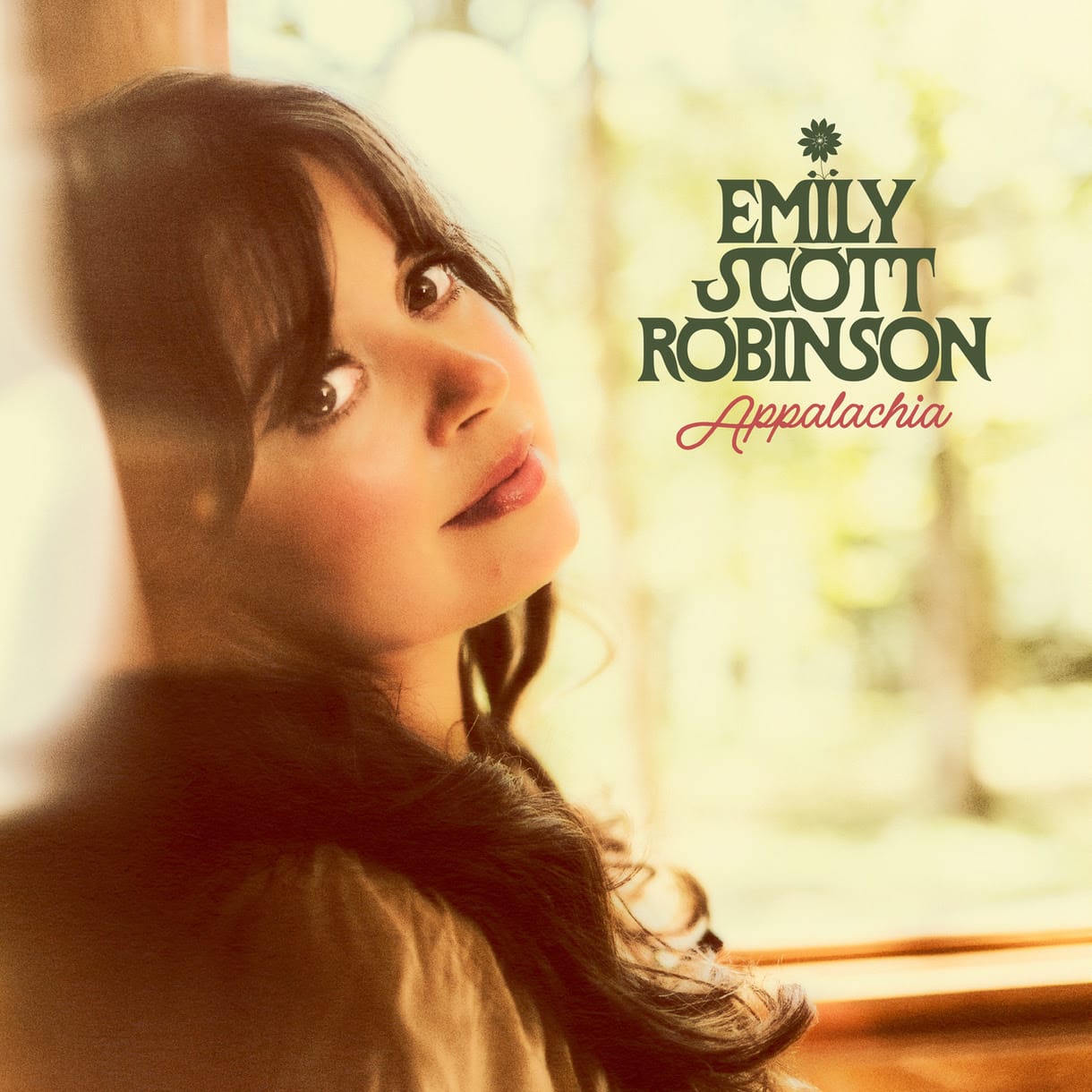
Robinson has one of the clearest voices in current folk, and handing her to Josh Kaufman, whose Bonny Light Horseman records are all space and grain, is an interesting pairing. The title track of her third Oh Boy album is the first taste of what that sounds like. Worth a listen with good headphones.
No Depression premieres the title track from Emily Scott Robinson's third album for Oh Boy Records, recorded with producer Josh Kaufman. The record is described as more experimental than her earlier work, with songs about resilience, love, grief and hope.
from the mindmaze-revisited dept.
For a certain generation, Encarta was the internet before the internet reached the house: articles, grainy video clips and that MindMaze quiz on a single CD. Someone has wrestled the 1995 edition into a static website using the archived disc contents, by their own admission via a brittle and convoluted pipeline. Computing nostalgia as a wildcard, sourced from the Internet Archive.
A developer has made Microsoft's Encarta 95 encyclopedia browsable on the web, reconstructing its articles from the archived CD-ROM material and serving the result as a static site. They describe the conversion pipeline as fragile but working, with the code published on GitHub.
from the drive-thru-history dept.
The sort of place you'd walk straight past: a fenced patch of grass behind a fast-food restaurant, holding settlers from when this was a stage stop on the way west. The Twelve Mile House was where travellers rested their horses, and some of them never left. A small, quiet reminder of how thin the layer of strip-mall Colorado really is.
Atlas Obscura visits the Melvin-Lewis Pioneer Cemetery, a small fenced plot in Aurora, Colorado, now tucked behind a Chick-fil-A. It holds early settlers and travellers from the days of John and Jane Melvin's Twelve Mile House ranch, a stopping point on the route west, along with later burials spanning more than a century.
from the great-scott-free dept.
Bob Gale has put his original draft of Part II back online, and the big swerve is that the almanac plot lands Marty in the late 1960s rather than back in 1955. Fun to read alongside the film for every timeline paradox that got tidied away, and a reminder that the sequel's clever revisit of the first movie was a later idea, not the plan.
Back to the Future co-writer Bob Gale has republished his early draft of Part II alongside a new book of the complete screenplays. In this version Marty goes to 1967 to stop Biff and the sports almanac, rather than revisiting 1955 as in the finished film.
from the five-a-day dept.
Dinosaur news, and a properly odd one. Oviraptorosaurs have long been the Rorschach test of theropod diets, with eggs, shellfish and plants all proposed at one time or another; this one comes with an intact skull whose beak and jaw look built for mashing soft fruit, much like a parrot's. Notice that the fossil came out of the ground in 2011, which is a reminder of how long a good skull can wait in a prep lab for its moment.
Researchers have named Infernogallus jamesi, a small toothless oviraptorosaur from the Late Cretaceous of Montana, from a rare complete skull. Its jaw mechanics point to a diet of soft fruit, which would make it the first dinosaur known to have specialised in eating fruit.
from the are-we-there-yet dept.
Opportunity's mileage record stood for years as the gold standard of planetary road trips, and it took that rover nearly fifteen years to set it. Perseverance has beaten it in about five and a half, mostly thanks to an autonomous driving system that lets it plan its own path instead of waiting on the round trip to Earth. The flight software folks deserve a quiet nod for this one.
NASA's Perseverance rover has now driven farther across the surface of another world than any vehicle before it, passing Opportunity's record of just over 28 miles. It is currently working through some of the oldest rocks it has reached, looking for traces of environments that might once have supported life.
from the second-life dept.

A star like the Sun swells up on its way out and swallows whatever planets sit too close, which ought to be the end of the story. Here the debris left behind settles into a disk around the white dwarf, and astronomers think they can see two new bodies taking shape in it. Zombie planets around a zombie star, and just in time for Halloween.
Astronomers have found a dusty disk around a white dwarf, built from the remains of planets destroyed when the star expanded at the end of its life. Observations suggest two new planets are now forming inside that disk.
from the eagle-has-landed dept.

The Madagascar Fish Eagle is one of the world's rarest raptors, with only a small population left along the island's western coast and lakes. This short interview with a lodge on the northwest coast is mostly about where and how you might see one, and it is a fine bit of daydream fuel for a raptor fan. Treat it as a travel brochure with better birds than usual.
10,000 Birds talks to Anjajavy le Lodge in northwestern Madagascar, whose protected area is one of the places to see the endangered and endemic Madagascar Fish Eagle. The piece covers the lodge's birding highlights and what visitors come looking for.
from the crossing-the-line dept.
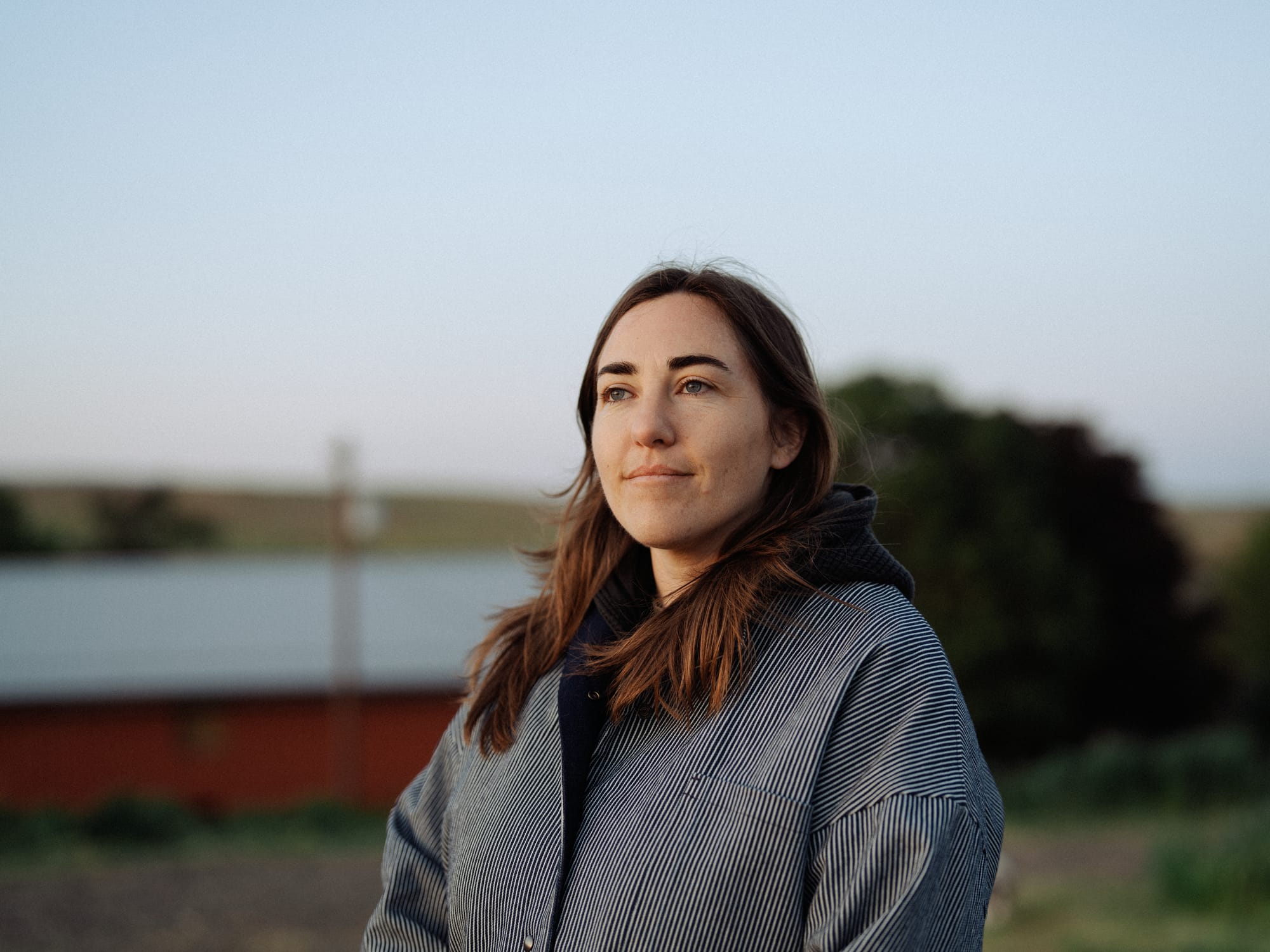
Cilker's first two records made her a favourite among people who like their Western folk literate and a bit dusty. Her third was cut in Lockhart, Texas with Bruce Robison producing, and she cheerfully describes it as a concept album whose concept is being sad and going to Texas. That kind of dry self-awareness usually means the songs are good.
No Depression premieres a track from Little White Cross, the third album by the Western folk songwriter Margo Cilker, released on a label she started with fellow musician ISMAY. The record was made in Texas with producer Bruce Robison.
from the brick-by-brick dept.
Most mayors leave behind a few plaques. Manuel José Laredo, who was also a painter and restorer, left a whole palace that mixes Neo-Mudejar brickwork, Gothic revival and early Modernism, with William Morris hovering in the background. It sits a short walk from the station in Alcalá de Henares, which is an easy day out from Madrid.
Laredo Palace in Alcalá de Henares was finished in 1886 for Manuel José Laredo, the town's mayor and an artist who personally directed its design and decoration. The richly ornamented brick building blends several revival styles and was inspired by the Arts and Crafts movement.
from the mind-your-ps-and-qs dept.

Before machines set type, fast hand compositors were minor celebrities, and their speed contests drew big crowds and serious prize money. This essay digs the scene out of the archives, including the women typesetters who used it to push for fairer treatment at work. It is also a nice reminder that every automated job once had its champions.
A Public Domain Review essay recovers the world of competitive hand typesetting in the decades before the Linotype machine arrived in the 1880s. The races were public spectacles with large cash prizes, and fast women compositors used them in their fight for equal treatment.
from the just-enough-locking dept.
Peter Alvaro and colleagues tackle the question every distributed system designer fudges: where do you really need ordering or sealing, and where are you paying for coordination you do not need? Blazes reasons over a dataflow model of the components and places coordination only where the analysis says anomalies can creep in. Good company for the Viewstamped Replication write-up from this morning's batch, approaching consistency from the opposite end.
Adrian Colyer reviews Blazes, a 2014 paper by Alvaro and colleagues that analyses a component model of a distributed program to decide where coordination is needed for correctness. It can infer the model from Bloom programs or from annotations on Java code, then synthesise the necessary coordination.
from the swipe-for-saturn dept.
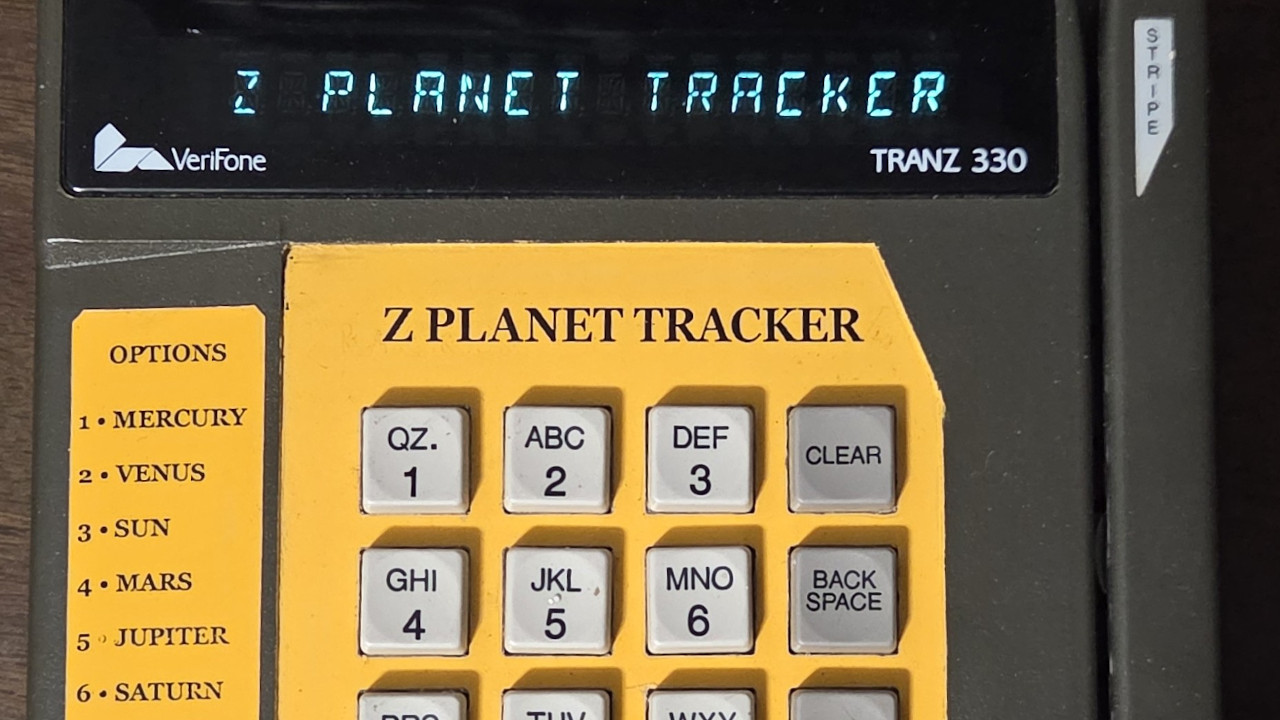
Under the keypad, the TRANZ 330 payment terminal turns out to be a perfectly good Z80 computer with UV-erasable ROMs. One hacker mapped out its innards, hooked up a GPS module and a period-correct thermal printer, and made it compute where the planets are. Exactly the sort of pointless, wonderful repurposing that retrocomputing contests exist for.
Hackaday covers an entry in its 2026 Retrocomputing Challenge that reprograms an old TRANZ 330 card reader, which is essentially a Z80 machine. With new firmware, a GPS receiver and a thermal printer, it now works as an interactive guide to the solar system.
from the trust-but-verify dept.
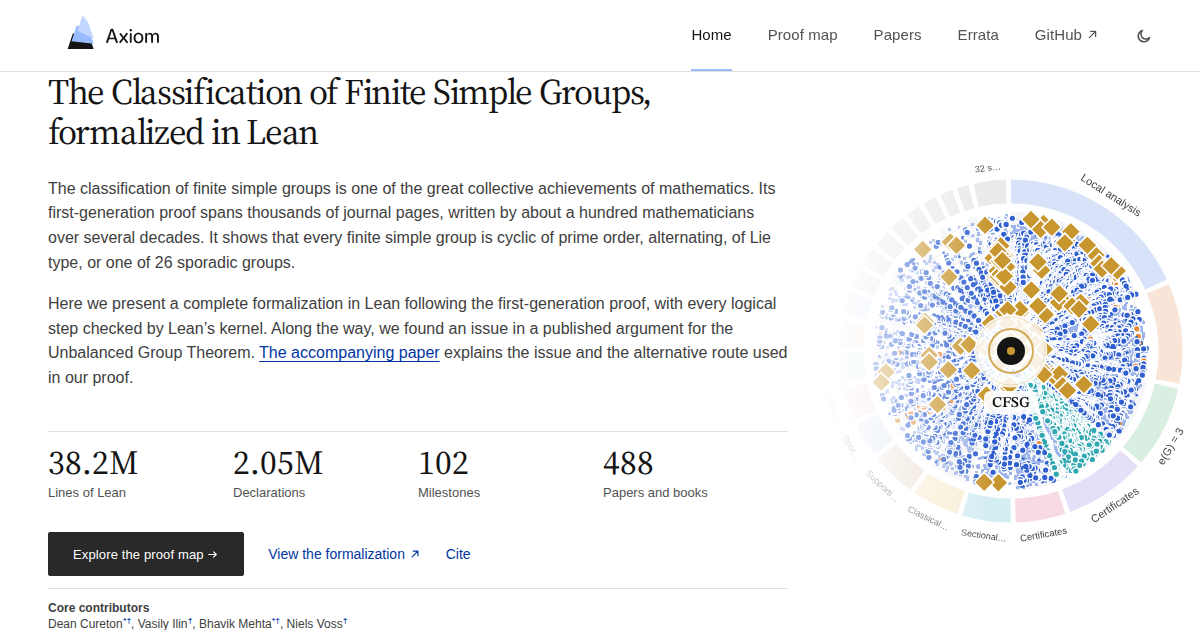
The classification of finite simple groups is famously a proof spread over tens of thousands of pages that few people have ever checked end to end. A project to formalise it in the Lean proof assistant has turned up counterexamples to one step in a published route through the argument, and has supplied a repaired argument for the case that matters. That is the strongest case for machine-checked mathematics you are likely to see this year.
A formalisation project has put the classification of finite simple groups into Lean. Along the way it found that a claim used in one published route to a key theorem is false, and its accompanying paper explains the problem and gives an alternative argument.
from the not-my-voice dept.
A favourite artist in the Irish Times, though not for a new record this time. Hayes describes finding herself on the wrong end of AI-driven fraud and how unsettling it is to have something posing as you out in the world. The pool only had the headline, so the details of what was faked and how she found out are behind the link.
The Irish Times interviews the Irish singer-songwriter Gemma Hayes about being targeted by fraud built with AI tools. She describes the experience as strange and as feeling dangerous.
from the unconquered-claw dept.
Megaraptorans are the big-thumb-clawed predators usually associated with South America and Australia, so one turning up in Britain rearranges the map a bit. Better still, the bones were collected from the Isle of Wight around a century ago and sat unrecognised in a collection until someone looked properly. A fine argument for museum drawers.
Palaeontologists have named a new megaraptoran, Invictibellatrix, from Isle of Wight fossils that spent roughly a hundred years in a museum collection. It is described as the first megaraptoran known from Europe, a group of lightly built predators with very long hand claws.
from the factor-75-sunscreen dept.
A planet this close to its star ought to be bare rock by now, its air long since blown off. Webb says otherwise, and the leading explanation involves reflective mineral clouds plus a magma ocean that keeps breathing gas back out. Notice how much a single brightness measurement is doing the heavy lifting here.
Webb observations of TOI-561 b, a scorching super-Earth about 280 light-years away, suggest it still has a thick atmosphere despite conditions that should have stripped it. The planet reflects around three quarters of its starlight, possibly thanks to mineral clouds, and its molten surface may be replenishing the gas.
from the rust-from-within dept.
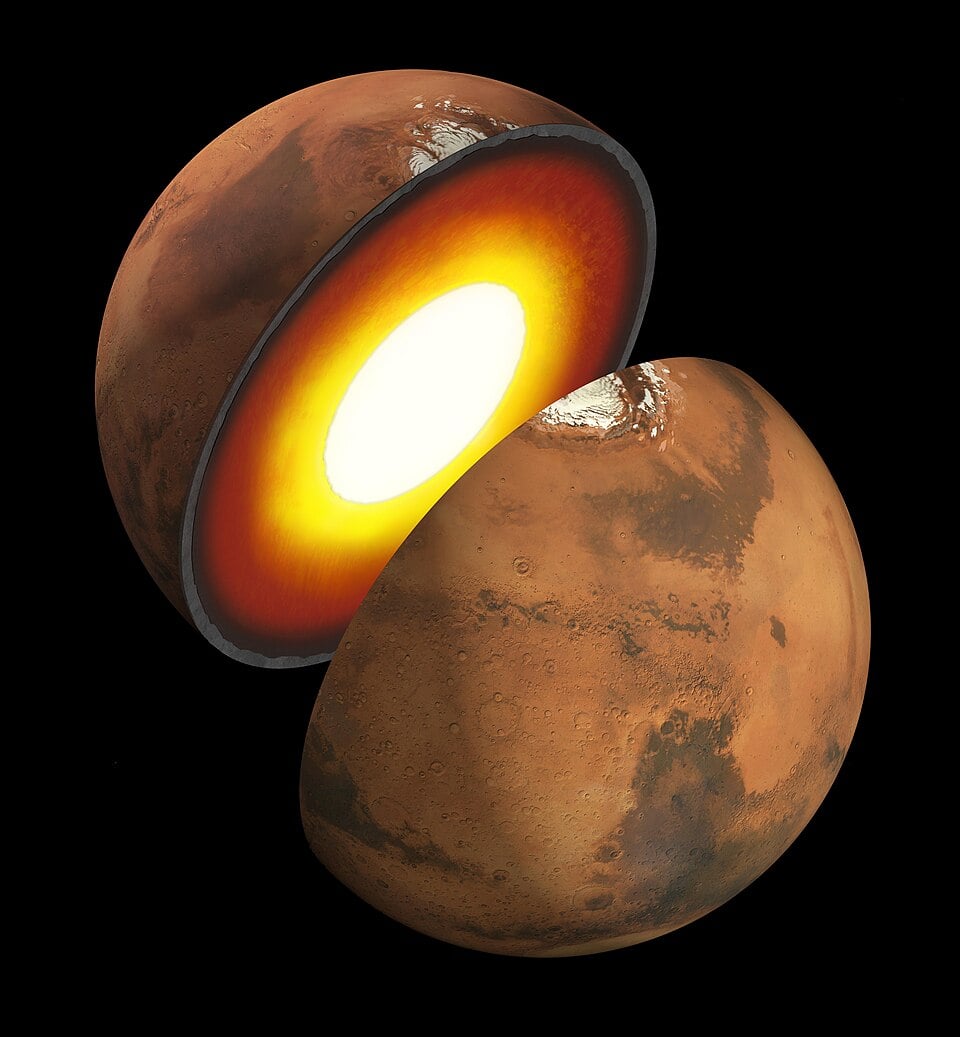
Martian meteorites have long told a chemistry story that contradicts what models of the planet's interior predict. Two Ehime University researchers propose that garnet in the deep mantle is the missing piece, quietly shifting the balance before magma ever rises. Small mineral, big bookkeeping consequences.
Many Martian meteorites look highly oxidised, even though Mars's interior was expected to produce melts in a reducing environment. A new paper in the Journal of Geophysical Research argues that garnet deep in the Martian mantle can reconcile the two.
from the big-bird-comeback dept.

Ratites rarely get good news, so this one is worth the minutes. Twenty years ago Darwin's rhea was almost gone from this corner of Patagonia, and now a team of women is preparing thirteen birds for release. A calm, hands-on look at what reintroduction actually involves.
Mongabay visits Patagonia National Park in Chile, where a women-led team is getting 13 Darwin's rheas ready for release. The large flightless bird nearly vanished from the region two decades ago, and the project aims to rebuild a self-sustaining population.
from the my-home-is-my-castle dept.
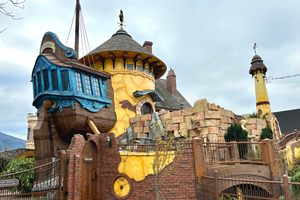
What happens when theme-park fabricators build a hotel for themselves. A miniature castle with a moat and a guardian dragon, a ship stuck in a tower, and a hobbit-ish house under a fake hill, all in a farming village. Pure whimsy, built the hard way over nine years.
In Yarrow, near Chilliwack, a three-suite inn built by a theme-park design company offers a small castle with its own moat, a sailing ship wedged into a tower and an underground house beneath an artificial hillside. The founders got the idea after staying in a restored Roman villa on their honeymoon.
from the column-of-irony dept.

In 1525, the year of the German Peasants' War, Dürer sketched a victory column out of baskets, tools and livestock, crowned by a slumped figure with a sword in his back. Nobody has ever quite agreed whether it mocks the rebels or mourns them. The Public Domain Review gives it the careful reading it deserves.
The Public Domain Review looks at a design from Dürer's 1525 treatise on measurement: a mock-triumphal monument to the peasants crushed that year. It was never meant to be built, and its meaning remains hard to pin down.
from the view-change-of-heart dept.
Liskov and Cowling's 2012 rewrite of VR is the replication paper people quietly prefer to Paxos when they actually have to build the thing. Colyer's write-up walks through normal operation, view changes, recovery and reconfiguration, and is good on why VR is a protocol rather than an algorithm you bolt on later.
An archive post from The Morning Paper covering the revised Viewstamped Replication protocol: state machine replication for crash failures in an asynchronous network. The updated version adds reconfiguration, several optimisations and a cleaner separation between the protocol and the service built on it.
from the space-cadet-cousin dept.

Every Sputnik-era kid had rocket books on the shelf, and most of them have vanished without a trace. Alan Brown digs one back out, Joseph Greene's Dig Allen series, and reads it with affection and a clear eye. Good company if you remember Tom Corbett or wish you did.
In his Front Lines and Frontiers column, Alan Brown revisits Joseph Greene's Dig Allen books, a juvenile science fiction series from the space-race years. He looks at how the series fed young readers' appetite for rockets and exploration.
from the channel-surfing-shangri-la dept.

A rare natural experiment: a whole country that had no television until 1999, then suddenly did. This short Aeon documentary looks at what changed, and is gentle about it rather than preachy. Good fodder for anyone who remembers the internet arriving in their own life.
An Aeon video on Bhutan, the last country to allow television, and what followed when the ban was lifted in 1999. It follows how people there met broadcast TV and what it did to everyday life.
Tuesday, October 27, 2026
from the feathered-fact-check dept.
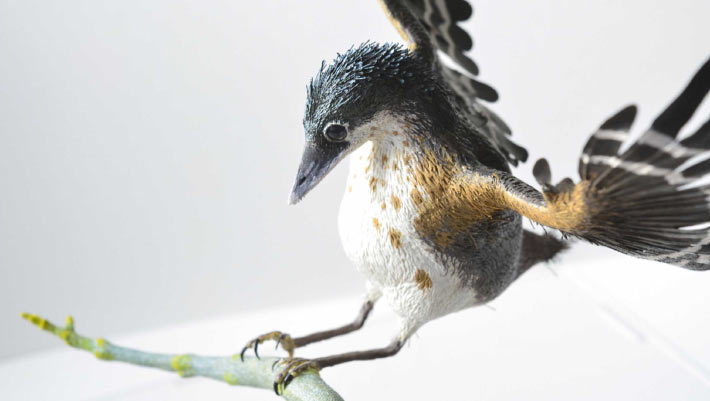
Enantiornithines were the dominant birds of the dinosaur age and then vanished entirely, which makes them easy to forget and hard to picture. This rebuild of Concornis stacks fossil evidence, digital modelling and old-fashioned sculpting, so every feather has to answer to a bone. Worth a look for how much careful inference goes into a single convincing model.
Concornis lacustris was a small bird that lived alongside dinosaurs more than 100 million years ago. Researchers have produced a life-size reconstruction of it, combining fossil data, digital modelling and hand sculpture to show what it probably looked like.
from the reports-of-my-death dept.

Hubble's early Orion pictures showed proplyds, protoplanetary disks being blasted by nearby massive stars, and the arithmetic said they should have been stripped away long ago. The proposed way out involves a merger, which would change the story of how long the disks have actually been exposed. A tidy example of an old paradox resolved by questioning the history rather than the physics.
Disks around young stars in the Orion Nebula are losing mass so fast that they should already be gone, a puzzle dating back to Hubble's first observations. New research proposes that a merger in the region's past explains why the disks have survived.
from the magnolia-for-breakfast dept.
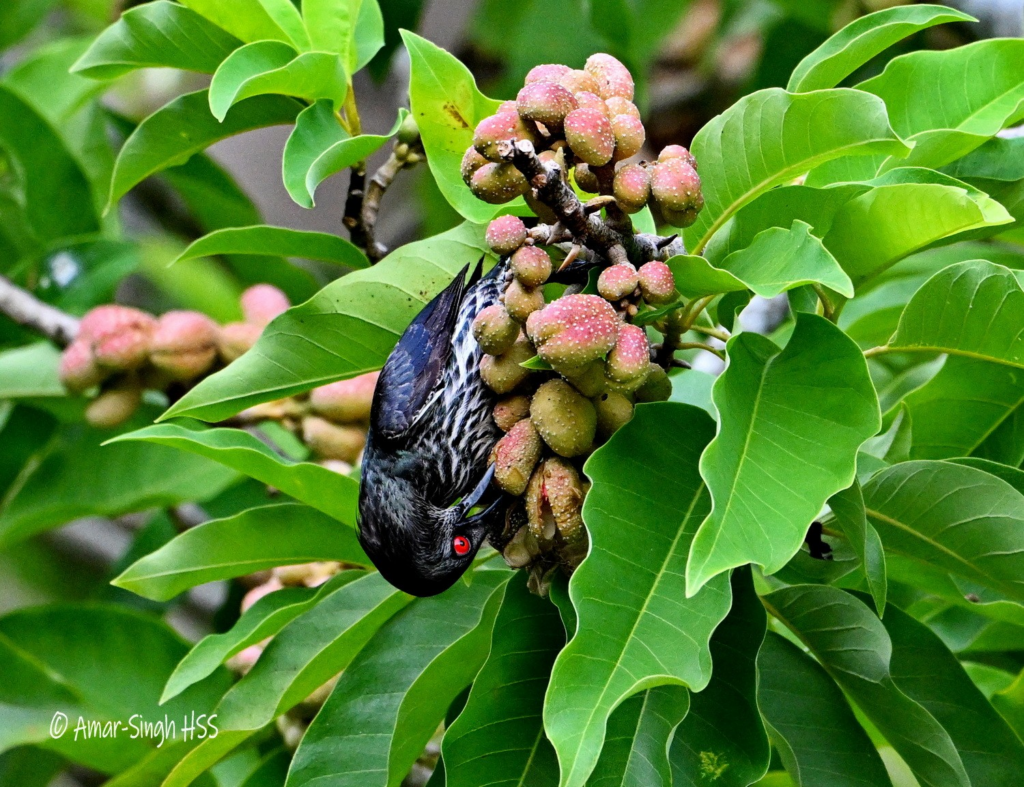
A short field note from just down the road in Perak, the kind of careful local observation that keeps regional bird knowledge honest. Glossy Starlings are famously unfussy, but splitting open champak carpels for the red arils had only been suggested, not properly documented. Something to watch for next time a cempaka tree is fruiting near a Penang flock.
A Bird Ecology Study Group note records a flock of Asian Glossy Starlings in Ipoh, Malaysia, opening the fruit of the cempaka tree to eat its sweet red arils. The behaviour had been suspected before but was poorly documented,, and the note also touches on other species using the same fruit.
from the it-runs-on-a-toaster dept.
There is something very 1999 about serving your own pages from NetBSD with the httpd that ships in base and one extra package for TLS. The author is upfront that it is meant for homebrew projects and small communities, not heavy traffic, which is the right spirit. A pleasant reminder that a web server can still be a weekend afternoon rather than a platform.
A practical walkthrough of setting up a NetBSD 11 web server the stock way, using the bundled bozohttpd and only one added package for HTTPS. It is aimed at personal sites and small community projects rather than high-traffic hosting.
from the flush-considered-harmful dept.
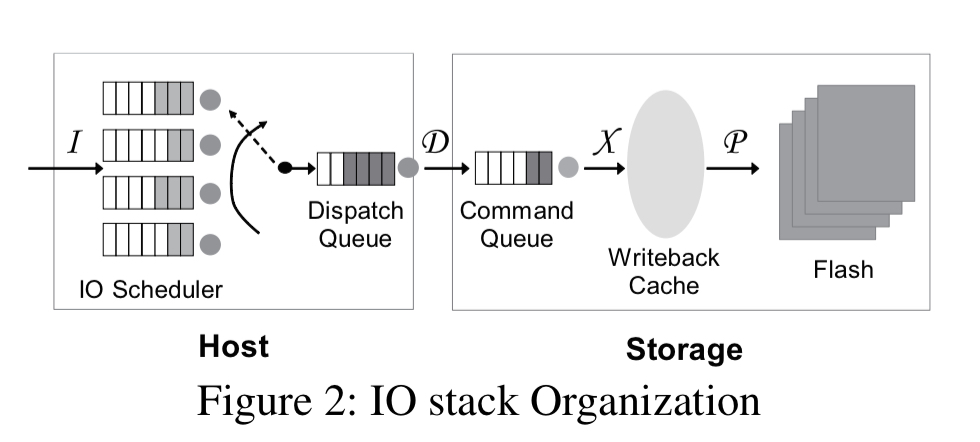
Anyone who has watched fsync latency eat a database's throughput will recognise the setup: flash got wildly parallel, but enforcing write order still means draining queues and waiting. Won et al. push an ordering barrier down through the block layer to the device so order no longer implies durability. Adrian Colyer's write-up is a good refresher on why the block layer's ordering story was built for spinning disks.
A review of the FAST 2018 paper that proposes a barrier-enabled IO stack for flash. By separating write ordering from durability and carrying barriers through the filesystem, block layer and device, it avoids costly flush-and-wait cycles and recovers much of the device's parallelism.
from the dreamliner-retirement-home dept.

ZA-001, the very first 787 prototype, now sits indoors at Chubu Centrair near Nagoya with a small exhibition built around it. You can get close to the cockpit and engines, and there's a children's play area alongside for those travelling with small aviation fans. A good excuse to arrive early for a flight out of Nagoya.
Flight of Dreams is an attraction inside Chubu Centrair International Airport in Japan, built around the first Boeing 787 prototype. It combines a small museum with close views of the aircraft's cockpit and engines and a children's playground.
from the asking-for-a-friend-in-1858 dept.

Long before forums, curious Britons mailed their oddest historical questions to Notes and Queries and other readers mailed back answers. This selection from an 1858 compilation chases things like what became of Mary Queen of Scots' head and who wielded the axe on Charles I. Quirky history, footnoted by an army of amateurs.
The Public Domain Review presents selections from an 1858 collection drawn from Notes and Queries, the long-running British journal of reader questions and answers. The extracts cover historical puzzles from the fate of Mary Queen of Scots' severed head to the identity of Charles I's masked executioner.
from the club-women-get-things-done dept.
Ruffin's life reads like a tour of nineteenth-century Boston reform: Civil War relief work, charity, suffrage, publishing and the women's club movement. She ran a newspaper and built networks that outlasted her. A solid, calm profile of someone whose name deserves to be better known around Beacon Hill.
A New England Historical Society profile of Josephine Ruffin (1842 to 1924), a Boston advocate who supported the Union cause during the Civil War, led charitable efforts, campaigned for women's suffrage, published a newspaper and organised women through club activity.
from the extension-agent-in-your-pocket dept.
Timothy Taylor does what he does best here: take a fat flagship report and pull out the one idea worth chewing on. The argument is that poor countries are short on skilled people, and AI tools might stretch what scarce experts like agricultural extension agents can reach. Sober, example-driven, and free of either hype or doom.
The Conversable Economist summarises the World Bank's World Development Report 2026, which focuses on artificial intelligence. Its core case is that AI could ease the shortage of human skills that holds back low-income economies, illustrated with examples such as advice for farmers.
from the read-the-rings dept.
Colonial writers described open, park-like forests and smoky skies, and tree-ring evidence turns out to back them up. The landscape Europeans called wilderness had been shaped for generations by Indigenous burning. A good corrective, told through the slow record of wood.
A piece highlighted by Kottke on how tree-ring records, along with colonial accounts, show that Native Americans regularly set fires to manage the land, undermining the idea of North America as a pristine wilderness before European arrival.
from the fiddle-me-this dept.
Another outlet weighs in on Lucky Water, and when it's Laura Cortese, a second opinion is never redundant. The fiddler from the Boston scene keeps turning chamber-folk arrangements into something that sounds both old and freshly built. Compare notes with last week's review and see whether the critics hear the same record.
An album review of Lucky Water, the new record from fiddler and songwriter Laura Cortese, reviewed by the music site The 13th Floor.
from the brick-by-brick-by-bone dept.
Clay pits dug for bricks have a long habit of coughing up Cretaceous bones, and this one has given palaeontologists something nobody had named before. The animal lived about 125 million years ago in the wet, river-laced lowlands that once covered southern England. Somewhere a kiln operator is wondering what else went into the walls.
Fossils recovered from a brickworks in England have been described as a new dinosaur species. It lived around 125 million years ago, in the wetland landscapes of Early Cretaceous England.
from the salt-of-the-earth-and-sea dept.
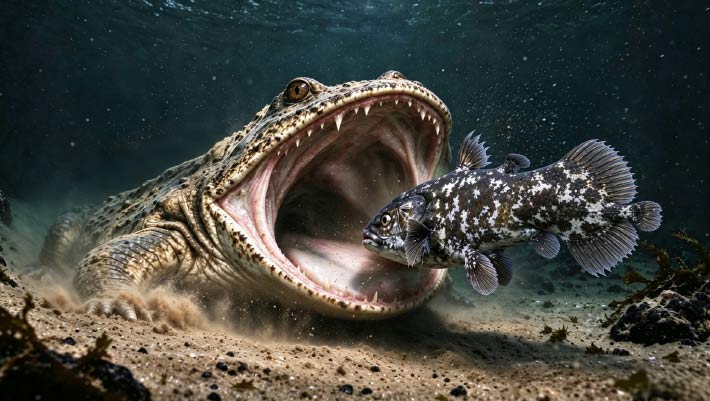
Amphibians and salt water are famously bad friends, which is what makes this flat-headed Triassic oddball worth a look. Two nearly complete skeletons from China suggest this stem amphibian went fully marine, a lifestyle its relatives never managed. Not a dinosaur, but it shared their world and makes a good argument that evolution reads rules as suggestions.
Palaeontologists have described Gerrothorax maritimus from two near-complete Late Triassic skeletons found in China. They argue it is the first known stem amphibian to have lived entirely in the sea.
from the dark-side-of-the-sun dept.

The Sun takes about 27 days to turn, which means trouble can brew out of sight for a fortnight before swinging round to face us. A Southwest Research Institute team now uses probability to estimate where far-side sunspots are likely to be. Space-weather forecasting, in other words, gets a peek around the corner.
Researchers led by Bibhuti Kumar Jha at the Southwest Research Institute describe a statistical method for inferring sunspot activity on the hemisphere of the Sun we cannot see. The aim is earlier warning of active regions before they rotate into view and affect space weather at Earth.
from the everything-is-an-object-lesson dept.
Smalltalk never went away; it just kept a live image running in the corner. The Pharo crowd shipped nearly a thousand merged pull requests into this one, and is moving its release season from spring to autumn. A small, stubborn community still building a whole environment for the fun of immediate feedback.
The Pharo project has released version 14 of its pure object-oriented language and environment, the result of 978 merged pull requests and 616 closed issues since Pharo 13. It is also the first release under a new autumn schedule.
from the spinning-in-its-grave dept.
The WAL, big pages and batched writes all grew up around disks where seeks were the enemy, so the obvious answer is to tear them out for NVMe. Brooker argues the answer is not what you'd guess, and the reasoning goes through durability and the network rather than raw device speed. A nice corrective for anyone itching to rewrite the storage engine.
Prompted by a question about designing a relational database specifically for local NVMe drives, Marc Brooker walks through which disk-era assumptions still matter and which don't. His conclusion is that the result looks rather different from a simple SSD-tuned rewrite of Postgres or MySQL.
from the going-dutch-underground dept.

Most visitors to Maastricht see a pleasant river city; Geoff Manaugh checked in and promptly vanished below it. The town sits on centuries of tunnels, from medieval limestone workings to 17th-century fortification casemates and NATO-era bunkers. A good argument for adding a torch to the Netherlands packing list.
On a stopover in Maastricht, BLDGBLOG's author toured the city's subterranean sites, including limestone mines some 800 years old, the casemates of its 17th-century star fortifications and later military bunkers. The post is a photo-led walk through them.
from the one-sided-argument dept.

Condorcet showed in 1785 that majorities can go round in circles, and mathematicians have been poking the wound ever since. Quanta explains how topology, of all things, captures why fair ways to aggregate preferences keep running into walls. Pure maths about elections with no politics in it, which is a rare treat.
Quanta Magazine explores the mathematics of social choice, from Condorcet's paradox onward, and how a topological view, likened to a Klein bottle, explains why turning individual rankings into one group choice is so stubbornly hard.
from the hounds-of-heaven dept.

Look closely at a Veronese crowd scene and there is nearly always a dog in it, usually more interested in the food than the miracle. Thomas Laqueur follows those dogs through half a dozen paintings and into the painter's awkward interview with the Inquisition. Art history from floor level.
In a Public Domain Review essay, historian Thomas W. Laqueur examines the attentive dogs that recur in Paolo Veronese's paintings, and how the artist's fondness for including them contributed to trouble with the Inquisition.
from the woman's-heart-on-the-south-coast dept.
Fresh McEvoy coverage, which by house rules walks straight past the bouncer. The local paper frames her, as everyone does, as the writer of the song that sold more copies in Ireland than almost anything before it, but the more interesting thing is that she is still out doing small-room dates decades on. The pool only carried the headline, so dates and venue details are behind the link.
A Sussex local news piece announces that Irish singer-songwriter Eleanor McEvoy, best known for writing the title song of the A Woman's Heart album, is bringing her UK tour to Shoreham-by-Sea this November.
from the plaits-in-the-plasma dept.

The solar wind is usually described as a firehose, which undersells how knotted it is. Parker has been flying close enough to see magnetic structures twisting up as they leave the Sun, and the point of interest is the bridge between big fluid-like plasma behaviour and what individual ions are doing. That gap is where the old puzzle of the too-hot corona may finally get some purchase.
Researchers using Parker Solar Probe data report braided, twisting magnetic structures that grow as the solar wind flows outward. The work aims to connect large-scale plasma behaviour with small-scale particle physics, which could help explain features such as the corona's extreme temperature.
from the moved-the-capital-fixed-the-clock dept.
Ancient eclipse records are one of the few ways to measure how Earth's rotation has slowed, and they only work if you know where the observer was standing. Here the fix was mundane and lovely: an ancient Chinese capital sat about eight kilometres off from where people had assumed. Shift the city, redo the geometry, and the length of a day nearly three thousand years ago comes into sharper focus.
Scientists corrected the location of an ancient Chinese capital and used it to reconstruct a total solar eclipse recorded in 709 BCE. The revised path gives a more precise estimate of how fast Earth was rotating at the time and also sheds light on the Sun's behaviour back then.
from the came-for-chimps-stayed-for-rockfowl dept.

Picathartes are the bald-headed, bright-skinned rockfowl that birders cross continents to see, and this one wandered into footage meant for chimpanzees. The find is in the Luki reserve in western DR Congo, which makes it a strong argument for treating the forest as one system across borders. Bycatch, in the best possible sense.
Camera traps set to survey mammals in the Luki Biosphere Reserve in the Democratic Republic of Congo recorded a grey-necked picathartes hopping through leaf litter. Researchers say the record strengthens the case for cross-border protection of the region's rainforest.
from the resin-of-the-story dept.
Japan is known for pearls and jade, so a museum devoted entirely to fossil tree resin in a small Iwate city is the kind of side trip that rewards the detour. Kuji is one of the few places in the country with amber big and clean enough to carve, and the museum claims to be the only one of its kind in Japan. Bonus: weather permitting, visitors can try digging for their own.
The Kuji Amber Museum in Iwate Prefecture is dedicated to the local amber deposits that have been worked for centuries. It displays specimens and carvings, explains the area's mining history and, in good weather, lets visitors try excavating amber themselves.
from the backwards-compatible-until-it-isnt dept.
A gloriously pointless question pursued properly. With no 16-bit subsystem on 64-bit Windows, the hunt moves to the early NT era and the odd corner of Win32s, which is where the archaeology gets fun. Anyone who has stared at PE headers and loader quirks will enjoy watching the search narrow.
A blogger sets out to find the oldest Windows application with a graphical interface that still launches on Windows 11 without emulation or patches. Since 16-bit programs are out, the search turns to early Win32 and Win32s-era software and what still survives the modern loader.
from the moulding-the-parity dept.
Reed-Solomon is storage-efficient and miserable to repair: lose one node and you read k others in full. Clay codes from FAST'18 keep the MDS property while hitting the minimum repair bandwidth, and Adrian Colyer walks the layered construction without hand-waving. Old post, still the best way in to why MSR codes stopped being a purely theoretical curiosity.
Adrian Colyer's 2018 write-up of the FAST paper introducing Clay codes, a way of transforming standard MDS erasure codes into ones with optimal repair bandwidth. It covers why data centres moved from replication to erasure codes, the cost of rebuilding after a node fails, and how the coupled-layer construction reduces it.
from the one-chapter-a-night dept.

Every October a chunk of fandom reads Zelazny's last novel a chapter a day, finishing on Halloween, and we are about five chapters from the end. Judith Tarr looks at it through its animal narrators, starting with Snuff, the watchdog who tells the story. A good excuse to start now and binge to catch up.
Judith Tarr writes about Roger Zelazny's final novel, a Halloween-countdown story populated by figures from Victorian horror and mystery and their animal familiars. She focuses on the book's animal companions, especially the dog narrator, and the yearly tradition of reading it day by day through October.
from the hammer-sickle-and-halftone dept.
A century of poster design from one corner of the world, all scanned and browsable, is a fine place to lose an evening. Princeton holds nearly five thousand of them, from 1904 to 2004, and there is a separate Flickr album of Soviet-era work for those who like their constructivism in bulk. Look at the typography as much as the slogans.
Kottke points to Princeton's digital collection of almost 5,000 posters from Russia and Eastern Europe spanning 1904 to 2004, plus a Flickr album holding about 1,500 Russian and Soviet posters from 1917 to 1991.
from the carriage-for-five-sous dept.
Pascal gets credit for the calculator, the wager and a unit of pressure, and almost nobody mentions that his last venture was public transit. In 1662 he helped launch shared carriages running fixed routes on a schedule at a set fare in Paris, the basic idea behind every bus line since. A transit planner makes the case that this was one of the great inventions, and he is not wrong.
A transit consultant revisits the 1662 Paris service of shared coaches running set routes at fixed times for a flat fare, a scheme Blaise Pascal devised shortly before his death, and argues it deserves recognition as the invention of fixed-route public transport.
Monday, October 26, 2026
from the brevity-is-the-soul-of-orbital-mechanics dept.

Getting to Mercury takes longer than getting to Pluto's neighbourhood would suggest, because the hard part is shedding speed, not gaining it: eight years and a string of flybys. The three-word game is a fluff video, but it's a nice excuse to mark the calendar for the December arrival. Collaborative is doing a lot of work in a mission split between two space agencies.
ESA marked the eighth anniversary of BepiColombo's launch by asking mission team members to describe the spacecraft in three words. The joint ESA and JAXA mission is due to arrive at Mercury on 9 December after its long trip through the inner Solar System.
from the return-to-sender dept.
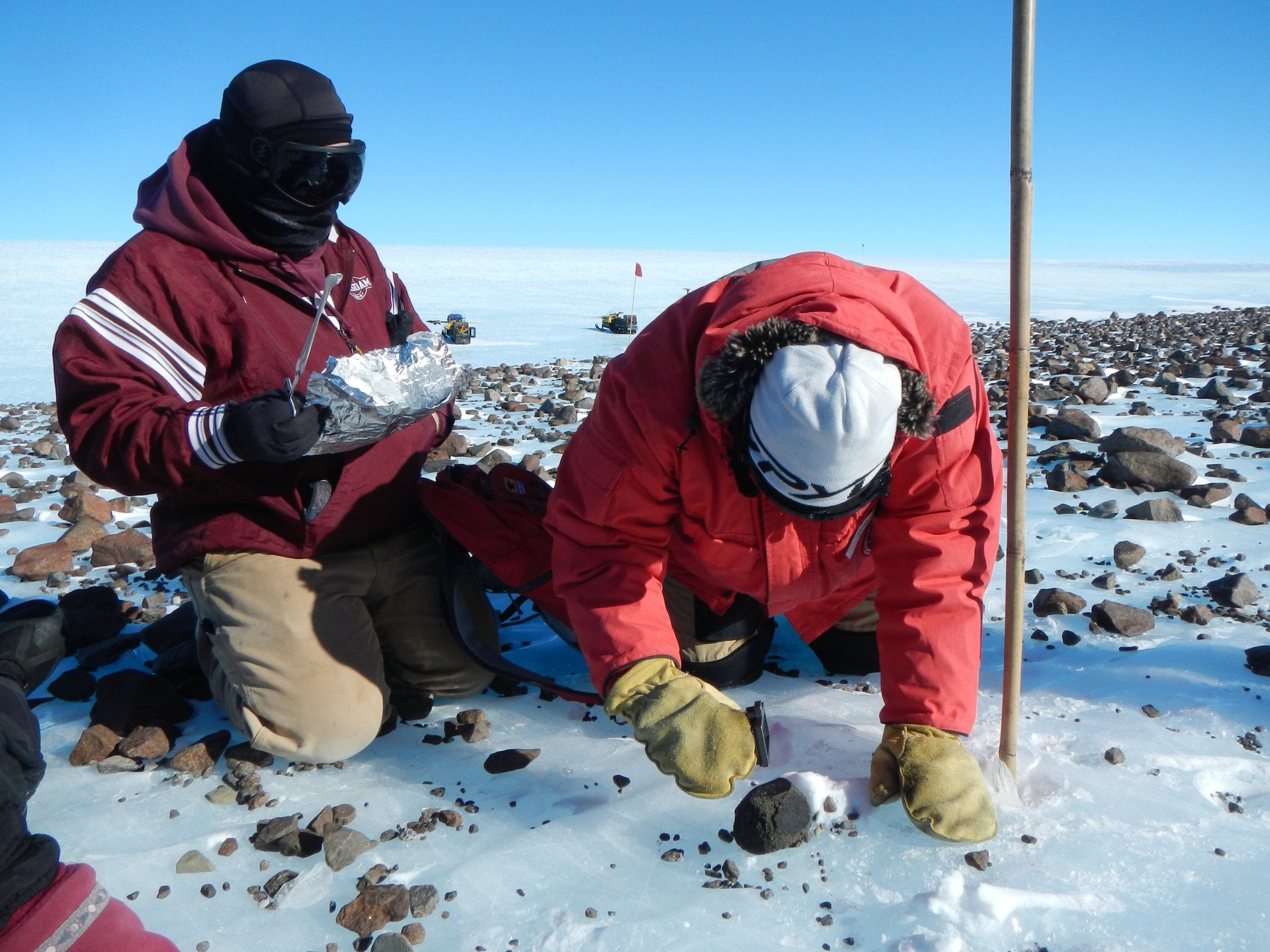
Apollo brought back hundreds of kilograms of Moon, but all from a handful of near-side sites chosen partly so the crews could land safely. Rocks blasted off the lunar surface by impacts and found in places like Antarctica sample the rest of the Moon at random. The piece is a good reminder that the cheapest sample-return mission is the one physics runs for free.
Almost every meteorite comes from an asteroid, but a rare few come from the Moon. Researchers argue these lunar meteorites fill gaps the Apollo collection leaves in the story of how our unusually large Moon formed and evolved.
from the bare-necessities dept.
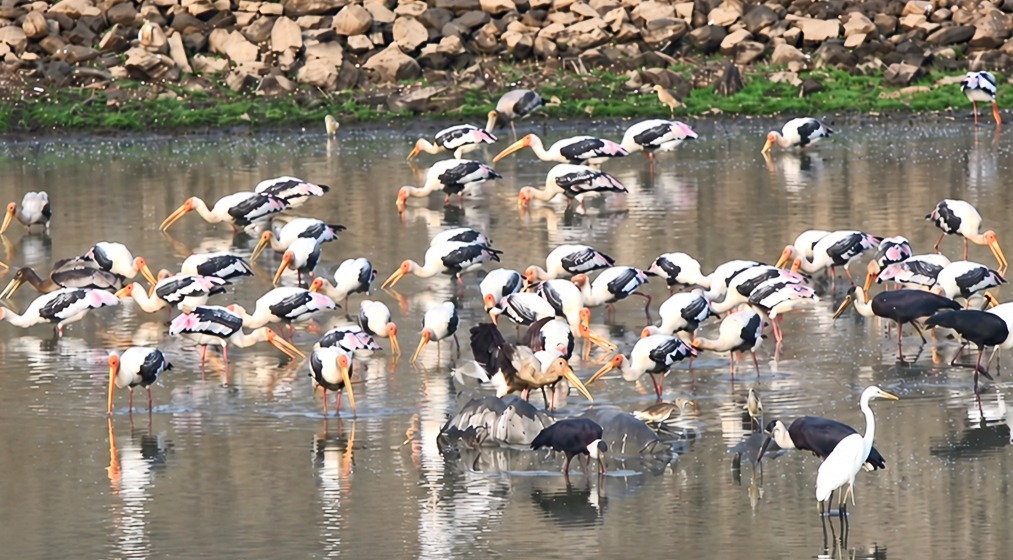
Everyone goes to Pench for the tigers, which leaves the birds to people who know better. A local guide writes about the reserve's birdlife and how birding tourism feeds back into protecting it. Central Indian dry forest has a different cast from Penang's, but plenty of familiar faces from the same families.
A bird guide based in central India describes birdwatching in Pench Tiger Reserve, which straddles Madhya Pradesh and Maharashtra in the Satpura hills and is linked to the landscape of Kipling's stories. He makes the case that birders visiting the reserve help its conservation.
from the parenthetical-virtual-machine dept.
A former gcj hacker wanted to call a Java library from SBCL, didn't like any of the bridges, and so wrote a JVM bytecode compiler in Lisp instead, as one does. It's the purest kind of open source project: scratching an itch with a far bigger stick than the itch required. Bonus points for writing the first working version by hand.
OpenLDK is a just-in-time compiler and runtime that translates Java bytecode into Common Lisp so Java code can run inside an SBCL process. Its author, who once worked on the GNU Java compiler, explains why he built it and how it works.
from the vectorise-all-the-things dept.
Someone read the ESP32-S3's technical reference manual closely enough to notice it has 128-bit SIMD instructions, then used them to make a classic corner detector twice as fast. This is the good kind of embedded hacking: a cheap chip, an obscure corner of the ISA, and real numbers at the end. Source is included.
A developer wrote a SIMD-accelerated version of the FAST feature detector for the ESP32-S3, roughly doubling the speed of the reference implementation and processing a small video frame in about six milliseconds. The write-up walks through the chip's little-known vector instructions.
from the cache-rules-everything-around-me dept.
The usual objection to a big cache tier is that DRAM is expensive, and this paper turns that around: the CPU you stop burning on recomputation and serialisation can pay for it several times over. Murat and Aleksey poke at the 4x claim and the call for richer object caching collocated with the application. Coherence, as ever, is where the hand-waving lives.
Murat Demirbas and Aleksey Charapko discuss a paper arguing that distributed caches cut datacenter costs by saving CPU, despite using much more memory. The authors also push for caches that store rich application objects rather than plain key-value pairs, placed alongside the application, with better coherence.
from the fleece-navidad dept.

For centuries, sober European writers described a Central Asian plant whose fruit was a small living lamb that grazed around its stalk until the grass ran out. The Public Domain Review weighs the candidate explanations, from a furry fern root sold as a curio to garbled reports of cotton. Medieval natural history at its most charmingly confident.
An essay on the Vegetable Lamb of Tartary, a half-animal, half-plant creature rumoured across medieval Europe. It traces the legend's possible origins, including fern rhizomes dressed up as lambs, misunderstood accounts of cotton, and other theories, with period illustrations.
from the extra-life dept.
Someone reading an Edwardian text kept running into people not being at full hp, and for a moment it looked like video-game vocabulary had time-travelled. It hadn't, which is the fun of it: the abbreviation was doing a different job a century before anyone counted hit points. A small, pleasing linguistics find.
Kottke shares a reader's discovery of a 1908 text that repeatedly uses hp in phrases like applying your full hp to a task. It looks like gaming jargon, but the abbreviation meant something else entirely at the time.
from the paint-by-studs dept.
Fan-designed builds at 1:1 scale are old news among MOC builders, but LEGO turning one into an official set is less common. This one won an Ideas contest themed on hobbies and became a promotional freebie, so you'll have to buy something else to get it. The review is the interesting bit: how the parts fake brushes, pots and a palette.
The Brothers Brick reviews 40889 Build, Paint and Play, a life-size model of a painting kit that began as a fan's winning entry in a LEGO Ideas hobby contest. LEGO is offering it as a gift with large purchases from late October.
from the no-words-needed dept.
Chris Thile is one of the great singers in acoustic music, so a Punch Brothers record with no singing at all is a bold flex. It's the band leaning into what they've always been underneath: five absurdly good pickers writing chamber music for a string band. The news hook is the European tour, their first in nearly a decade.
Punch Brothers' first all-instrumental album, The Unsung Adventures of Punch Brothers, came out on Nonesuch this summer. The band is now taking it to Europe, their first run of shows there in close to ten years.
from the hand-me-the-lightbulb-bust dept.
The World Fantasy Awards are the quieter, more literary sibling of the Hugos, decided by a judging panel rather than a popularity vote, which tends to surface books you won't find on airport tables. A winners list like this is a ready-made reading list for the long nights ahead.
The winners of this year's World Fantasy Awards were announced at the convention in Oakland, California, across novel, long and short fiction, anthology, collection, artist and special awards, plus the life achievement honours.
from the rubble-with-a-cause dept.
OSIRIS-REx's sample capsule keeps paying dividends long after the parachute was folded away. The interesting bit here is that the grains seem to carry material from both sides of the Solar System's great divide, with Jupiter cast as the bouncer who let the crowds mingle.
New analysis of the samples returned from asteroid Bennu suggests its parent body formed in a zone where inner and outer Solar System material mixed. The researchers argue Jupiter's growth and migration played a part in stirring that material together.
from the three-body-problem dept.
One active supermassive black hole in an early galaxy is news; three in the same galaxy is a traffic jam. Two of them are close enough to be on course for a merger, and one is growing faster than the textbooks say it should, which is the part theorists will be chewing on.
Astronomers found three actively feeding black holes in a single galaxy seen as it was more than 12.5 billion years ago. Two sit about 620 light-years apart and should eventually merge; one weighs around 80 million suns, and another is gaining mass faster than standard models predict.
from the tap-it-with-a-chisel dept.

An unidentified chip from a box of old parts, no matching part number in any databook, and a quick tap with a chisel to get inside: this is Shirriff doing what he does best. The grid of tiny capacitors on the die gives the game away, and the write-up on how switched capacitors fake resistors is the real treat.
CuriousMarc found some unlabelled Harris chips and handed one over. Under the microscope it turned out to be Harris's take on the classic MF10 switched-capacitor filter, and Shirriff walks through how its capacitor array and switches build an analog filter that can be tuned with a clock.
from the long-tail-wags-the-dog dept.
Brooker usually argues tail latency matters for users; here he argues it matters for the bill. Borrowing the Lorenz curve from economists to show how much of the mean the slowest requests account for, then running it through Little's law to get capacity, is a neat bit of cross-disciplinary theft.
An entry in Brooker's amateur statistics series asks how much each latency percentile contributes to mean latency. He uses Lorenz curves to quantify the share held by the tail, then Little's law to connect that to the concurrency and capacity you end up paying for.
from the class-of-1839 dept.
Plenty of American state universities began life as humble teacher-training schools. Massachusetts opened the first state-funded normal schools in the country, and the long arc from teacher training academy to modern university is a quietly important piece of New England history.
Normal schools were set up to give teachers standardized training, and Massachusetts was the first state to fund them in the early nineteenth century. The piece traces how they became state colleges in the twentieth century and into the state universities of today.
from the tickled-pink dept.
North America is stingy with pink birds, which makes each one a small event in the field. Kenn Kaufman fact-checked the list, and the fun is in how generous you have to be with the word pink before the roster gets past a handful.
Audubon rounds up the birds in North America that can fairly be called pink, from obvious cases to rare visitors and generous edge cases, with notes on where the colour comes from. The piece was fact-checked by Kenn Kaufman.
from the close-your-brackets dept.

Any Lisp programmer will feel a twinge of kinship. Sidney loved brackets so much that his romance Arcadia, unfinished at his death, breaks off partway through one, which is either tragic or the best punchline in English prose.
Florence Hazrat looks at how early modern writers thought about the parenthesis, a device Erasmus likened to little moons. Philip Sidney used them more freely than anyone, and his Arcadia famously stops mid-bracket.
from the time-flies-like-an-arrow dept.
Everyone over forty has noticed that the years got shorter. A Victorian clergyman put that observation into a short rhyming poem and someone had the good sense to fix it to the front of a cathedral clock, which is about the most fitting place imaginable.
Henry Twells wrote a short poem, Time's Paces, about how time seems to creep in childhood and fly in old age, each stage of life getting a faster verb. It hangs on the clock case in the north transept of Chester Cathedral.
from the sail-away-with-me dept.
The Spinosaurus argument has been running longer than some sitcoms: river monster, heron with delusions of grandeur, or something in between. This round brings machine learning and a large pile of skeletons to the question, and lands on the soggy side. Worth noticing is the twist in the other direction, where a few marine reptiles turn out to have kept one flipper on the beach.
Yale researchers trained a model on thousands of fossil and living-animal measurements to estimate how aquatic extinct creatures really were. It puts Spinosaurus underwater for most of its life, while suggesting some ancient sea reptiles long assumed fully marine spent real time on land.
from the that's-no-moon dept.
Exomoon claims have a habit of evaporating on closer inspection, so read this with the usual squint. Still, the setup is gloriously odd: a star, a brown dwarf circling it, and something at least Jupiter's mass circling that. Whether you call it a moon, a planet, or a taxonomy headache is half the fun.
Astronomers report evidence for an object at least as massive as Jupiter orbiting a brown dwarf, which in turn orbits a star. If confirmed it would be the first moon detected outside the Solar System, though its size makes the planet-or-moon label genuinely unclear.
from the three-copies-zero-guarantees dept.
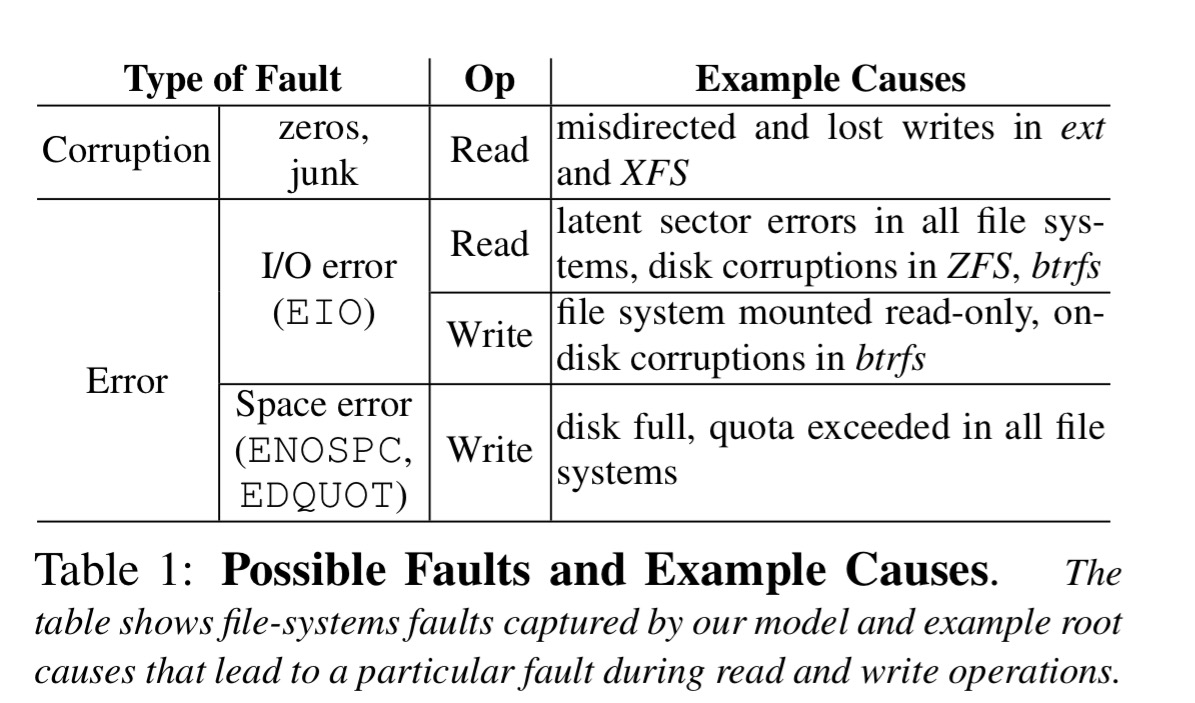
Jepsen taught everyone to fear the network partition; this FAST 2017 study points at the disk instead. Inject a single bad block or read error under a replicated store and watch how often the system shrugs, crashes, or cheerfully propagates the damage to its healthy replicas. A good reminder that replication protects you from failures you modelled, not the ones you didn't.
Adrian Colyer walks through Ganesan et al.'s analysis of how popular distributed storage systems react to a single filesystem-level error or corruption on one node. Many respond badly, from unavailability to silent data loss, despite having redundant copies to recover from.
from the cordless-computing dept.

Somebody needed a laptop, and instead of walking into a shop spent two months designing one around a mini-ITX board and power-tool batteries. The justification offered is 'because I can', which is the only correct one. The write-up on power delivery and the bill of materials is the meaty bit, and the trackball is a nice period touch.
A maker who had built Raspberry Pi writerdecks and cyberdecks designed a full x86 portable from scratch, with a small mini-ITX board, a custom case and power drawn from swappable tool batteries. The post covers the design choices, how the power is handled and what it all cost.
from the world-turned-upside-down dept.
October 19 just went by, so here is the surrender at Yorktown through the letters and recollections of New Englanders on the scene rather than the tidy textbook version. Eyewitness accounts tend to notice the odd details historians skip. A neat bit of anniversary reading.
The New England Historical Society retells the British surrender at Yorktown in October 1781 through the accounts of four New Englanders present. The battle did not formally end the Revolution but all but settled Britain's defeat.
from the mad-as-a-hatter dept.

Plenty of bird conservation groups have dull founding stories; this one started in 1899 because people were wearing whole stuffed birds on their heads. The interview moves on to modern work in the Netherlands, home of the godwit in the lead photo. A good look at how a European BirdLife partner actually operates.
An interview with Vogelbescherming Nederland, the Dutch BirdLife partner and the country's oldest nature organisation. It was founded in 1899 to oppose the fashion for feathers and taxidermied birds on hats, and today runs conservation work across the Netherlands.
from the follow-the-concrete dept.

Skip the arguments about what AI will do and look at the bill of materials: chip fabs, data centres, power plants. Timothy Taylor walks through a Brookings paper on how that physical buildout is being financed, which is a calmer and more useful question than most of the discourse. Treat it as an infrastructure story, the kind economists know how to read.
Timothy Taylor summarises Stijn Van Nieuwerburgh's Brookings paper on financing the AI buildout. It treats AI as a physical capital boom, with data centres, chip plants and new power supply, and looks at where the money is coming from and how large it is by historical standards.
from the going-underground dept.

Most visitors see Maastricht's squares and cafes; Geoff Manaugh checked into his hotel and vanished beneath the city. Eight centuries of limestone quarrying, 17th-century countermine tunnels and Cold War bunkers all sit within an afternoon's walk. A good itinerary for anyone who prefers a torch to a tour bus.
BLDGBLOG's author spent a short stopover in Maastricht touring its underground sites, from medieval limestone mines to the tunnels of the Casemates Waldeck star fortifications and later NATO bunkers. The post is mostly photographs with notes.
from the lift-here-for-mortality dept.

Long before pop-up books were about trucks, the flap book was about transformation and, inevitably, the grave. Lift a flap and Adam becomes Eve, a lion becomes a griffin, and the moral arrives right on schedule. The Public Domain Review's scans make the mechanism easy to follow.
The Public Domain Review gathers pages from early 19th-century metamorphosis flap books, where folding paper panels transform one figure into another. They were meant for children, mixing play with lessons about mortality.
from the fish-as-hard-as-wood dept.

A workshop founded in 1882 still smoke-dries bonito over a hand-tended fire, a method only a handful of places keep alive. Watching six months of boiling, smoking, patching and mould turn a fish into something you could build furniture from is oddly calming. The ideal idle-moment video.
A short film from a fifth-generation workshop in Nishi-Izu shows the traditional process for katsuobushi: filleting and boiling bonito, smoke-drying it more than ten times over wood, fermenting it with koji mould and sun-drying it for months until it is rock hard.
Sunday, October 25, 2026
from the grounded-before-it-was-cool dept.
Birds spent the Jurassic barely getting the hang of flight, and here is one that apparently decided the whole business was overrated. If the reading holds, flightlessness turns up almost as soon as flight does, which makes the ostrich look less like a late dropout and more like a family tradition. Teeth and a grasping claw included, for the nostalgic.
A 150-million-year-old fossil bird from China pairs sharp teeth and a dinosaur-style claw with a build suited to running about on the ground. Its describers argue it is the oldest known case of a bird lineage losing flight, much earlier than anyone assumed.
from the even-the-test-pattern-is-pretty dept.

Before the giant LSST camera went in, Rubin ran for a few weeks on a small commissioning camera whose whole job was to shake down the plumbing. Its leftover frames are now being released, and the Seagull Nebula shot shows what the telescope can do even when the instrument on the back is the understudy.
The Vera Rubin Observatory used its Commissioning Camera for about seven weeks in 2024 to test equipment and procedures before the main camera arrived. NOIRLab has now published that camera's image of the Seagull Nebula, a sprawling cloud of glowing gas.
from the old-time-is-the-new-time dept.
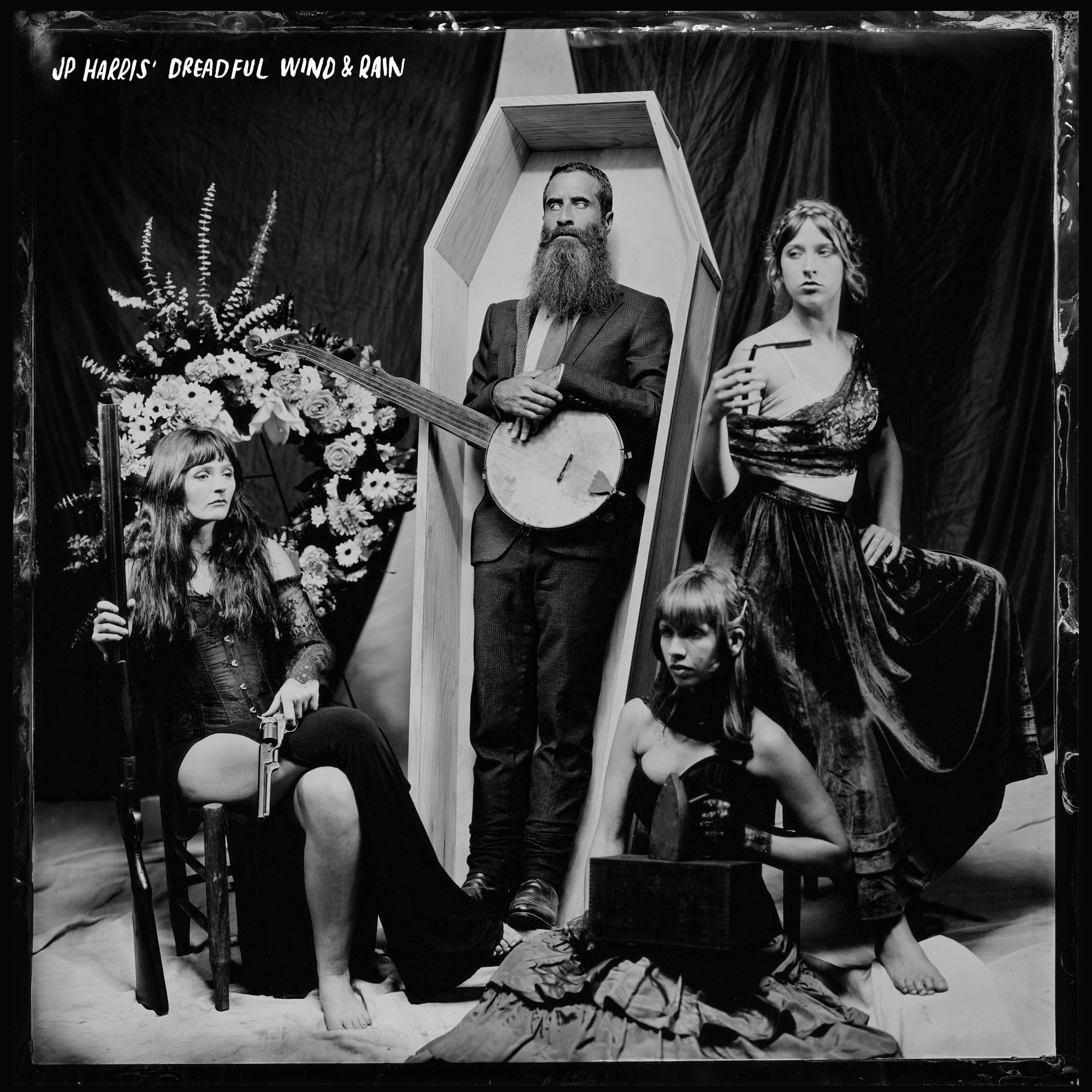
A honky-tonk songwriter going back to the tunes that made him want to play in the first place is a familiar move, but it is usually done with less commitment than this. No Depression's review hears him serving the songs rather than restyling them, which is exactly what the old-time crowd tends to want.
On his sixth album, Shaving A Dead Man, JP Harris sets aside the hard-edged country of his earlier records to work through traditional Appalachian old-time material that shaped him early on. No Depression reviews it as a respectful, intuitive reading of a centuries-old repertoire.
from the extra-cheese-extra-Ghidra dept.
Somebody picked a bargain-bin business sim at a mall in 2004 and, twenty years on, cracked it open to see how its little isometric city works. The fun part is the method: Ghidra for the four thousand functions, live memory peeking to map cash and camera state, and a patched message loop to drive the game from outside.
A developer decompiled Fast Food Tycoon 2, an obscure 2001 game about building a pizza chain in a simulated city, using Ghidra plus a coding-agent loop. The write-up covers indexing the decompiled code, reading the running game's memory to identify values, and injecting commands into its UI thread to explore how the world is drawn.
from the slow-node-in-the-room dept.
Charapko admits he keeps trying to leave state machine replication and keeps getting dragged back. This one leaves the protocol's core alone and goes after the tail: what happens to throughput when one replica is sluggish, the network splits, or log compaction kicks in at a bad moment. Worth it for anyone who has watched a healthy Paxos cluster stutter for no visible reason.
Aleksey Charapko introduces his VLDB 2025 paper, which combines several independent optimisations to classic MultiPaxos so that its performance stays steady under slow nodes, partitions and log-management work, without changing the protocol's fundamentals.
from the more-crop-per-drop dept.
Timothy Taylor in his natural habitat: one report, one set of charts, no sermon. The interesting bit is the accounting, where productivity is whatever output growth is left after land, water and inputs are tallied, and that residual has been sagging for over a decade just as the world needs it most.
Taylor walks through Virginia Tech's 2026 Global Agricultural Productivity report. Farm output growth once came mostly from more inputs, then from productivity gains by the 1990s, but productivity growth has slowed since around 2011; the report looks at regenerative practices as one route back.
from the babbler-with-a-sweet-tooth dept.
The Bird Ecology Study Group keeps doing the patient work of noting exactly who eats what, which is how field guides eventually get better. A mostly insect-eating babbler adding another fruit to its menu, recorded at Kledang-Saiong, is about as close to home as these records get.
An observer at the Kledang-Saiong Forest Reserve in Perak recorded a pair of Pin-striped Tit-Babblers eating the fruit of Commersonia bartramia, adding to a list of fruits this largely insectivorous species has been seen taking, including two Macaranga species.
from the silversmiths-of-the-world-unite dept.
Revere gets remembered for one night's ride, but he spent a lot more time on the dull and useful business of organising Boston's craftsmen. The Mechanic Association was part guild, part mutual-aid society, and later a sponsor of big industrial fairs, a nice reminder of how artisan Boston looked after itself.
The New England Historical Society traces the late-18th-century founding of the Massachusetts Charitable Mechanic Association, a Boston body set up to promote the city's many trades and to help members in hard times, with Paul Revere among its organisers.
from the high-tide-is-the-critic dept.

Before boardwalk amusements got loud, people paid a coin to look at elaborate figures carved out of wet sand, knowing the sea would take them by morning. The Public Domain Review's selection preserves an art form whose whole premise was not being preserved.
A gallery of old photographs of the ornate sand sculptures that artists built on Atlantic City's beaches in the decades around 1900, a popular seaside attraction of the period.
from the warp-and-weft-and-flip-flop dept.
Marilou Schultz has woven die photographs of chips before, and this time it is the 555, possibly the most-sold integrated circuit ever. Ken Shirriff does what Ken Shirriff does and explains which bit of the rug is which bit of the silicon, so you can admire the comparators and the weaving at the same time.
Diné weaver Marilou Schultz has made a weaving of the 555 timer's internal circuitry in white lines and orange diamonds on black. Ken Shirriff explains how the chip works and maps the rug's patterns onto the transistors and resistors of the die.
from the one-sixteenth-of-a-hair dept.
Every space telescope launch story eventually has a chapter about mirrors, and usually it is the anxious kind. This one is the opposite: a nudge smaller than a sliver of a hair and the Wide Field Instrument now beats its own error budget by a wide margin. Nice to see the alignment engineers get the headline for once.
Engineers on the Nancy Grace Roman Space Telescope moved one mirror by about a sixteenth of a human hair's width to bring its optics into near-perfect alignment. The Wide Field Instrument now delivers image quality close to 30 percent better than predicted, which bodes well for its big sky surveys.
from the gravitational-wave-recoil dept.

When two supermassive black holes merge, the gravitational waves can carry away momentum unevenly and give the newborn hole a shove. Theory has said so for decades; the fun part is the image of a monster black hole pacing back and forth through its own galactic centre like a pendulum. The evidence is statistical rather than a single smoking gun, which is exactly how these things usually start.
A new study finds statistical evidence that some supermassive black holes have been knocked off-centre by the recoil from a merger. Instead of settling in the middle of their galaxy, these remnants oscillate back and forth through the core, as long predicted by theory.
from the no-easy-lever dept.
Taylor's quiet point: economists have a decent recipe for a demand collapse, and much less of one when the shock hits what the economy can produce. Spending and rate cuts can prop up demand, but they cannot conjure up missing goods. A calm, useful frame for a lot of recent economic news.
On Conversable Economist, Timothy Taylor contrasts demand shocks, like the 2007-09 financial crisis, where fiscal and monetary stimulus are the standard response, with supply shocks, which are harder to treat. He asks whether we have entered an era where supply-side disruptions are the main problem.
from the republic-of-vermont-never-really-left dept.
Vermont spent fourteen years as its own republic, and some of the furniture from that era is still in use. Its county courts have had elected assistant judges continuously since then, and no other state does it. The kind of local oddity that only makes sense once you know the history.
The New England Historical Society traces the history of Vermont's assistant judges, elected county court officials who have existed since the Republic of Vermont period of 1777 to 1791. Vermont is the only US state that still has these elected positions.
from the stringer-theory dept.
A spiral staircase with no newel post, held together by wooden pegs, rising two full turns to a choir loft. Nobody recorded who built it, which has given legend plenty of room to work. Go for the carpentry; the mystery is a bonus.
In the Loretto Chapel in Santa Fe, New Mexico, a spiral staircase climbs about 20 feet to the choir loft without any central support. Its notched stringers make two complete turns and the whole thing is pegged together in wood. It was built between 1877 and 1881 by a carpenter whose name was never recorded.
from the test-card-for-one dept.
Old TV collectors have the same problem as old radio fans: nothing on the air. Someone who worked in a 1990s transmitter control room solved it by building a miniature broadcast chain, waveform monitor and vectorscope included, mostly out of Raspberry Pis. Pure hobbyist joy, and a good tour of what a TV station actually had in its racks.
A Hackaday write-up of BorisDigital's small analog TV station, built so vintage sets have something to tune in to. A cheap transmitter board sits on top, with a Pi Pico clock and audio monitor, Pi 5 based vectorscope and waveform monitor, and SD card video players standing in for expensive broadcast gear.
from the rally-for-the-road dept.

Homologation specials were road cars built in just enough numbers to let the racing version compete, and they are mostly extinct. Toyota's GR Yaris is the modern exception, and Mihail Rakovskiy has captured its odd three-door rally stance in bricks. Car MOCs live or die by their shaping, so look at the curves.
The Brothers Brick features Mihail Rakovskiy's LEGO model of the Toyota GR Yaris, a car developed for the World Rally Championship and sold to the public to meet homologation rules. The post explains the homologation idea and why the GR Yaris counts as one of the last of its kind.
from the merge-without-asking dept.
From the archive: Adrian Colyer working through Shapiro and colleagues' 2011 tour of state-based and operation-based replicated data types. The appeal is principled eventual consistency, with consensus pushed off the critical path rather than waved away. Still the paper people mean when they say CRDT.
A Morning Paper post, part of a series of desert-island papers chosen by Jonas Bonér, summarising Shapiro et al.'s comprehensive study of convergent and commutative replicated data types. It covers how these structures let replicas update independently and still converge, without coordination on every write.
from the cork-for-foreground dept.
Thomas Gainsborough wanted to paint landscapes but had portraits to pay the bills, so he brought the countryside indoors. Broken stones, moss, vegetables and shards of mirror, all set on a folding table and painted by candlelight. An eighteenth-century model railway enthusiast, minus the railway.
Futility Closet recounts how Gainsborough, short of time for outdoor sketching, built miniature landscapes at night from moss, rocks, vegetables, sand, clay and pieces of mirror. Contemporaries including Joshua Reynolds described watching him assemble and paint these little scenes.
from the brake-with-the-air-you-have dept.

Aerocapture is the orbital equivalent of parking by scraping the curb: one pass through a planet's atmosphere to shed enough speed to stay, no big braking burn required. It has been on the wish list since before most flight software engineers were born, because guidance, heat shielding and orbital mechanics all have to be right at once, with no second try. Worth noticing how much of the problem is closed-loop control rather than hardware.
NASA has given a contract to the California company Inversion to advance aerocapture, using a single dip through an atmosphere to slip a spacecraft into orbit. The piece explains why the technique saves so much propellant and why it has never been flown for real.
from the consensus-before-it-was-cool dept.
Long before distributed SQLite became a crowded category with funding rounds attached, one engineer bolted Raft onto SQLite over a weekend because a clustered system needed a little relational storage and no node wanted the job. This is the founder's own history, written partly to correct the record, and it's at its best on the unglamorous parts: what replicating every write actually costs and what a decade of users taught him.
The author of rqlite looks back on twelve years of the project, which replicates SQLite across a cluster by running every write through a Raft log. He covers why he built it in 2014, how the design evolved, and how the wider field caught up.
from the degrees-of-separation dept.
Every database's isolation-level dropdown descends from this paper, which defined consistency in numbered degrees decades before the ANSI committee muddled the names. Adrian Colyer's write-up walks through what Gray and colleagues meant by each degree and where the later standard parted ways with them. A good reminder that the anomalies we still argue about were catalogued half a century ago.
A Morning Paper archive post on the second half of Gray et al.'s 1975 paper on lock granularity and degrees of consistency. It explains degrees 0 to 3, how they map roughly onto Read Uncommitted, Read Committed and repeatable reads, and why the mapping to SQL isolation levels is messier than it looks.
from the server-that-wanted-to-be-a-Mac dept.

The Apple Network Server was a Power Mac 9500 in a big case that Apple deliberately stopped from running Mac OS, then promised a ROM swap that everyone assumed was vapourware. Leaked preproduction ROMs proved otherwise, and here a hobbyist who discovered he owned one has packaged up the extensions needed to make it usable. Peak retrocomputing: archaeology, stubbornness and a working result.
A retrocomputing blogger releases a 1.0 extensions pack that lets the 1990s Apple Network Server run classic Mac OS from its rare Mac OS ROMs. The post explains the machine's odd history and what the pack fixes on hardware that was never meant to boot Mac OS.
from the hundred-studs-and-a-spiral dept.

SHIPtember asks builders for a spaceship at least a hundred studs long in a month, and the real treat is always the work-in-progress photos. This one is built around swirling vortex shapes that look as if they shouldn't be possible in LEGO, and the progress shots show they began as a chain of Technic frames. Technique first, spaceship second, which is exactly how it should be.
The Brothers Brick spotlights Matrix Bricks' SHIPtember entry, a large spaceship ringed with curving vortex forms. Shots of the build in progress show how linked Technic frames became the core of the design.
from the keep-the-light-on dept.
Newport is mostly known for gilded mansions, but out in the harbour sits a small lighthouse on an island with a military past of its own. It isn't even Rhode Island's oldest light, which makes its story more interesting rather than less. Bring binoculars; the all-round view across Narragansett Bay is the point of the climb.
A history of Rose Island Lighthouse in Newport Harbor, Rhode Island, which mixes maritime heritage with the island's earlier military role. The site is open to visitors and known for its panoramic views of the bay.
from the best-of-luck-with-that dept.
Kyla's starting premise is hard to argue with: most career advice was written for an economy that has since moved out. Her new show with Vox asks what still holds and what the job market really looks like now, which is the kind of question she answers with data and calm rather than doom. A good fit for her style of explaining.
Kyla Scanlon announces Best of Luck, a new show made with Vox about work and the modern economy. It sets out to separate career advice that still holds from advice built for conditions that no longer exist.
from the fish-hawk-and-friends dept.
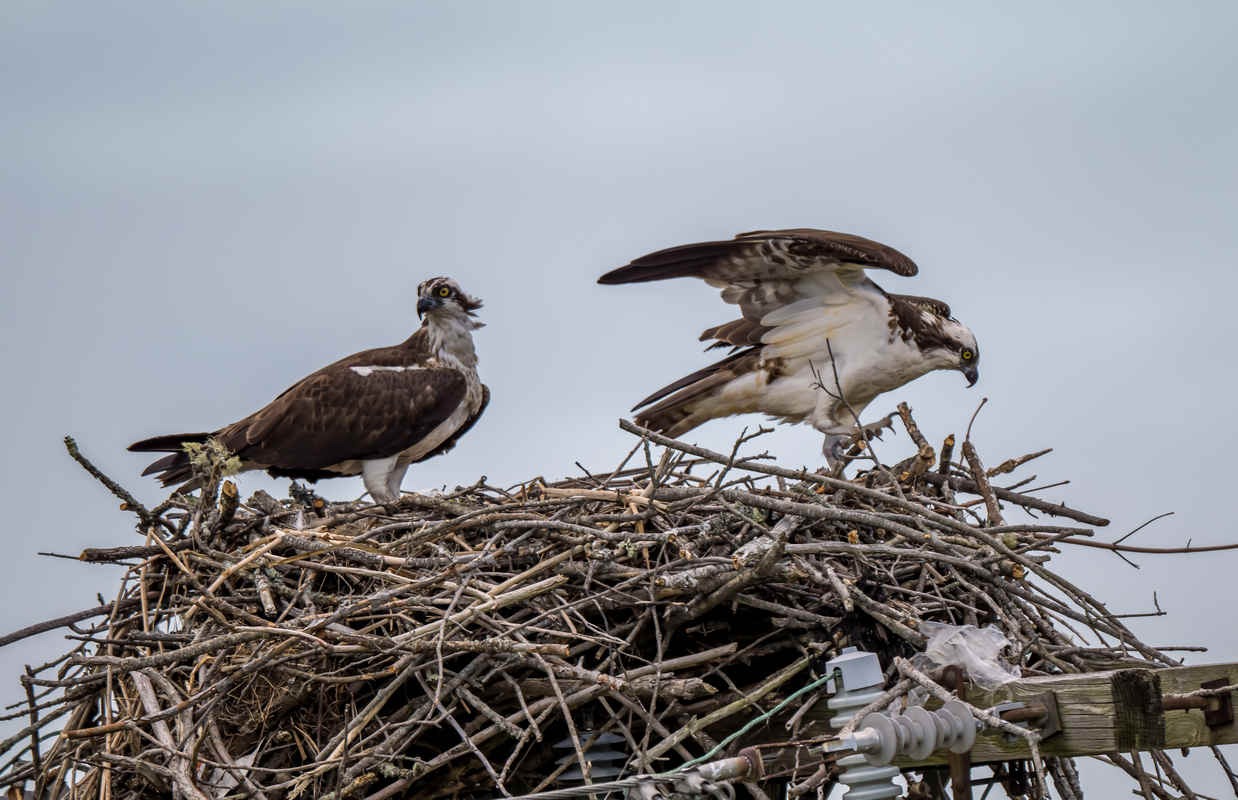
Ospreys are the raptor that made a full comeback in living memory, and a reservoir in a state park is exactly where you'd go looking. This guide comes from a young birder who has been at it since she wandered into a neighbour's feeder-filled yard at seven, and the affection shows. Nice photography, and a reminder that good local patch knowledge beats a long trip.
A young birder from northeastern Pennsylvania writes about watching Ospreys at Lackawanna State Park, one of her favourite local spots. The piece covers where to look and what the birds get up to there.
from the wheel-reinvention dept.
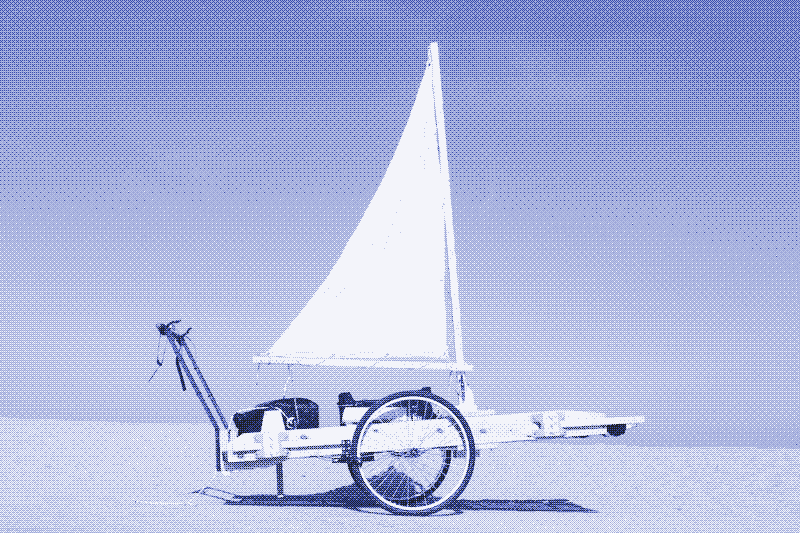
Low-tech Magazine makes a case for the humble handcart that is part history and part engineering argument: cheaper than a cart animal, easier than carrying, and it doesn't have opinions about where to go. The lead photo shows one fitted with a sail, which tells you what kind of read this is. Thoughtful, slightly contrarian, and oddly calming.
An essay on the human-powered handcart, tracing its history and arguing it is the simplest and cheapest useful vehicle. It weighs the handcart against carrying loads, sleds and animal carts, and notes its one big dependency: decent roads.
from the go-fly-a-kite dept.

The Public Domain Review has gathered kite pictures from 1430 to 1929 and about a dozen countries, which turns out to be a tour of what each era thought a kite was for: play, war, science or simple showing off. The early ones sit somewhere between toy and military signal. Good browsing for an idle five minutes.
A Public Domain Review gallery of 69 images of kites and kite flying, spanning five centuries and many countries. It ranges from early illustrated manuscripts to early twentieth-century photographs.
from the nothing-to-see-here-except-everything dept.
The quiet Sun is the bit solar physicists used to treat as wallpaper between the exciting active regions. Lift a telescope above most of the atmosphere on a balloon and the wallpaper turns out to be full of wiring. Worth noticing is the claim that surface twisting shapes the threads, which is the sort of cause-and-effect that coronal heating models have been short on.
Scientists using the balloon-borne Sunrise III observatory found thin, thread-like magnetic structures running through the atmosphere above calm regions of the Sun, apparently wound up by twisting motions at the surface. They also measured how the magnetic field changes with height inside tall jets of solar material.
from the bring-your-own-watchdog-timer dept.
A short one, but the rule here is that anything from the flight software crowd gets through. The call for abstracts went out earlier; now you can actually sign up to sit in the room where people swap war stories about patching code a hundred million kilometres away.
The Flight Software Workshop has opened registration for its 2027 meeting, held on the Caltech campus in Pasadena from 22 to 25 March. The organisers promise their usual programme of technical talks aimed at engineers who write software for spacecraft.
from the please-do-not-touch-the-exhibit dept.
Keeping a lone positron alive is a bit like keeping a soap bubble in a room full of pins, so the endurance alone is impressive. The real point is precision: an isolated antiparticle you can watch for weeks is how you compare matter and antimatter closely enough to catch them disagreeing, if they ever do.
Physicists have caught a single positron from a radioactive sodium source and held it for months in a trap, long enough to make quantum measurements of its states. The hope is that comparing it very precisely with the electron may shed light on why the universe ended up made of matter.
from the fifty-shades-of-buff dept.

A proper field note from Ipoh, just down the road in birding terms, about a bird most people drive past without a second look. The interesting bit is the asynchrony: in one flock some birds are in full ginger breeding dress while others have barely started, and the species is now breeding further south in Perak than the books used to say.
A Bird Ecology Study Group post documents a flock of 15 Eastern Cattle-Egrets near Ipoh in June 2026, showing how much individual birds vary in the amount and timing of their orange breeding plumage. The writer notes the species, long known mainly as a winter visitor to Peninsular Malaysia, has been breeding in Perak since at least 2012.
from the chaos-monkey-has-a-proof dept.
Everyone who has watched Jepsen take apart a database has wondered whether it's luck. This Morning Paper write-up of Majumdar and Niksic's POPL 2018 paper says no: for the bugs that need only a few partitions in the right order, random exploration covers them with high probability in a modest number of tests. A nice bit of theory explaining something practitioners already trusted.
Adrian Colyer reviews a POPL 2018 paper by Rupak Majumdar and Filip Niksic that formalises why random testing works so well against network-partition bugs in distributed systems. Using combinatorial covering arguments, it shows that small random test suites are very likely to hit the specific partition patterns that trigger such bugs.
from the reticulating-splines-slowly dept.
Doom gets the credit for squeezing miracles out of old hardware, but this author argues the city builders did something harder: simulate an economy, not just draw walls. A good read on the tricks game programmers used when every cycle was spoken for.
A developer looks at how classic city-building games such as the original SimCity managed to model traffic, growth and economies on machines with clock speeds in the low megahertz. The piece walks through the shortcuts and data layouts that made a large simulation fit on such modest hardware.
from the war-with-no-casualties-of-note dept.
A war fought mostly over lumber, with militia, surveyors and a great deal of indignation, and settled by diplomats before it really got going. It explains why the top of Maine looks the way it does on a map, and why the largest county east of the Mississippi is up there at all.
The New England Historical Society tells the story of the Aroostook War, the late-1830s standoff between Maine and New Brunswick over their undefined border. It traces how the dispute was settled and how the region grew into Aroostook County, today the largest county east of the Mississippi.
from the lost-world-found-in-the-stacks dept.

Before Conan Doyle's dinosaurs became the template, a curator at the American Museum of Natural History was writing his own lost-world fiction with fresh science folded in. The essay is honest that the book is a slog, which is part of the fun: you get the history of the genre without having to finish the novel yourself.
Richard Fallon writes for the Public Domain Review about Louis Pope Gratacap's 1915 novel The New Northland, arguably the first fiction to feature Tyrannosaurus rex. He finds a book that mixes up-to-date palaeontology with heavy borrowing from earlier lost-world adventures.
from the some-assembly-and-no-instructions-required dept.

A 1677 book of alchemy with no text at all, just engraved plates, which makes it the IKEA manual of the Philosopher's Stone. This copy belonged to Carl Jung, who naturally read a great deal into it. Look for the couple working side by side at the furnace: the 'humid way' was apparently a two-person job.
The Public Domain Review presents the plates of the Mutus Liber, or 'mute book', a 1677 alchemical manual that lays out its process for making the Philosopher's Stone through images alone. The scans come from the copy once owned by Carl Jung.
from the they-went-thataway dept.
A sleepy amateur race in County Meath, a single phone line, and one man who had thought very carefully about both. Damn Interesting tells it at length and with obvious relish; it's one of those Irish stories that gets better every time it's told in a pub, and this is the long version.
Damn Interesting recounts how gambler Barney Curley pulled off a famous betting coup at a small race meeting in Bellewstown, north of Dublin, in 1975. The plan exploited the village's isolation, and locals still talk about it.
Saturday, October 24, 2026
from the another-one-out-of-the-sandstone dept.
Utah keeps doing this: you turn your back on a stretch of sandstone for five minutes and it hands over a new species. The segment is short on anatomy, so treat it as the headline and watch for the paper with the proper name and the cladogram.
A short FOX 10 video report on dinosaur fossils excavated in Utah that researchers say belong to a species new to science. Local coverage of the dig in southeastern Utah describes the site as holding several different kinds of dinosaur.
from the strathspey-in-the-studio dept.
Sacramento public radio wraps a day of local news with a visit from Alasdair Fraser and family, which is the correct way to end any programme. Skip ahead past the earlier segments if you only came for the fiddle; nobody will judge.
An episode of CapRadio's daily show from Sacramento whose final segment features the Alasdair Fraser Family Band, the Scottish fiddler's family group. The earlier parts of the hour cover a congressional candidate interview and a local school district's budget.
from the which-way-is-north-again dept.

Geomagnetic reversals have been suspected of extinction crimes for decades without ever quite being convicted. This new work finds a tight cluster of flips lining up with an extinction and a flood-basalt eruption, which is still circumstantial, but it's a much nicer alibi problem for the defence.
Researchers have found an interval with an unusually dense run of geomagnetic reversals that coincides with a mass extinction and with Large Igneous Province eruptions. The authors stop short of claiming causation, but it strengthens a long-debated link between field flips and life on Earth having a bad time.
from the highest-txg-wins dept.
Not a primer so much as a set of working exhibits: you get to click Next txg and watch the uberblock ring advance, then change the sector size and see the slot count fall. If you've ever explained pool import to a colleague with a whiteboard and some hand-waving, this is the whiteboard done properly.
An interactive site that walks through ZFS on-disk structures with live diagrams, starting from the uberblock ring that each disk keeps. It shows how transaction groups write new uberblocks into successive slots and how import picks the newest valid one, with knobs such as sector size to play with.
from the multiboot-and-mixing-desk dept.
The nice trick here is that nothing gets opened up: the GBA's old multiboot feature, built so friends could share one cartridge, now ships a synthesizer straight into RAM. No soldering iron, no sacrificed consoles, just a link cable and some very period-correct bleeps.
Hackaday covers a synthesizer that runs on an unmodified Game Boy Advance by loading its code through the console's multiboot link-cable feature. Connected to a computer, the GBA boots the synth into memory and plays through its headphone jack, with controls on both the console and the PC.
from the love-apple-of-Newport dept.
Every culinary revolution needs an early adopter willing to be stared at, and in Newport it was apparently an Italian marine painter. A good small story about how a whole region came round to something the rest of us now take for granted on pizza.
The New England Historical Society tells the story of Michele Felice Cornè, an Italian-born artist who settled in Newport, Rhode Island, and is credited with persuading suspicious New Englanders that tomatoes were safe to eat. His house still stands on the street named after him in the city's historic district.
from the low-water-mark dept.
Most visitors photograph the green bridge with the vintage trams and move on. The trick is to come when the Danube runs low and look down, where the wreckage of the original span is still lying in the river.
Budapest's Liberty Bridge, between Gellért Hill and the Central Market, was originally the Ferenc József Bridge and was destroyed during the Battle of Budapest in January 1945. When the Danube is low enough, remnants of the old structure can be seen beneath the water next to its rebuilt successor.
from the not-that-Clarke-Award dept.
Worth a look mostly for the useful footnote: these are the Clarke Foundation's own honours, not the British literary prize for the year's best SF novel. Sir Arthur would probably have enjoyed the confusion, and then corrected everyone in a long letter.
File 770 lists the winners of the 2026 Arthur C. Clarke Awards from the Arthur C. Clarke Foundation, to be presented at its Unleash Imagination event on 18 November. These honour imagination and its impact in science and society, and are separate from the literary Arthur C. Clarke Award.
from the wish-you-were-weird dept.

Vienna in 1907 was busy inventing modern design, and here is one of its young artists using the humble postcard to mix medieval grotesques with bright folk colour. They look like they could have been printed last week by a very good risograph studio.
The Public Domain Review gathers postcards Rudolf Kalvach designed for the Wiener Werkstätte in 1907. They blend grotesque medieval figures and vivid folk-art palettes into designs that still read as strikingly modern.
from the waning-gibbous-objection dept.
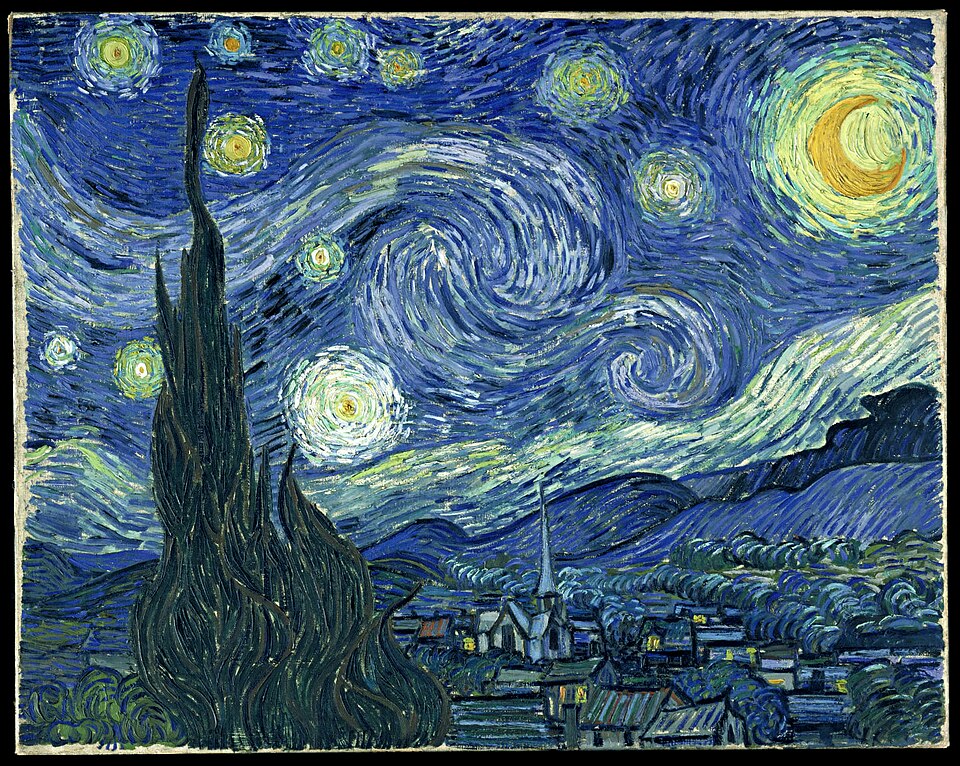
Someone finally checked the sky against the canvas: in mid-June 1889 the moon over Saint-Rémy should have been fat and waning, not the crescent Vincent painted. Astronomy as art history, which is the best kind of pedantry.
Van Gogh's The Starry Night is usually dated to mid-June 1889 from a letter to his brother Theo. A Kyung Hee University doctoral student noticed the moon phase was wrong for that date and, using sky simulations, weather records and the painter's writings, argues for dawn on 22 July 1889, when a crescent moon, Venus and the Hyades would have been up.
from the five-men-one-microphone dept.
Chris Thile and company returning to a Connecticut college stage is the sort of news that justifies the whole favourite-artists list. Storrs is a long way from Penang, but a Punch Brothers date on the calendar is still worth knowing about, if only to imagine the Bach-to-breakdown setlist.
A local Connecticut paper notes that Punch Brothers are coming back to the Jorgensen Center for the Performing Arts at UConn in Storrs. The show is listed for 7 November 2026, part of the band's North American tour.
from the leave-it-behind dept.
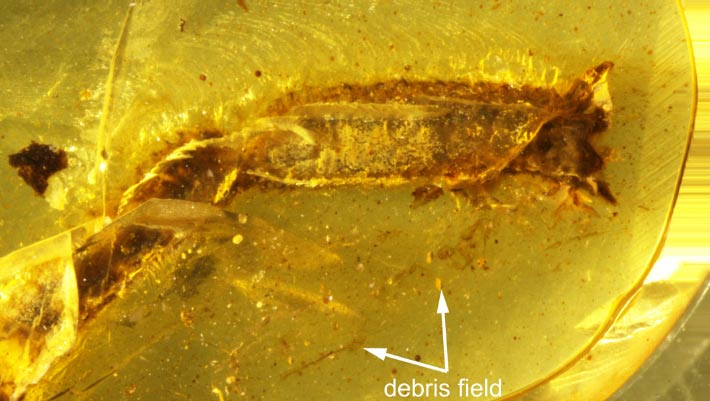
No dinosaurs this time, but the next best thing: a Cretaceous lizard frozen mid-escape in Burmese amber. Behaviour almost never fossilises, which is what makes this tiny tail-drop so satisfying; the trick it shows is one modern geckos still pull on cats.
Researchers describe a piece of Myanmar amber, about 99 million years old, preserving evidence that a lizard deliberately dropped part of its tail. It is a rare fossil record of caudal autotomy, the defence lizards still use to escape predators.
from the grand-canyon-on-steroids dept.

Mars is usually filed under geologically retired, so it is nice to see the planet's great canyon system still shifting. Worth noticing how far the evidence has to stretch: billions of years after it formed, the 4,000-kilometre scar is apparently not finished.
Scientists at Imperial College London and Columbia University report that Valles Marineris, the largest canyon in the solar system, is still tectonically active. Their work suggests faulting continues to reshape the canyon on present-day Mars.
from the palm-oil-diet dept.

Proper Malaysian field notes, just down the road from Penang: careful watching of who is actually eating the fruit and who is only picking off insects. Sparrows and Spotted Doves at the mesocarp were new even to the observer, which makes this a nice thing to look out for next time you pass a plantation edge.
A Bird Ecology Study Group post from Ipoh, Perak, records Asian Glossy Starlings, Eurasian Tree Sparrows (juveniles included) and Spotted Doves feeding on the flesh of ripe oil palm fruit. The writer notes that the fatty mesocarp is a rich energy source and that the sparrows and doves were new feeders to him.
from the fsync-is-a-promise dept.
Brooker makes the case for building animations to get an intuition for how systems fail, and picks a cracking example: one replica whose storage lies about fsync is enough for Raft to lose acknowledged writes. Anyone who has argued with a disk controller's write cache will nod along.
Marc Brooker writes about using small animations to understand distributed-system behaviour, with examples covering metastable failure and lost writes. One shows how a Raft cluster can drop committed writes when a single member's storage layer falsely reports durable fsync.
from the honey-I-shrunk-the-printer dept.
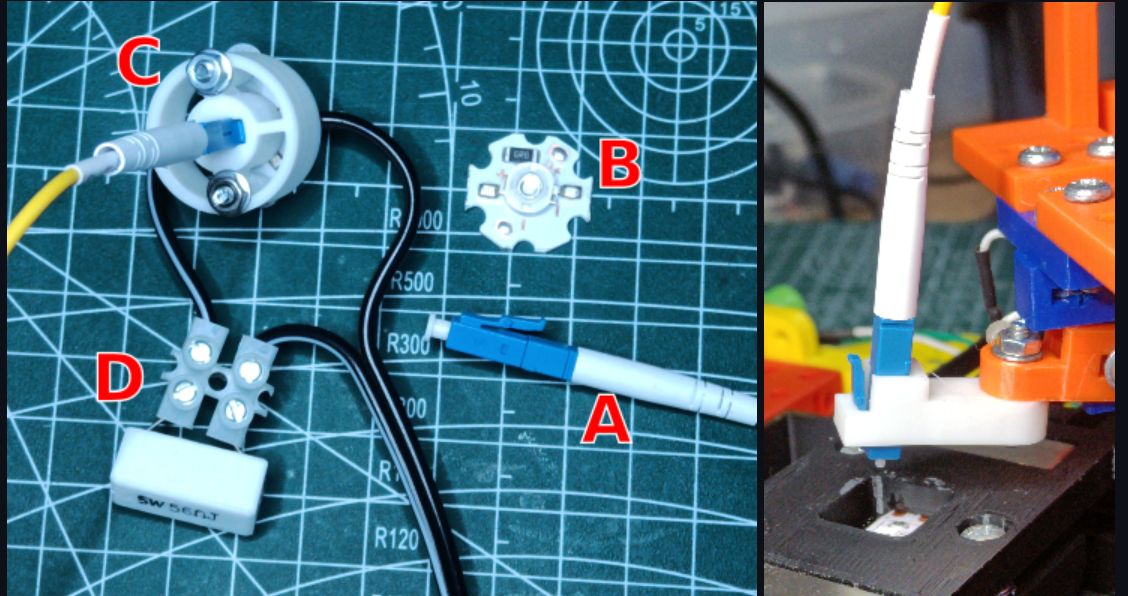
The RepRap dream of machines that build things, scaled down to the micron. The new head is mostly off-the-shelf fibre and UV LEDs, which is exactly the build-it-in-your-shed spirit; the resulting Benchy is small enough that photographing it is the hard part.
Hackaday covers the latest addition to the open RepRapMicron project: a UV print head that pipes light from a UV LED through single-mode optical fibre to cure resin in place. It reaches a resolution of around nine micrometres, demonstrated with a tiny Benchy.
from the house-lights-stay-on dept.

After a summer of nervous headlines about the Davis Square building being put up for sale, the theatre's future looks settled. A century-old single-screen-and-stage palace that also hosts folk shows owning its own roof is about as cheering as Boston real estate news gets.
Universal Hub reports that the Somerville Theatre in Davis Square has secured its future by taking ownership of its building, so it is now its own landlord. The building had been put on the market earlier in 2026.
from the condiment-monument dept.
Some towns get statues of founders; Perstorp got its vinegar bottle, red cap and label included. The best detail is the 1994 unveiling, where a TV chef explained how to squeeze an egg into a bottle using vinegar, which is the most on-brand speech ever given.
Beside a main road into Perstorp in southern Sweden stands a nearly five-metre concrete copy of the town's well-known vinegar bottle. It honours a local acetic acid industry that began in 1881 using wood from nearby beech forests, and was unveiled in 1994.
from the realists-of-a-larger-reality dept.
The Le Guin Prize goes to books that imagine real alternatives to how we live, taken straight from her 2014 National Book Awards speech, so the winner is always worth a look. This year it heads to New Zealand, with a jury that includes Nicola Griffith and Fonda Lee.
The Ursula K. Le Guin Foundation has named Audition by New Zealand writer Pip Adam as the 2026 winner of its 25,000-dollar fiction prize. The award honours writers Le Guin called realists of a larger reality.
from the siege-engine dept.

A spider with a spring-loaded silk trap tuned to a single prey species, the notoriously bad-tempered green tree ant. The lovely twist is that the ants may be goaded into setting it off themselves, which is the Roman ballista, reinvented by an arachnid.
Researchers have described a new Australian ballista spider that builds a spring-loaded silk snare aimed at green tree ants. It is the first known spider whose web targets one prey species, and the first where the prey triggers the trap.
from the harmony-at-the-ballot-box dept.
Watchhouse on a hometown bill with Hiss Golden Messenger, Tift Merritt and Karly Hartzman reads like a short history of North Carolina's roots scene on one stage. That they were doing it to get out the vote for Roy Cooper's Senate run is a fine use of four-part harmony: Carrboro's finest, putting their voices to work for the ballot box.
Jambands reports that Watchhouse, Hiss Golden Messenger, Tift Merritt and Karly Hartzman of Wednesday were booked for a get-out-the-vote concert in Carrboro, North Carolina, on 23 October, hosted by Roy Cooper's US Senate campaign. The note lists the performers and the event details.
from the last-carnivore-standing dept.
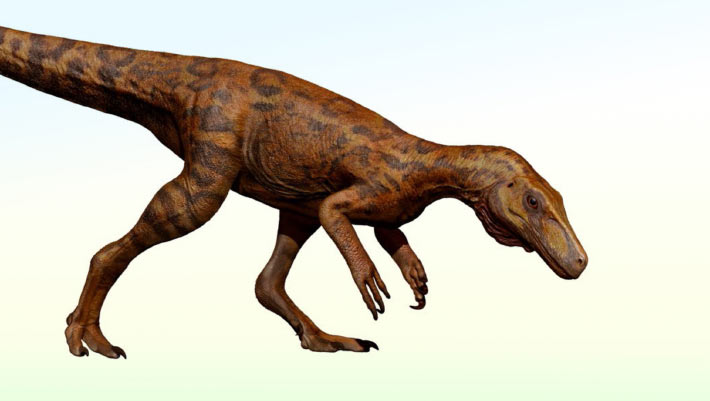
Herrerasaurids are about as close to the root of the dinosaur family tree as anyone gets, so even a single bone carries a lot of weight here. The interesting bit is not the predator itself but the ecosystem around it: the plant-eaters and cynodonts shifted, and the early meat-eaters apparently just carried on.
A Sci.News report on one fossil fragment from southern Brazil's Triassic rocks, identified as belonging to a herrerasaurid, one of the earliest large predatory dinosaur groups. Its age suggests these animals persisted after the surrounding fauna, including the cynodont Exaeretodon, had changed.
from the not-so-perfect-circle dept.

Textbook transit diagrams treat planets as tidy black discs, which is a fine approximation until a telescope is good enough to notice the edges disagree. Webb now is. The puffed-up evening side of this hot gas giant is the sort of detail that turns a dot into weather.
Researchers from Cornell and the University of Bristol used JWST transit data to show that the hot Jupiter WASP-17b has a noticeably asymmetric atmosphere, with its evening limb differing from its morning one. The Nature Astronomy paper is described as the first study of an exoplanet's lopsided shape, linked to fierce winds carrying heat around the planet.
from the skim-reading dept.
Black Skimmers are the birds that fish by ploughing the water with an oversized lower bill, which makes them a neat living sensor for what small fish are doing near the surface. Twenty tagged birds is a modest sample, but enough to show their commute changing.
Audubon and the South Shore Audubon Society report on a project that fitted 20 Black Skimmers at Lido Beach on Long Island with trackers. The movement data point to a shift in where the birds find their fish, and what that could mean for managing their nesting and feeding sites.
from the hardware-will-save-us-all dept.
Day one was the AI-and-specs day; the back half is where the workshop gets back to its usual business of storage, failures and consensus. Note the session pointedly titled 'Hardware will save us all' and the GPU-database talk that concedes two of its three problems are being fixed by the roadmap and the third is engineering.
Murat Demirbas finishes his trip report from the High Performance Transaction Systems workshop, covering sessions on hardware, object storage, failure handling, consensus and lakehouses. He summarises each talk with his own commentary, starting with NVIDIA's view of why GPUs and databases have struggled to get along.
from the opn-sesame dept.
New hardware for a 1983 home computer standard, released because someone wanted it to exist, is exactly the spirit this category is for. The Yamaha FM chip at its heart will sound instantly familiar to anyone who heard late-80s Japanese game music.
Ricardo Suzuki's Misato MSX is a do-it-yourself sound expansion cartridge built around the Yamaha YMF288 (OPN3), giving the MSX six FM channels, three SSG channels and rhythm voices. Paired with a decent DAC, it can play OPN music or be used for new compositions, with its own stereo output.
from the shiver-me-ball-bearings dept.
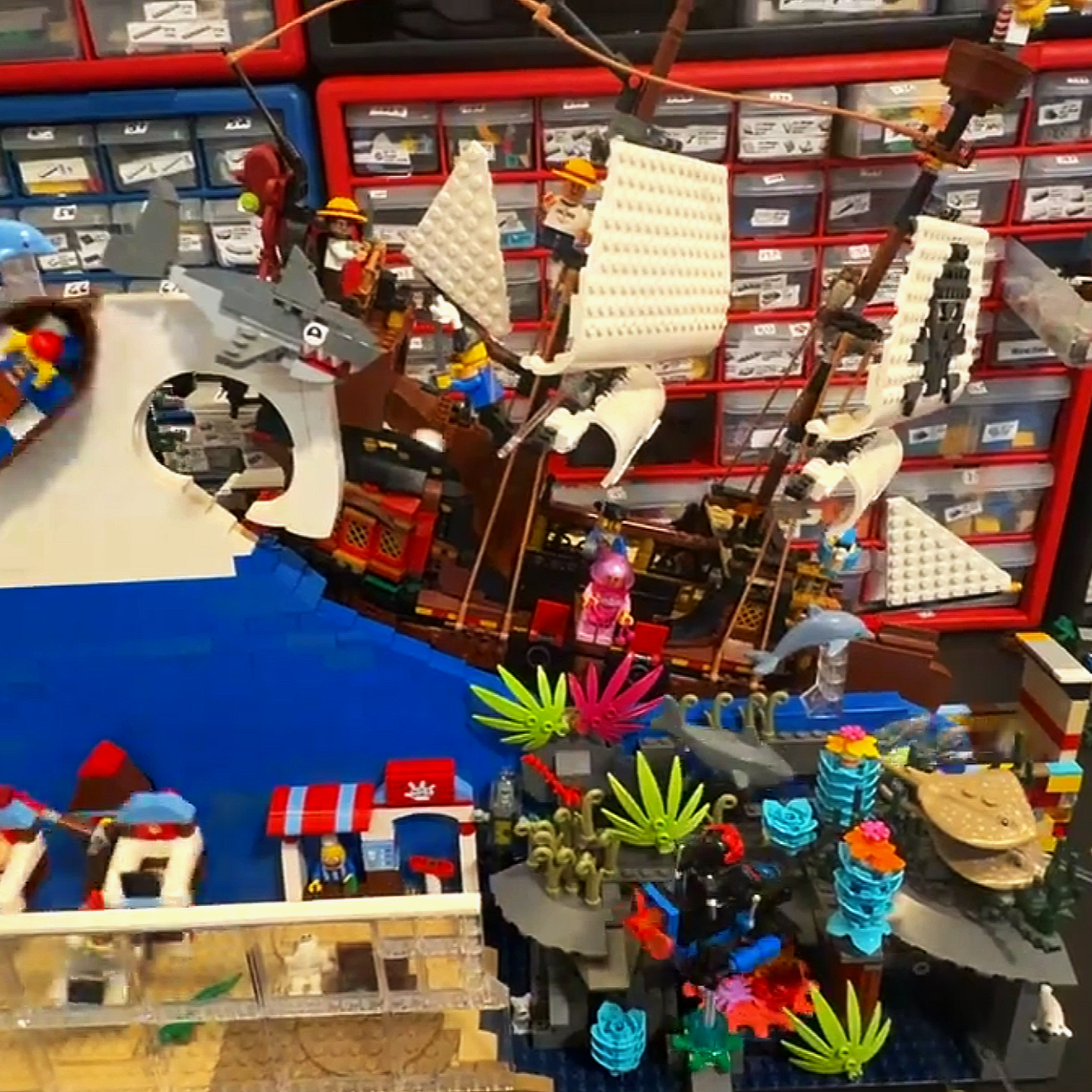
A Great Ball Contraption module has one job, move balls from input to output, and an infinite number of ways to fail at it in front of a convention crowd. Dressing that job up as a pirate ship adds a whole new set of hazards, and the question mark in the title suggests not all of them were avoided.
A BrickNerd story from a builder who made a pirate-ship-themed GBC module, part of the LEGO fan tradition of chained machines that pass balls along at conventions. The piece reflects on what went well and what didn't while building and running it.
from the full-steam-behind dept.
Every famous invention has an unfamous inventor somewhere upstream, and Morey has a better claim than most. Notice the range: steamboat, an early internal combustion engine and even a primitive car, all from a man most people have never heard of.
The New England Historical Society tells the story of Samuel Morey of northern New England, who built working steamboats before Robert Fulton's famous success and later patented an internal combustion engine. The article covers his dealings with Fulton and why credit went elsewhere.
from the set-in-stone dept.
Heritage rules usually save whole buildings; here they saved only the front, which leaves an ornate stage-set of arches and shells bolted onto an ordinary street. Fitting, somehow, for a shop that made funerary monuments.
Near Madrid's Plaza Mayor, on Calle Concepción Jerónima, stands the elaborate carved façade of Mármoles Molina, a former business that made tombstones and funerary monuments. When the building behind it was demolished, the protected frontage had to be rebuilt in place, so it now fronts a very different interior.
from the rub-it-in dept.

Friction is the villain of every physics homework problem, which is why it is fun to read someone who studies it for a living make the case for it. Tribology underpins everything from bearings to brakes, and the essay takes it all the way out to the stars.
An Aeon essay by tribologist Jennifer R Vail on the science of surfaces rubbing together. She argues that friction, far from being a nuisance to be eliminated, has been essential to human progress, from the wheel onward, and shows up at astronomical scales too.
Friday, October 23, 2026
from the fsync-and-pray dept.
Nur flagged this one as really good, and it is: the view from userspace's heaviest customer, delivered by the person who keeps getting paged when the kernel moves under him. Note the fsyncgate scar tissue and the unexpectedly warm words about working with the io_uring side. Anyone who has been on the other end of an 'application regression' report will recognise both sides of this.
Jonathan Corbet's write-up of Andres Freund's Kernel Recipes talk on what PostgreSQL has to work with, and around, in Linux. Freund recounts the 2018 discovery that I/O errors could silently lose data, recent io_uring breakage for multi-process programs, and the steady churn of performance changes, then asks how the kernel could serve database workloads better.
from the reach-for-the-stars dept.
No dinosaurs tonight, but this goes much further down the family tree. The textbook picture of a worm-like burrower at the root of the starfish and acorn-worm lineage takes a knock from a Chinese Cambrian fossil. Worth noticing how much a single well-preserved soft body can rearrange a branch of the tree.
Researchers describe Yujingia glutenotunica, an early Cambrian ambulacrarian from China. Its anatomy points to a common ancestor of starfish, sea urchins and their kin that sat in the water feeding with tentacles, rather than burrowing through sediment like a worm.
from the not-so-cosmological-constant dept.
Type Ia supernovae gave us dark energy in the first place, so it is fitting that a big pile of them is now poking at whether it holds still. This joins a growing set of results nudging against the cosmological constant. Not a revolution yet, but the error bars are getting interesting.
A new analysis of 2,884 exploding stars adds evidence that dark energy, the force behind the universe's accelerating expansion, may weaken or strengthen over cosmic time instead of staying constant. If it holds, a core assumption of the standard model of cosmology would need revisiting.
from the up-past-your-bedtime dept.

A familiar squat shape at dusk in Penang's mangroves and fish ponds, and it turns out the bird has an odd research footnote or two. Watch for the curious nestling sex-ratio study. A good reminder that the commonest birds are often the least looked at.
A 10,000 Birds profile of the Black-crowned Night Heron, found on every continent bar Australia and Antarctica. It rounds up the species' many nicknames and some of the science, including a small study in which most nestlings examined were male, with no link found to nest site, timing or brood size.
from the can-you-hear-me-now dept.
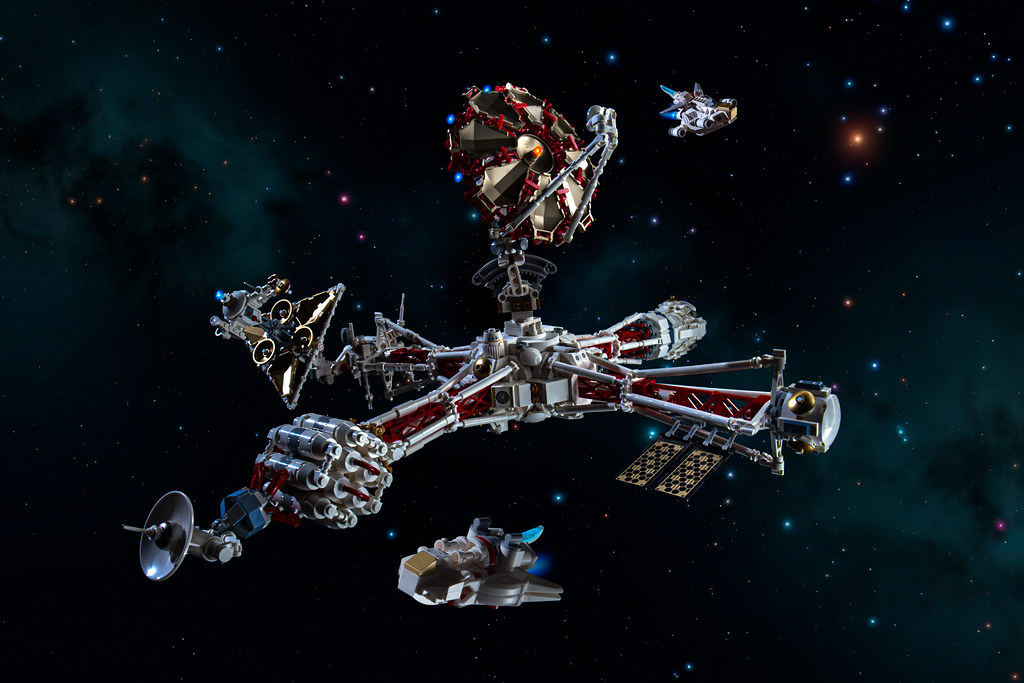
Hard sci-fi in LEGO means trusses, dishes and no swooshable fighters, and this one commits. The main radar dish is the part to study: nine red bicycle frames hooked together by their handlebars. Parts usage like that is why people keep the odd bits in a separate drawer.
Part of a builder's ongoing homebrew hard sci-fi theme, this space station is built around communications dishes and sits beyond the Kuiper Belt as a relay for deep-space travel. The main dish frame is made from nine bicycle frames arranged in a ring.
from the are-we-there-yet dept.
Long before turnpikes and rest stops, a Boston schoolmistress set off on horseback for New Haven and New York, and kept a sharp-tongued journal of the inns and guides along the way. Her account is one of the best windows we have on everyday colonial travel. Imagine the Yelp reviews.
In 1704 Sarah Kemble Knight, a 38-year-old Boston widow, teacher and businesswoman, made the long horseback trip from Boston to New Haven and on to New York on family business. The New England Historical Society retells the journey and the journal she kept, later published and still read for its picture of colonial roads and taverns.
from the mother-church-picking-party dept.
Look at that roster: Stuart Duncan, Michael Cleveland, Jerry Douglas, Sierra Hull, Molly Tuttle, Edgar Meyer and more on one stage. The studio album already won a Grammy; this captures the night they played it straight through at the Ryman. Plenty here for anyone who follows the Punch Brothers end of the pool.
Folk Alley reviews a new 3-LP or 2-CD set recorded at the Ryman Auditorium in January 2022, when Béla Fleck and an all-star band performed his Grammy-winning album My Bluegrass Heart in full. The reviewer praises how crisply the recording catches the night.
from the please-do-not-fall-off-the-edge dept.

A curiosity for the shelf next to the hollow-Earth maps. Samuel Rowbotham, writing as Parallax, built a whole 'zetetic' method out of looking down a Fenland canal and trusting his eyes. The diagrams are earnest and lovely, and it is a useful study in how a confident wrong idea gets built to last.
The Public Domain Review presents Zetetic Astronomy, the 1865 book by the pseudonymous Parallax that did more than any other to bring flat Earth ideas back into circulation in modern times. Its illustrations lay out an Earth as a disc, with arguments built from simple observation.
from the see-also-disgraceful-act dept.
Every database person has met an indexer like Samuel Palmer, who classified stories by how they made him feel. It took decades before a reader noticed and wrote in. A short, perfect read about why metadata needs a schema.
In the 19th century the index to the London Times was compiled by Samuel Palmer, who filed articles under his own emotional headings. A reader pointed it out in 1890: a boy who stole a twopenny pie appeared under Atrocious Criminal, and a chapel that drifted from its moorings under Disgraceful Act.
from the it-measures-amps-and-imps dept.
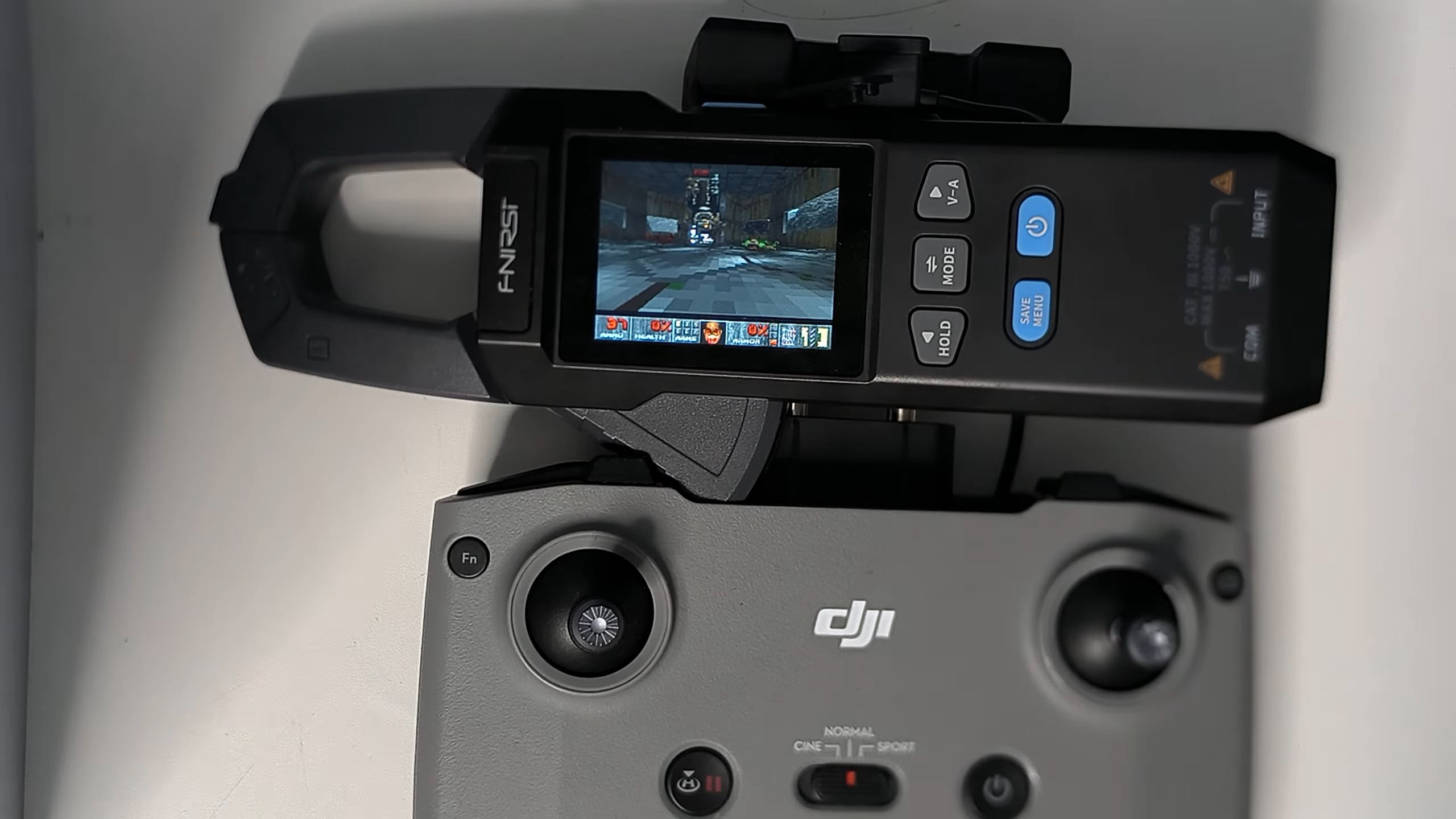
The 'does it run DOOM' question gets a new answer, and this one is impressive on memory alone: 32 KB is a fraction of the 4 MB the original wanted in 1993. The whole first Freedoom episode is there, saves and all. The drone-controller gamepad is the cherry on top.
Artur Bieniek got the doomgeneric engine running on a roughly 30-dollar FNIRSI clamp meter, whose Artery microcontroller runs at 150 MHz but has only 32 KB of RAM. All nine maps of Freedoom's first episode play in colour on the 320 by 240 screen, with buzzer sound effects and controls from a drone remote.
from the niche-interest dept.
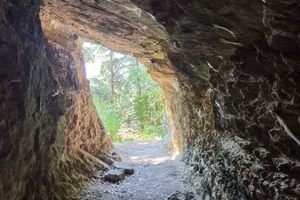
San Marino is mostly visited for its towers and its stamps, but just outside the walls is a rock niche that people prayed at from the Iron Age to late antiquity. The finds are the moving part: little terracotta arms and fingers left as offerings. A quiet stop on the way between the towers.
Grotta Tanaccia is a shallow niche in the cliff face of Monte Titano near Montale Tower, used as a place of worship from the Iron Age through Roman and late-antique times. Excavations turned up bronze votives, terracotta body-part offerings and over a hundred coins, now displayed in the State Museum of San Marino.
from the think-globally-read-locally dept.

Nur's note calls it brilliant, and the idea earns it: take the world's largest reference work and throw away everything you couldn't walk to before your tea goes cold. It turns the encyclopedia back into what old county gazetteers were, a guide to the ground under your feet. Worth trying from Penang to see which forgotten shophouse or temple has an article nobody reads.
A small web toy by Ed Jefferson that shows only the Wikipedia articles about places and things within roughly thirty minutes on foot of where you are. It works as a map-driven browser for local history, landmarks and oddities you have probably walked past.
from the some-assembly-in-reverse dept.
Most of palaeontology happens long after the dig, with dental picks and air scribes and a great deal of patience, and usually behind a closed door. Raleigh is putting that slow work in front of the public. Late Cretaceous, so a few million years older than the museum's famous T. rex.
A large block holding a roughly 75-million-year-old dinosaur has been moved into the North Carolina Museum of Natural Sciences in downtown Raleigh. Visitors will be able to watch as the fossil is gradually prepared out of the stone.
from the every-cloud-has-a-volcano-lining dept.

Every Martian summer morning a cloud the length of a small continent unfurls west of Arsia Mons, then vanishes by lunch, and for decades nobody could make the atmospheric models reproduce it. A new paper offers a mechanism that textbook cloud physics hasn't had a real example of before. Weather that keeps a schedule better than most airlines.
Scientists led from the Sorbonne report in Nature Geoscience a possible explanation for the Arsia Mons Elongated Cloud, a thin white plume up to 1,800 kilometres long that forms daily beside the extinct volcano during Martian summer. Mars Express has watched it for years, and the study suggests it may be the first natural example of a cloud process previously only theorised.
from the a-little-help-from-my-boobies dept.

A pleasant reversal of the usual climate story: the birds are part of the engineering. Seabirds haul nutrients from open ocean to roost, and that fertiliser feeds the reef that builds the island. Keep the native trees and the rats out, and the atoll can keep pace.
A study in Science Advances traces how nutrients in seabird droppings move through the land and reef ecosystems of low-lying atolls. Islands with healthy native forest and large seabird colonies appear better able to build and maintain the reef structure that keeps them above rising seas.
from the nuts-about-macaranga dept.
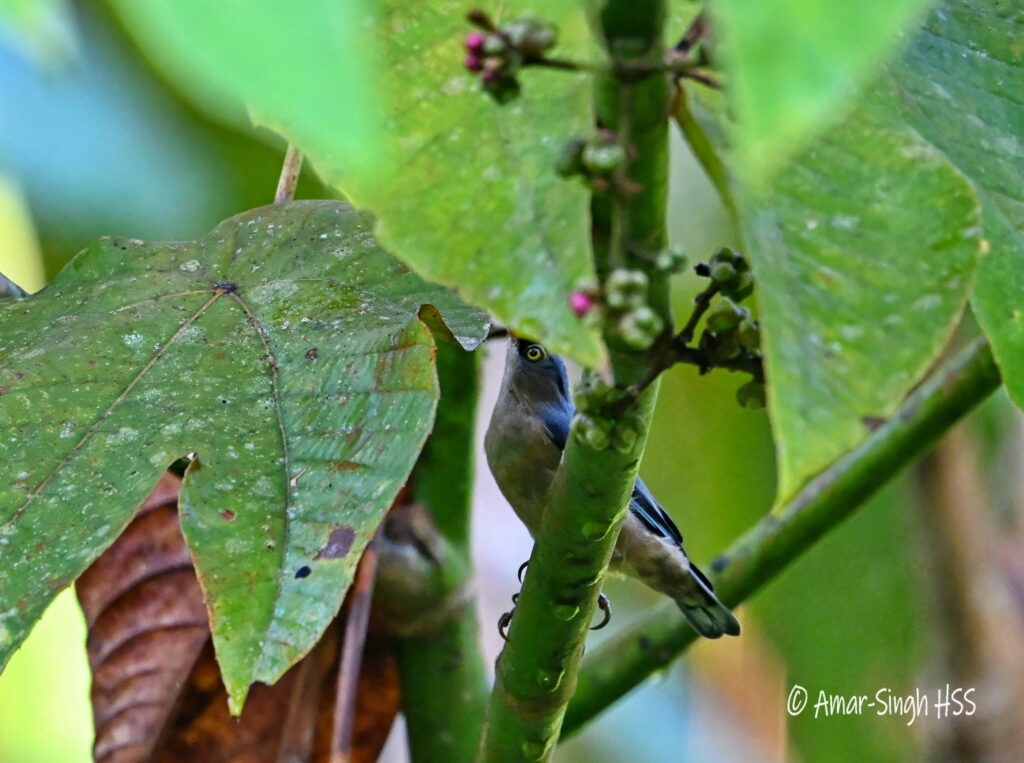
The sort of note only a patient local birder produces: decades watching one species, then one morning it does something off-script. It's a Peninsular Malaysia record, a short drive from Penang, and a good reminder that field guides are drafts. Bring binoculars to the next fruiting Macaranga.
An observer near Ipoh, Perak, describes a lone male Velvet-fronted Nuthatch, usually seen in pairs or family groups, snatching a fruit from a Macaranga bancana tree and flying off with it. The behaviour is unusual for a bird thought of as an insect-gleaner, and the writer suggests it may have been feeding nestlings.
from the magnets-how-do-they-walk dept.

M-Tron got magnets, red and black and that lovely trans-neon green, but never a pair of legs. Luna S has fixed the oversight with a dense, playable mech that keeps the classic-space rule of features everywhere. Bonus points for the little autonomous walker riding on its back.
Builder Luna S has made a walking mech in the colours and spirit of M-Tron, the 1990 LEGO space faction whose nine sets never included a walker. It carries the theme's customary magnet crane, a smaller detachable walker on top and plenty of hidden play features.
from the parlez-vous-paper-mill dept.
Forget dropped r's and 'wicked'. In Berlin, up in the North Country, French Canadian mill families and their English-speaking neighbours cooked up a mixed vernacular odd enough that someone wrote a dictionary of it. A nice reminder that New England speech has more layers than the Boston accent.
The New England Historical Society looks at the local speech of Berlin, New Hampshire, shaped by the French Canadians who came to work in its paper mills. It covers the blend of French and English that took hold there and the dictionary compiled to record it.
from the system-360-comrade dept.
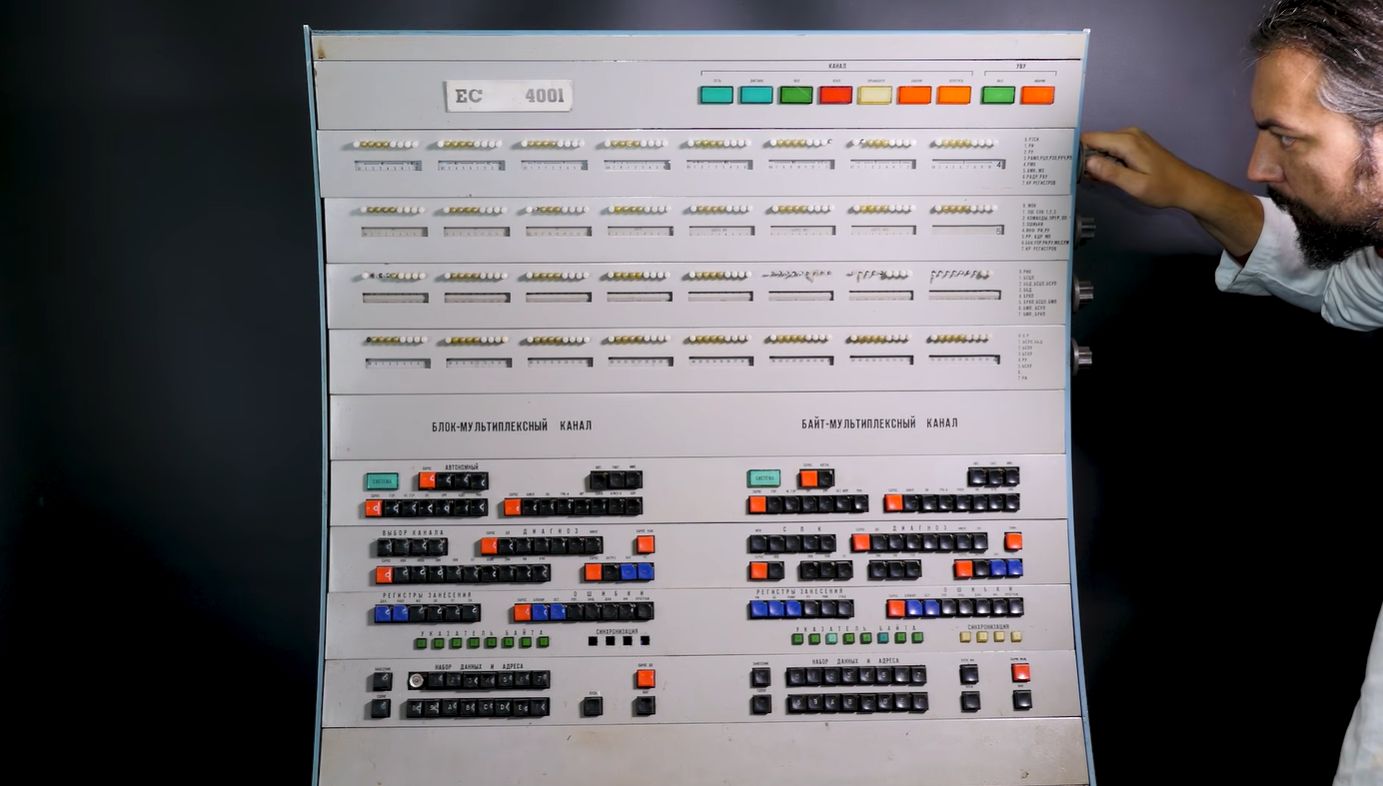
The Soviet ES EVM line cloned IBM's System/360 and 370, yet the hardware ended up quite unlike the originals, and only a few hundred of these machines were built. This team nursed a battered front panel back into working order and explains the switches along the way. Lamps-and-toggles restoration in its purest form.
A YouTube group interested in Soviet technology restored an early-1980s control panel from an ES-4001, one of the USSR's IBM-compatible mainframes. Their interest started at the Duga radar site near Chornobyl, whose ES-1060 was never commissioned; this panel came from an ordinary data centre and needed repair after being ripped out of its machine.
from the roll-for-isolation dept.
Paul McKenney's 1990 trick is one of those algorithms that looks too cheap to work: hash flows onto a fixed number of queues, rehash now and then, and noisy neighbours mostly stop hurting everyone else. Brooker walks through why the odds are so good and where it fits in modern multi-tenant services. Familiar from the qdisc side, worth seeing argued from first principles.
Marc Brooker revisits Stochastic Fairness Queuing, which approximates per-client fair queuing with a constant number of queues and constant work by hashing clients onto them. He explains how that probabilistic isolation limits the damage from misbehaving tenants and why he counts it among his favourite small distributed-systems algorithms.
from the tread-softly-on-my-teal dept.
Only Portland would give a floor covering a public memorial. The 1987 teal carpet with its runway-map pattern turned into a civic mascot, found on socks, beer labels and the occasional tattoo, and when it was retired the city decided it deserved a send-off. A pilgrimage site for anyone who has photographed their shoes in an airport.
A sign on the side of a downtown Portland, Oregon hotel commemorates the carpet that covered Portland International Airport from 1987. Its geometric pattern, inspired by the airport's intersecting runways and taxiways, became a beloved local symbol before it was replaced.
from the dwarf-planet-renewer dept.
Holst finished The Planets in 1918, a dozen years before Pluto turned up, so in 2000 Colin Matthews composed an eighth movement to complete the set. Six years later the IAU demoted the planet, leaving the music orbiting an awkward category of its own. Bad timing, as a sub-genre of musicology.
A short Futility Closet note on Pluto, the Renewer, the movement Colin Matthews added to Holst's The Planets in 2000. It was written to cover the world discovered after Holst's suite premiered, only for Pluto to be reclassified as a dwarf planet in 2006.
from the family-reunion-gets-awkward dept.
Every few years a new tyrannosaur turns up and the family tree has to be redrawn in pencil again. This one is billed as a relative of T. rex that doesn't sit where the textbook says it should. The pool only carried the headline, so the details of which bones and which branch are behind the link.
New Scientist reports the discovery of a newly identified relative of Tyrannosaurus rex. According to the report, the find challenges the accepted account of how the tyrannosaur lineage evolved.
from the dark-side-of-the-moon-was-just-shy dept.

The near side is all dark lava seas, the far side is pale and cratered, and nobody has had a really satisfying reason why. Now there are actual rocks from the far side to argue with, which beats modelling in the dark. Notice that Earth itself is the culprit here: the tidal tug of the home planet may have stirred the young Moon's interior unevenly.
Using the first samples ever returned from the lunar farside, researchers propose an explanation for why the Moon's two hemispheres look so different. Their results suggest Earth's gravity heated the early Moon unevenly, driving huge flows of magma that shaped the contrasting landscapes.
from the here's-looking-at-you-guillemot dept.

Low-tech, slightly absurd, and it works: a spinning pair of big eyes on a pole, or a kite shaped like a bird of prey, hovering over the nets. Guillemots and razorbills dive for fish and can drown in gillnets, so anything that makes them think twice is a win. The kite version did better, which tells you something about what an auk fears most.
A study off the Cornish coast tested two scare devices on gillnets: buoys topped with spinning oversized eyes and kites made to look like raptors. Both cut the chance of catching diving auks, with the kites reducing the odds by about 71 percent and the eye buoys by about 59 percent.
from the one-step-at-a-time dept.
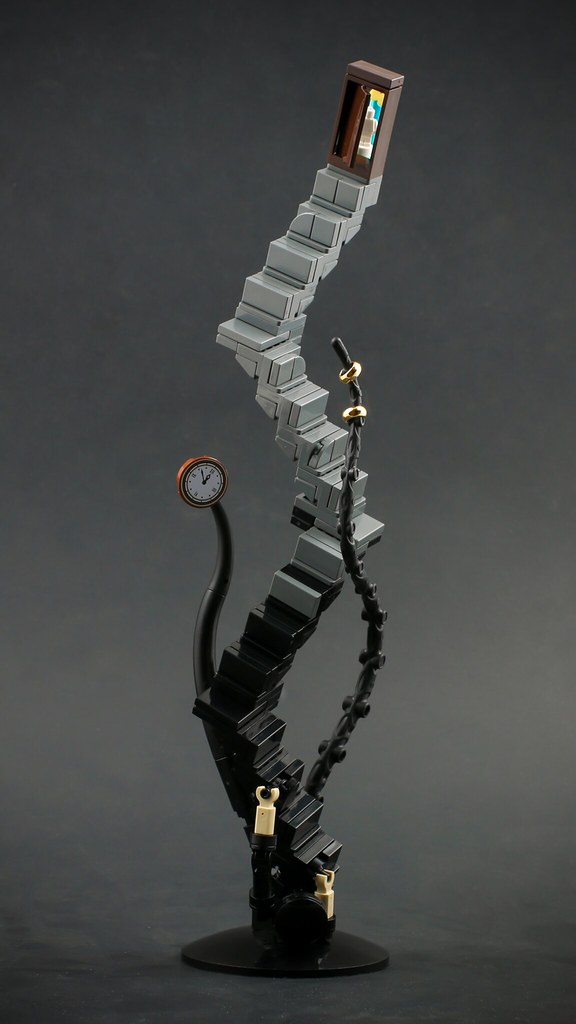
Eli Willsea has a knack for vignettes that tell a whole story in a small footprint, and this one is about as direct as a build gets: a lone figure at the foot of a stair, darkness below, light above. The builder ties it to his own faith, but the image works on anyone who has had a hard stretch. Look at how the lighting does most of the storytelling.
Builder Eli Willsea's latest LEGO creation is a dramatic staircase rising from shadow toward light, with a small figure at the bottom trying to make the climb. The Brothers Brick looks at the build and the personal meaning the builder attached to it.
from the fiddle-me-this dept.
Alasdair Fraser coming to a Northeast Kingdom arts centre is exactly the sort of small-town show that makes New England folk life so good. The Scottish fiddle master has been a cornerstone of the Celtic revival for decades. If you can't be in St. Johnsbury, at least it's a nudge to put on one of his records with Natalie Haas.
The local paper in Vermont's Northeast Kingdom announces an upcoming concert by the Alasdair Fraser Band at Catamount Arts in St. Johnsbury. Fraser is the celebrated Scottish fiddler known for his long partnership with cellist Natalie Haas.
from the conquer-or-dye dept.
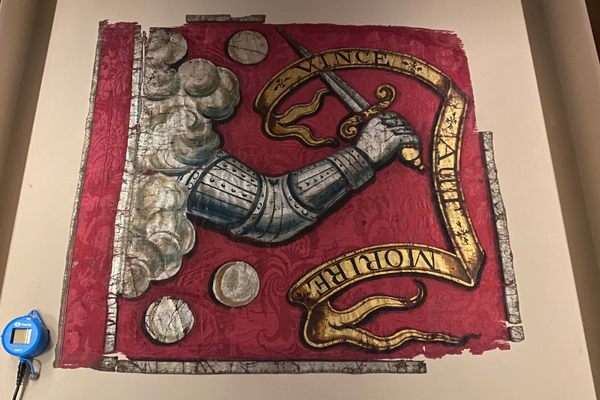
Just up the road from Concord and Lexington sits a flag that predates the Stars and Stripes and is still in one piece. Crimson silk damask, an armoured arm reaching out of a cloud with a sword, and a Latin motto with no room for compromise. Its exact age is still argued over, which only adds to the charm.
Atlas Obscura visits the Bedford Flag in Bedford, Massachusetts, said to be the oldest complete flag surviving in the United States. Made of crimson damask painted in silver and gold, it shows an armoured hand gripping a sword beneath the motto Vince Aut Morire, Conquer or Die.
from the video-killed-the-radio-format dept.

There is a whole generation of perfectly good internet radios going deaf because stations moved to newer streaming formats. Clifford Farrugia's answer is pleasingly small: a Raspberry Pi in the corner that translates the new streams back into plain old MP3. This is the late-90s spirit in miniature, one person keeping a gadget out of the landfill and sharing the fix.
Many older internet radio appliances can't play stations that have switched to HLS streaming. The open-source HLS Radio Converter runs on modest hardware such as a Raspberry Pi and re-serves those streams as ordinary HTTP MP3 streams that the old radios understand.
from the lookout-below dept.

A map drawn as a circle makes perfect sense once you picture the person using it: a lookout in a tower, turning slowly to scan the horizon for smoke. These were made for Maine's fire towers about a century ago, so they double as a New England curiosity. Maps built around a single point of view are always worth a slow look.
The Public Domain Review presents Archie G. Norcross's forest fire maps of Maine from 1918 to 1922. Each was drawn in the round for a specific fire tower, helping lookouts pinpoint smoke across the surrounding wilderness.
from the small-but-perfectly-formed dept.

Anything new from the author of Jonathan Strange and Mr Norrell is an event, even when it's only a short story and an essay. Reactor's reviewer argues the little volume is more than the sum of its parts. Consider it a pocket-sized return to Clarke's England, footnotes of the soul included.
Reactor reviews The Bishop of Durham Attempts to Surrender the City, a slim new book from Susanna Clarke pairing a short story with an essay. The reviewer finds it slight in size but substantial in effect, in keeping with the rest of her work.
from the early-birders dept.
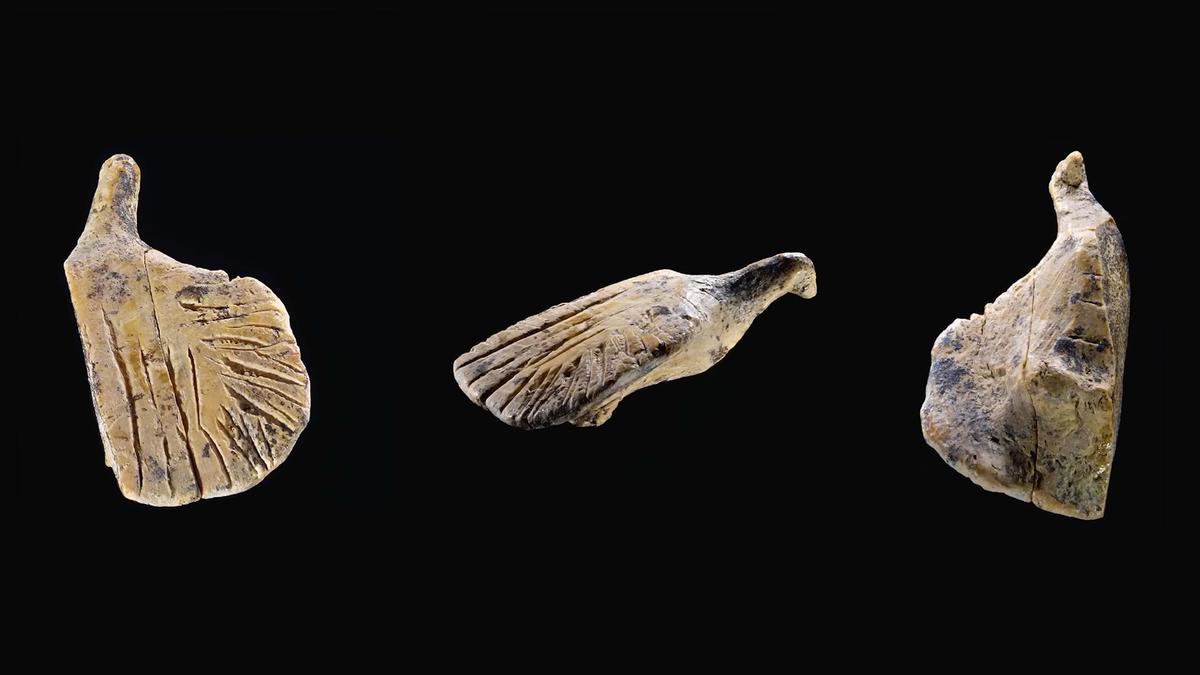
Tens of thousands of years ago someone in a German cave carved birds, which makes them birders of a sort. Aeon's short film uses the Hohle Fels finds to ask why our species thrived where Neanderthals faded, and suggests that making art was part of the answer. A quiet reminder that people have been looking hard at birds for a very long time.
An Aeon video explores the Hohle Fels cave in southern Germany and the bird figurines found there from the Ice Age. It considers what those objects say about the symbolic lives of early modern humans and the role art may have played in their success.
from the calamari-bulk dept.
Not a dinosaur, but it swam above their heads, and the nickname alone earns it a slot. Belemnites are the bullet-shaped squid cousins every fossil shop sells by the bucket, which makes a barrel-shaped one from a family thought long gone all the more fun. Worth noticing: the shape hints at a different lifestyle, perhaps hunting smaller cephalopods.
Researchers have described the stoutest belemnite yet found, a squid relative from the seas that covered Wyoming about 160 million years ago. The rare fossils show a barrel-shaped animal unlike known belemnites, possibly a predator of smaller squid-like creatures and a late survivor of a lineage thought to have died out.
from the dark-energy-side-quest dept.

Euclid was built to map the dark universe across billions of light years, so it is quietly charming that it also tripped over a fresh snowball in our own backyard. Survey telescopes that stare at everything tend to find things nobody asked them to; this is that tradition, continued.
ESA's Euclid space telescope has spotted its first previously unknown comet, picked out in images it took between 16 and 24 September 2026 while carrying out its main cosmological survey.
from the sonic-boom-over-the-Cape dept.
Remember the May boom that rattled windows and startled birds all along the Cape. MIT's Haystack people and colleagues pooled an unusually large pile of ground and satellite data to work out where the rock came from. Nice local detective story with a solar-system-sized map at the end.
Researchers including a team at MIT's Haystack Observatory traced the superbolide that exploded over Cape Cod Bay on 30 May. Their preprint describes a dense, strong, possibly iron-rich meteoroid whose earlier orbit reached out past Mars.
from the some-assembly-required-in-3000-BC dept.
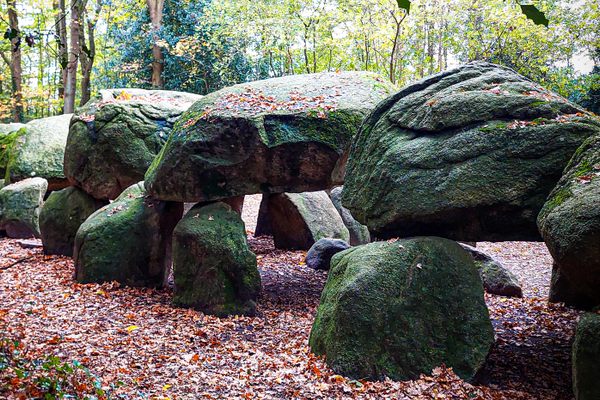
Drenthe's hunebedden are the Netherlands' answer to anyone who thinks the country is all polders and bicycles. D27 is the largest of them, older than Stonehenge, topped by a capstone of roughly twenty tonnes, and an easy walk from the Hunebedcentrum. A good excuse for a day trip out of Amsterdam.
D27 in Borger is a Neolithic passage grave more than 22 metres long and over 5,000 years old, the largest dolmen in the Netherlands. It carries the heaviest capstone known on a Dutch dolmen and was the site of the first recorded excavation of one, in 1685, though much of it is still undisturbed.
from the one-page-to-rule-them-all dept.

Somewhere Tolkien, who redrew his own maps obsessively, would approve of the sheer stubbornness. Over a thousand artists hand-drew Fellowship of the Ring shot for shot, all three hours, 120,000 pages. The first 11 minutes are out; mute it and play the film underneath for the full effect.
Animator Andy Bailey coordinated more than a thousand artists for over a year to make a hand-drawn flipbook version of Peter Jackson's Fellowship of the Ring. The complete film runs to some 120,000 drawn pages, and the first eleven minutes have been released, without the film's soundtrack.
from the future-as-it-used-to-be dept.
Omni was where hard science, airbrushed space art, very questionable parapsychology and genuinely great short fiction shared a binding. Gibson's early stories ran there, which is reason enough to go digging. Settle in; this is a long afternoon of retro-futurism.
The Internet Archive holds an archive of Omni, the US and UK magazine that mixed science articles, parapsychology and short science fiction and fantasy from 1978 to 1995. Kottke points to the collection.
from the fiddle-in-the-current dept.
New Laura Cortese means it goes in, no committee vote needed. The fiddler and songwriter behind the Dance Cards, long a fixture of the Boston scene, has a new record out, and here is a review to read before putting it on.
Americana Highways reviews Lucky Water, the new album from Laura Cortese, the fiddler, singer and songwriter known for her work with the Dance Cards.
from the sibling-counterpoint dept.
Cello and fiddle, two sisters, and decades of playing in each other's pockets. Brittany you know from Hawktail and Crooked Still, Natalie from her long partnership with Alasdair Fraser; this is the two of them together again on a second duo album.
Jambands reviews North Node, the new album by Natalie Haas on cello and Brittany Haas on fiddle, released on Padiddle Records as a follow-up to their first duo record.
from the alexandria-unplugged dept.
Live write-ups are the next best thing to being in the room, and the Birchmere is about as good a room as American folk has. Aoife on 12 October, with DC duo the Sweater Set warming things up.
Parklife DC reviews Aoife O'Donovan's 12 October 2026 show at the Birchmere in Alexandria, Virginia, where the Sweater Set opened.
from the ten-years-downstream dept.
Undercurrent was the record that won Jarosz her first Grammys, and a decade on she is taking it back on the road. This profile catches her on the California leg, looking back over the career so far.
Monterey County Weekly talks to Sarah Jarosz about her fall 2026 tour marking ten years since her album Undercurrent, and about looking back on her career as she plays it.
from the lake-kariba-park dept.
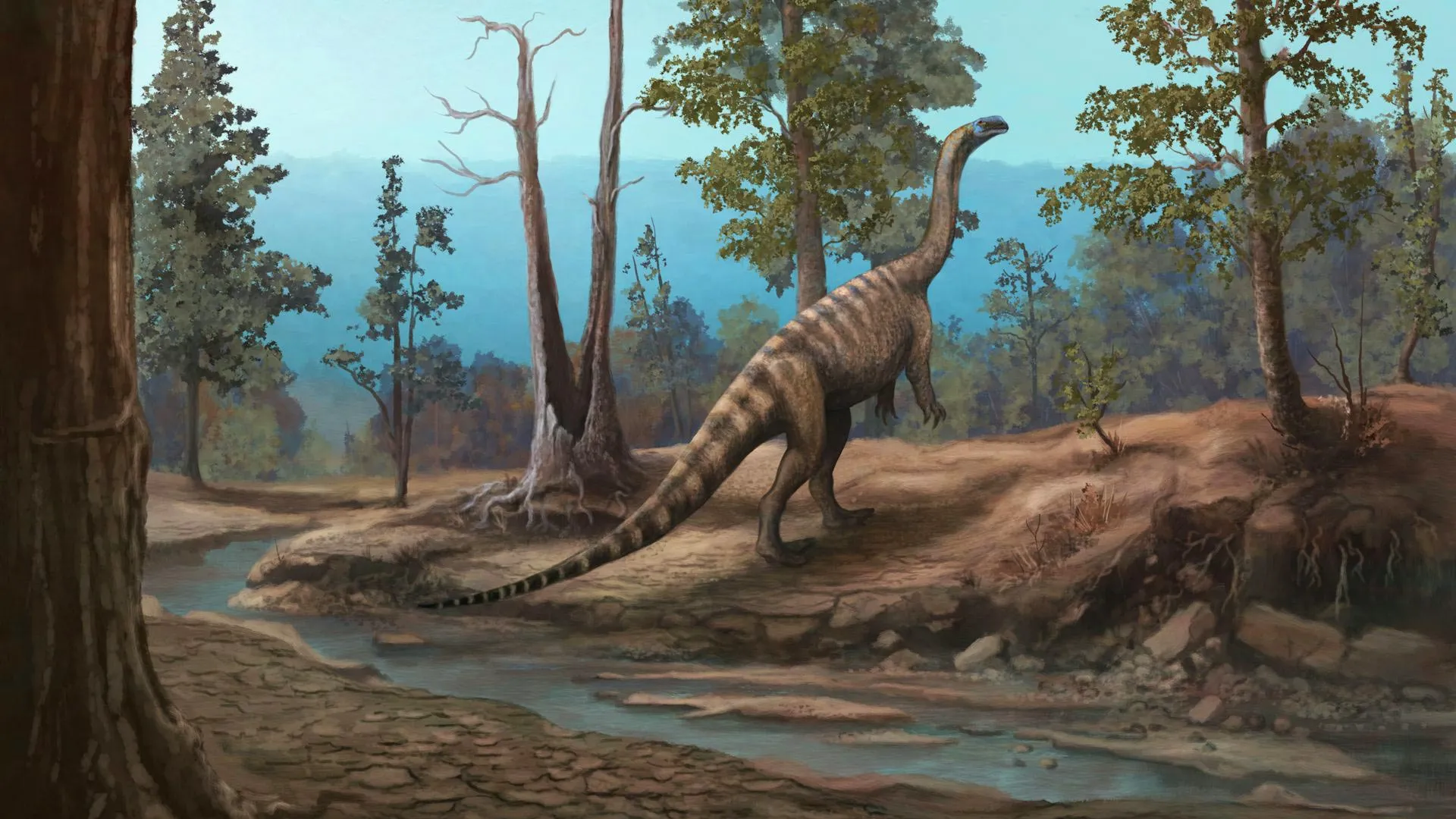
Fresh dinosaur news from somewhere that rarely makes the headlines: Zimbabwe, 210 million years ago. The interesting bit is not the skeleton itself but the argument that Zimbabwe's early dinosaurs were a different crowd from the ones down south, possibly because the climate differed. The story is written by the lead palaeontologist himself.
Paul Barrett of the Natural History Museum and colleagues describe Musango matusadonaensis, a two-legged plant-eater about 4.5 m long known from a partial skeleton found on a riverbank in Matusadona National Park. Growth rings show it was not fully grown. Along with Musankwa, named in 2024, it suggests the Late Triassic dinosaurs of Zimbabwe differed from South Africa's.
from the snowbird-archosaur dept.
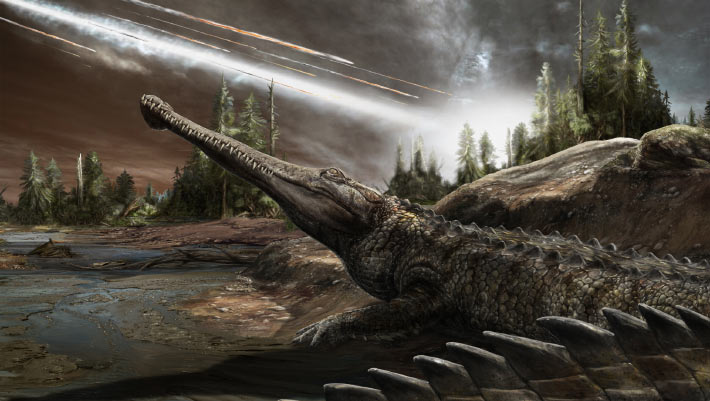
The other branch of the archosaur family tree gets its turn. A UCL team argues that crocodile-line reptiles never really adapted to new climates; they just moved whenever the world warmed or cooled. That same habit may be why they made it through the asteroid when their dinosaur cousins did not.
Alfio Alessandro Chiarenza and Philip Mannion combined a tree of over 400 pseudosuchian species with thousands of fossil sites and living-crocodile records. They found the group kept a stable preferred climate, around 23 C for the ancestor, and shifted range rather than adapting. Climate models of the end-Cretaceous aftermath show warm refuges near the equator that could have sheltered them. The study is in Science Advances.
from the morning-on-sol-4982 dept.
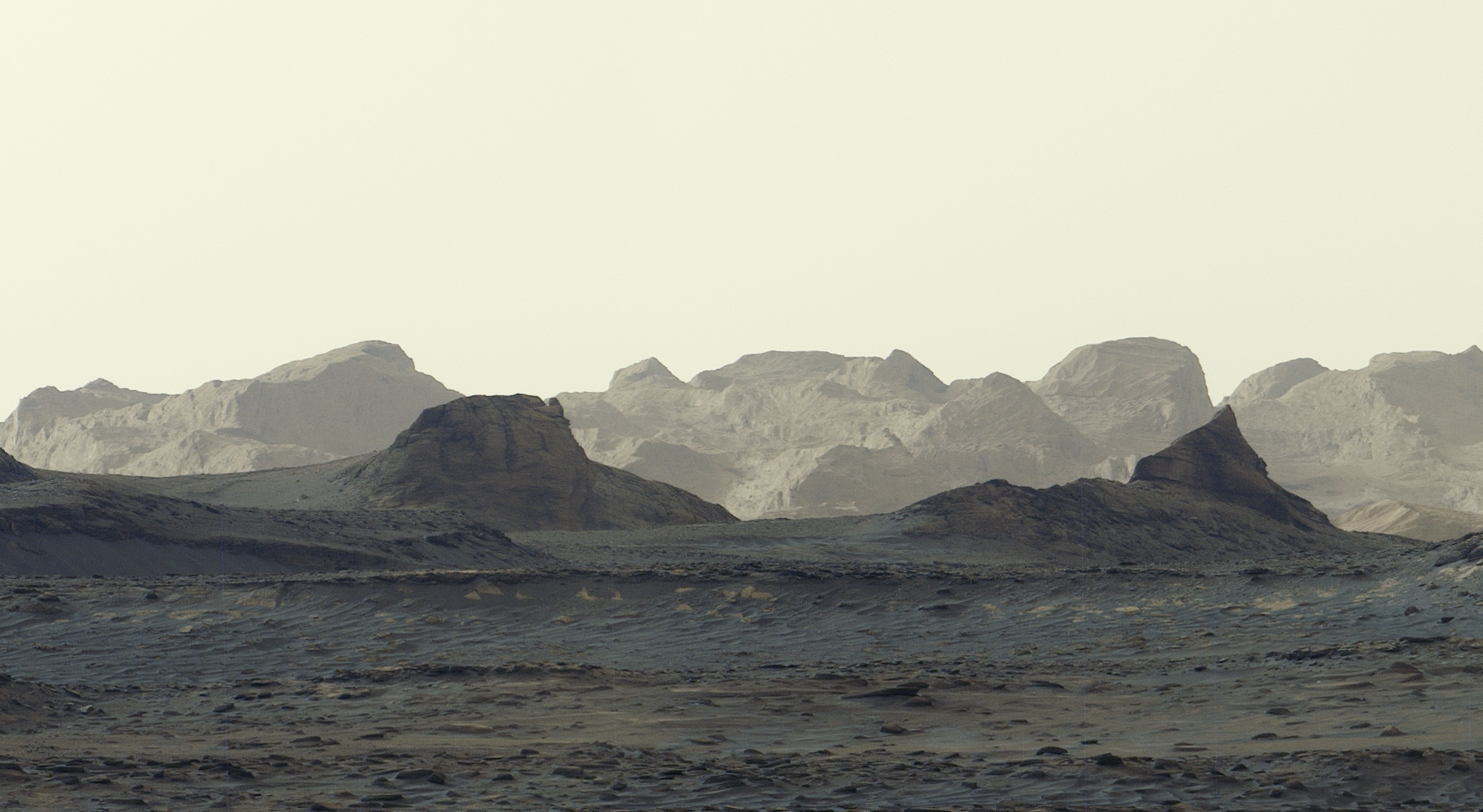
A pretty picture with a geology puzzle attached. The yardangs on Mount Sharp are the wrong colour and their layers tilt oddly, and one idea is that they are ancient volcanic ash. Curiosity plans to drive up and poke them with its arm in 2027, which counts as a cliffhanger by rover standards.
Curiosity's Mastcam shot six frames at 8:30 a.m. local time on sol 4,982 (August 11, 2026), stitched into a panorama without colour correction. It shows the wind-sculpted yardangs on the northwest side of Mount Sharp, ridges about 16 km long. The team hopes to reach their base in 2027 to work out what they are made of.
from the fear-and-dread-sample-return dept.

Japan's sample-return team, the people behind Hayabusa and Hayabusa2, is going after a moon of Mars this time. Phobos is too small to orbit in the normal sense, so landing looks more like a careful bump than a touchdown. The capsule is due back around 2031.
JAXA's Martian Moons eXploration spacecraft launched on an H3 rocket from Tanegashima this week. It will study Phobos, about 22 km across, land on it and collect a sample of at least 10 grams to return to Earth. Hackaday covers the mission and the oddities of operating around such a small body.
from the local-patch-notes dept.

Home-turf reading for a Penang birder. The highlights are a possible cross between Black and Oriental Pied Hornbills, a cuckoo eating eggs, and a White Wagtail subspecies never before recorded in Malaysia. It is citizen science at its best: careful notes by people who simply go out and look.
The new issue of the free Malaysian Bird Report has gulls gathering on the North Selangor coast, possible hornbill hybrids, odd feeding records and nesting accounts for Orange-breasted Trogon, Green Broadbill and Common Hoopoe. There is also a special report on the Critically Endangered Chinese Crested Tern, and tributes to Lord Medway and David Hogan Jr. The post links to the full issue for download.
from the startle-response dept.

New England folklore that turned into real neurology. Lumberjacks at Moosehead Lake who leapt and echoed words when startled became a newspaper sensation, and then a research project for George Beard, who tried reciting Homer at one of them. The trail ends, unexpectedly, at Gilles de la Tourette.
Ross Bullen traces the story from an 1878 New York Sun report and an earlier 1861 account through Beard's field tests in 1880. Beard compared the jumpers with dancing plagues and latah, the startle condition described in the Malay world. The essay follows how the case fed into Tourette's later work on tics.
from the turning-radius dept.

A classic BrickNerd technique piece, back on the front page, solving a problem every LEGO city builder runs into. The fix comes from an unlikely place: an arch from the Lion Knights' Castle set. Part numbers are included, so it is something you can actually build.
Brian Everett tried curved slopes on standard road plates and found they broke down at intersections. His answer pairs the 1x4x3 arch (80543) with a 3x3 round corner (65617) to make a clean curve in a brick-built MILS road, with the curb sitting two plates above the road. The piece first ran in 2022 and is republished in BrickNerd's best-of series.
from the advice-autopsy dept.

Her Bluesky post announced it with a YouTube link, so here is a page you can actually read instead. The format is the draw: guests sit a mock job interview, then Scanlon takes their career advice apart and ties it back to how the economy actually works. A gentler way to take the economic temperature than the news.
Kyla Scanlon is hosting Best of Luck, a career-advice interview show made with Vox and premiering 27 October 2026. Guests range from economists and journalists to farmers and comedians. It will be on YouTube, Apple Podcasts and Spotify as part of the Vox Media Podcast Network.
from the calipers-unbound dept.
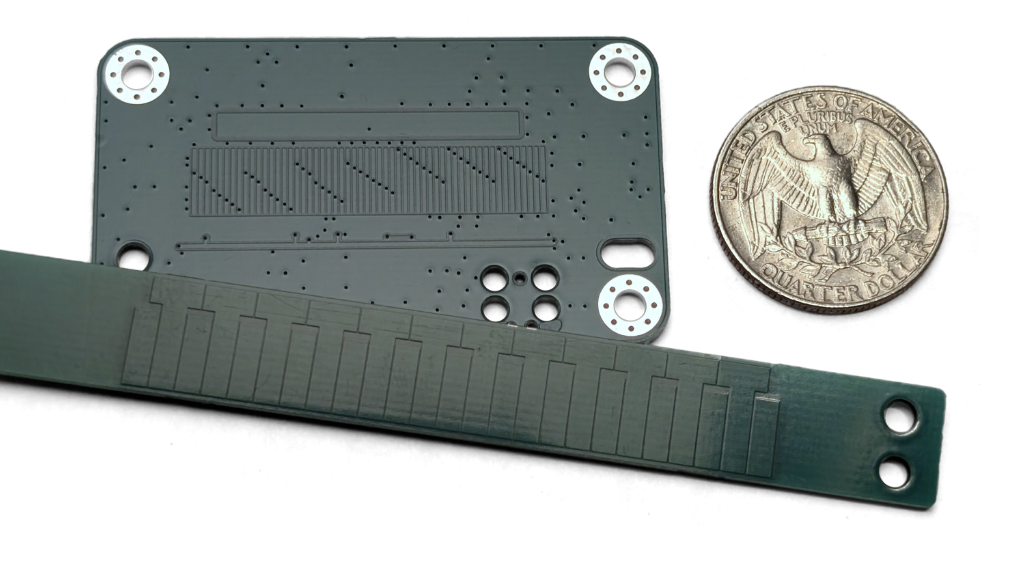
The trick inside every cheap digital caliper, pulled out, explained and given away. It is a nice example of the old spirit: one person works out how something clever works, builds their own and publishes the boards for anyone to copy. Rev B is in progress.
Nick's encoder has an STM32 drive a grid of transmit antennas on one PCB, coupling through a reflector PCB to measure displacement to roughly 40 micrometres. The design files and schematics are on GitHub, and Hackaday featured the project on 22 October.
from the glow-your-own dept.

Most people buy their gas-discharge displays; this maker is coating the glass himself with a home sputtering rig. The first prototype glowed only inside the vacuum chamber and died once sealed, which is exactly the sort of honest failure that makes these projects worth following.
Witchcraft and Alchemy deposited titanium and then platinum cathodes on glass, added an ITO anode and an argon fill, and drove it with a classic 74141 nixie driver. The next version swaps epoxy for a gasket and argon for a Penning gas mixture, with the goal of a full seven-segment display. Hackaday's write-up summarises the maker's video.
from the three-part-harmony-in-real-time dept.
Fresh off a Grammy for Wild and Clear and Blue, the trio put out a record of what they sound like in a room, which is where three-part harmony either holds or doesn't. Aoife O'Donovan walks through the songs and her recent guest turns. A little older than our usual news, included here simply because it's lovely.
Goldmine reviews Sing Me Alive, a live album drawn from I'm With Her's 2025 concerts, with Aoife O'Donovan talking about tracks including Find My Way to You, Overland and Mother Eagle, and about guesting on records by Sierra Hull and by Alison Brown and Steve Martin.
from the fiddle-meets-cello-meets-quarter-century dept.

Scottish fiddle and cello shouldn't make this much rhythm between them, but Fraser and Haas have been proving otherwise for a quarter of a century. The review singles out Haas's writing, which is worth noticing if you know her mainly as the engine under Fraser's tunes. An August review, here as a bit of decoration.
Strings Magazine reviews Meridians, the duo's seventh album and first since 2021, covering new tunes by both players, from a stirring opener by Haas to a quiet closing piece by Fraser, with medleys and dance sets in between.
from the asilomar-by-the-sea dept.

HPTS is the small, invitation-only workshop where the transaction-processing and storage crowd says what it really thinks, and Murat's trip reports are the next best thing to being there. The disk numbers from Dropbox are the bit to stop on: capacity has outrun bandwidth so far that reading a whole drive now takes about a day and a half.
A day-one write-up from the High Performance Transaction Systems workshop at Asilomar. It covers Ion Stoica on where agent-written software falls short, Todd Lipcon on learned systems, Dropbox on its Magic Pocket storage and the growing gap between drive size and throughput, and Google on Spanner Omni, among other talks.
from the measure-twice-commit-once dept.

An argument any kernel maintainer will recognise: the code that everything else depends on deserves the most patience, not the least. Zhang borrows from the slow food movement and ties effort to blast radius, which is a tidy way to say what reviewers have long felt. It is from July, but it has aged into exactly this moment.
Writing on the SIGOPS blog, Irene Zhang argues that fast AI-assisted development has cut the link between how quickly software is built and how much depends on it. She proposes deliberately slowing work on critical infrastructure in proportion to its dependents, while leaving quick tools for prototypes and low-risk code, and uses storage consistency as an example of what can quietly break.
from the feelings-are-not-a-leading-indicator dept.
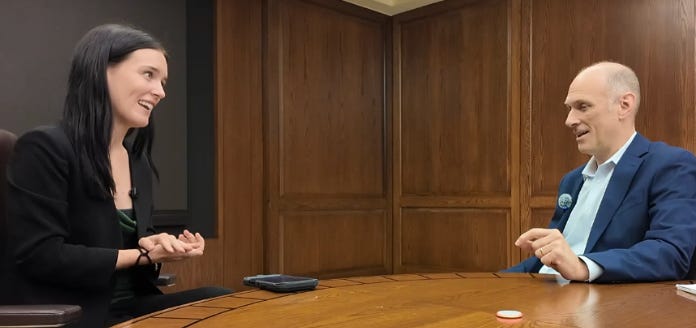
A central banker explaining, in plain terms, why the numbers and the national mood have stopped agreeing. Scanlon asks the questions you would want asked and lets him think out loud. The low-hire, low-fire labour market is the phrase to remember.
The Chicago Fed president talks about why consumer sentiment has become a weaker guide to spending, what drives people's gloom about prices, the slow-moving jobs market, and whether the AI data-centre boom is a demand shock the Fed needs to watch. The full transcript is free to read.
from the as-the-crow-thinks dept.
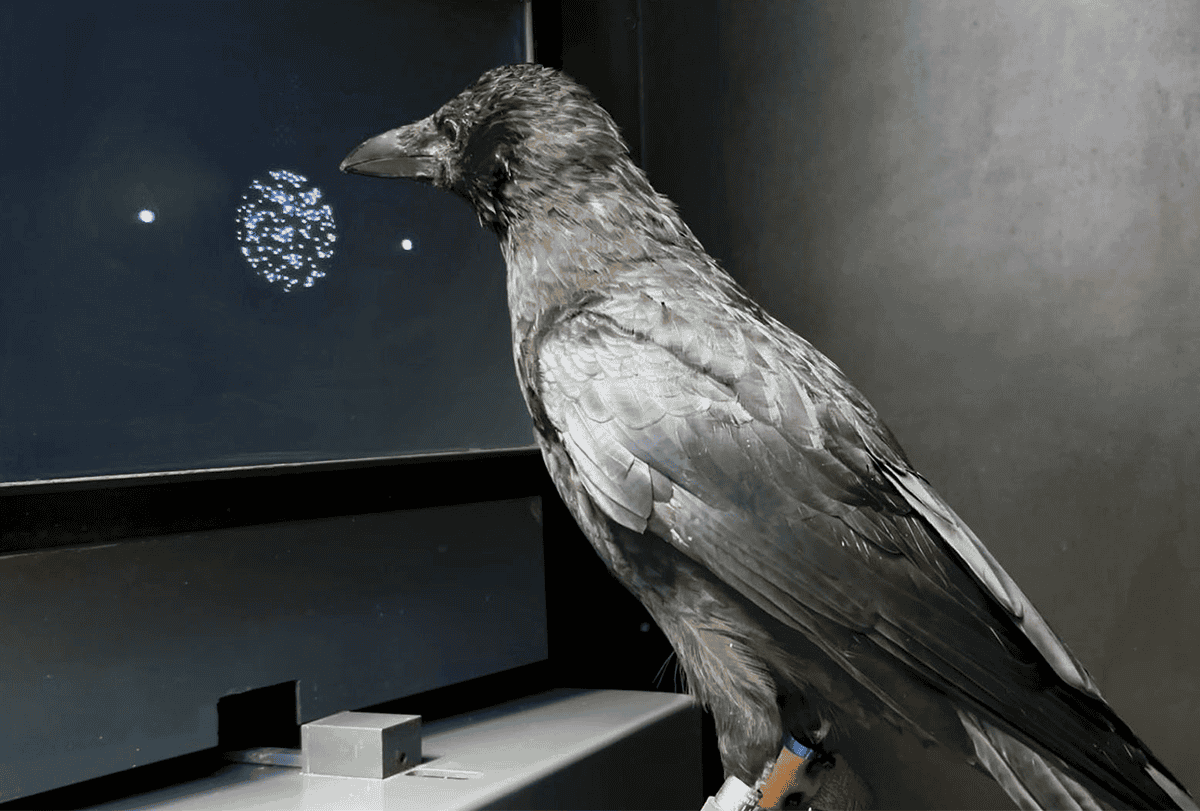
Corvids keep embarrassing the primates. Two carrion crows named Iggy and Lemmy, which is reason enough to read it, beat monkeys handily on a classic perception task, and their neurons gave the game away within 70 milliseconds. The open question of why bird brains run so fast is the fun part.
A study in Science from Andreas Nieder's lab in Tübingen trained carrion crows on a moving-dots decision task and recorded from a brain region that plays a role like the primate prefrontal cortex. The crows answered in about a quarter of a second, roughly twice as quickly as primates, and researchers suggest densely packed neurons, shorter wiring and warmer bodies as possible reasons.
from the look-ma-no-hands dept.

A Jordaan side street, a room full of self-playing pianos and a library of punched paper rolls: music stored as holes, which is practically a storage format. Volunteers run it, and the tours are by people who love the machines. Bonus history about who once ran a roll factory in the neighbourhood.
A small museum on Westerstraat in Amsterdam's Jordaan holding around fifty player pianos and close to twenty thousand music rolls, from the era when the pianola was a parlour sensation. Atlas Obscura's entry covers the collection, how player pianos work, and the local connection to the building now known as the Anne Frank House.
from the roll-for-initiative-then-snap dept.

Somebody built a whole alternate-history wargame universe on top of LEGO, gave it away, and grew a community that writes fiction and draws art for it. The designer's point that bricks are the perfect prototyping medium will ring true to anyone who has ever hacked something together. The included squadron instructions are a nice touch.
BrickNerd interviews Paul Antoine about Brassbound, a set of free tabletop games played with LEGO models, from Cold War-style ground battles to 1917 air combat at 1:300 scale. He talks about design, the game's Discord community and his favourite unit, and the article includes building instructions for an aircraft squadron.
from the it's-not-the-heat-it's-the-fractures dept.
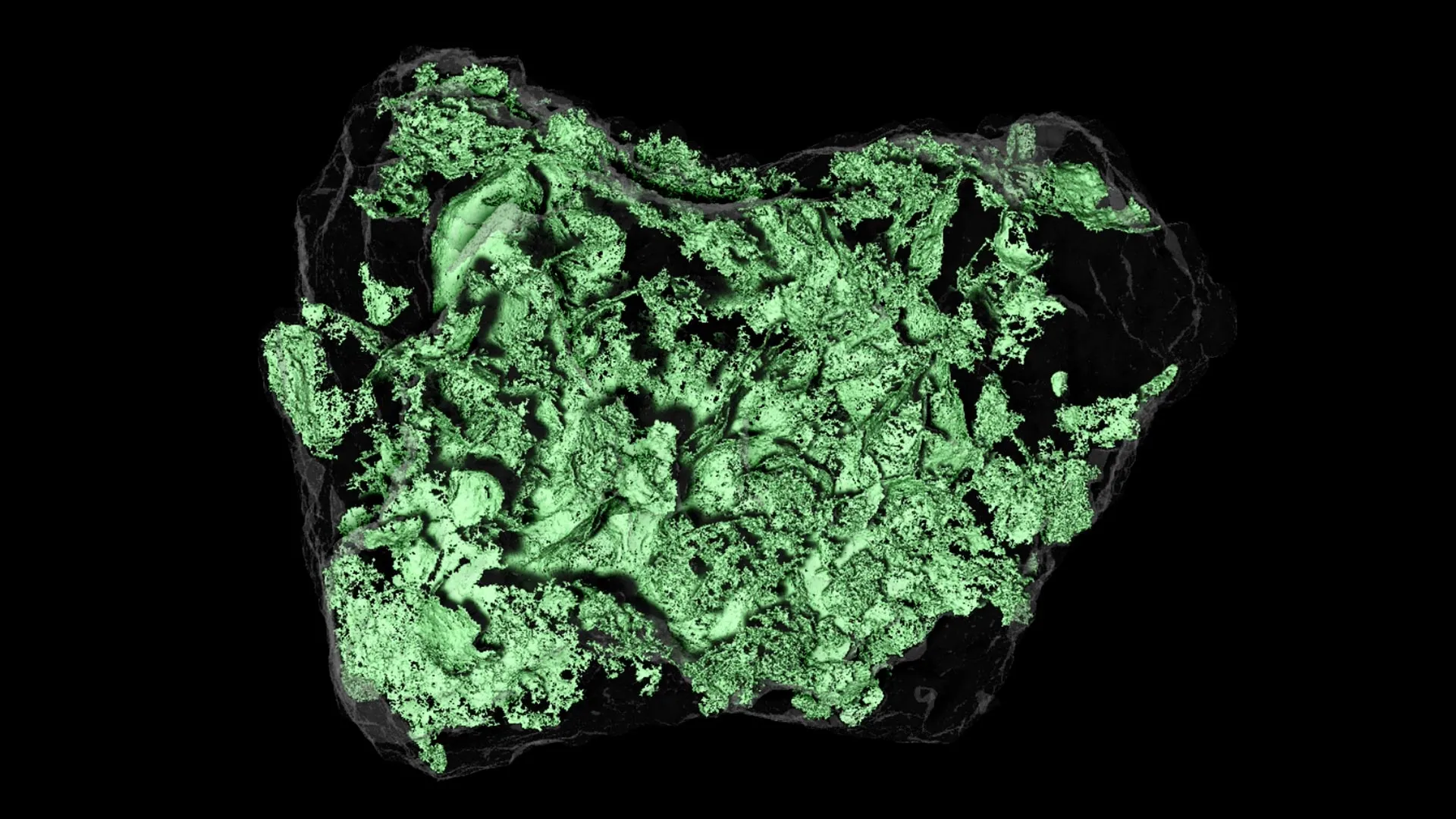
OSIRIS-REx brought back pieces of Bennu, and now the lab has explained a long-standing puzzle from orbit. It is a good example of sample return earning its keep: you can measure a rock from a spacecraft, but you need it on a bench to see why it behaves the way it does.
Researchers led from the University of Arizona, working with NASA Johnson and Nagoya University, scanned returned Bennu particles with X-ray CT and thermal imaging. Networks of internal cracks, along with porosity, explain why the asteroid's surface sheds heat so quickly, and simulations built from the scans match what the spacecraft measured. The study appeared in Nature Communications.
from the human-barcode-scanner dept.

Strictly useless and completely delightful: decoding QR codes by hand, error correction and all. It is the same pleasure as reading a hex dump, and you come away understanding what the little squares are actually doing. The human-readable QR variant at the end is a fun twist.
Hackaday covers Noel Friedrich's guide to decoding small QR codes on paper, including how to undo the masking and use the error-correction layout, plus a side project that uses that error correction to hide readable text inside a working code.
from the no-ITAR-in-the-slides dept.
The one conference where the people who write the code that keeps spacecraft alive compare notes, and the talks go up on YouTube afterwards for the rest of us. Registration just opened and the call for abstracts is live, so if a kernel person ever wanted an excuse to talk to the JPL crowd, this is it.
The 20th workshop on spacecraft flight software runs 22 to 25 March 2027 at Caltech's Ramo Auditorium, hosted by JPL with Aerospace Corporation, SwRI, NASA Goddard and APL. It is talks only, no papers; abstracts of up to 400 words are due 4 December 2026, and themes include architectures, resilience, space networking, DevOps and onboard AI.
from the five-a-day-in-the-cretaceous dept.
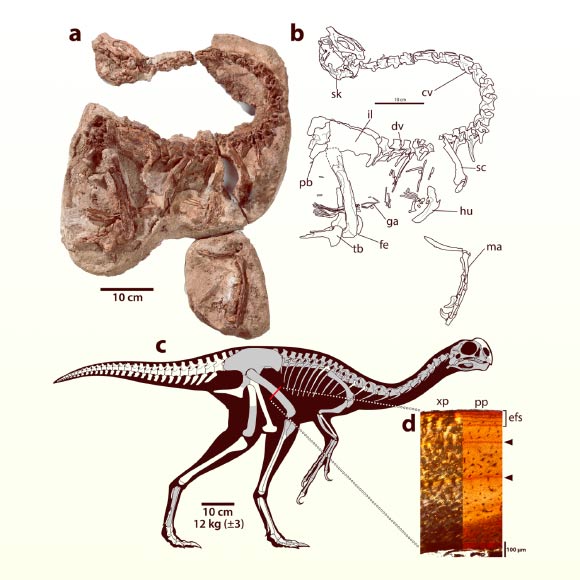
Hell Creek is T. rex country, so it is a nice change to meet a 12 kg neighbour with a weak bite and a sliding jaw that probably preferred fruit. The comparison to a living parrot is the bit that makes it click. Also a reminder that a nearly complete skull can sit in a collection for over a decade before its story gets told.
Researchers describe Infernogallus jamesi, a toothless oviraptorosaur from the very end of the Cretaceous in Montana and the Dakotas, from a near-complete skull collected in 2011. CT reconstructions of its jaw muscles point to a gentle, slicing bite, and with no gizzard stones found, the team argues for a soft, fruit-heavy diet. The paper is in Nature Communications.
from the grounded-before-takeoff dept.
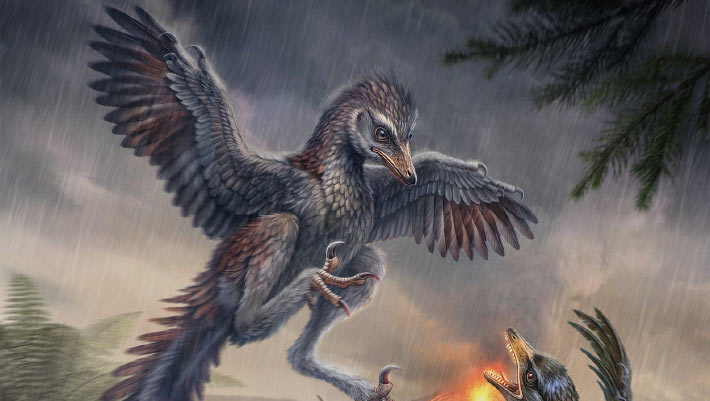
We tend to tell bird evolution as a straight line towards the sky, and this one walks right off that script. Barely past Archaeopteryx on the family tree, it already had stubby arms and runner's legs, plus a raptor-style sickle claw for good measure. Bird science with a dinosaur chaser.
Yuezhuornis yangyuanensis, about 150 million years old from Fujian in southeastern China, sits among the earliest birds but has short forelimbs and limb proportions like modern ground birds, suggesting it could not fly. It also kept serrated teeth and a hyperextensible second toe. The study, by a team including the Institute of Vertebrate Paleontology in Beijing, appeared in Nature.
from the it's-all-connected-man dept.
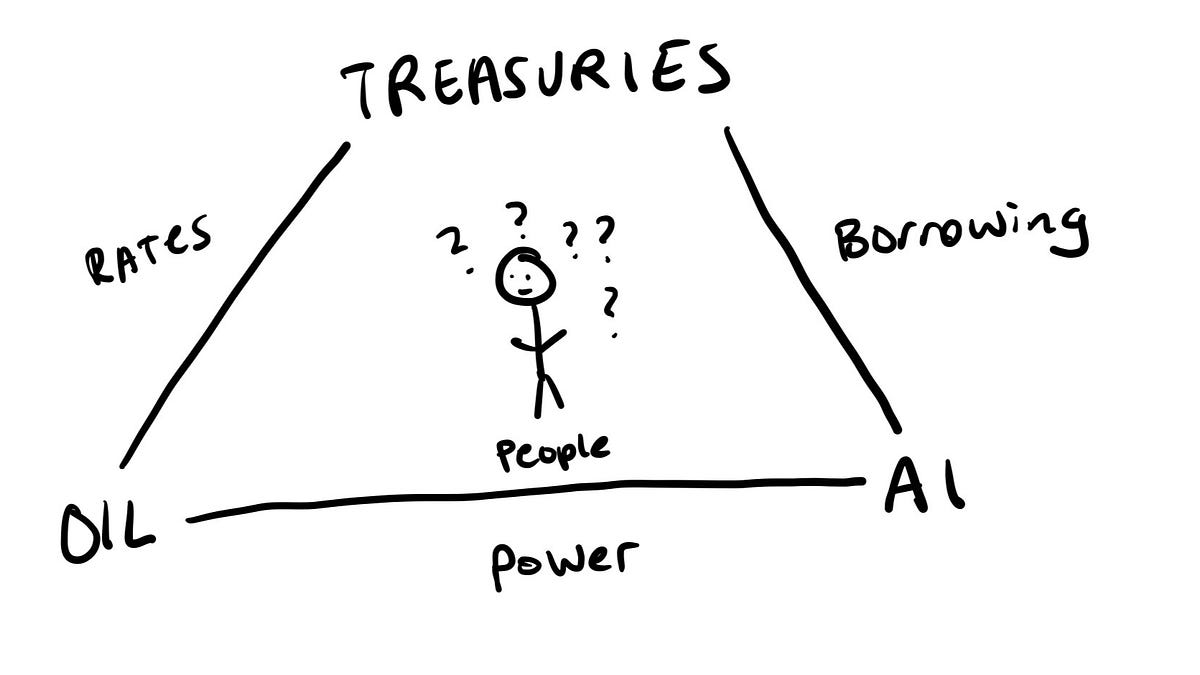
Plenty of people will tell you the economy feels weird; Scanlon actually draws the wiring diagram. The useful idea here is how three separate stories, energy prices, the data-centre building spree and government borrowing, push on each other. Calm, numerate and free to read.
Scanlon argues that higher oil prices, massive borrowing to fund AI infrastructure, and a large federal deficit are feeding into one another through interest rates and Treasury demand, and looks at who ends up carrying the cost. She backs it with recent figures on fuel prices, consumer sentiment, hyperscaler spending and the fiscal year's books.
from the murder-ballads-before-breakfast dept.
An Orkney fiddler, a grim Scottish ballad and a Boston-heavy band of players, which makes it a neat bridge between two of this feed's favourite places. Listen for how the strings carry the story while the voices stay plain. She animated the video herself, too.
Folk Alley premieres the video for Bichan's arrangement of the traditional ballad, with Kris Drever and Rachel Sermanni on vocals and a string section arranged with fiddler Katie McNally. It is the third single from her album Binnorie, due 30 October.
from the impressionist-tendencies dept.

A builder took LEGO's Monet set and reworked it into a moody night-time palette, then wrote up which part swaps worked and which colours turned out to be liars next to their neighbours. It is a good look at colour theory done in plastic, with a comment from the set's designer about how many bridge colours they tried.
Meredith Najewicz rebuilt the LEGO Art Bridge over a Pond of Water Lilies in dark blue, dark grey and black, inspired by a different Monet canvas. She explains her substitutions, from wedge plates to quarter-round tiles, how she sourced parts, and what she learned about tan versus white highlights.
from the it's-not-easy-being-green dept.

Textbooks insist there are no green stars, and for good physical reasons. This one cheats: it swallowed pieces of its old planetary system, and the sodium they left behind soaks up orange light. The survey also found pink and yellow white dwarfs nearby, so the night sky is a little more colourful than advertised.
University of Warwick astronomers report WD J1330+6435, a white dwarf whose atmosphere, polluted with rocky debris, gives it a chartreuse colour. A survey of 151 nearby white dwarfs found a handful of other odd hues, and the team estimates about one in thirty may look noticeably coloured.
from the export-symbol-or-bust dept.
Two decades of LTTng, and its maintainer still cannot upstream it piece by piece because the kernel will not export symbols with no in-tree user. Jake Edge's write-up is a fair, detailed look at a real engineering knot rather than a flame war. Anyone who has carried an out-of-tree module will nod along.
At the Linux Plumbers Conference, Mathieu Desnoyers led a session on how LTTng could work better alongside ftrace and perf. The discussion covered the rule against exporting unused symbols, duplicated tracing infrastructure, different ring-buffer needs, and whether a middle path exists between staying out of tree and merging everything at once.
from the oil-well-cuttings-never-lie dept.

A buried crater off the English coast that geologists voted against in 2009 turns out to be the real thing after all. The clinching evidence came from shocked quartz in old oil-well rock cuttings, which is a lovely example of industrial leftovers settling a scientific argument. Close enough to the Dutch coast to count as neighbourhood news, give or take 45 million years.
Researchers led by Uisdean Nicholson at Heriot-Watt University present several lines of evidence that the 3 km Silverpit Crater, 700 m below the seabed, was made by an asteroid around 160 m across some 43 to 46 million years ago. Simulations suggest the impact threw up a curtain of rock and water and a tsunami more than 100 m high.
from the jurassic-parking dept.

Two of this feed's favourite things in one small build: a speeder bike wearing a tyrannosaur as a body kit. It is compact enough to actually build this weekend, and the write-up explains the pipe-frame trick underneath. The final jaw detail left out of the instructions is the kind of nerdy footnote worth reading for.
Builder Dan Ko made this dinosaur-styled speeder for a community space-building challenge and shares an 18-step guide, a parts list you can load into BrickLink or Stud.io, and a separate display stand. It belongs to a running fan-made faction that started in a LEGO space Discord.
from the leftovers-again dept.
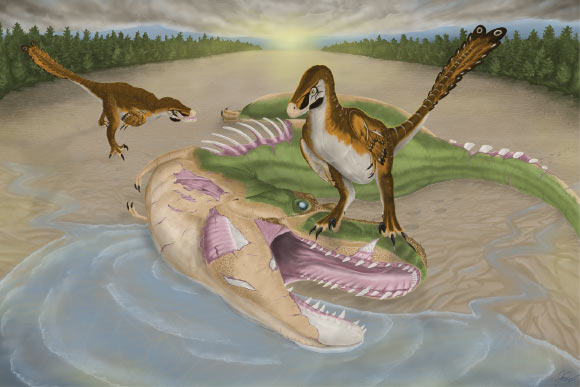
Forensic palaeontology at its finest: researchers measured serration spacing in bite marks, corrected for the angle of the bite, and named a likely suspect. The size gap makes the case, since a turkey-sized raptor was not taking down a half-tonne tyrannosaur, but it would happily clean up after one.
A jaw from a young Albertosaurus, about 70 million years old from Alberta, carries scrape marks matching the teeth of the dromaeosaur Atrociraptor. At an estimated 16 to 18 kilograms against roughly 530, the biter was probably feeding on a carcass rather than hunting. The study appeared in the Journal of Paleontology this month.
from the back-bone-of-the-algarve dept.
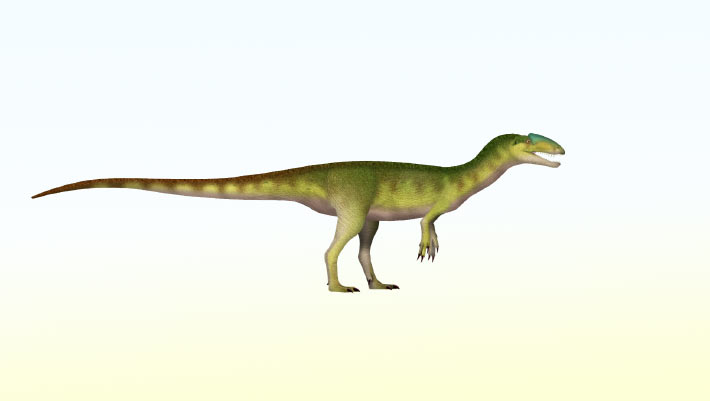
Not every dinosaur find is a skeleton; sometimes it is one 37 mm bone that moves a timeline by tens of millions of years. Worth noticing how much careful phylogenetic work can hang on a single centrum, and how honest the authors are about not naming it.
A vertebra from Late Triassic rocks near Loulé in southern Portugal, over 220 million years old, is the first Triassic dinosaur material from the Iberian Peninsula. Analysis places it among early neotheropods, closest to England's Sarcosaurus, but the bone is too incomplete to name a new species.
from the are-we-there-yet dept.

Opportunity's distance record stood as a monument to plucky persistence; Perseverance matched it in about a third of the time. The interesting part is why: the rover drove itself with autonomous navigation for over 90 percent of the trip. A nice milestone for onboard software as much as wheels.
On 11 October the rover's odometer reached about 45.2 km, edging past Opportunity's long-held total. It has also overtaken the Apollo 17 lunar rover and the Soviet Lunokhod 2, and it begins an extended mission running to roughly the end of 2028 with 29 samples collected so far.
from the carry-the-one dept.
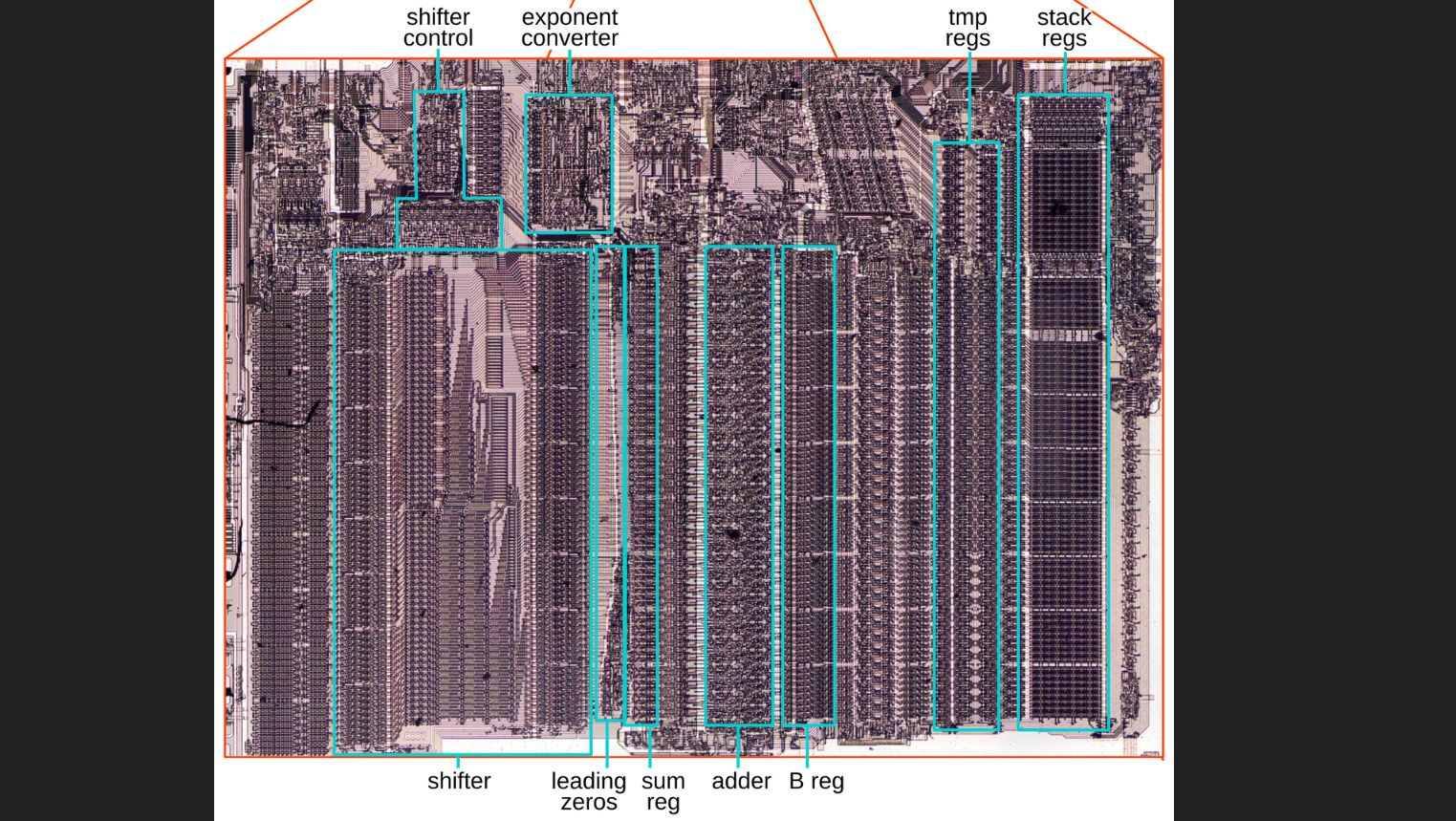
Ken Shirriff is back at the die photos, this time walking through the 8087's add and subtract microcode line by line. Systems people will enjoy the two-pass normalisation scheme and the candid description of the special-case handling as spaghetti. It is a reminder that IEEE floating point was hard-won silicon before it was a standard.
Using images of the chip and an extracted microcode ROM, the article traces how the 8087 handles 80-bit numbers through a wide integer adder, shifters and leading-zero detection, and how its microcode branches through the many edge cases floating-point arithmetic requires.
from the connecting-people-to-busybox dept.
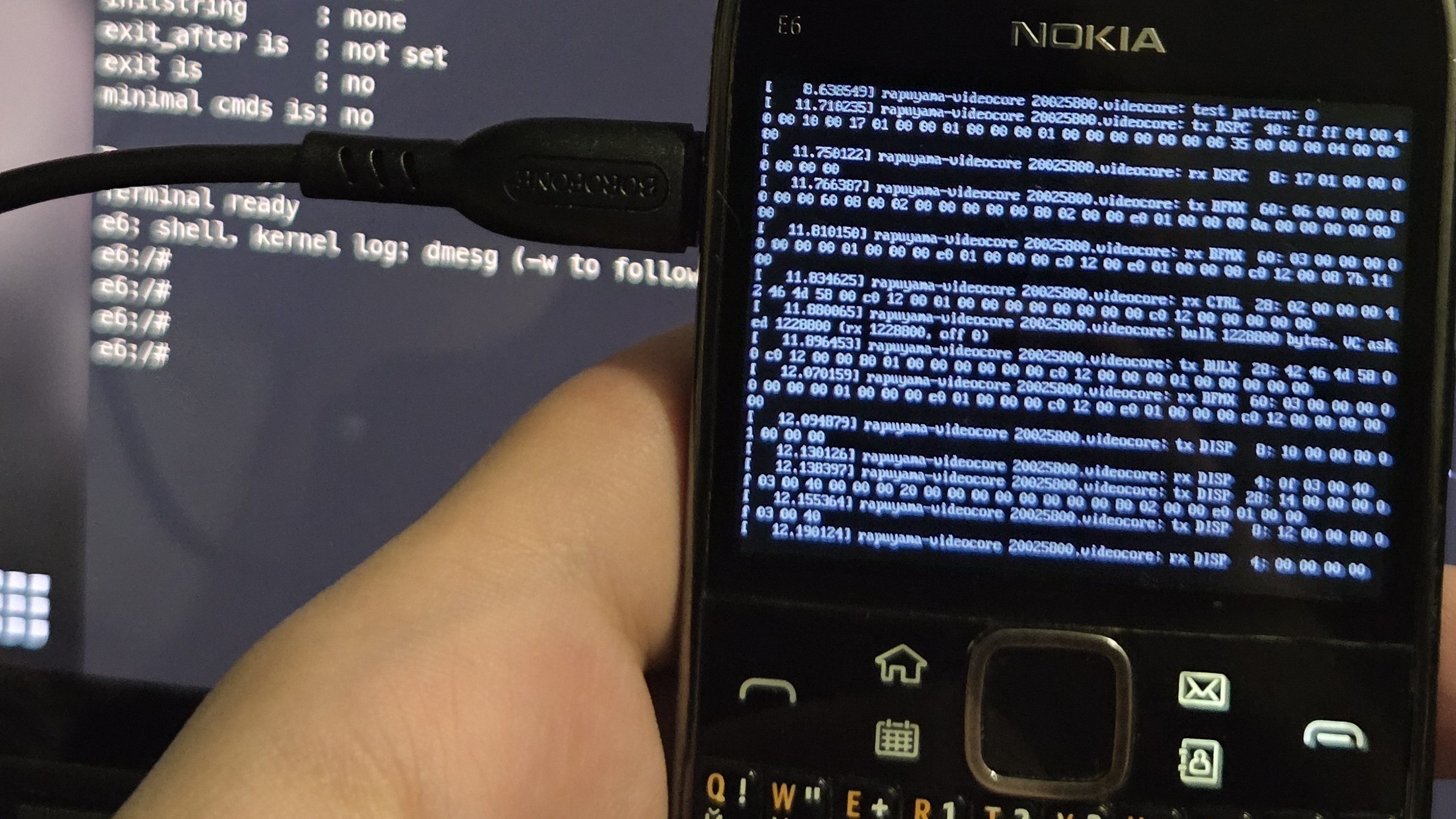
Pure late-90s energy: no unlocked bootloader, so a Symbian app loads a kernel, switches off the MMU and jumps. The display works by replaying messages sniffed from Nokia's own driver. The open puzzle, a mystery reset a few minutes after boot that may be the baseband watching over things, is the kind of bug kernel people lose weekends to.
A hobby project bringing a modern Linux 6.12 kernel up on the Nokia E6, an ARM11 phone from 2011. It boots to a BusyBox shell with the screen, keyboard and touchscreen working, and the repo includes build steps and detailed notes on the reset problem still being chased.
from the found-in-the-forest-not-the-feed dept.

A properly hopeful bird story from the neighbourhood: every rediscovery here is from the Philippines, Indonesian Papua or Papua New Guinea. Each came from patient local birders and guides with a camera rather than a big expedition, which a solo birder may find encouraging.
The latest update to the Lost Birds List records five species photographed again in 2025 after gaps of a decade or more, among them the Bismarck kingfisher, the Sulu cuckooshrike and the rufous-breasted blue flycatcher. The list of lost birds has shrunk from 163 in 2022 to 120.
from the wrong-kind-of-sun-on-the-line dept.

A cosy detective story: one of the earliest recorded cases of space weather affecting technology turned out to be dated before the railway in question existed. Physicists checked timetables and magnetometer records like historians, and the case closes neatly.
A 16-minute train delay near Exeter, blamed on telegraph disruption from a geomagnetic storm, was long dated to 1841. Researchers led by Lancaster's Jim Wild found the line did not open until 1846 and place the event in October 1848 instead, with an 1847 Midland Railway report as the earliest credible case.
from the good-boy-of-the-wari dept.
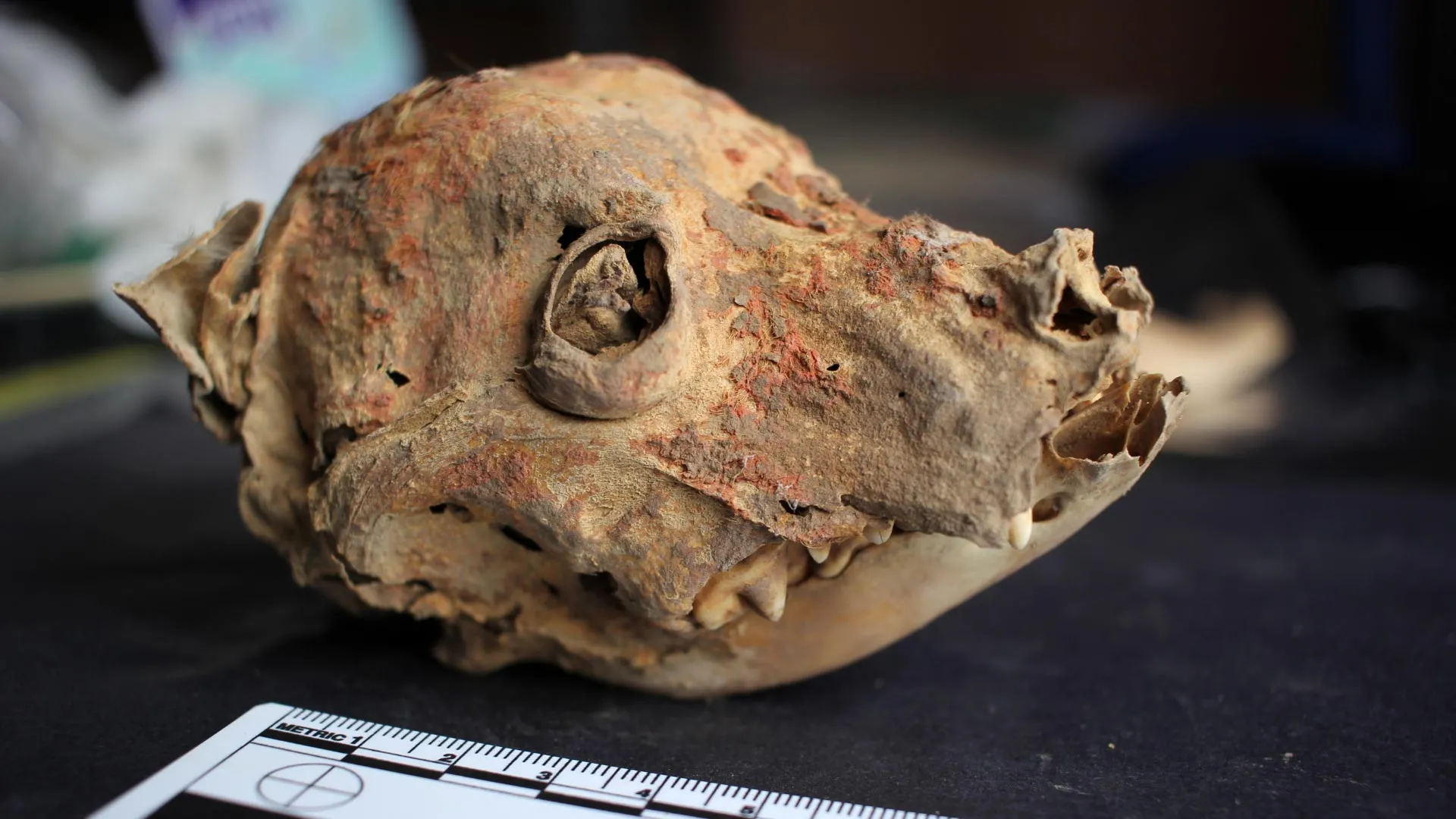
Archaeology with a wagging tail. The clever detail is that hairless dogs lack certain teeth because of the same gene, so even bare bones can reveal the breed. The diet results suggest these pups were fed more like children than like the other dogs.
Excavations at Castillo de Huarmey, a Wari-era site north of Lima, turned up remains of at least 19 dogs and a naturally mummified one, identified as Peruvian hairless dogs. Some puppies were buried with high-status people, and chemical analysis of their bones hints at deliberate breeding and special care.
from the filed-under-misc dept.

Proof that the best fieldwork sometimes happens in a storeroom. A scrap of skull the museum bought in 1924 turns out to be the first megaraptoran ever found in Europe, which redraws the map for a whole family of big-clawed hunters. Bonus points for a name that translates as unconquered female warrior.
Researchers from UCL and the Natural History Museum have named Invictibellatrix amberina from a partial skull collected on the Isle of Wight by amateur collector Reginald Hooley. The animal lived about 120 million years ago and was roughly 3 to 4 metres long. The find suggests megaraptorans ranged widely early on, then faded out in the northern continents while their southern cousins became top predators.
from the who-you-gonna-call dept.

Amateur astronomers pointed a telescope at a well-photographed patch of sky for about a hundred hours and found things nobody had catalogued. Fitting timing for late October. Look for the faint blue wisps; those are the new arrivals.
The 21 October Astronomy Picture of the Day shows the nebulae IC 59 and IC 63 near the bright star Gamma Cassiopeiae, plus three newly spotted faint clouds glowing in ionised oxygen. One may be gas piled up in a bow shock as the star ploughs through space, and another could be a planetary nebula if a white dwarf is found at its centre.
from the rm-rf-the-closet-carefully dept.

Every kernel hacker's archaeology dream: someone cleans out a room and finds a nine-track reel labelled with what may be the only surviving copy of Fourth Edition UNIX, the first one mostly rewritten in C. The story is worth it for the reminder of how much of our history lives on fragile media in forgotten cupboards.
A research associate in the University of Utah's Flux Research Group found the 1970s tape while clearing out a storage room in 2025. The team arranged to take it to the Computer History Museum for careful reading, noting that the hardware is scarce and old reels were often reused, so success was not guaranteed.
from the casque-and-effect dept.

A local bird with a solid-ivory battering ram on its face and a call that speeds up into maniacal laughter audible kilometres away. The section on males jousting in mid-air is the highlight. Also worth noticing the Malay folk name, which hints at what people thought that laugh sounded like.
The helmeted hornbill lives in lowland forests from southern Myanmar and Thailand through the Malay Peninsula, Sumatra and Borneo. Unlike other hornbills its casque is nearly solid, and males use it to ram rivals in flight. Demand for that casque has driven heavy poaching, and the species has been listed as Critically Endangered since 2015.
from the here-and-there-and-everywhere dept.
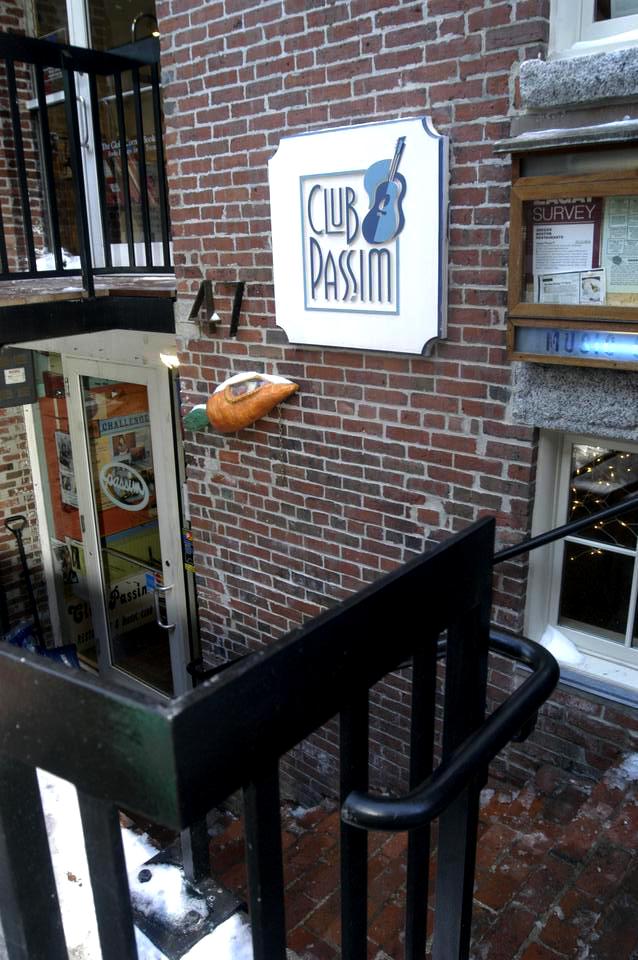
A short, affectionate history of the Cambridge room where the folk revival got a lot of its early practice. Dylan sneaking in between sets and old blues masters being brought north are the famous bits; the more charming one is how a gift shop slowly turned back into a stage.
The Crimson traces Club 47 from its 1958 opening on Mt. Auburn Street, through its move to Palmer Street and its 1968 closure, to its rebirth under new owners as Passim, named for the Latin word for here and there. It ends with the club as a nonprofit still running open mics and concerts.
from the analog-before-it-was-cool dept.

Before anyone had a stored program, people were summing sine waves with pulleys and a wire to print a year of tides in under half an hour. It is a lovely piece of special-purpose hardware, and the American one, nicknamed Old Brass Brains, stayed in service into the 1960s.
Starting with William Thomson's 1872 design, these mechanical analog computers added up many tidal components, each set by gears turning at its own rate, to draw future tide curves for a port. Dozens were built worldwide, and they were used for jobs as serious as planning the D-Day landings.
 Neat