News for Nur. Stuff that's neat.
Sunday, November 8, 2026

A possible new dinosaur turns up just outside Arches

Posted by Captain Queso on Sunday November 8, 2026 @5:59PM in Dinosaurs
from the arches-of-triumph dept.

Moab's red rock keeps giving, and this time the dig sits practically in the shadow of a national park famous for its stone, not its bones. Early word is cautious, with a lot of 'possible' in it, which is how real palaeontology sounds before the paper lands. Dinosaur news makes the cut on principle; this one earns it on scenery too.

Paleontologists working a bone site near Arches National Park in eastern Utah say some of the material may belong to a species not yet described. The remains are still being prepared and studied, so a name and a formal description will have to wait.

A stellar leaf blower may explain JWST's too-bright early galaxies

Posted by Captain Queso on Sunday November 8, 2026 @5:58PM in Space and science news
from the blowing-in-the-lyman-wind dept.

Webb keeps finding more bright galaxies in the first half-billion years than the models allow, and the fixes on offer range from boring to universe-breaking. This one is pleasingly mundane: the galaxies were always there, they just cleared their own fog. Notice how much of cosmology turns out to be housekeeping about dust.

Researchers propose that intense ultraviolet radiation from dense clusters of young stars pushed gas and dust out of early galaxies, letting more of their light escape. That would make galaxies from roughly 400 to 500 million years after the Big Bang look brighter, and more plentiful, than expected without breaking existing theory.

Artemis II's launch rippled the upper atmosphere enough to nudge GPS

Posted by Captain Queso on Sunday November 8, 2026 @5:57PM in Space and science news
from the anthropogenic-space-weather dept.

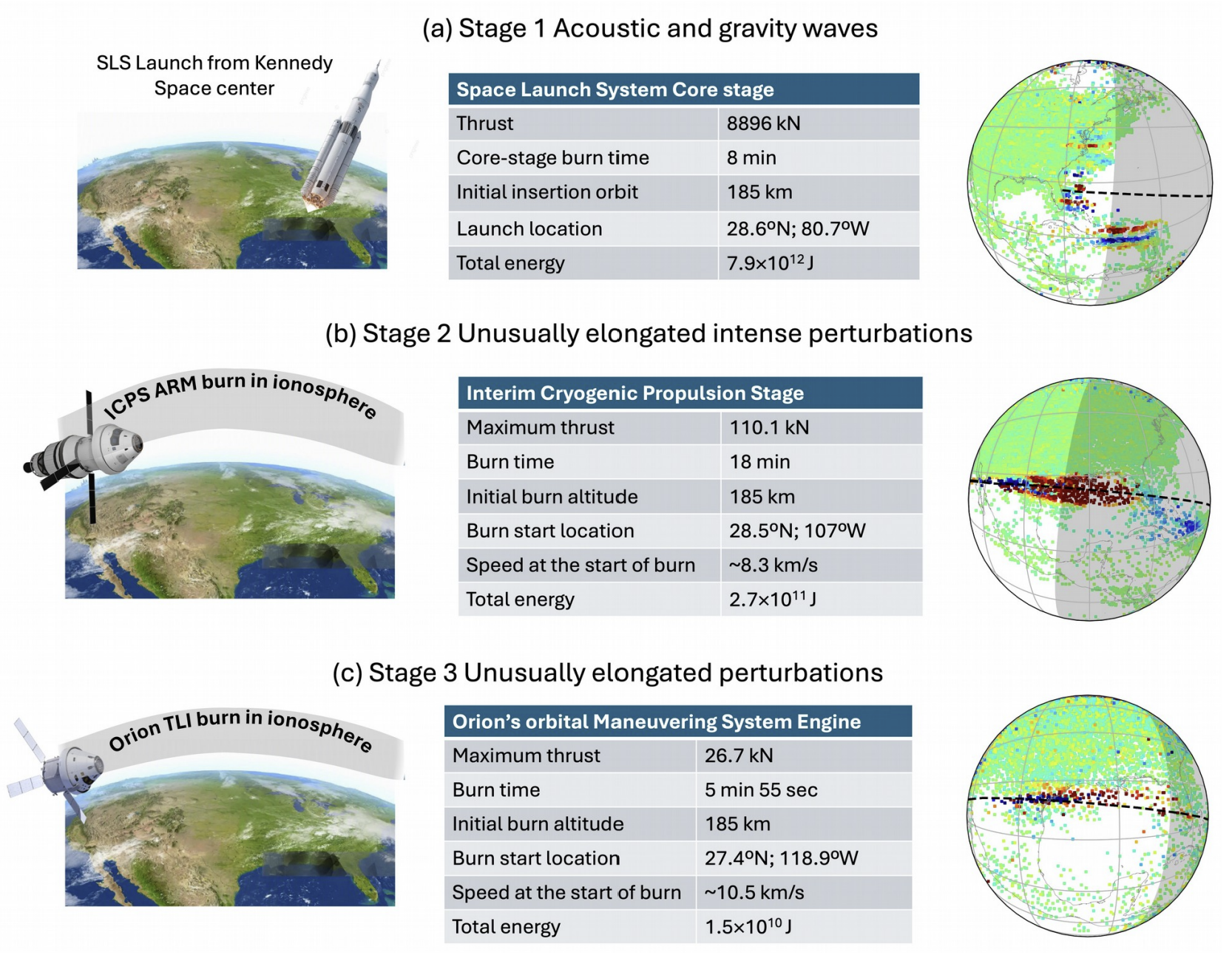
Everyone remembers the noise and the flame; fewer people think about the hole a heavy-lift rocket punches in the ionosphere on the way up. A new preprint maps the disturbance stage by stage, and the effect on satellite navigation signals is the part that makes engineers sit up. Space weather, it turns out, can be locally manufactured.

A preprint studying the Artemis II launch traces how each stage of the Space Launch System disturbed different layers of the atmosphere as it climbed. The ripples reached the ionosphere widely enough to measurably affect GPS signals, a reminder that big launches leave a footprint far above the pad.

Two cyclists follow a migrating whimbrel from Alaska's Arctic coast

Posted by Captain Queso on Sunday November 8, 2026 @5:56PM in Birds
from the shorebird-and-the-bike dept.

Plotting a shorebird's migration on a map is science; following it on a bicycle is something closer to devotion. An ecologist and an endurance athlete are trying to cover the bird's route over land, which tells you a lot about how absurdly far whimbrels fly. Worth it for the sheer scale of the trip.

University of Alberta ecologist Timm Döbert and his partner, athlete Leanna Carriere, set off by bike from Prudhoe Bay on Alaska's Arctic coast in August to follow the migration route of a whimbrel. The planned ride runs more than 18,000 miles, a measure of just how far these shorebirds travel.

Three songwriters cut 'Shakespeare's Bones' with barely a plan

Posted by Captain Queso on Sunday November 8, 2026 @5:55PM in Folk and Americana
from the alas-poor-chord-chart dept.

Thomm Jutz has been quietly turning out some of the best bluegrass-adjacent songwriting around, so a three-way record with Lacy Green and Adam Wright is worth an ear. The pitch is the old one, friends in a room with chord charts and no overthinking, and the review suggests it worked. Good craft talk for anyone who likes to watch songs get built.

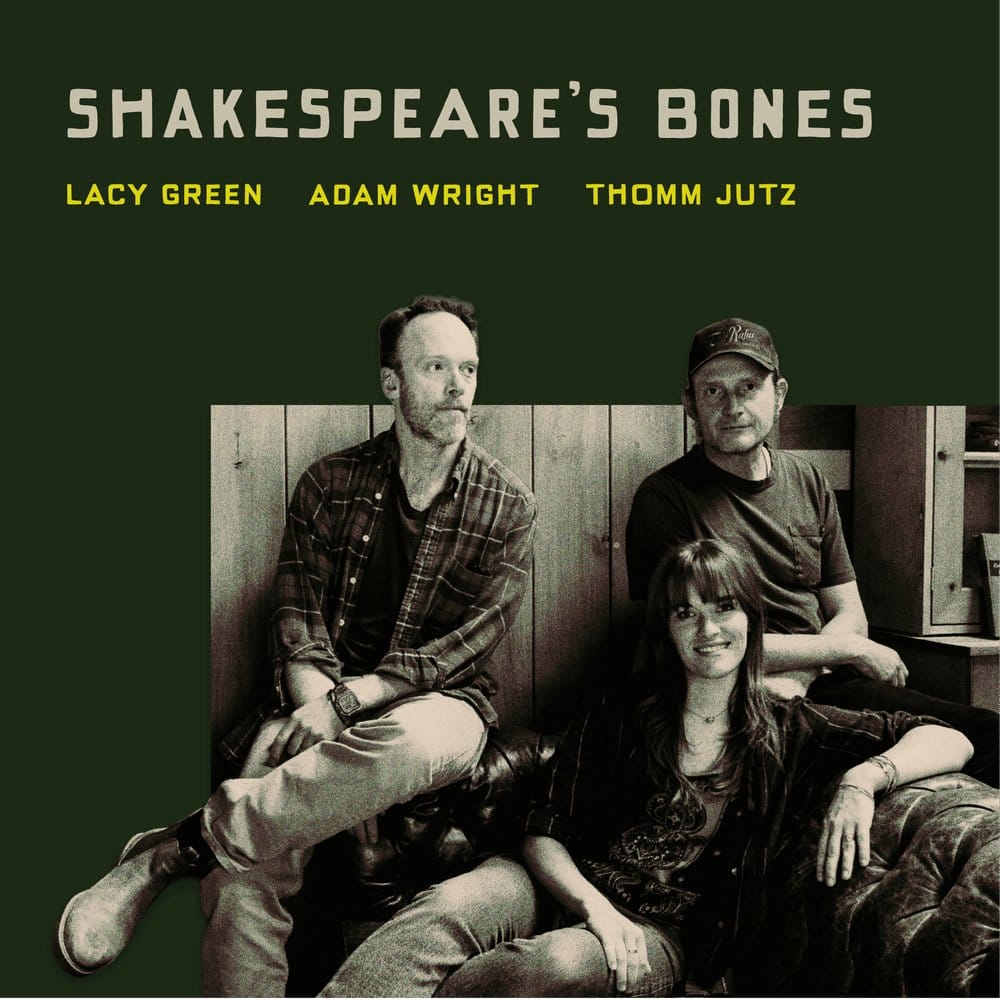
No Depression reviews a collaborative album by songwriters Lacy Green, Thomm Jutz and Adam Wright, with some songs co-written with Dean Fields. The trio recorded twelve tracks over three loosely planned sessions, and the review credits the looseness and the friendship with the record's spark.

Bringing the long-dead T-Mobile Sidekick back to life

Posted by Captain Queso on Sunday November 8, 2026 @5:54PM in Open source
from the danger-will-robinson dept.

The Sidekick was a thin client before anyone called it that, and when its servers went dark it became a very nice paperweight. Someone dug the old SDK out of an archive and started poking at DangerOS, which is exactly the kind of pointless, delightful archaeology this category exists for. Mind the bits about the Java-based OS and what survives of it.

A hobbyist recounts reverse engineering the Danger Hiptop, sold as the T-Mobile Sidekick, two decades after it launched. With the backend that held everything long shut down, the work starts from a surviving SDK and device simulator and digs into how DangerOS ran and what can still be made to work.

Marc Brooker on fixing UUIDv7 for databases

Posted by Captain Queso on Sunday November 8, 2026 @5:53PM in Systems Research and Kernel Development
from the version-seven-deadly-sins dept.

UUIDv7 solved index locality and promptly got blamed for everything else. Brooker sorts the fair complaints from the noise and sketches what a database actually wants from its keys, with the usual distributed-systems eye for correlated behaviour across regions. Short, opinionated, and the kind of thing you end up citing in a design review.

Marc Brooker looks at the criticisms of UUID version 7: it leaks server timestamps, carries less entropy than random IDs, and can create correlated hot spots across datacenters and regions. He separates the legitimate concerns from the rest and proposes adjustments that keep the benefits for database use.

James Skinner's illustrated 1825 survey of India's peoples

Posted by Captain Queso on Sunday November 8, 2026 @5:52PM in Maps and archives
from the painted-in-persian dept.

Skinner is one of the stranger figures of early British India, a soldier of mixed parentage who raised his own cavalry and commissioned books like this one. The pages are in the Company painting style, that hybrid of Mughal and European habits, and the detail in the dress and trades is the real draw. Linger on the pictures.

The Public Domain Review presents illustrations from a Persian manuscript compiled for James Skinner in 1825, describing the customs and occupations of communities across northern India. The paintings, made in the Company style, form a vivid if period-bound record of how the colonial era catalogued the people it ruled.
Read the rest of this story (Public Domain Review)

Infinite chess, where a rook can flee to anywhere and still lose

Posted by Captain Queso on Sunday November 8, 2026 @5:51PM in Wildcard
from the just-one-more-square dept.

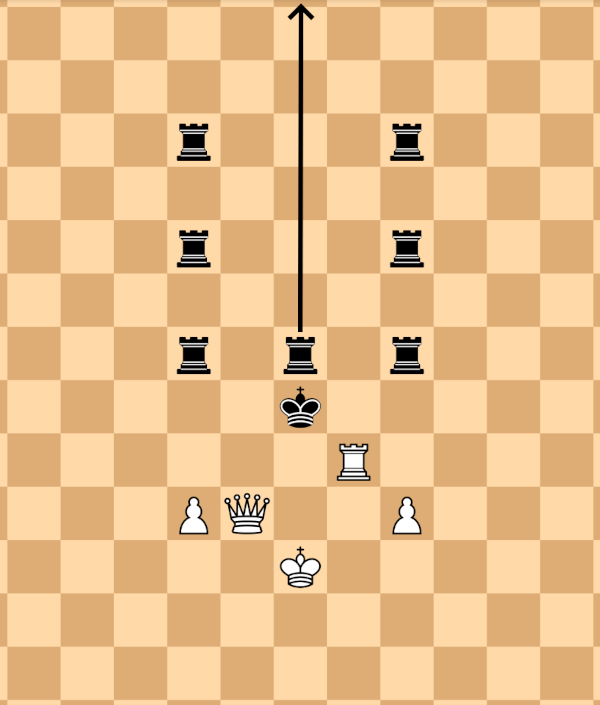
Take away the edges of the board and chess starts producing positions that feel like Zeno's paradoxes in a cardigan. Here Black escapes mate by flinging a rook arbitrarily far away, and is doomed anyway by a patient chase that never quite ends. A lovely little puzzle about what 'eventually' means.

Futility Closet presents a position on an unbounded chessboard in which Black avoids immediate mate by sending a rook any finite distance north. White can then drive the king endlessly up the board after it, raising the odd question of whether a game that never concludes counts as a forced loss.
Read the rest of this story (Futility Closet)

The Antarctica-nuking scene that almost made Project Hail Mary

Posted by Captain Queso on Sunday November 8, 2026 @5:50PM in Science fiction and fantasy
from the cold-war-on-ice dept.

Andy Weir's novel has a gloriously unhinged plan to deal with a dimming sun by blowing up a continent, and fans noticed it missing from the film. Drew Goddard explains what was cut and why it still bugs him, which is a nice window into how hard-SF ideas survive, or don't, the trip to the screen. Spoiler-light if you've read the book.

Screenwriter Drew Goddard says one of his biggest regrets about the Project Hail Mary adaptation is leaving out the book's plan to nuke Antarctica. Reactor covers what the scene was and why it ended up on the cutting-room floor.

Dinosaur bones still hold traces of blood after 115 million years

Posted by Captain Queso on Sunday November 8, 2026 @12:59PM in Dinosaurs
from the it's-not-ketchup dept.

Every few years someone claims soft tissue in a dinosaur bone and the field braces for the argument. This time the selling point is chemical confirmation rather than a suggestive smear under the microscope, which is the bit worth reading closely. If it holds up, the clock on how long biomolecules can last just got a lot longer.

Researchers report chemically verified remnants of blood preserved inside dinosaur bones roughly 115 million years old. The find pushes back estimates of how long such molecules can survive, and could open a window on dinosaur physiology and inform how we look for traces of life beyond Earth.

Rubin Observatory finds two hidden companions of the Milky Way

Posted by Captain Queso on Sunday November 8, 2026 @12:58PM in Space and science news
from the more-in-the-neighbourhood dept.

Rubin has barely cleared its throat and it is already turning up things the galaxy's census missed. Two new satellites from a sliver of preliminary sky coverage is a strong hint of what the full survey will do to the missing-satellites problem. Notice the dust-hidden star cluster: not every discovery is about being faint, some are just about being behind something.

Early data from the Vera C. Rubin Observatory, covering only about seven percent of the sky, has revealed two previously unknown companions of our galaxy: a very faint dwarf galaxy some 355,000 light-years away and a star cluster obscured by dust. Astronomers expect hundreds more such satellites to turn up as the survey continues.

A 4.1-billion-year-old piece of Mars, found in the Sahara

Posted by Captain Queso on Sunday November 8, 2026 @12:57PM in Space and science news
from the return-to-sender dept.

Mars has been mailing us samples for free for billions of years; we just have to find them in the sand. This one is old enough to remember the planet's crust forming, which makes it more useful than its plain looks suggest. A tidy little Kottke pointer to a story that sample-return planners will be quietly jealous of.

Kottke points to new research on a Martian meteorite recovered in Mali a few years ago. The rock turns out to be more than 4.1 billion years old, and its blend of igneous minerals records clues to how the early Martian crust took shape.

Chasing the great Nutcracker invasion in the Netherlands

Posted by Captain Queso on Sunday November 8, 2026 @12:56PM in Birds
from the sugar-plum-corvid dept.

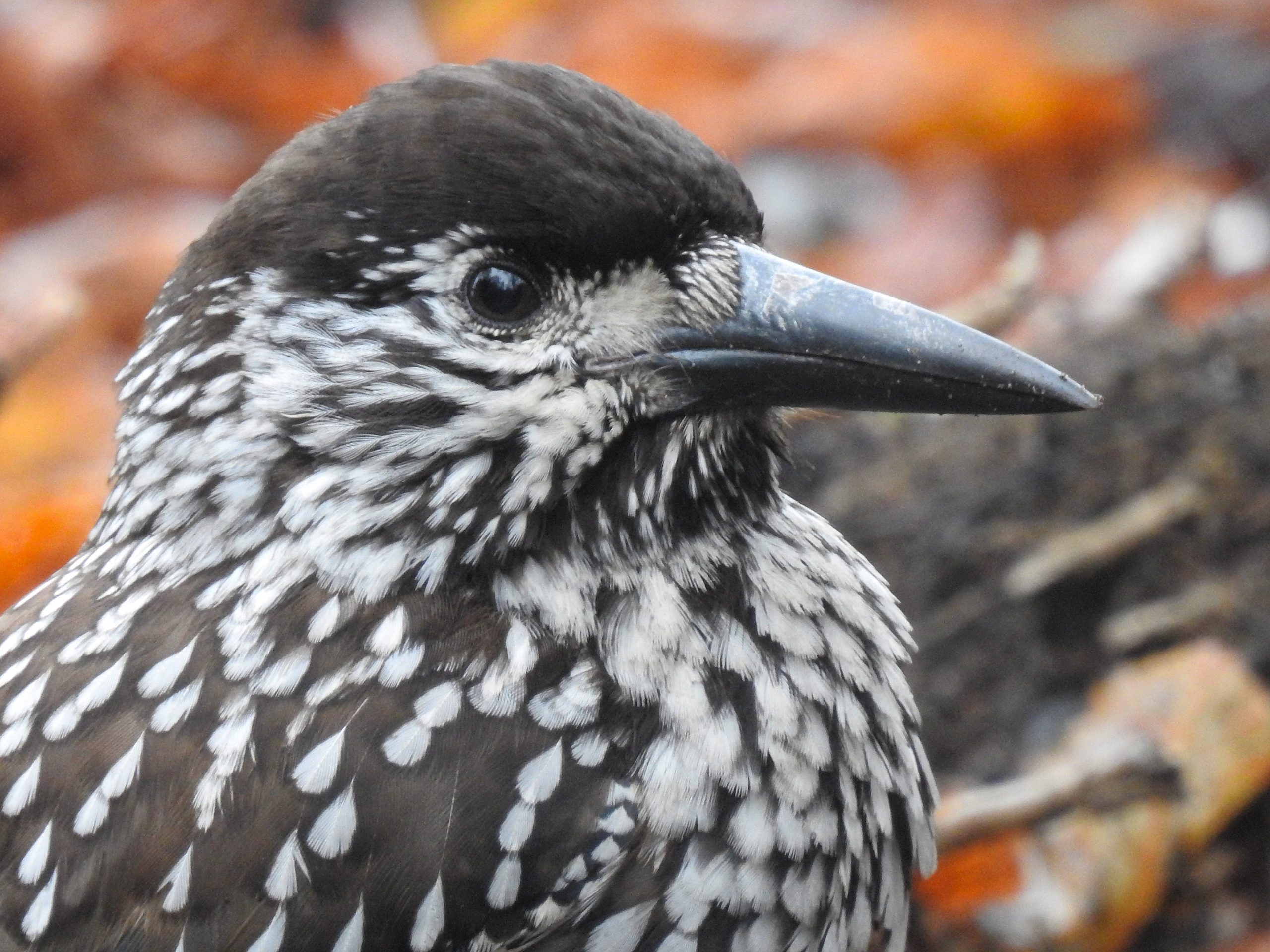
A bike ride across the Netherlands in pursuit of a Siberian corvid is about as Dutch a twitch as they come. Nutcrackers irrupt westward only now and then, so this is a nice first-person account of a rare movement while it is happening. Bonus points for the Tchaikovsky gag, which the author commits to fully.

A 10,000 Birds writer recounts cycling out to De Tempel to catch up with Nutcrackers, part of an irruption that has brought these crows from Russia across much of western Europe this autumn. Expect a cheerful mix of birding diary and ballet puns.

Full Linux, with an MMU, on the new ESP32-S31

Posted by Captain Queso on Sunday November 8, 2026 @12:55PM in Open source
from the microcontroller-with-ambitions dept.

The line between a microcontroller and a real SoC just got blurrier: the ESP32-S31 is RISC-V with a proper MMU, so this is the real kernel rather than the no-MMU compromise. Nobody is going to compile a browser on it, but a cheap Wi-Fi board running a 6.x port is exactly the kind of toy that ends up in a hundred weekend projects. Watch for the Espressif repo to grow a community.

Hackaday notes that Espressif's dual-core RISC-V ESP32-S31, with Wi-Fi 6 and a memory management unit, can boot a full Linux kernel. An official repository and a 6.x kernel port exist, and development boards are already cheap enough to tinker with, though performance will be modest.

The Morning Paper revisits Linda and tuple spaces

Posted by Captain Queso on Sunday November 8, 2026 @12:54PM in Systems Research and Kernel Development
from the tuple-up-and-wait dept.

Gelernter's Linda is the fourth concurrency model everyone forgets, sitting quietly beside shared memory, message passing and RPC. Adrian Colyer's write-up, from Peter Alvaro's desert-island list, is a good reminder that decoupling in time as well as space was a fully formed idea in the eighties. Read it and count how many modern queueing systems are reinventing it.

An archive post from The Morning Paper walks through David Gelernter's paper on generative communication, the idea behind Linda. Processes coordinate by dropping tuples into and pulling them out of a shared tuple space, so communicating parties need not exist at the same time or know about each other; the post explains why that model was argued to be simpler and more expressive.
Read the rest of this story (The Morning Paper)

Eight odd gargoyles and grotesques worth a trip

Posted by Captain Queso on Sunday November 8, 2026 @12:53PM in Places to visit
from the stone-faced dept.

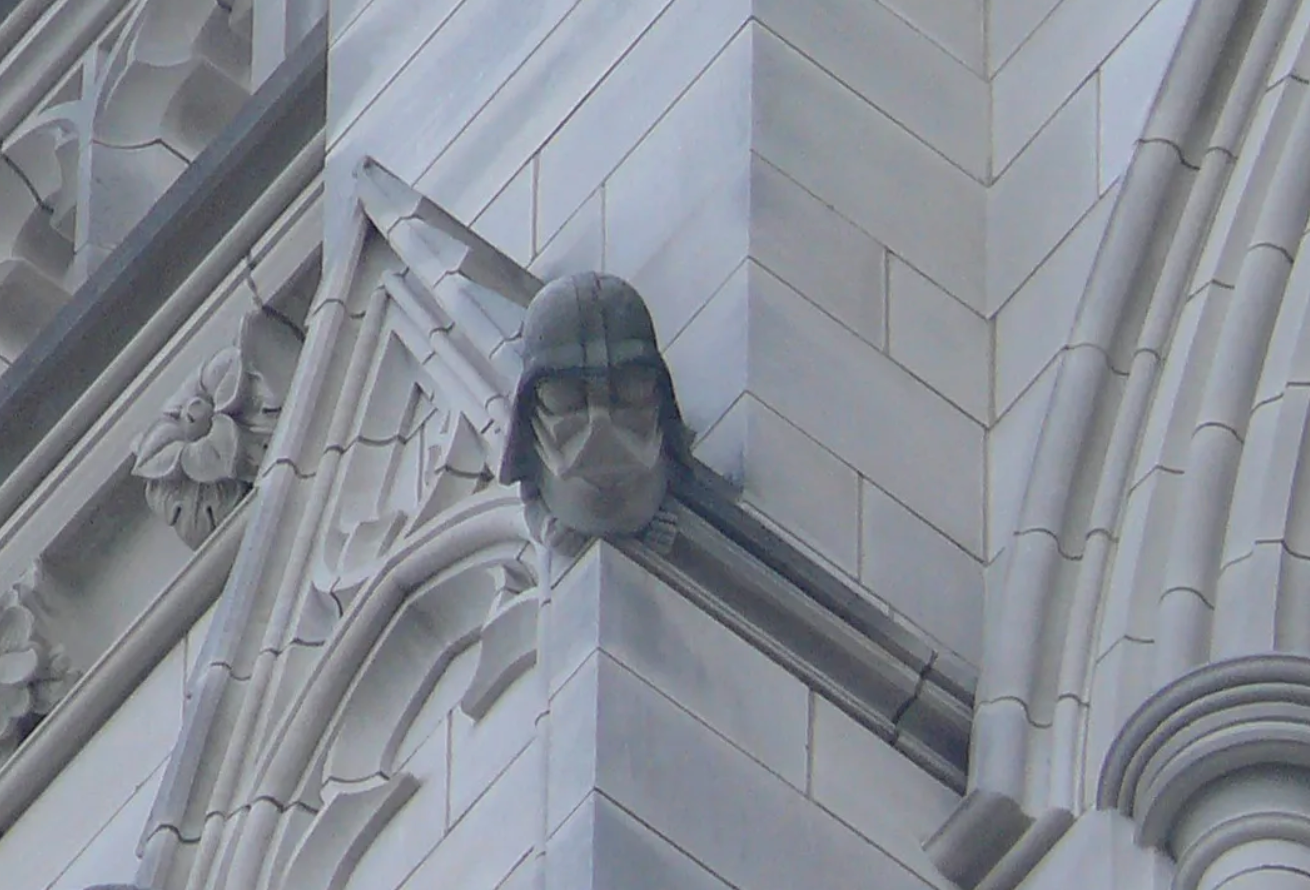
Gargoyles are the original user-generated content: a stonemason with a sense of humour and a long time to sit on a scaffold. Atlas Obscura rounds up the ones that break the mould, which makes for a handy itinerary of buildings to stare upward at. Look for the ones that are clearly portraits of someone the carver did not like.

Atlas Obscura gathers eight unusual gargoyles and grotesques from buildings around the world, the ones that stray furthest from the standard scowling beast. Each entry is a real spot you could visit and crane your neck at.

Folk Alley's radio hour: IBMA winners, Joni's birthday and a seisiún

Posted by Captain Queso on Sunday November 8, 2026 @12:52PM in Folk and Americana
from the bluegrass-is-greener dept.

A good week to catch up: the IBMA awards just handed out their hardware, and Folk Alley's show threads Billy Strings and Sierra Hull together with Solas and a live session on air. It is the kind of playlist that drifts from Kentucky to Kerry without anyone noticing the border. Jake Blount's new material alone is worth the hour.

This week's Folk Alley radio show features recent IBMA Bluegrass Music Award winners such as Billy Strings, Sierra Hull and East Nash Grass, a birthday nod to Joni Mitchell, Irish music from Solas, new songs from Liv Greene and Jake Blount, and an on-air Irish session.

A surprise right whale calf turns up off Quebec

Posted by Captain Queso on Sunday November 8, 2026 @12:51PM in Wildcard
from the late-entry-to-the-census dept.

In a species this rare, every calf gets counted by name, so one that slipped through the winter surveys entirely is genuinely good news. The detective work is the fun part: matching photos against the catalogue the New England Aquarium keeps on every known animal. A small, cheering correction to the numbers.

Researchers photographed an unidentified North Atlantic right whale calf near Anticosti Island in Quebec in September. Scientists at the New England Aquarium in Boston concluded it was born months earlier and missed by winter surveys, bringing the latest calving season's count to 24.

LEGO Ideas Godzilla stomps in at over 5,000 pieces

Posted by Captain Queso on Sunday November 8, 2026 @12:50PM in LEGO
from the king-of-the-bricks dept.

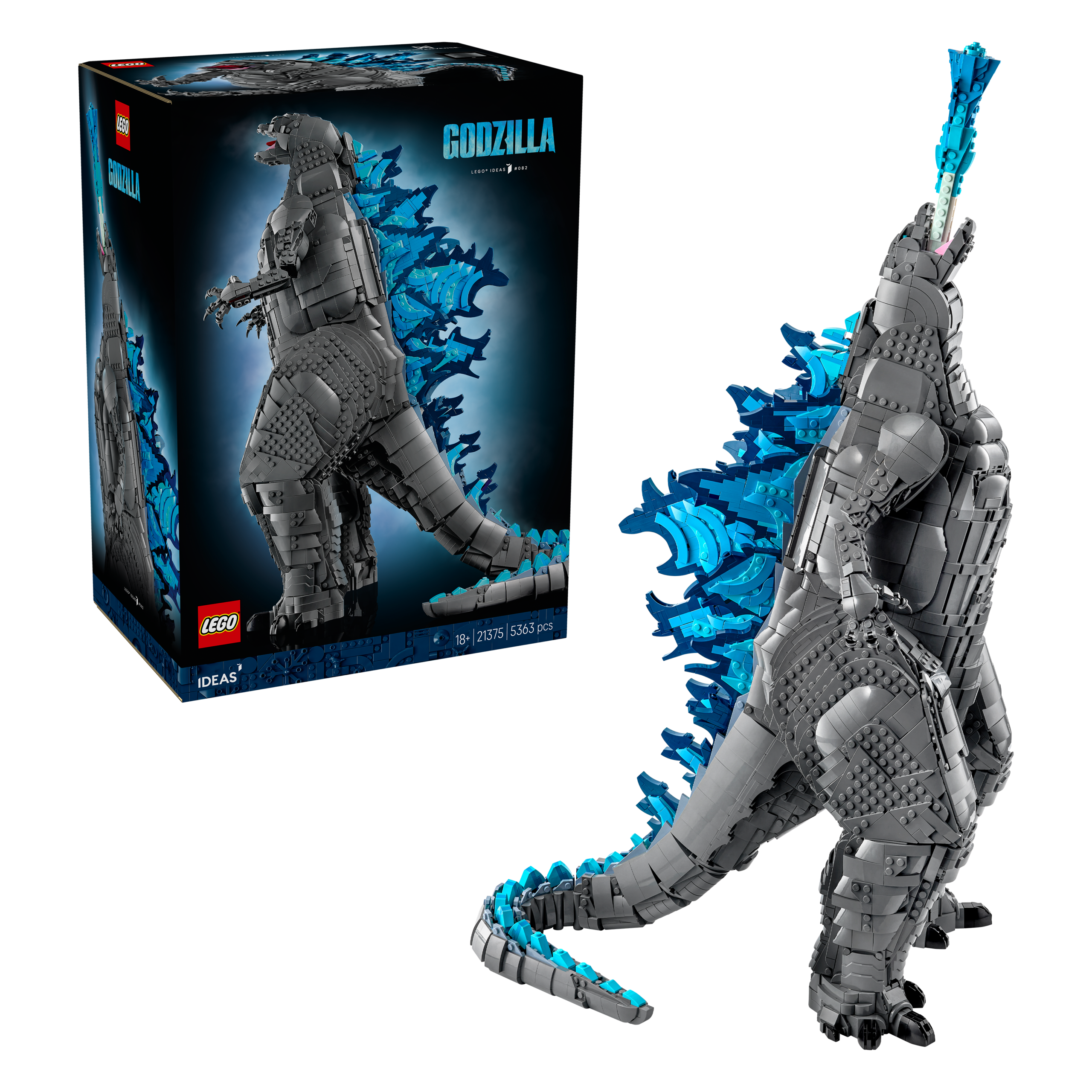
A fan submission that cleared the Ideas vote in 2024 has grown into a 5,363-piece kaiju, which says something about how much the designers enjoyed themselves. The interesting bit is how far the official model departs from the original fan build. Keep your minifig city well back from the display shelf.

The Brothers Brick reports on 21375 Godzilla, the next LEGO Ideas set, based on a fan design by Matthew Esposito. The model runs to more than 5,000 pieces, comes out at the end of November, and is noticeably larger than the original submission.
Read the rest of this story (The Brothers Brick)

A new tyrannosaur joins Alberta's crowded family tree

Posted by Captain Queso on Sunday November 8, 2026 @6:59AM in Dinosaurs
from the tyrant-lizard-registry dept.

Alberta has been handing palaeontologists tyrannosaurs for over a century, and apparently the province still has a few in the drawer. Each new branch on this family tree tightens the story of how the big northern tyrants split and spread, so it's worth noticing where this one sits relative to its famous cousins. The CTV headline writer clearly had fun, too.

Palaeontologists have described a new species of tyrannosaur from fossils found in Alberta. CTV News reports on the find and what sets the animal apart from the tyrannosaurs already known from the province's rich Late Cretaceous beds.

A white dwarf wears two rings of shattered planets

Posted by Captain Queso on Sunday November 8, 2026 @6:58AM in Space and science news
from the after-the-red-giant-party dept.

Most previews of the Sun's retirement stop at the white dwarf; this one shows the furniture left over afterwards. Two rings of debris with a clean gap between them suggest something sizeable is still orbiting and sweeping the lane, which is the kind of detail that makes a dead system feel oddly lived in.

Astronomers have found a double ring of planetary wreckage around a white dwarf, split by a gap that may be kept open by a surviving body as big as Pluto or the Moon. The two rings differ in chemistry, hinting they are the remains of two separate destroyed worlds, and a glimpse of what our own Solar System may look like long after the Sun dies.

Hunting for a Powerful Owl in Sydney's Botanic Gardens

Posted by Captain Queso on Sunday November 8, 2026 @6:57AM in Birds
from the who-goes-there dept.

Australia's largest owl, roosting in the middle of a city botanic garden, is the sort of thing that rearranges a birder's sense of what an urban patch can hold. This is an archive piece from 10,000 Birds, so no breaking news, just the quiet pleasure of a long-awaited lifer refound after years. Raptor fans, note the prey it tends to carry around at its roost.

A 10,000 Birds writer recalls going looking for a Powerful Owl in Sydney's Royal Botanic Gardens, years after last seeing the species while living in Victoria. Republished from 2018 as part of the site's archive series, it is a short field story about Australia's biggest owl living in plain sight in a city park.

Punch Brothers take Carnegie Hall on an imaginary voyage

Posted by Captain Queso on Sunday November 8, 2026 @6:56AM in Folk and Americana
from the five-guys-one-mandolin-one-ocean dept.

Punch Brothers have been on the road all autumn, and this time the stop is Carnegie Hall, the venue where a string band stops being a novelty and starts being chamber music. The review frames the night as a journey to an invented place, which fits a band that has spent the year playing its new all-instrumental record. Worth a read to see how the set was built.

NYS Music reviews Punch Brothers' recent show at Carnegie Hall, describing the evening as an imagined voyage through the band's music. It is a concert write-up from the quintet's current tour.

Should the kernel finally know what a container is?

Posted by Captain Queso on Sunday November 8, 2026 @6:55AM in Systems Research and Kernel Development
from the there-is-no-spoon dept.

Every kernel hacker knows the old line: there is no such thing as a container, just namespaces and cgroups in a trench coat. This LWN piece looks at the long-running push to give the kernel a first-class notion of a container, an idea that has stalled more than once over who gets to define one. Read it for the arguments about identity and nesting rather than the patch details.

LWN examines a proposal to make containers a recognized object inside the Linux kernel, rather than a user-space convention assembled from namespaces and control groups. The article covers why some subsystems want a stable container identity and why the idea has met resistance before.

OpenBSD's top learns to show who has pledged what

Posted by Captain Queso on Sunday November 8, 2026 @6:54AM in Open source
from the Q-lifts-the-shroud dept.

A small commit, very much in the OpenBSD house style: instead of a sprawling security dashboard, one new key in top that shows which processes have pledged, unveiled or chrooted themselves. The nice part is that it makes privilege-awareness visible at a glance, so unhardened daemons stand out on a running system. Tiny change, satisfying idea.

OpenBSD's top(1) gains a new Q flag and key that swaps the time column for a privilege column, showing pledge promises and state letters for chroot and unveil use. The aim is to spot quickly which programs restrict themselves and which do not.

A Cat-astrophe, from the great 1918 cat-song craze

Posted by Captain Queso on Sunday November 8, 2026 @6:53AM in Maps and archives
from the feline-groovy dept.

Apparently 1918 had a brief boom in cat-themed music, which is the sort of fact the Public Domain Review exists to rescue. This 1919 piece arrived at the tail of the craze, and the accompanying picture of a cat organ is a reminder that people have been putting cats and music together in questionable ways for centuries.

The Public Domain Review presents the 1919 piece of sheet music "A Cat-astrophe", a late entry in an odd wave of cat-themed popular songs from 1918. The collection page sets it in that short-lived fashion.
Read the rest of this story (Public Domain Review)

Marshfield police ask drivers to watch out for loose cows

Posted by Captain Queso on Sunday November 8, 2026 @6:52AM in Boston and New England
from the udderly-routine-patrol dept.

After a week of heavy news, here is the South Shore at its most restful: a police warning about cows. Universal Hub's headline earns its pun, and the story is exactly as small and pleasant as it sounds.

Police in Marshfield, on Massachusetts' South Shore, warned residents and drivers to steer clear of a couple of cows that had got loose and were wandering the area. Universal Hub passes on the advisory.

Need for Speed Underground 2, recompiled to run in a browser

Posted by Captain Queso on Sunday November 8, 2026 @6:51AM in Wildcard
from the neon-underglow-in-a-tab dept.

A port born from two brothers wanting to race each other again twenty years on, which is about the best reason to do something this ambitious. The game's own code was recompiled for the browser, with online races, widescreen and wheel support thrown in, and the author keeps it free with no paid perks. Hacker News filler, but the good kind.

A fan project recompiles the original PC version of Need for Speed Underground 2 to run in Chrome and Firefox, with free roam, online races with friends and support for controllers, wheels and touch. The author started it so he could play with his brother again and kept going.

Tanya Huff's Keeper books and their indispensable tuxedo cat

Posted by Captain Queso on Sunday November 8, 2026 @6:50AM in Science fiction and fantasy
from the cats-hold-the-keys dept.

Judith Tarr's SFF Bestiary column picks the animal sidekicks of fantasy, and this time it is the cat in Tanya Huff's 1990s Keeper series. A cozy urban fantasy set in Kingston, Ontario, written just before mobile phones took over, is a pleasant period piece in its own right. Good pick for anyone who likes Pratchett-adjacent cats with opinions.

In Reactor's SFF Bestiary series, Judith Tarr reads Tanya Huff's Summon the Keeper, the first of the Keeper novels, and looks at the tuxedo cat who is essential to the heroine's work. She enjoys the book's very Canadian setting and its late-1990s feel.

Older stories → the november 2026 archive